





 Portuguese
  English
  Spanish
  6 min of reading
  0 comments


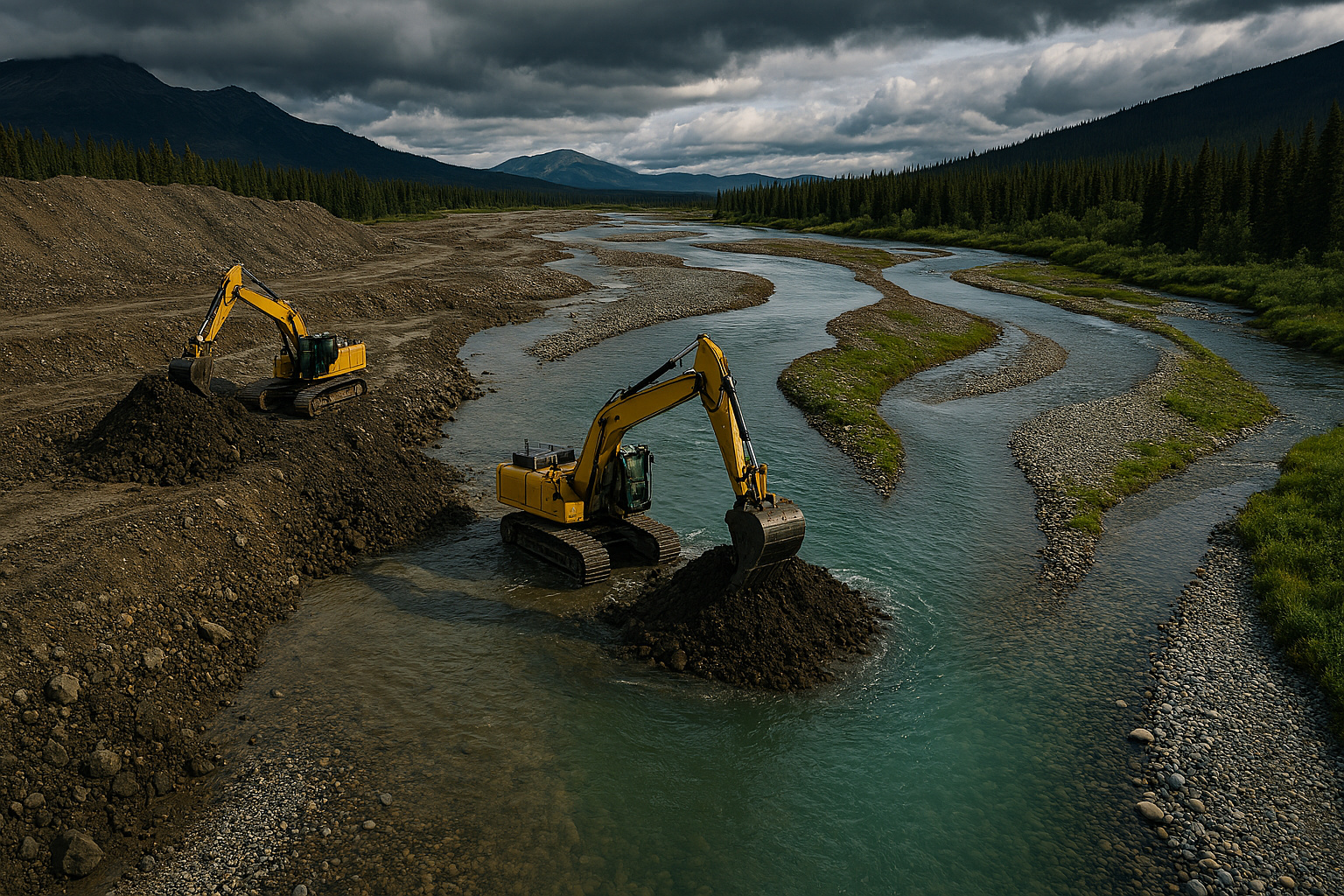
Dredges Removed Waste From The Gold Rush And Reconstructed The Fortymile River Bed In Alaska, Restoring An Ecosystem Destroyed Over 100 Years Ago.
For over a century, the Fortymile River has carried deep scars left by the gold rush that marked the interior of Alaska in the late 19th century. What was once a winding river system, filled with rapids, deep pools, and natural salmon spawning areas, was literally dismantled by dredges, high-pressure water jets, and primitive excavators. The river was not only polluted, it was forcibly redesigned, straightened, buried under waste, and transformed into a shallow, unstable, and biologically impoverished channel.
Decades after intensive mining ended, the destruction remained. Nature alone could not reverse the damage. It was in this context that one of the most ambitious post-mining river restoration projects ever undertaken was born: an operation using heavy engineering, hydrological modeling, and direct intervention in the riverbed to undo, meter by meter, the damage accumulated since the gold rush.
The Gold Rush That Dismantled Entire Rivers In Alaska
Between the late 19th century and the early decades of the 20th century, the interior of Alaska underwent a radical transformation. The discovery of gold attracted thousands of miners who began to explore waterways through what is known as placer mining.
-
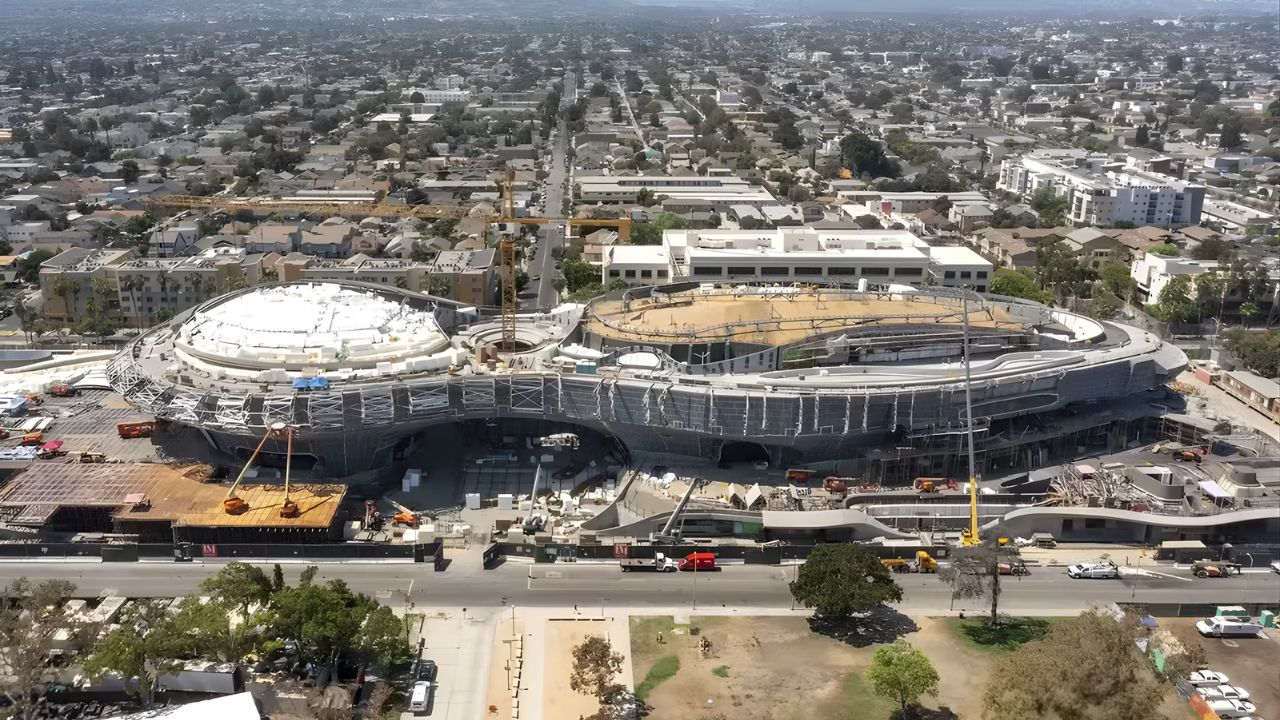
Created by George Lucas with over $1 billion, a futuristic museum in the shape of a spaceship with 1,500 curved panels is about to open in Los Angeles and will house one of the largest private collections of narrative art in the world.
-
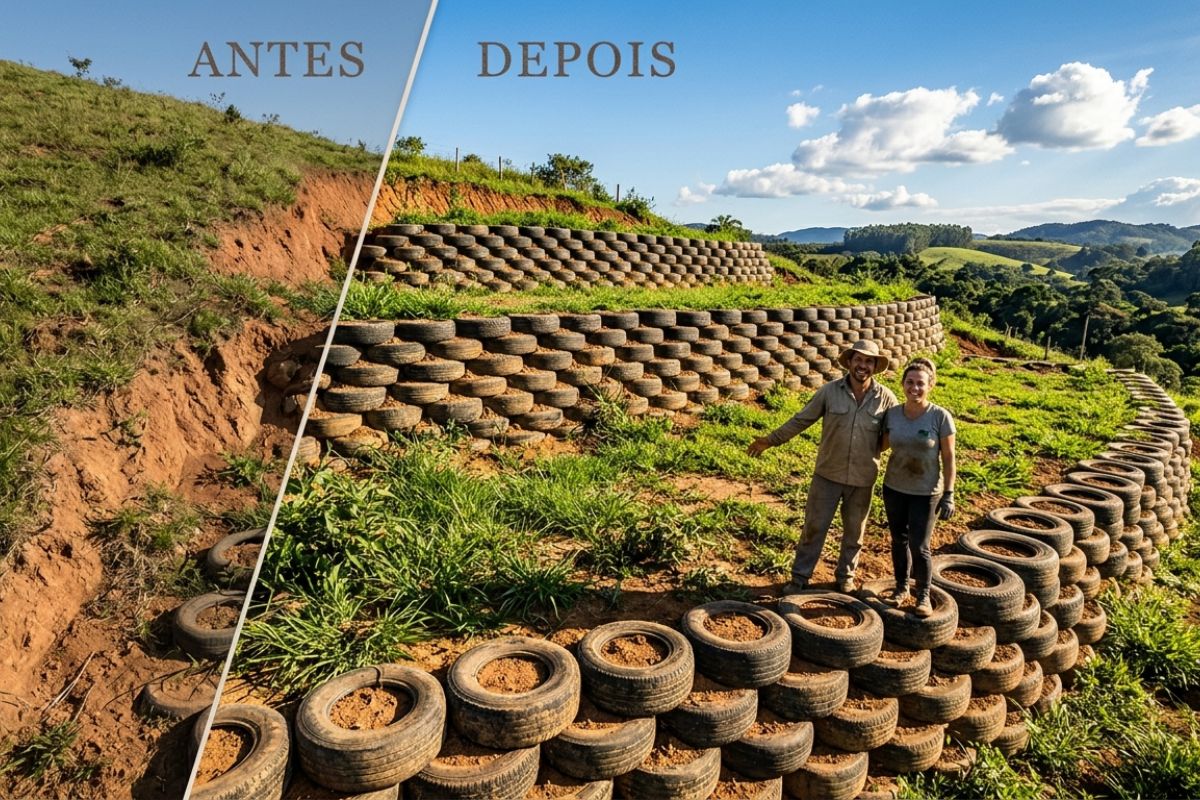
Couple shows how they built a retaining wall on their property using 400 old tires: sloped land turned into plateaus, tires are aligned, filled, and compacted with layers of soil, with grass helping in support and at almost zero cost.
-
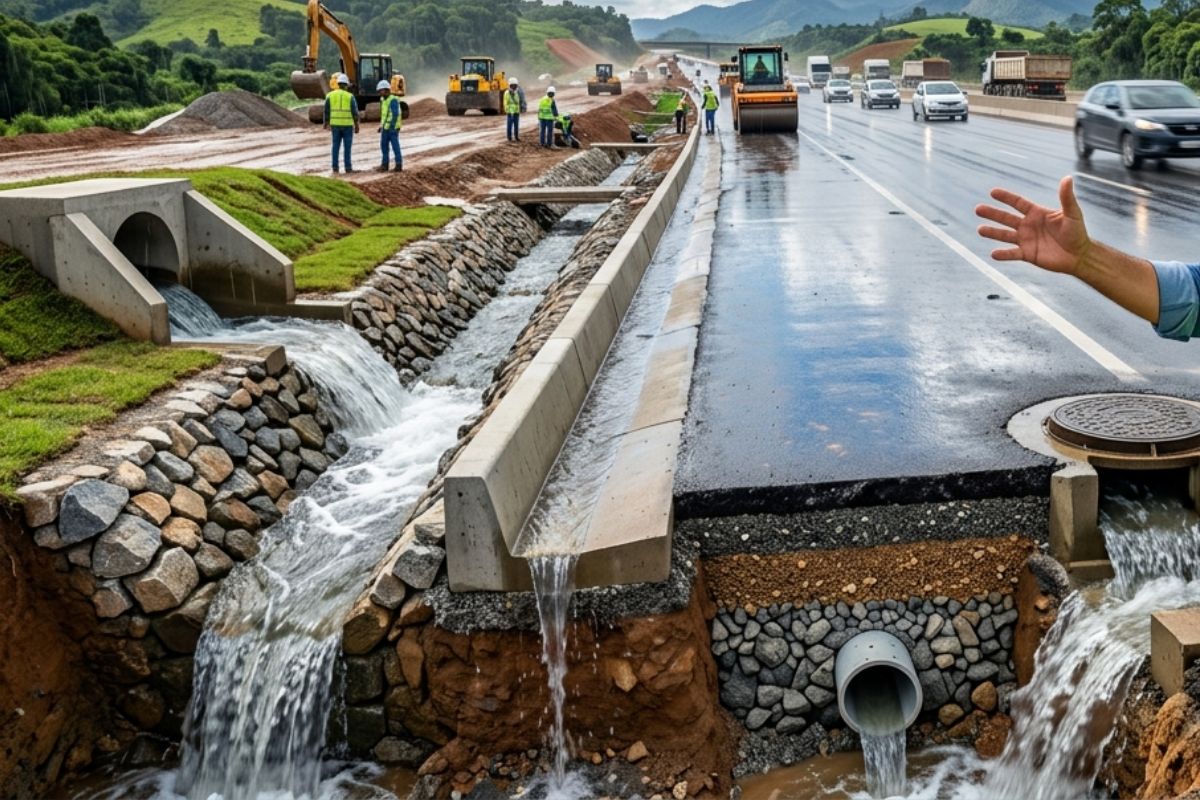
Engineer explains drainage during the rainy season: the difference between surface water and deep water, ditches, gutters, and water outlets on the road, as well as drains and drainage mattresses, to prevent erosion, aquaplaning, and flooding at the construction site today.
-
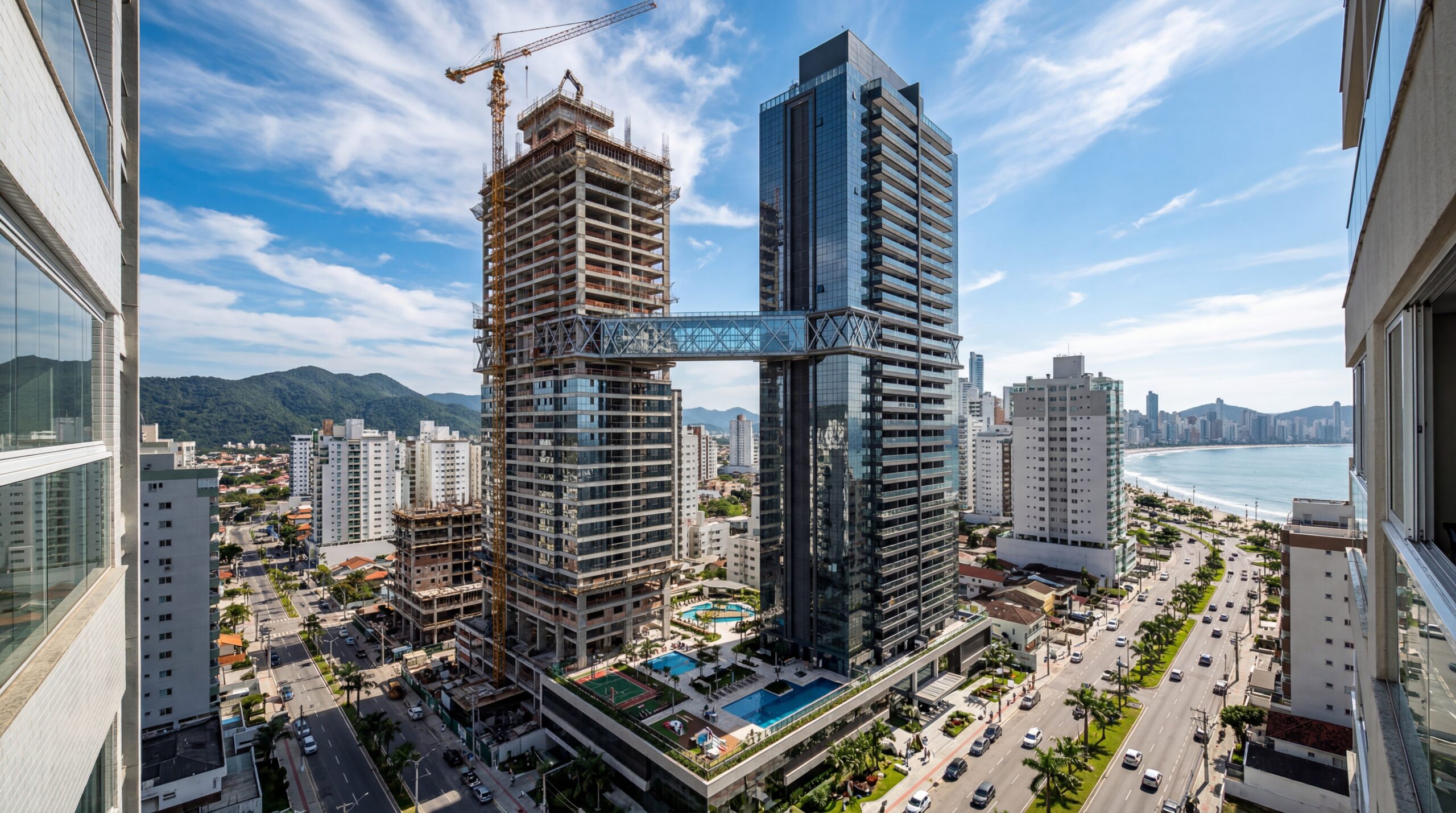
With 55 floors, 177 meters in height, a 15-meter walkway between the twin towers, ventilated facade, and 6,300 m² of leisure space, Ápice Towers already has one tower completed and another nearly at the top.

Unlike underground mining, this method was based on completely overturning the riverbeds, diverting streams, removing natural sediments, and leaving behind enormous volumes of gravel and waste.

In the case of Fortymile, the activity was so intense that the river lost its geomorphological identity. Natural bends disappeared, deep pools were filled, and shallow areas became unstable. Water began to flow too quickly in some stretches and too slowly in others, disrupting the balance necessary for aquatic life.
The result was a silent ecological collapse: salmon ceased to spawn, aquatic insects disappeared, and the food chain entered a decline. When mining stopped, the river did not return to normal, because normal had been physically destroyed.
Why Nature Could Not Recover On Its Own
In many cases, degraded ecosystems can regenerate over time. In Fortymile, this did not happen for one simple reason: the original riverbed no longer existed. In several stretches, the bottom had been excavated down to the bedrock or covered by meters of unstable waste.

Without a functional riverbed, the river could not form:
- stable rapids,
- slow-moving areas for juvenile fish,
- deep pools for winter shelter,
- or suitable spawning zones.
Moreover, the waste left by mining continued to be remobilized with each flood, increasing water turbidity and preventing riparian vegetation from establishing. Scientists concluded that without direct human intervention, the river would remain degraded for centuries.
The Concept Of Post-Mining River Restoration
Unlike reforestation or surface recovery projects, the restoration of Fortymile required a radical approach known as Mining Stream Restoration. In this model, the goal is not to “improve” the existing river, but to rebuild the river from scratch, respecting natural patterns of flow, sediment, and geometry.
This means accepting an uncomfortable truth: the damage was caused by machines, and only machines can reverse it.
In Fortymile, the restoration was not limited to planting trees or installing artificial structures. It involved:
- large-scale excavation,
- removal of historical waste,
- complete reconstruction of the riverbed,
- and returning control of the system to the river’s natural dynamics.
Dredges, Trucks, And Heavy Engineering In Action
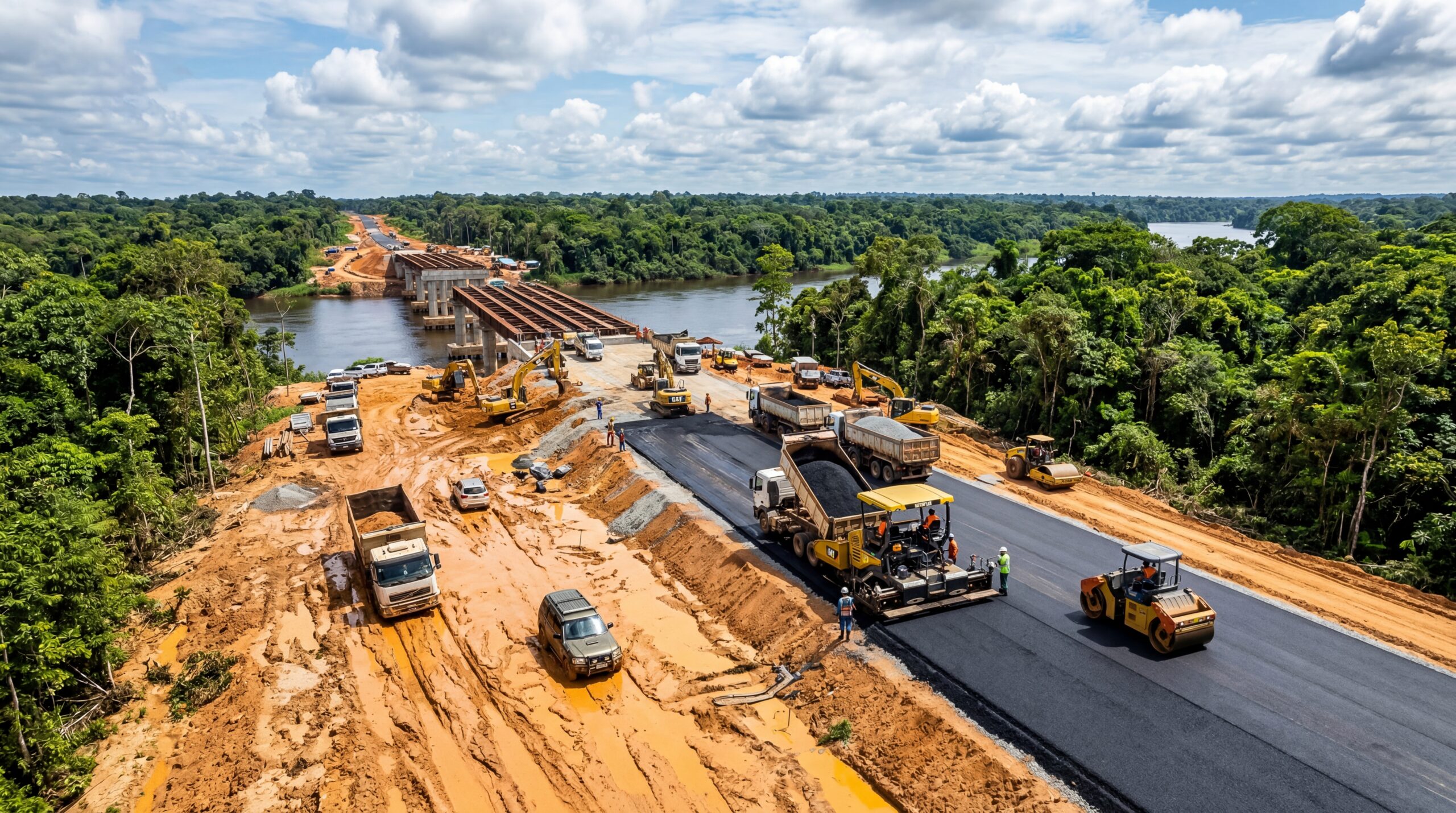
The most visible phase of the project was the entry of large excavators, dump trucks, and earth-moving equipment. Thousands of tons of gold rush waste were removed or redistributed out of the main channel.
Based on hydrological studies and historical maps, engineers and geomorphologists redesigned the course of the river, recreating natural bends (meanders), transition zones, and sediment deposition areas. Nothing was done haphazardly: each curve, slope, and depth was calculated to allow the river to “function” independently again.
The goal was not to create an artificial river, but to restore the conditions for the river to self-regulate once more.
Reconstruction Of The Riverbed: Giving Shape To Give Life
One of the most critical points was the reconstruction of the riverbed. The fine gravel left by mining did not allow for the fixation of salmon eggs or the formation of micro-habitats. Therefore, the project used controlled mixtures of rocks, pebbles, and sediments, strategically positioned.
This new composition allowed:
- bottom stability even during floods,
- adequate oxygenation of the water,
- creation of shelter zones for fish,
- and recovery of flow diversity.
Instead of a shallow and uniform channel, the Fortymile once again displayed natural variations, essential for biodiversity.
The Return Of Salmon After Decades Of Absence
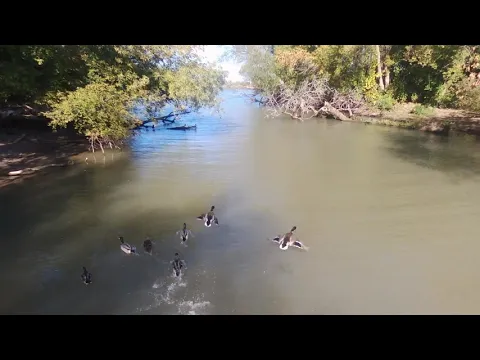
One of the clearest indicators of restoration success was the gradual return of salmon. Species that had practically disappeared began to be recorded again in restored sections of the river.

The most impressive thing is that this return did not depend on artificial repopulation. As soon as the physical conditions were restored, the fish returned on their own, guided by migratory instincts that had survived for generations, even without access to the original habitat.
This confirmed a fundamental hypothesis of river ecology: when the form of the river is restored, life returns naturally.
Benefits That Go Beyond Aquatic Fauna
The restoration of Fortymile brought benefits not only to fish. The improvement of water quality favored aquatic insects, birds, mammals, and riparian vegetation. The banks became more stable, reducing erosion and improving the system’s resilience to extreme events.
Moreover, the project had social and economic impacts. Areas previously considered degraded began to attract sport fishing, ecotourism, and scientific research. The river ceased to be an environmental liability and became a natural asset.
One Of The Largest Projects In The World In Post-Mining Rivers
Although there are similar initiatives in Canada and Australia, the Fortymile project stands out for its scale of historical damage faced and the depth of intervention. Few rivers in the world have been so intensely dismantled by mining and, nonetheless, subjected to such a complete reconstruction.
Therefore, Fortymile has been cited as a global reference in post-mining river restoration, influencing projects in other regions affected by placer mining.
For a long time, engineering was only associated with building dams, channels, and permanent structures. The case of Fortymile shows a new role for engineering in the 21st century: undoing old interventions that have proven unsustainable.
Dredges, which once destroyed the river, have now been used to rebuild it. Trucks that carried waste from gold now remove the same waste. The symbol of degradation has turned into a tool for recovery.
The Fortymile As A Global Lesson
What happened at Fortymile is not an isolated case. Thousands of rivers around the world have been degraded by mining, dams, and forced straightening. The difference now is that there is a proven path to recovery even when the damage seems irreversible.
The project shows that it is not enough to stop degrading. In many cases, it is necessary to actively work to correct. And this requires investment, technical knowledge, and above all, the courage to acknowledge that certain projects of the past need to be undone.
When Rebuilding A River Becomes An Act Of Historical Reparation
The restoration of Fortymile goes beyond ecology. It represents a gesture of historical reparation towards a territory exploited without limits during the gold rush. By reconstructing the riverbed, the project also rebuilds the relationship between society and nature.
More than 100 years later, Fortymile flows again like a real river not because nature “managed on its own,” but because humans decided to take responsibility for what they destroyed.









-

Uma pessoa reagiu a isso.