





 Portuguese
  English
  Spanish
  4 min of reading
  0 comments


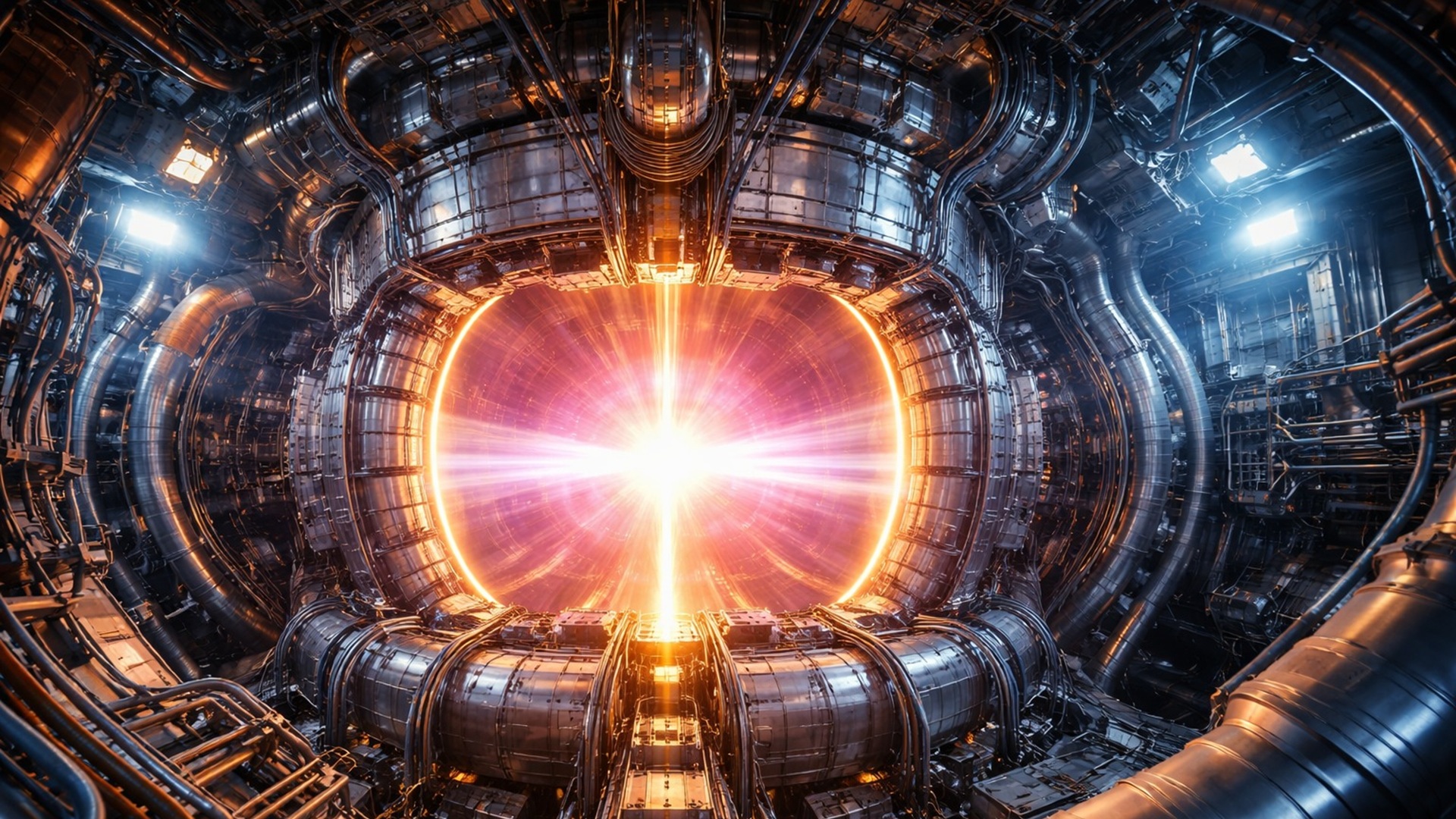
Experimental Campaign at the Wendelstein 7-X Stellarator in Germany Broke Historical Nuclear Fusion Records by Increasing the Triple Product, Keeping Plasma Stable for 43 Seconds, Reaching 30 Million Degrees Celsius, and Surpassing Parameters Recorded by Tokamaks in Japan, the United Kingdom, and China Consolidating Measurable Technical Advancements
An experimental campaign at the Wendelstein 7-X stellarator in Germany broke fusion records by increasing the triple product, maintaining plasma for 43 seconds, and reaching 30 million degrees Celsius, reinforcing the technical advancement towards practically limitless clean energy.
Experimental Advancement and New Performance Standard
The recently completed campaign at Wendelstein 7-X, operated by the Max Planck Institute for Plasma Physics in Greifswald, established a new benchmark for fusion reactor performance. The results surpassed historical parameters and repositioned stellarators among the most promising concepts.
The experiment focused on the stability and confinement time of the plasma, two critical factors for the viability of fusion reactors. By simultaneously increasing these indicators, the team demonstrated measurable gains in operational efficiency without relying on external data obtained outside the campaign itself.
-
With a cost per shot close to zero, the DragonFire laser could change naval warfare in 2027 and provide British ships with nearly unlimited defense against drones.

-
A British startup creates tires that generate electricity in electric vehicles when passing over potholes, speed bumps, and cracks.

-
Scientists have created robots made with living cells that have their own nervous system, swim on their own, explore the environment, and self-organize without any genetic engineering, and now they want to do the same with human cells.

-
Students create a solar-powered ambulance that operates without a plug, without fuel, and still keeps medical equipment running in remote areas.


Nuclear Fusion, Technical Challenges, and the Role of Stellarators
Nuclear fusion is based on the collision of hydrogen isotopes at extremely high temperatures, forming a plasma of electrons and ions that fuse into heavier atoms, releasing large amounts of energy. Reproducing these conditions on Earth remains a central technical challenge.
While reactions are self-sustaining in the interiors of stars, current concepts still consume more energy than they produce. Stellarators stand out for using powerful external magnets to control the plasma in a vacuum chamber shaped like a ring, maintaining high and stable pressure.
Unlike tokamaks, which rely on an electric current in the plasma itself to generate magnetic fields, stellarators exhibit greater stability over long periods. This characteristic is considered fundamental for the future implementation of the technology in commercial power plants.
Comparison with Tokamaks and Previous Records
In recent experiments, the W7-X surpassed references set by the decommissioned JT60U tokamak in Japan and JET in the United Kingdom, especially in plasma maintenance time.
The main highlight was the new triple product record, a metric that combines particle density, fusion temperature, and energy confinement time. A minimum value, known as the Lawson criterion, indicates when the reaction begins to produce more energy than it consumes.
Increasing the triple product brings the system closer to this threshold and signals greater reaction efficiency. During long pulses, the W7-X achieved levels comparable to those of tokamaks, establishing a technical milestone for the stellarator concept.
Innovation in Fuel Injector and Thermal Control
The achievement was made possible by a new fuel pellet injector, which combined continuous refueling with pulsed heating. In 43 seconds, 90 pellets of frozen hydrogen were injected into the plasma at speeds of up to 800 meters per second.
Pre-programmed pulses of high-power microwaves heated the plasma, which reached a maximum temperature of 30 million degrees Celsius. The coordination between microwaves and pellet injection was crucial for prolonging plasma stability.
According to Thomas Klinger, head of operations at Wendelstein 7-X, increasing the triple product to tokamak levels during long pulses represents an important milestone on the path to a stellarator capable of generating energy.
Energy Renewal and International Comparison
The same campaign raised the energy renewal rate to 1.8 gigajoules in six minutes, surpassing the previous record of 1.3 gigajoules set by the reactor itself in February 2023. This indicator combines heating power and plasma duration.
The energy renewal rate reflects the ability to sustain high-energy plasma, being a central parameter for the future operation of fusion power plants. The new value even surpassed the recent record of EAST in China.
For Robert Wolf, head of Heating and Optimization of Stellarators at IPP, the results represent more than just numbers, validating the stellarator concept through consistent international collaboration.
Implications for Reactor Development
By combining prolonged stability, high triple product, and greater energy renewal, the campaign reinforces the ability of stellarators to meet critical technical requirements. The data obtained establish experimental foundations for subsequent advancements in the same concept.
Although commercial fusion still depends on overcoming the overall energy balance, the results from Wendelstein 7-X indicate concrete progress. The combination of external magnetic control, innovation in fuel, and heating has proven effective under laboratory conditions.
With the consolidation of these parameters, the German stellarator now occupies a central position in fusion research, providing relevant experimental evidence for the design of future energy reactors.








-

-

-

-

-

-

29 pessoas reagiram a isso.