Portuguese
  Spanish


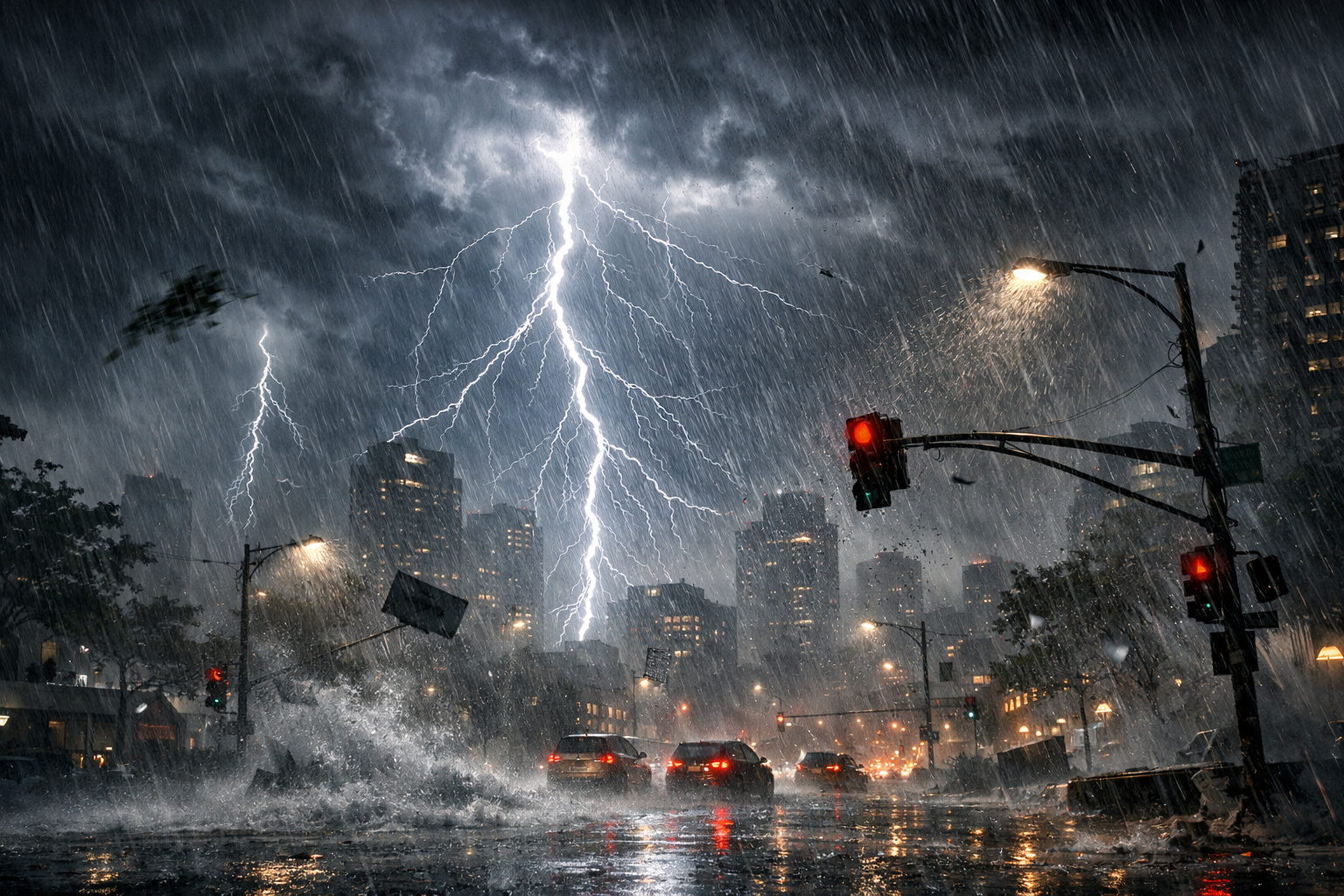

Meteorologists warn of a year without a defined climatic pattern, with alternation of intense heat, sudden temperature drops, and extreme events that can impact energy, agriculture, and supply
The climate in 2026 is expected to bring an even more unpredictable and extreme scenario than what was observed in 2025. According to experts, Brazil may face an unusual combination of out-of-season heat, unexpected cold waves, irregular rains, and intense climatic events over the coming months.
This information was released by Climatempo, which pointed out the absence of a climatic pattern as the main characteristic of the year. In other words, different atmospheric and oceanic phenomena are expected to act alternately. Thus, the country may record periods of intense heat followed by abrupt temperature drops.
Moreover, this dynamic increases the risk of extreme events. At the same time, it reduces the predictability of the seasons, making planning in various sectors more difficult.
-
Mobile Electron Accelerator Units Enable Safe Testing of Water, Materials, and Industrial Waste Treatment in Countries Without Permanent Labs

-
Brazil Invests $12 Million in Biodiversity to Develop Drug Molecules, but When Will It Reduce Dependence on Imported Pharmaceutical Ingredients?
-
3D Printing: From 1945 Sci-Fi Concept to Modern-Day Prosthetics, Homes, and Industrial Parts
-
SpaceX’s Billion-Dollar Decision Could Propel Company to Historic $800 Billion Valuation


Alternation between extreme heat and unexpected cold should mark the year
According to meteorologist Vinicius Lucyrio from Climatempo, the behavior of the climate in 2026 will be marked by contrasts. He states that very hot periods will alternate with episodes of heavy rains and temperature drops.
Additionally, dry spells are expected to occur frequently. However, these dry periods should not last long. Soon after, intense rain showers may arise quickly.
Temperatures, in general, are expected to remain above historical averages. This is not expected to happen only in the summer. On the contrary, traditionally milder periods may also record higher-than-expected heat.
On the other hand, between May and July, the situation may change. Areas in the Central-South are expected to face more significant temperature drops. This occurs due to the arrival of more intense cold air masses.
Still, the cold is not expected to persist for long periods. Shortly after, the heat may return strongly, bringing typical spring characteristics even during winter.
Phenomena like La Niña and El Niño will have a central role
Global climatic phenomena will have a direct influence on the behavior of the climate in 2026. Initially, the presence of La Niña is expected to favor greater thermal contrast and instability.
This happens because the cooling of the equatorial Pacific waters alters atmospheric circulation. As a result, Brazil may experience greater variation between dry and rainy periods.
Subsequently, the scenario may change. The trend is a transition to climatic neutrality and, later, the possible formation of El Niño.
In this case, the warming of the Pacific waters may significantly alter rainfall and temperature patterns in the country. Thus, the succession of these phenomena directly contributes to a more unstable year.
Additionally, other systems also influence this scenario. The Madden-Julian Oscillation, for example, may interfere with the distribution of rains. Meanwhile, the Antarctic Oscillation may facilitate or block the arrival of cold fronts.
Irregular rains may impact energy and supply
Another point of concern involves the rainfall regime. Instead of constant precipitation, the predicted scenario indicates irregularity.
In other words, dry periods are expected to alternate with intense and concentrated rains. As a consequence, the recovery of reservoirs may be hindered.
This directly affects the hydropower system. Additionally, it impacts water supply and energy planning.
Despite this, there is a more favorable window. Between the end of summer and the beginning of autumn, the scenario of climatic neutrality may favor larger volumes of rain.
Still, irregularity remains a challenge. This is because the distribution of rains tends to be uneven.
The second semester may intensify climatic extremes

In the second semester, the scenario may become even more critical. If El Niño consolidates, heat waves may intensify starting in August.
Temperatures may be significantly above average. At the same time, the return of rains is expected to occur gradually.
However, this recovery will not be uniform. Agricultural regions, such as Matopiba, may face early rains, but without sufficient regularity to ensure planting security.
Meanwhile, in the North region, the trend is for elevated levels of the Negro River in the first semester. After that, the level is expected to drop more sharply throughout the year.
In the South of Brazil, especially in Rio Grande do Sul and in Santa Catarina, the risk increases in spring. This happens because atmospheric blockages may favor above-average rains.
As a consequence, the risk of flooding, storms, gusts of wind, and hail is expected to increase between September and November.
Positive and negative impacts in different sectors
Despite the risks, some sectors may benefit from this scenario. For example, out-of-season heat may increase the demand for ventilation and cooling equipment.
On the other hand, sectors such as agriculture and energy face greater challenges. This is due to the lack of predictability and climatic irregularity.
Therefore, Brazil is expected to face a year marked by extremes and rapid changes in weather. This scenario requires constant adaptation and planning.
Have you noticed changes in the climate of your city in recent years?