





 Portuguese
  English
  Spanish
  6 min of reading
  5 comments


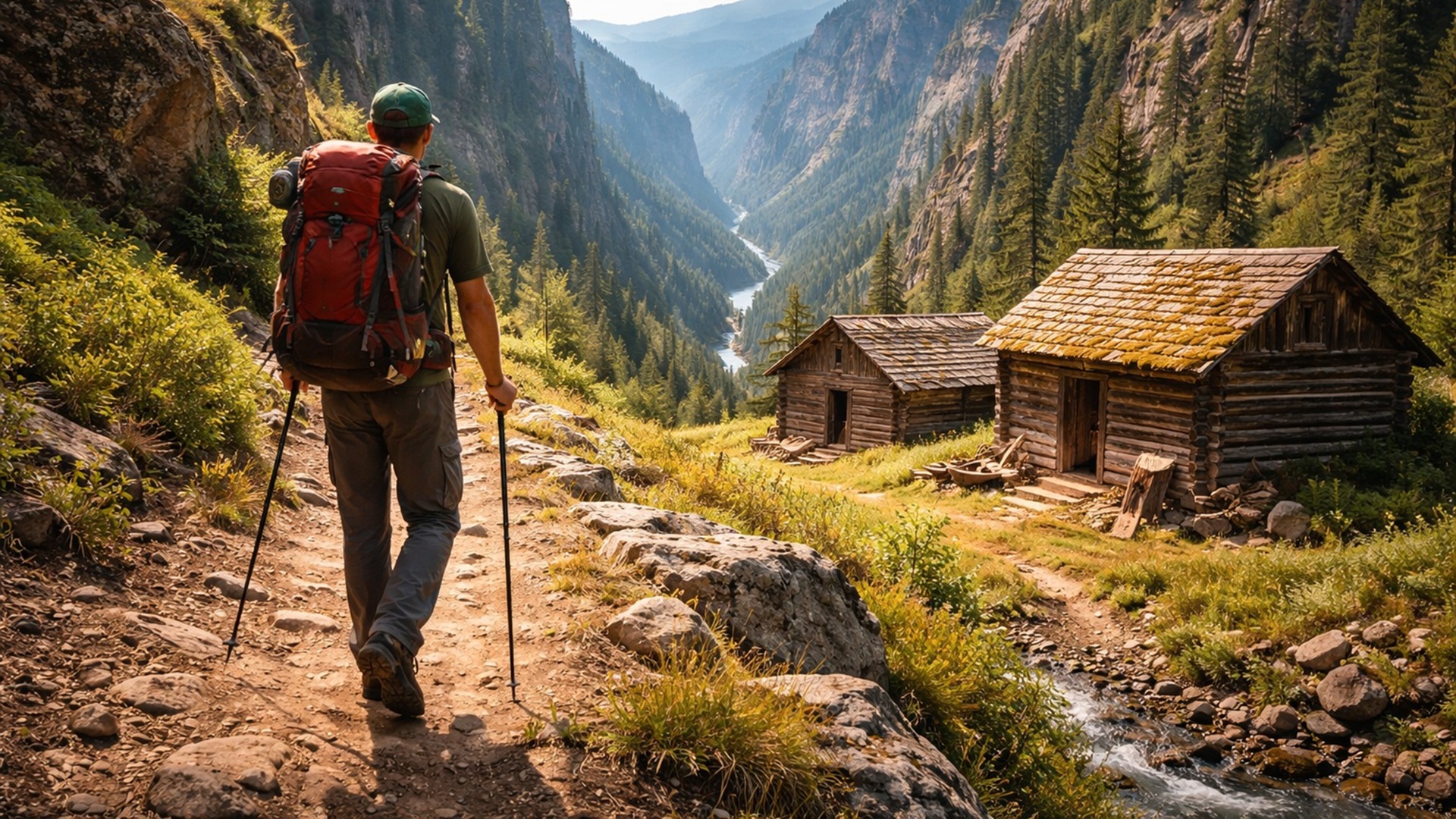

Over Four Days, An Extreme Crossing On Almost Vanished Trails Revealed 19th Century Cabins, Gold Mills, Abandoned Equipment, And Forgotten Human Stories In The Inyo Mountains, On A Route With Great Altitude Variations, Water Scarcity, And Access Considered One Of The Most Difficult In California
An expedition of the Ghost Town Living channel through forgotten trails, abandoned mines, and human stories buried by time marked an extreme journey through the Inyo Mountains in California, in search of remnants of a gold rush that shaped the region in the 19th century and now survives only in ruins scattered across remote canyons.
The journey began with a clear goal: to traverse the so-called Lonesome Miners Trail, a historic route of approximately 80 kilometers that connected ancient gold mines in the Inyo Mountains, east of the Sierra Nevada, and which is now considered one of the most isolated and demanding trails in California.
The route crosses five deep canyons, sums up to about 25,000 feet of elevation gain and loss, and passes through old mining camps practically untouched since the end of the 19th century. Few records indicate recent visits, and in some sections, there are no clear trail signs, only traces of the path opened by miners over 130 years ago.
-
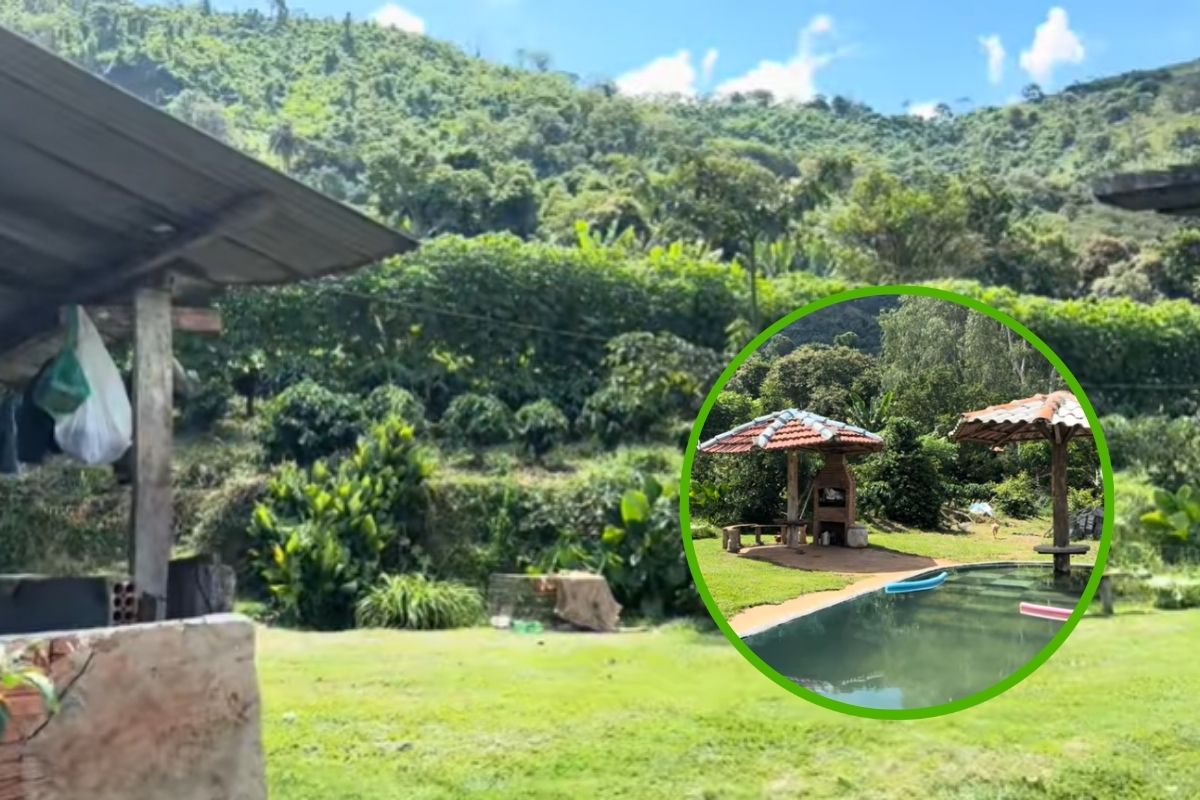
House without a door and without a window: a resident lives high in the mountains, says he enjoys the “free life,” mentions that the cat comes and goes hunting bats and rats, and that when it rains he wakes up with wet feet.
-
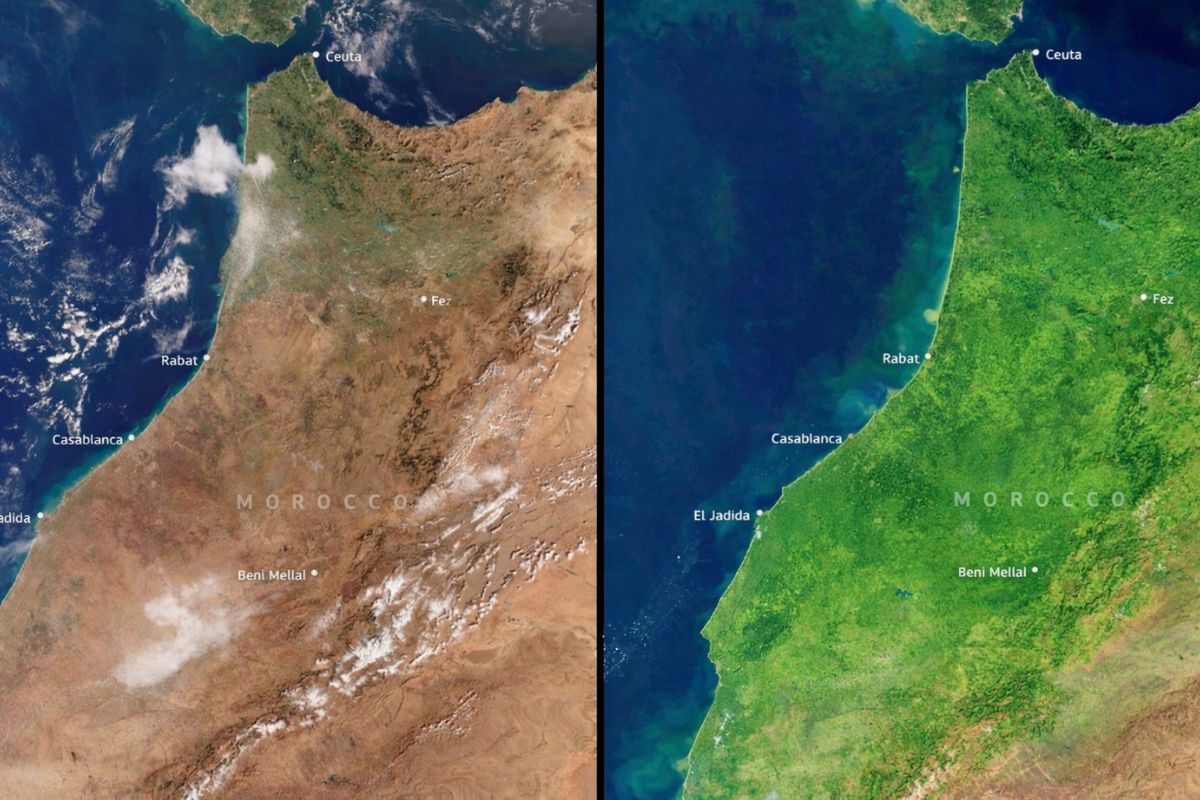
Satellite images show that Morocco became so green in 2026 that the country looks different from space: two months of heavy rains transformed arid land into dense vegetation for the first time in a decade.
-
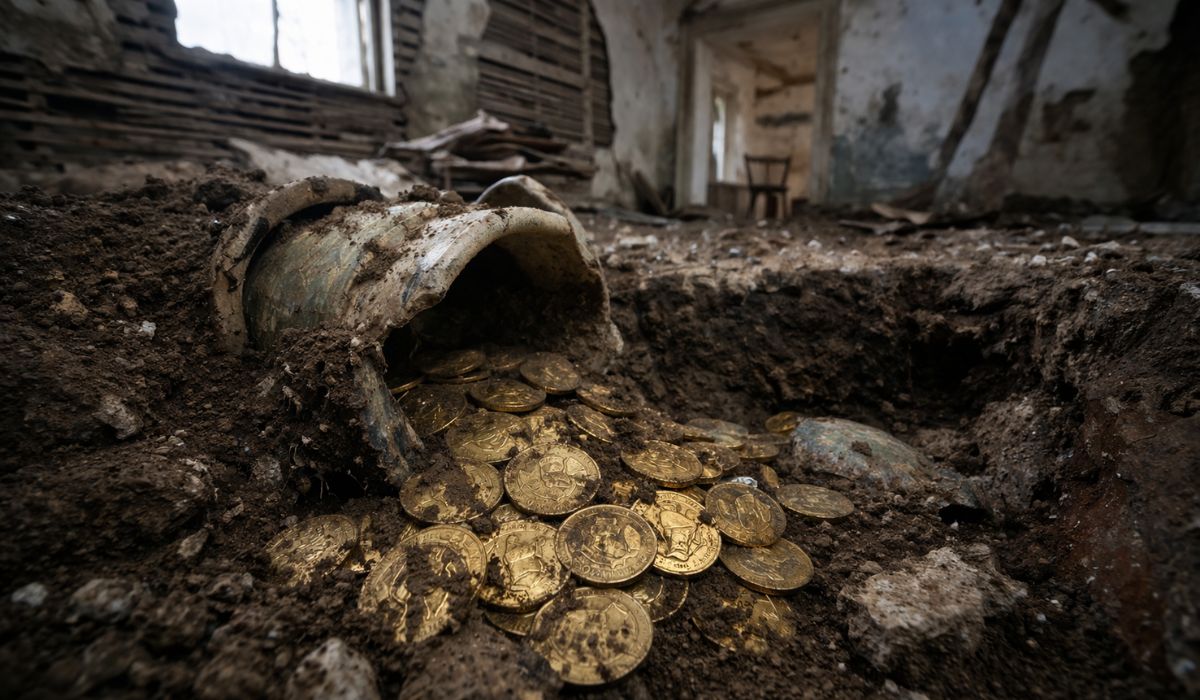
Archaeologists were excavating the foundation of a historic house in Russia when they discovered a buried treasure with gold coins, left behind in the final days of the Russian Empire and now valued at over R$ 2.8 million.
-
The Mediterranean has become the target of the largest underwater archaeological mission ever coordinated by UNESCO: eight countries have joined forces to map shipwrecks and protect a historic corridor.


An Almost Vertical Route In The Heart Of The Desert
Described by researchers in the 1960s as a “wild, arid region accessible only on foot,” the trail was already considered extreme at the height of mining. A 19th-century newspaper reported that, in many places, the path was “so close to vertical that nothing could cross it without wings.”
Even so, thousands of men insisted. It is estimated that nearly 38,000 ounces of gold were extracted from these mountains – equivalent to about US$ 100 million in current values. The reason was simple: the ore found there was among the richest in the American West.
Today, only ruins, stone cabins, rusty rails, and abandoned equipment remain. It is in this setting that the expedition unfolds, aiming to understand how these settlements functioned and who the people were that lived and worked there.
The Initial Challenge: Altitude, Isolation, And Water
The hike began at around 1,100 meters in altitude, with the goal of reaching nearly 3,000 meters still on the first day. The initial stretch already imposed severe difficulties: heat, excessive backpack weight, and a critical issue — the uncertainty about the existence of water along the way.
It is not possible to carry enough water for several days of crossing. The success of the journey depended on locating historic springs used by miners, but whose current flow is unknown. Reports are scarce, and many of these points do not appear on modern maps.
The risk was real. Without water or proper equipment, the only alternative would be to abandon the trail.
A Mistake From The Past That Almost Ended The Expedition
Five months earlier, a previous attempt to complete the route ended abruptly when the main backpack broke. With no options, part of the equipment — including a sleeping bag and water filter — was hidden at a high point on the trail.
The hope was to find this material intact. After more than five thousand feet of ascent on the first day, the search ended in relief: the equipment was exactly where it had been left. This moment redefined the expedition and made it possible to move forward.
Pat Keyes And The Origin Of A Forgotten Gold Rush
The first major historical stop was the complex of Pat Keyes, a miner who, in 1887, established one of the most productive gold mines in the region. Records indicate that, in 1895, Keyes managed to extract 113 ounces of gold in a single week.
The remnants of his operation are still scattered throughout the canyon: stone cabins, cans, tools, remnants of rails, and an arrastra — a primitive circular mill used to grind ore, a technique of Spanish origin introduced to the Americas in the 16th century.
The location of the mill was not random. It was near a spring, essential for both processing the ore and for the survival of the workers. Finding this water was one of the most decisive moments of the crossing.
The Encounter With Water In The Desert
After hours of steep descent, the landscape changed abruptly. Green trees, sounds of flowing water, and an unexpected microclimate appeared at the bottom of the canyon. The spring was still running.
In addition to water, clear signs of human occupation emerged: remnants of campfires, household utensils, parts of mills, and wooden structures. The feeling was that of having crossed an invisible border between the desert and a hidden oasis.
The Mystery Of The Lonely Beekeeper
Further along, the expedition revealed one of the most improbable human stories of the region. Amid the ruins, beekeeping helmets, smokers, hives, and an improvised cabin made of straw and tarpaulin appeared.
The site belonged to Marian Howard, a former automotive industry worker who, in the 1960s, abandoned urban life and lived in isolation in the canyon, raising bees in complete solitude. He reached the site after long walks crossing passes over 3,300 meters in altitude, carrying only a canvas bag.
For decades, his presence was a mystery to researchers and hikers. Finding his preserved belongings was one of the most striking moments of the journey, humanizing a territory often remembered only for mining.
The Keynot District And Frustrated Modern Mining
The trail continued to the Keynot district, one of the largest in the region. Discovered in 1878, the complex once gathered about 50 people and extracted approximately 30,000 ounces of gold.
Decades later, in the 1980s, a company attempted to resume mining. Heavy equipment, conveyor belts, Caterpillar generators, and even a tractor were transported by helicopter to 2,400 meters in altitude.
The attempt failed in less than a year. The problem, again, was water. The logistics of transporting essential resources to such a remote location made the project unviable. The equipment remains abandoned to this day, frozen in time.
Beverage Canyon, The Peak And The Decline
The highlight of the expedition was Beverage Canyon, considered the most structured settlement on the trail. There operated a five-stamp mill, powered by steam, which ran up to 12 hours a day at the height of production.
Remnants of an aerial tramway can still be seen, used to transport ore from the slopes to the bottom of the canyon. In some historical accounts, miners even traveled suspended in baskets, decades before commercial aviation.
Today, the site is silent. The wooden structures are deteriorating, while stone walls resist the passage of time. Vegetation slowly advances, reclaiming the space.
The Final Reflection Of An Extreme Crossing
After four days of walking, exhausting ascents, and technical descents, the expedition concluded with a central reflection: those miners were not there for leisure but for necessity, hope, and ambition.
Traversing the same paths, sleeping in the same valleys, and depending on the same springs revealed a rare human continuity. The rusty names on machines, forgotten records, and abandoned cabins tell stories that nearly disappeared.
Recovering these memories, even if for a few days, transforms the past into something alive again. This article was based on the audiovisual and narrative report published on the Ghost Town Living channel,








I love going to those remote places! Although the article was out of spec with respect to actual numbers of ounces extracted etc, it still brings back that awesome feeling I got from finally arriving at those locations after a bunch of hours of grueling hard work to get there. Go check out Panamint City if you dare! Finding old cabins and getting to experience the scenery and feeling of remoteness these hardened people saw back more than a hundred years ago– tools that look as though they were just set down one day and never picked up again; the inky black night sky with so many stars that is hard to pick out constellations. It all brings back a sense of nostalgia for how it felt to live during those times– somebody went to the trouble of even building a rickety little picket fence partially surrounding the ‘front yard’ of their cabin; obviously not to keep out animals, but to presumably make it feel more like home. A shadow box built into the outside wall of their cabin that still had bolts classified in each section, but the dividers were so weathered and dry that the breeze made them tinkle back and forth in their slots with a soft melody that i could hear the whole time I was there. A stark contrast to the sound of city life I had temporarily left behind, or the hustle and bustle of the place when it was still operational. There’s so much life in those places, but now the are almost silent. It’s worth every moment to experience this.
Numbers are all screwed up. Elevation, oz of gold etc. off by orders of magnatude.
A.I. issues
38 ounces is worth less than $200,000 at today’s prices. AI screws up again.
If you noticed one of the miners pulled out 110 oz in a week.