





 Portuguese
  English
  Spanish
  4 min of reading
  1 comment


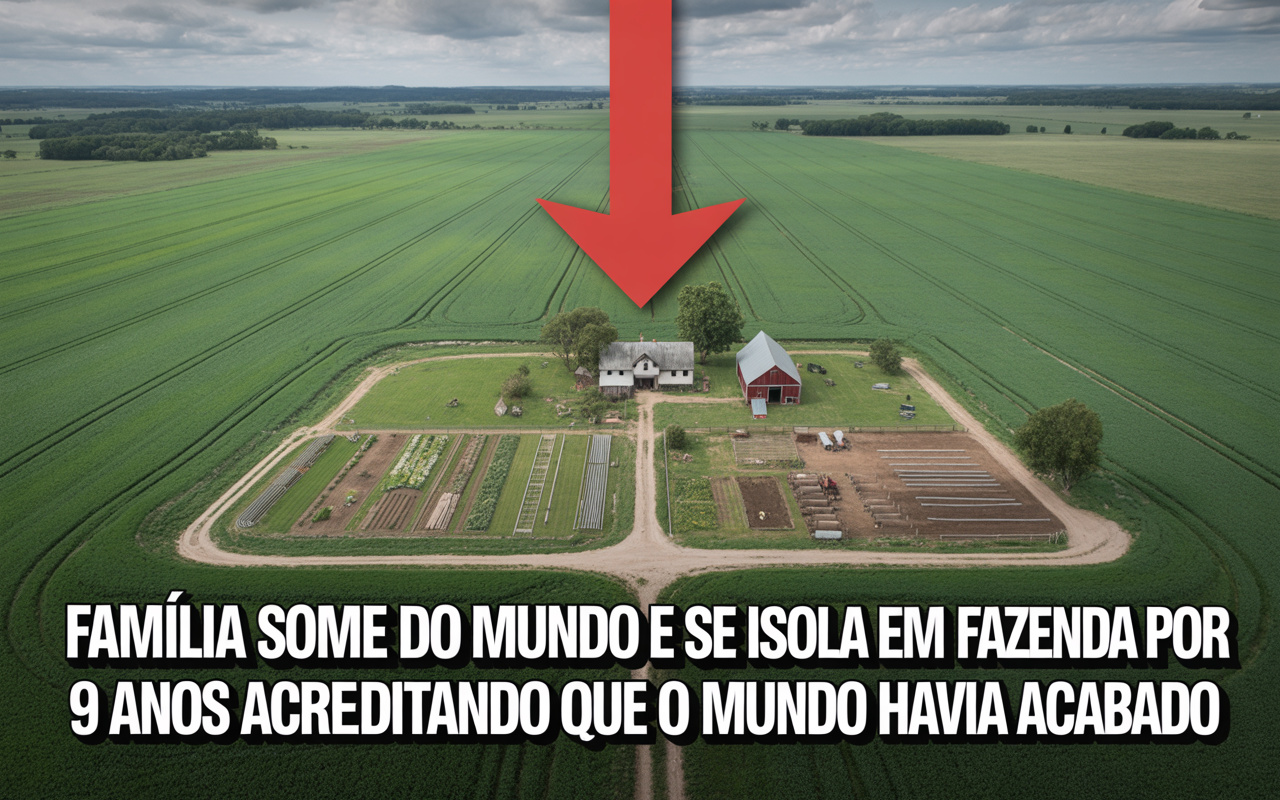


Dutch Family Lived 9 Years Isolated on Farm Believing the World Had Ended. The True Case Surprised Authorities and Revealed the Limits of Human Isolation.
For almost a decade, a family lived completely isolated on a remote farm in northern Netherlands, convinced that the world had come to an end. The case came to light in 2019, when one of the children, now an adult, managed to escape and seek help at a nearby bar, revealing a story of confinement, apocalyptic belief, and mystery that astonished both authorities and psychologists. The family, consisting of a father and six children, lived hidden in the basement of a rural property in the small village of Ruinerwold, in the province of Drenthe.
They believed that the planet had been destroyed and that only they had survived, awaiting the “new time,” as they called the beginning of a new spiritual era. For almost 9 years, no one in the community knew of their existence, and the group survived by growing vegetables, raising animals, and storing food.
The Accidental Discovery That Revealed the Isolation
The case only came to light when the eldest son, 25 years old, managed to escape and walked to a local bar. Disoriented, he told the owner of the establishment that he had spent the last nine years locked up on an isolated farm with his family. The report shocked the merchant, who immediately called the police.
-
These living root bridges and ladders are over 700 years old and help indigenous people survive in one of the rainiest regions in the world.

-
From sertanejo star to international investor: Ana Castela invests millions in a mansion in the USA, creates a themed accommodation in Orlando, and shows that the “boiadeira” also wants to grow away from the stage.

-
The 10 most stunning motorhomes in the world: a $3 million trailer with a rooftop nightclub and garage for a Ferrari, “palaces on wheels” with Italian marble, private cinema, and five-star hotel luxury for billionaires.

-
Trump wanted to spend $400 million on the White House, but the courts prohibited the million-dollar construction.


Upon arriving at the site, investigators found a hidden staircase behind a wardrobe that led to an improvised basement. There were the father and the other five children, visibly malnourished and disoriented.

The rooms were dark, with no access to natural light, containing makeshift mattresses, cans of food, and basic utensils. The children, aged between 18 and 25, believed that the world outside no longer existed.
The Leader and the Apocalyptic Beliefs
The man identified as the patriarch of the family, Josef Brunner, 58, was Austrian and had moved to the Netherlands decades earlier. He worked as a carpenter and rented the isolated farm from an elderly man who was later also investigated for involvement in the case.
According to the police, Brunner strictly controlled his children’s routine and preached that the end of the world occurred in 2010, after a “great spiritual purification.”
Reports indicate that the children were born or grew up in isolation and were educated based on religious texts and predictions of global catastrophes. They believed that confinement was a form of divine protection. The family had a garden, animals, and a rudimentary water filtration system. They had no electricity or internet.
The Psychological Consequences of Prolonged Isolation
The case caused perplexity among psychologists and sociologists. Living in isolation for almost a decade, without external human contact, especially during childhood and adolescence, tends to have profound impacts.
The children showed speech difficulties, fear of strangers, and mental confusion when exposed to life outside the farm. For experts, the case illustrates the power of psychological manipulation and the vulnerability of closed groups that adopt extreme ideologies.
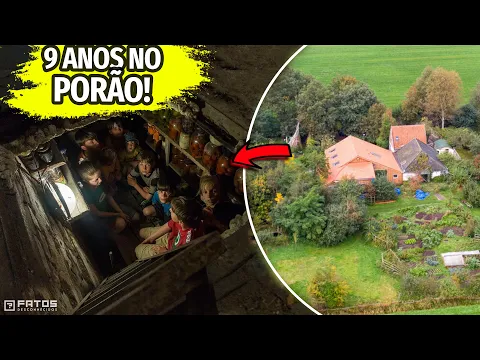

Dutch authorities stated that, for years, the isolation was possible because the farm was located in a dense forest area, with a discreet entrance and little movement from neighbors. The rent for the location was paid regularly, which avoided suspicion.
The Return to Life and the Quest for Normalcy
After the discovery, the children were taken in by social services and received psychological and medical treatment. Some quickly adapted to modern life, while others had difficulties understanding the contemporary world, especially the use of technology and socializing with others.
Josef Brunner was arrested and charged with kidnapping and abuse, but died months later due to health problems before the trial. Investigations showed that he sincerely believed in his apocalyptic visions, which made the case even more complex.
Reflections on Isolation and Belief
The story of the Ruinerwold family raises deep questions about faith, control, and isolation. To what extent can the fear of the end turn into psychological imprisonment?
How can belief in extreme narratives lead entire families to distance themselves from reality? For investigators, the case serves as a warning about how unchecked ideologies and beliefs can create microcosms of alienation within modern and connected societies.

Today, part of the family lives discreetly under a new identity, trying to rebuild their lives. For many residents of the region, the memory of that dark basement remains a symbol of how far humanity can go when it decides to completely disconnect from the world.









Não acredito nisso não dá para plantar ou criar animais em um porão