





 Portuguese
  English
  Spanish
  6 min of reading
  0 comments


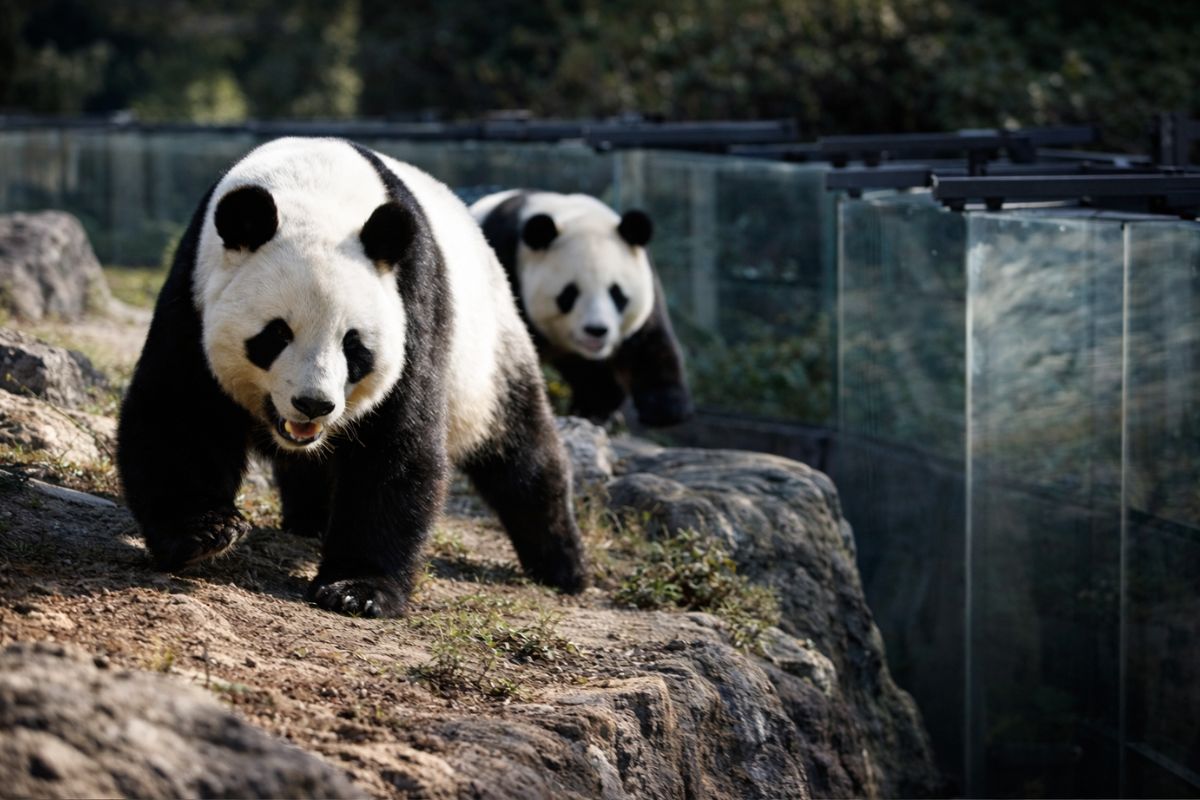
Lei Lei and Xiao Xiao, the Last Pandas in Japan, Leave Ueno Zoo and Close a 50-Year Chapter of “Panda Diplomacy,” Just as Distrust Between Beijing and Tokyo Grows.
At the gates of the Tokyo zoo, emotional fans, strained bilateral relations, and a windowless truck encapsulate the moment when Japan finds itself, for the first time in half a century, without any giant pandas on its territory. The animals’ departure is both a routine act of the Chinese program and a powerful symbol of the changes in the relationship between the two Asian neighbors.
A Farewell That Feels Like a Family Loss
On the morning of the departure, hundreds of people gathered at Ueno Zoo to see the last pandas in Japan one last time.
Many wore patterned jackets, hats, pins, and carried stuffed animals, turning the sidewalk into a kind of silent and affectionate vigil.
-
He started running at 66 years old, broke records at 82, and is now a subject of study for having a metabolic age comparable to that of a 20-year-old, in a case that is intriguing scientists and inspiring the world.

-
Oldest tree on the planet reappears after 130 years of searches: Wattieza, 385 million years old, was 10 meters tall and had no leaves or seeds; Gilboa fossils in New York solved the mystery in 2007.

-
A 48-square-meter house assembled in hours with 4,000 bricks made of recycled plastic that does not absorb moisture, has natural thermal insulation, and costs less than 90,000 reais in a complete kit.

-
Luciano Hang revealed that Havan’s air fleet has already accumulated more than 20,000 landings, 10,000 flight hours, and 6 million kilometers traveled, and he says that without the planes, the company would never have grown so quickly.


Lei Lei and Xiao Xiao, four-year-old twins, were born at Ueno Zoo in Tokyo and quickly won over the Japanese public. For many visitors, they stopped being just animals and became almost family members.
“I’ve been coming to see them since they were born,” said Nene Hashino, in her 40s, holding a teddy bear. “It feels like my own children are going to a very distant place. It’s sad.”
The zoo organized a special farewell scheme. On the Sunday before the trip, 4,400 people, selected through an online lottery, were able to see the pandas for the last time.
Two days later, on the day of departure, admirers spread out on the streets nearby, waiting for hours just to wave, shout their names, and capture the moment when the truck took the last pandas in Japan to the airport.
“It’s so sad,” lamented 37-year-old merchant Daisaku Hirota, who said he visited the animals whenever he could on his days off. “I’ve lost a part of my heart.”
Half a Century of Pandas and Diplomacy Between China and Japan


The giant pandas from Beijing are not just charismatic animals. Since 1972, when China and Japan normalized their diplomatic relations, they have become a visible symbol of rapprochement between the two countries. It was then that what became known as “panda diplomacy” was born.
Within this program, China loans pandas to zoos in countries with which it wishes to strengthen ties. In return, it receives payment, scientific cooperation, and, above all, reinforces its image abroad.
In the case of Japan, the presence of the pandas has always served as a concrete reminder of a time of greater dialogue and trust between Beijing and Tokyo.
Lei Lei and Xiao Xiao are the offspring of Shin Shin, a female who arrived in Japan in 2011. She had already become a local icon before returning to China in 2024 due to health issues. From then on, the clock also began to tick for the twins.
Although the program is formally technical and scientific, the emotional impact is huge. As the last pandas in Japan return home, many Japanese feel that it is not just the end of a loan, but the closure of a 50-year cycle of symbolic closeness with China.
Political Tension, Taiwan, and the End of “Panda Diplomacy”
The announcement of the return of Lei Lei and Xiao Xiao was made amid a more tense diplomatic climate. The decision came shortly after a controversy involving Japanese Prime Minister Sanae Takaichi, who suggested the possibility of Tokyo intervening militarily in the event of an attack on Taiwan.
Taiwan is viewed by Beijing as part of its territory, and any comment about foreign intervention on the island tends to provoke a strong Chinese reaction. Takaichi’s remarks irritated the Chinese government and reignited suspicions in bilateral relations.
In this context, the end of the presence of the last pandas in Japan sounded to some in public opinion like a political gesture, albeit indirect.
Under the agreement, the loan of the animals would end in February, and the Tokyo metropolitan government, responsible for Ueno Zoo, confirms that the return follows the planned timeline.
Guo Jiakun, spokesperson for the Chinese Ministry of Foreign Affairs, stated that the pandas “began their journey home today” in accordance with the treaty between the two countries and emphasized that Japanese visitors are welcome to see the pandas in China.
Nonetheless, the timing of the departure fuels political interpretations. Since late last year, Beijing has been discouraging Chinese tourists from traveling to Japan, citing worsening public safety and incidents against Chinese citizens.
At the same time, there are reports of Chinese restrictions on the export of rare earths to the Japanese market, strategic inputs for sectors ranging from electric cars to missiles.
Does Japanese Society Still Want Pandas?
As the truck took the last pandas in Japan, a parallel discussion gained traction: should the country negotiate for the loan of new animals?
According to a poll by the Asahi Shimbun, about 70% of respondents do not think the Japanese government should negotiate with China for the sending of new pandas, while 26% would like that to happen.
The data reveals a divided scenario, where popular affection for the animals coexists with distrust towards China.
There are reports that Japanese authorities are considering requesting a new pair in the future, but this will depend directly on the political climate between the two countries.
For many analysts, the absence of the last pandas in Japan will serve as a thermometer for bilateral relations in the coming years. If trust begins to grow again, the pandas may also return.
Pandas, Soft Power, and Money at Stake

Although other countries also use animals as diplomatic tools, Chinese pandas occupy a unique place.
Thailand has already sent elephants, Australia lends koalas, but none of these symbols have the same global appeal as giant pandas.
According to Professor Masaki Ienaga from the Women’s Christian University of Tokyo, an expert in East Asian international relations, “pandas are special.”
They attract crowds to zoos, drive tourism, product licensing, and even marketing campaigns. In other words, they are also a powerful revenue-generating and image projection machine for China.
This helps explain why the departure of the last pandas in Japan made headlines and moved so many people.
Their absence is not only a void in the zoo enclosures but also a symbolic blank space left in the relations between Tokyo and Beijing.
For Japan, which today coexists with a more assertive China and disputes on sensitive issues such as Taiwan and trade, the return of the pandas is a reminder that even the cutest gestures of diplomacy carry geopolitical implications.
When a country loses its last pandas, it does not just lose a charismatic animal; it also loses an emotional channel for dialogue with the lender.
In the end, as Lei Lei and Xiao Xiao adapt to their new life in China, Japan adapts to the idea of no longer having pandas at home for the first time in 50 years.
And the world watches how this absence will reflect in the next phase of the relationship between the two countries.
What do you think? Should Japan negotiate the return of new pandas or is it time to view the departure of the last pandas in Japan as definitive?








-

-

-

5 pessoas reagiram a isso.