





 Portuguese
  English
  Spanish
  7 min of reading
  15 comments


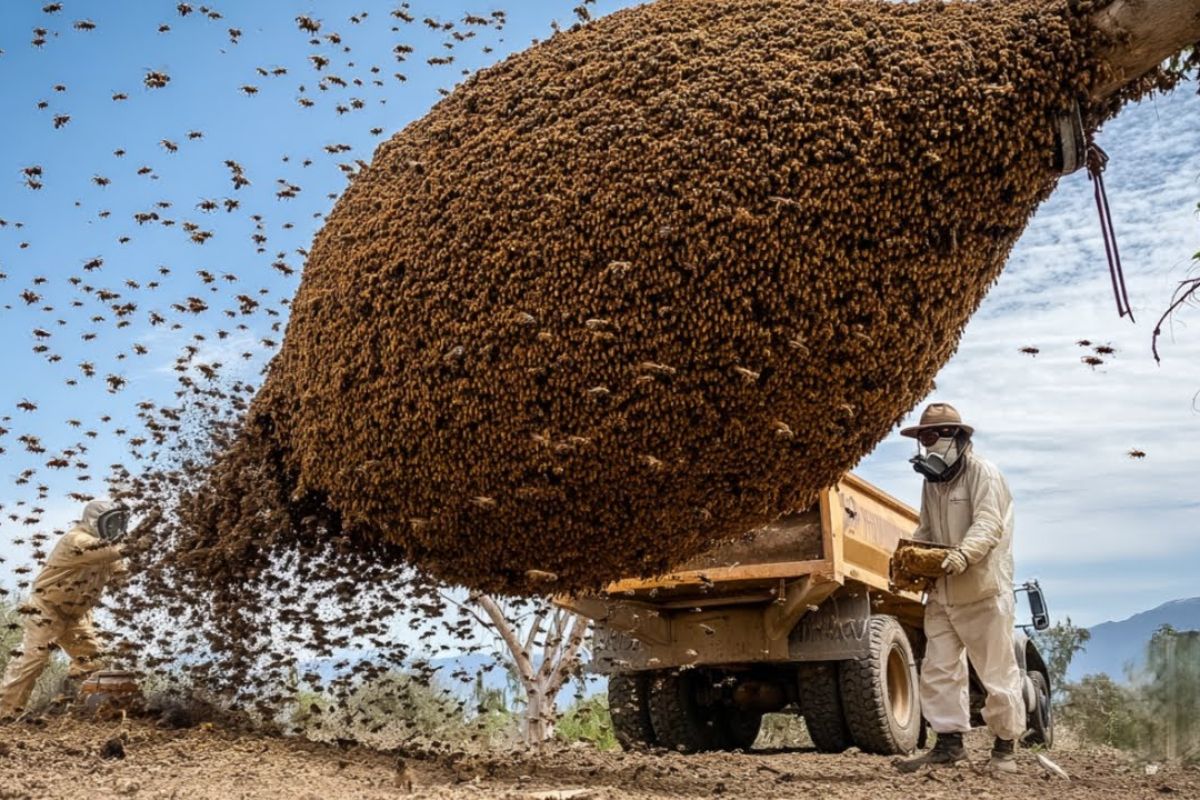


In The Salty Desert Of Nevada, Farmers Bet On Native Bees And Alkaline Bees To Transform Alfalfa Seed Production Into An Agricultural Pollination Engine And Income.
The salty desert of Nevada seemed doomed to agricultural failure, with white, cracked salt soil considered sterile even by experts, but a group of farmers decided to risk it all and fill the region with millions of native bees to save alfalfa seed production. What began as an experiment seen as insane turned into an extremely efficient pollination system, capable of multiplying yields and transforming the salty desert of Nevada into a global reference in agricultural innovation.
While neighbors called these producers irresponsible and researchers doubted that the plan could work on a large scale, the alkaline bees were digging invisible tunnels beneath the saline soil. In just a few weeks, what seemed to be a doomed experiment began to become the salvation of alfalfa crops, paving the way for the salty desert of Nevada to cease being synonymous with failure and become seen as a strategic hub for agricultural pollination.
The Agricultural Collapse In The Salty Desert Of Nevada
Agriculture in the salty desert of Nevada has always been a high-risk game. The arid climate, intense heat, and scarce water made everything difficult, but the bigger problem lay in the soil. Ancient lakes left behind mineral deposits that, year after year, made the land increasingly alkaline.
-
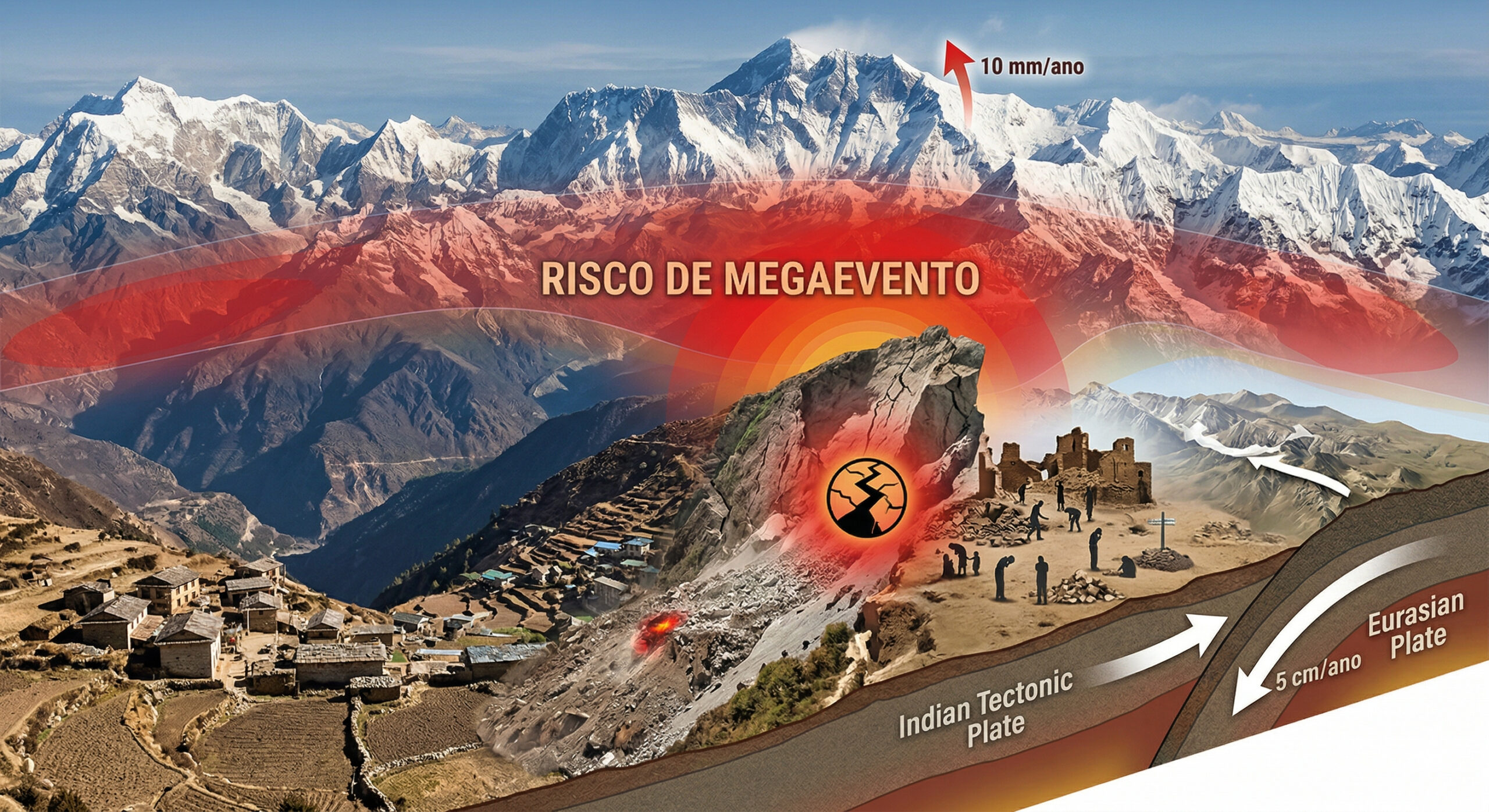
The Himalayas continue to grow to this day, with tectonic plates advancing 5 cm per year, mountains rising up to 10 mm annually, and the 2015 earthquake that killed 9,000 people may have increased the risk of an even larger seismic mega-event.
-
At an altitude of 400 km by astronauts from the International Space Station, Paris transforms at night into a golden mesh so precise that it reveals the outline of the Seine River, avenues, and entire neighborhoods like a luminous map drawn over the Earth.

-
iPhone 17 reaches historic low price with 256 GB, 120 Hz display, and drops to R$ 5,703 on Shopee, featuring A19 chip, dual 48 MP cameras, battery life of up to 30 hours, and advanced AI features.

-
Trip to Mars getting closer: Pulsar Fusion, from the UK, advances with plasma ignition in fusion engine and could drastically reduce space travel time, making crewed missions faster, safer, and economically viable.


Crops after crops failed. Farmers invested in irrigation, soil correction, and expensive technologies, but the salty desert of Nevada seemed to reject any attempt at “normal agriculture”, driving many producers to losses and giving up.
One exception stood out in this scenario. Alfalfa thrived where other plants succumbed. Its deep roots sought water in deeper layers and helped retain a bit of moisture in the soil.
The farmers earned from selling hay, but the real gold was in the alfalfa seeds, much more valued. There was just one problem: without efficient pollination, the crops bloomed purple and beautiful but yielded almost no seeds.
Why Common Bees Failed
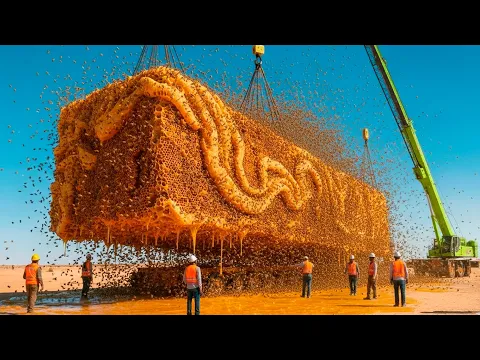

The alfalfa flower has a peculiar pollination mechanism. The petals act almost like a mechanical trap that requires the right pressure to release the pollen and ensure seed formation. European honeybees, used worldwide, did not adapt well to this.
Some bees could not trigger the flower’s mechanism. Others simply learned to avoid the “jolt” of the alfalfa, preferring easier flowers. The result was brutal.
Entire fields of alfalfa in the salty desert of Nevada were covered in flowers but produced very few seeds, wasting the economic potential of the crop.
It was at this moment of crisis that old scientific studies from the 1970s came back to the fore, bringing back a forgotten protagonist: the alkaline bee, native to the region and adapted precisely to the type of soil that everyone considered an enemy of agriculture.
The Rediscovery Of Alkaline Bees
Researchers remembered that the alkaline bee does not live like the honeybee. It does not produce honey, does not build hives, and does not respond to a queen. Each female digs her tunnel in the salty soil, forms underground chambers, and raises the larvae there, alone.
The old studies showed that these bees thrived in lands with three main characteristics: high salinity, controlled moisture, and sufficient stability to maintain intact tunnels. In other words, precisely the typical conditions of the salty desert of Nevada.
When scientists revisited this data, they realized something obvious that no one had seen due to fear of taking risks.
Perhaps what hindered traditional crops was exactly what made the salty desert of Nevada perfect for a massive population of alkaline bees, capable of pollinating alfalfa far more efficiently than honeybees.
Bee Beds: How To Build A “Bee City” In The Desert

Some farmers, already on the brink of bankruptcy, decided to bet everything on this idea. They prepared specific areas of their properties, called bee beds. They loosened the soil, adjusted the salinity, and installed pipes and sensors to maintain the exact level of moisture.
Neighbors took pictures, posted on social media, and called the producers crazy. To many, transforming the salty desert of Nevada into a laboratory for native bees seemed like the last step before definitive bankruptcy. But the farmers pressed on, trusting in science and their own intuition.
When trucks arrived bringing millions of alkaline bees, the reaction was one of shock. From afar, everything seemed like a strange spectacle in white salt soil, devoid of flowers, green, or a drop of visible water. But beneath the surface, another story began.
The bees landed, sensed the salt, dug below the crust, and found the moist soil prepared by the farmers. Before long, perfect tunnels and chambers spread like a living underground city.
The Turnaround In Alfalfa Crops
Three weeks later, the first visible signs appeared. The alfalfa fields were more vibrant, with flowers filled with alkaline bees landing, triggering the flower’s mechanism, and leaving covered in pollen. The difference compared to honeybees was striking.
Each alkaline bee managed to pollinate 200 to 300 alfalfa flowers a day, while honeybees barely reached 50 or 75. Furthermore, alkaline bees worked for many more hours, withstood extreme heat, and simply did not give up on the more difficult flowers, making the system perfect for the salty desert of Nevada.
When the harvest came, the results surprised even the most optimistic. Some reports indicated that small bee beds, with just a few acres, managed to pollinate hundreds of acres of alfalfa.
In many fields, seed production practically doubled compared to areas where only honeybees were used, generating thousands of dollars more per acre for producers who, not long ago, considered abandoning agriculture.
From The Salty Desert Of Nevada To The Global Pollination Map

The impact was so profound that soon the farmers who laughed at the experiment began knocking on the doors of those who had taken the first risk. They sought guidance, wanted to learn how to set up their own bee beds, and asked about water, soil depth, and salt management.
Over time, the salty desert of Nevada became an international reference in pollination with native bees, attracting researchers, consultants, equipment companies, and farmers from various parts of the world interested in replicating, at least in part, the model.
Reports spoke of farms able to maintain productive bee beds for decades without needing to repopulate the bees, and of producers who multiplied their cultivated areas thanks to increased pollination efficiency.
What started as a survival strategy turned into a global competitive advantage, with Nevada alfalfa seeds gaining a reputation for quality and fetching premium prices.
Not Everything Is Miracle: Challenges, Conflicts, And Limits
The success also brought problems. The water needed to maintain the moisture of the bee beds reignited discussions about water resources in a region already suffering from severe droughts. Critics accused the model of putting further pressure on reservoirs, especially in dry years.
There were also land conflicts, seed production contracts, and even rumors of attempts to “steal” bees between properties.
When millions of dollars come into play, the salty desert of Nevada ceases to be just a story of agricultural creativity and becomes a field of intense economic dispute.
Still, long-term studies showed positive effects. The bee beds improved soil structure, increased water retention, and favored the biodiversity of plants and insects in the surrounding areas, which helped balance some environmental criticisms and reinforced the idea that native bees can be allies of conservation, not enemies.
A New Way To View Bees, Crops, And Desert
For many farmers, the biggest change was in mindset. For decades, dependence on honeybees seemed inevitable. Hives were transported thousands of kilometers to pollinate various crops and, at the same time, crises like colony collapse made the entire system vulnerable.
The alkaline bees showed an alternative. They do not need to be transported in trucks, do not require artificial hives, and naturally adapt to the salty desert of Nevada, as long as soil and moisture conditions are respected. Instead of forcing the environment to adapt to agriculture, these farmers chose to adapt agriculture to what the environment already offered.
Today, researchers are studying how this model can inspire new pollination solutions for other crops and how the unique social behavior of alkaline bees can help better understand the evolution of insects and resistance to diseases affecting honeybees.
In a place that many said was useless for agriculture, the salty desert of Nevada became a symbol of rural reinvention. And you, would you risk turning a seemingly lost piece of land into a living laboratory of native bees to save your crops?






Me pareció estupendo fascinante de muchísima muchísima importancia. Un aprendizaje maravilloso como nunca había visto para mejorar un lugar que antes no sfrecia nada felicitaciones
I love the article and would love to send it by email to my chapter of the DAR but cannot figure out how to send it.
My screen has a red bubble over to the side that has three circles connected by lines. Clicking on it allowed me to send a link. It was in Portuguese I think but google can translate it for you.
I love the article and would love to send it by email to my chapter of the DAR but can not figure out how to send it.