





 Portuguese
  English
  Spanish
 4 min of reading
  1 comment


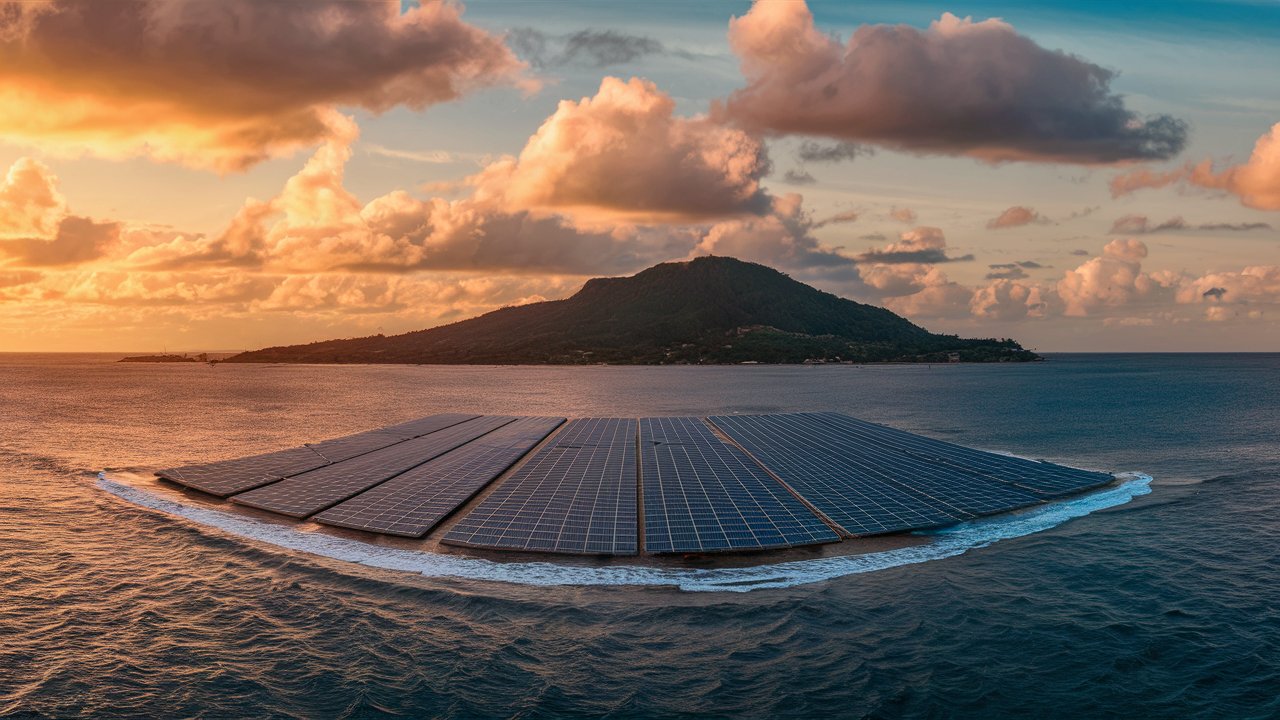


Know How Technology, Innovation, and Environmental Preservation Are Aligned to Reduce CO₂ Emissions, Promote Energy Efficiency and Position the Island as a Global Example of Sustainability.
First and foremost, it is essential to emphasize that Fernando de Noronha is preparing for a historic milestone. The installation of the first floating solar power plant on the island was officially announced in January 2023. The project, which will be completed by 2025, reinforces the island’s commitment to sustainability. Moreover, the initiative promises to transform the local energy model and serve as an example for Brazil.
Consequently, the idea was born within the Sustainable Energy Program Noronha, an initiative launched in 2020 by Neoenergia. Thus, the island continues to advance in sustainable development, showing that it is possible to reconcile environmental preservation and technological innovation.
Why Is The Floating Solar Plant So Important?
Without a doubt, the floating solar plant is a significant innovation. Firstly, the structure will be installed on the Xaréu Dam, occupying an area of 4,400 square meters. The project was licensed by the archipelago administration in March 2023 and approved by the government of Pernambuco in April of the same year.
-
Embrapa’s discovery reveals an unexpected advancement by allowing the production of seedlings from the caatinga using brackish water, opening a new frontier for farmers to face drought more efficiently.
-
6 sources of free fertilizer that you are throwing away every day and can transform your garden without spending anything.

-
With a water crisis on the radar, Sabesp invests in reclaimed water for data centers and transforms sewage treatment into a solution that saves millions of liters and protects public supply.

-
Foresea achieves 100% offshore waste reuse in 2025, eliminates landfill disposal, and consolidates sustainable strategy with 1,500 tons recycled.

Additionally, the system has a capacity of 630 kWp, which will allow it to produce about 1,238 MWh per year. This energy capacity was calculated during feasibility studies conducted throughout 2022.
Thus, it will be possible to meet more than 50% of the energy consumption of the Pernambuco Sanitation Company (Compesa). More importantly, the project will contribute to the reduction of 1,663 tons of CO₂ per year, according to data provided by the Institute of Energy and Environment (IEMA) in 2023. Consequently, the environmental impact will be significant, reinforcing the need for clean and sustainable solutions.
Project Benefits:
- Environmental Sustainability: Reduction of dependence on fossil fuels and preservation of the local ecosystem.
- Energy Efficiency: Reduction of operational costs for the region.
- Global Example: Fernando de Noronha as a reference in sustainable solutions.
Moreover, the project directly contributes to the preservation of the island’s biodiversity, which has been recognized worldwide by UNESCO since 2001.
How Does A Floating Solar Plant Work?
First and foremost, it is important to understand that floating solar plants use photovoltaic panels installed over water. This technology began to be developed in Brazil in 2019, with the first pilot project implemented in Minas Gerais.
Thus, the floating panels generate energy in a sustainable and efficient manner. Furthermore, this technology offers several advantages.
Advantages:
- Reduction of Evaporation: Preserves essential water resources for the island.
- Greater Efficiency: The water cools the equipment, increasing their durability and energy efficiency.
- Space Optimization: Does not utilize land that could be allocated for other purposes.
Consequently, this model is ideal for locations with limited space and high environmental concern, such as Fernando de Noronha.
Innovation In Electric Mobility In The Archipelago
On the other hand, besides the floating solar plant project, the island is advancing in electric mobility. In 2021, Neoenergia inaugurated the Vacaria Solar Plant, with a capacity of 50 kWp, dedicated exclusively to powering electric vehicles.
Additionally, in March 2022, four charging stations were installed on the island. These stations have six points each, allowing tourists and residents to use electric vehicles sustainably.
Highlights:
- Sustainability: Encouragement of non-polluting transport usage.
- 100% Renewable Energy: Powering vehicles with clean and sustainable energy.
- Environmental Preservation: Reduction of emissions and impacts on the ecosystem.
Therefore, electric mobility reinforces the island’s commitment to a sustainable future.
Investment In The Future: Advanced Metering Technology
Even more interesting is the investment in metering technology. The modernization began in 2022, with the replacement of all energy meters on the island with smart models. This advancement was led by Neoenergia and monitored by the National Electric Energy Agency (ANEEL).
Thus, residents receive a more reliable and sustainable service, with less waste. Therefore, the island continues to stand out as a model of energy efficiency.
Benefits Of Modernization:
- Real-Time Monitoring: Greater control of energy consumption.
- Failure Detection: Quicker resolution of supply issues.
- Reduction of Waste: Encouragement of conscious energy use.
Consequently, these changes reflect the commitment to innovation and sustainability.
Environmental And Social Impact: What Changes For Residents?
With these initiatives, Fernando de Noronha is transforming the lives of its residents. Firstly, the reduction of dependence on fossil fuels benefits both the environment and public health. Moreover, electricity costs are expected to decrease.
On the other hand, sustainable tourism gains even more strength. After all, visitors seeking eco-friendly experiences will find on the island an example of sustainability.
Advantages For The Community:
- Reduced Costs: Savings on electricity and greater efficiency.
- Environmental Awareness: Education on the importance of preservation.
- Sustainable Tourism: Attraction of visitors interested in eco-friendly practices.
Thus, Fernando de Noronha consolidates itself as a reference in sustainability and quality of life.
Brazil As A Leader In Renewable Energies
Finally, it is important to highlight Brazil’s role in the global renewable energy scenario. Since 2019, the country has been advancing with floating solar plant projects. Moreover, the largest floating solar plant in Brazil, inaugurated in Minas Gerais in 2020, reinforces this prominence.








Muitos bons mesmo