





 Portuguese
  English
  Spanish
  4 min of reading
  0 comments


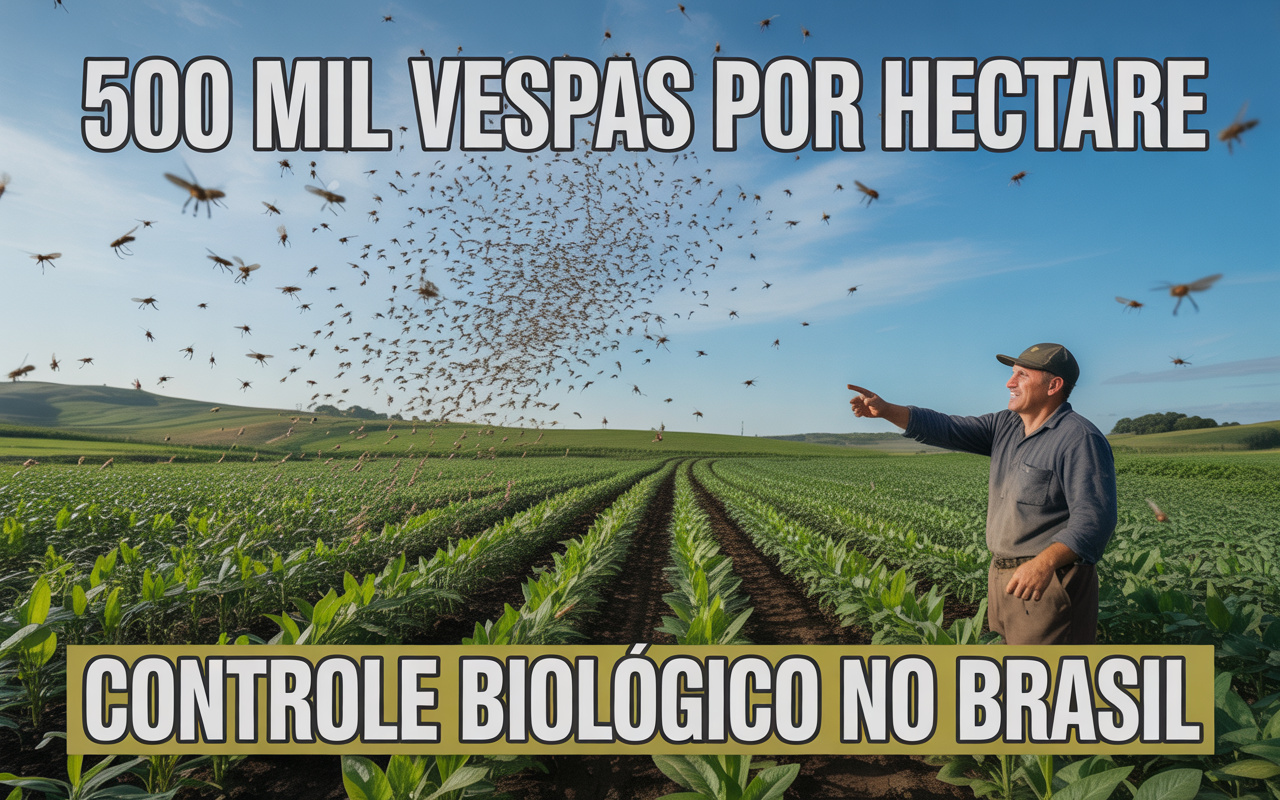
Farmers in Brazil Release Between 100 and 500 Thousand Wasps per Hectare to Control Pests, Reduce Pesticides, and Transform Soybean Crops with Biological Control.
When Brazilians think of agricultural pests, the usual image involves tractors spraying chemical pesticides, masks, trucks, and an entire logistics of combat. What almost no one imagines is what has been happening away from the cameras: farmers releasing tens to hundreds of thousands of parasitic micro-wasps per hectare — insects so small they look like dust to attack caterpillars and other pests before they destroy the field.
The scene resembles science fiction, but it is applied science and precision agricultural management. The tactic is growing in soybeans, corn, cotton, and beans, placing Brazil on the path of the largest biological control programs on the planet.
How the “Invisible Army” Works
The most used species belong to three main groups:
-
The eggshell that almost everyone throws away is made up of about 95% calcium carbonate and can help enrich the soil when crushed, slowly releasing nutrients and being reused in home gardens and vegetable patches.

-
This farm in the United States does not use sunlight, does not use soil, and produces 500 times more food per square meter than traditional agriculture: the secret lies in 42,000 LEDs, hydroponics, and a system that recycles even the heat from the lamps.

-
The water that almost everyone throws away after cooking potatoes carries nutrients released during the preparation and can be reused to help in the development of plants when used correctly at the base of gardens and pots, at no additional cost and without changing the routine.

-
The sea water temperature rose from 28 to 34 degrees in Santa Catarina and killed up to 90% of the oysters: producers who planted over 1 million seeds lost practically everything and say that if it happens again, production is doomed to end.
- Trichogramma → attacks caterpillar eggs
- Telenomus → attacks the eggs of the corn earworm
- Cotesia and Braconidae → attack larvae that have already hatched
All these small wasps are harmless to humans, do not sting, and do not attack animals. Their war happens exclusively in the crops, where they seek the eggs or larvae of pests and parasitize them.
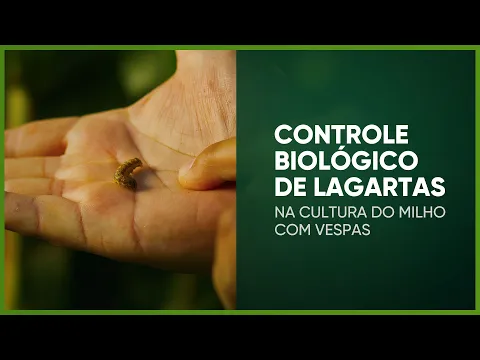

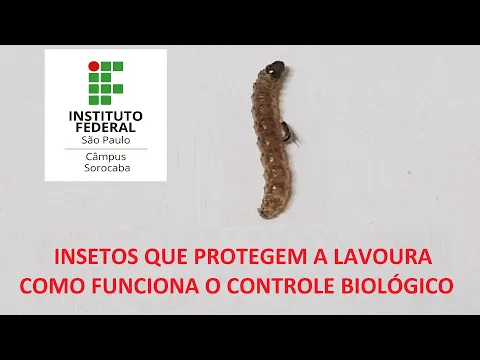
It is precise: a single egg parasitized by a wasp does not produce more caterpillars, but rather a new wasp that continues the cycle. That’s why releases must follow a calendar and population density, and that’s where the impressive numbers come in.
Why “500 Thousand Wasps per Hectare” Is Not an Exaggeration
Brazilian companies that produce and distribute biological control agents follow technical recommendations based on:
- pest pressure
- type of crop
- phenological stage of the plant
- microclimate
- size of the area
In soybeans, it is common to find densities between 50 thousand and 100 thousand wasps per hectare, with repetitions throughout the cycle. In large-scale farms, adding sequential applications, the number released easily exceeds 300 thousand or 500 thousand per hectare throughout the harvest and all without chemical spraying.
This volume is impressive because they are microscopic insects and completely natural, functioning as a “biological army” integrated into the ecosystem.
Why This Matters for Brazilian Agribusiness
Soy alone occupies over 45 million hectares in Brazil. But the pressure to reduce pesticides is global — for economy, health, and export.
Each hectare that receives wasps instead of insecticides:
- reduces costs with chemicals
- slows pest resistance
- attracts international interest
- supports environmental certifications
- protects local biodiversity
Not surprisingly, giants of agribusiness and cooperatives are entering contracts with biofactories, while Brazilian startups receive foreign investments to scale these insects.
From the Field to Science: Brazil as a Living Laboratory
Another little-discussed part is the scientific leap. The releases are monitored with:
- pheromone traps
- drone monitoring
- climate modeling
- multispectral images
- satellite remote sensing
In other words: while the public sees only a green crop, there is a real scientific experiment going on, with data, maps, research, and efficiency indicators.
This “biological + digital integration” is one of the reasons why biological control grows about 15% a year in Brazil, according to sector associations.
Replacing Chemicals Is Not Utopia; It Is an Ongoing Transition
It is important to clarify: biological control does not eliminate pesticides. But it reduces their use, delays resistance, and avoids preventive spraying over vast areas.
In many farms, the scheme is simple:
- wasps to prevent the caterpillar from hatching
- microfungi and bacteria to attack already established infestations
- selective insecticides only when necessary
For the export market, this means lower residue limits and fewer sanitary barriers.
What Changes for Producers and Consumers
In the field, the impact is direct:
- fewer re-entries of workers in recently sprayed areas
- less contamination of beneficial fauna
- better ecological balance
For urban consumers, the effect appears indirectly:
- foods with lower chemical loads
- more sustainable supply chains
- less environmental impact per hectare
- efficient production even under extreme heat and drought
And What Happens to the Wasps Afterwards?
This is another point of strangeness for those who do not know the process. The wasps do not become pests, do not form colonies, do not attack people, and have a short cycle. When the pest disappears, they disappear along with it, because there is no more host.
In other words: they are self-limiting by nature.
Brazil Is at the Forefront
Recent data indicate that the country:
- is already a world leader in area treated with biological control on a large scale
- receives investments from companies in the USA, Europe, and Asia
- exports technology and biofactories
- is studied by entomologists and agronomy engineers
An unexpected scenario for those who still imagine agribusiness as a mass spraying machine.
What started as a low-scale experiment has turned into a silent ecological transformation. While the city discusses pesticides, the field is already releasing microorganisms, fungi, and microscopic wasps in a planned biological war.

And few people know that, in Brazil, there are crops that receive up to 500 thousand wasps per hectare throughout a harvest, defending millions of tons of grains.
It is technology, biology, strategy, and ecological engineering — all at once — using insects as an agricultural tool.









Seja o primeiro a reagir!