





 Portuguese
  English
  Spanish
  5 min of reading
  0 comments


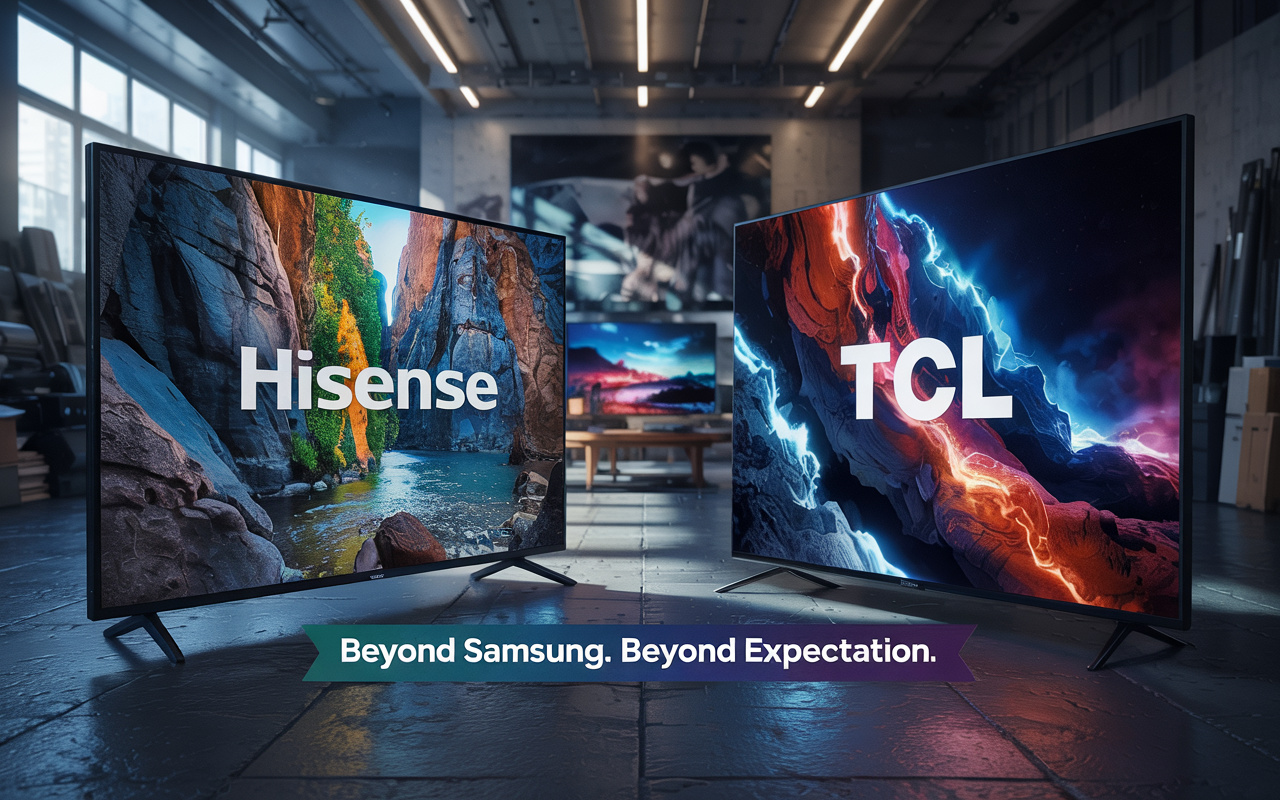
Large Premium TVs Gain New Prominence in 2025 with Hisense XOD and TCL QLED Challenging Samsung QNED. Learn How the 2025 TV Competition is Redefining Technology, Innovation, and Cost-Effectiveness in the Global Market
The global television market is undergoing a transformation. For the first time, brands like Hisense and TCL have surpassed Samsung’s traditional leadership in large screen TV sales. According to a report by Omdia (via Digitimes), released in May 2025, Samsung’s TV division entered a state of emergency due to falling market share in the segment of models over 65 inches, pressured by emerging brands like Hisense and TCL. The competition is now focused between the Chinese companies Hisense and TCL, which are making strides in sales and technology, bringing new trends in large premium TVs.
Hisense Leads Global Market for Large Premium TVs
According to data from Omdia released by Hisense, the Chinese manufacturer achieved 19.8% global market share in the segment of TVs 75 inches or larger in 2024, maintaining its lead at the beginning of 2025.
The company stood out with its Hisense XOD models, which combine Mini LED technology, high brightness levels, and advanced artificial intelligence features to optimize the image in real time.
-
How the terraforming of Mars can transform the planet: artificial aerosols can increase the temperature by up to 35°C in 15 years, creating conditions for liquid water.

-
Scientists drilled nearly 8,000 meters into the ocean floor above the fault that caused the 2011 tsunami in Japan and discovered that a layer of clay 130 million years old was responsible for making the wave much worse than any model had predicted.

-
Thousands of years after causing the largest eruption of the Holocene, one of the world’s largest supervolcanoes is rebuilding itself beneath the sea south of Japan, receiving new magma and alarming scientists with its transformation.

-
China has activated a magnet 700,000 times more powerful than the Earth’s magnetic field that operates for over 200 consecutive hours while consuming little energy, and now the world wants to know what Beijing plans to do with this technology in 2026.

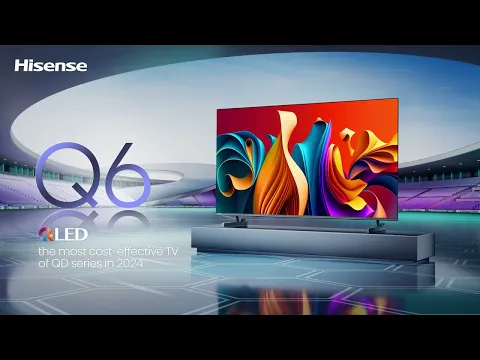

Hisense’s performance was particularly boosted by growth in North America, Europe, and Latin America. The company managed to surpass Samsung not only in sales volume but also in revenue in the large screen segment, consolidating itself as a global leader for the first time.
Factors driving this growth include an aggressive pricing strategy combined with rapid adoption of cutting-edge technologies, such as Mini LED and Google TV in premium models.
TCL QLED: Brand Takes Second Place with a Focus on Technology
According to data from Omdia released by Yicai Global, in the fourth quarter of 2024, TCL achieved 14.6% global market share in TV sales, trailing behind Hisense, which obtained 15.6% in the same period.
The company strengthened its TCL QLED line, focusing on delivering high visual performance, enhanced contrast, and gaming features, such as a refresh rate of up to 144 Hz and support for FreeSync Premium.
TCL has gained relevance particularly in the European and Asian markets, with models like the C855 line standing out for combining ultra-slim design, superior image quality, and integrated Dolby Atmos sound. In emerging countries, the company has also focused on competitive pricing without sacrificing robust technical specifications.
In addition to large premium TVs, the manufacturer is increasingly investing in technologies like AI for image upscaling, optimized gaming modes, and integration of virtual assistants like Google Assistant and Alexa.
Samsung QNED Loses Ground Even with Advanced TVs
Despite the advances of Hisense and TCL in the large TV segment, Samsung maintains a strong presence in the global premium TV market, with a significant share in screens over 65 inches, consolidating its historical leadership and reputation for technological innovation.
Even with a slight decline in sales, the South Korean company has focused on the Samsung QNED line, utilizing Neo QLED technology, Mini LED lighting features, and AI processors for image quality.
However, according to industry analysts, the main factor for the loss of market share was the greater price competitiveness offered by Chinese brands.
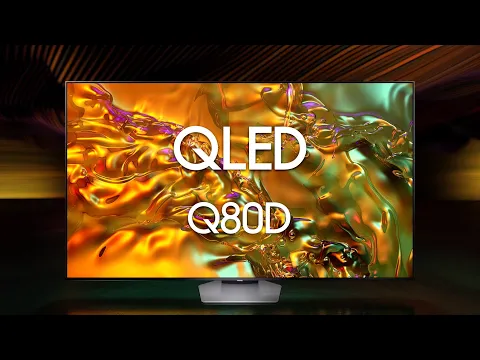
While Samsung maintained high prices for its more advanced lines, Hisense and TCL managed to deliver good visual experiences at more accessible prices, achieving a higher volume of sales. Another point raised by experts is Samsung’s slower pace in adopting new market strategies in emerging regions, which facilitated the advance of competitors.
Comparison: How Hisense, TCL, and Samsung Position Themselves in the 2025 TV Competition
In terms of technology, the 2025 TV competition is intensifying. All three brands adopt similar technologies like Mini LED, AI for image and sound, as well as next-generation smart systems. However, there are notable differences in their strategies:
| Brand | Main Technology | Highlights | Strength |
| Hisense | Mini LED (Hisense XOD) | Higher brightness, Google TV, advanced AI | Best cost-effectiveness and performance |
| TCL | QLED (TCL QLED) | Superior contrast, premium design | Focus on gamers and sound quality |
| Samsung | Neo QLED (Samsung QNED) | Neural Quantum Processor, HDR10+ | Tradition in premium quality |
The Hisense XOD and TCL QLED lines have attracted consumers with a combination of competitive pricing and cutting-edge features. Meanwhile, Samsung relies on its global brand recognition but faces challenges against the pressure from competitors.
Market Trends: Bigger Screens, More Technology
The Omdia report also highlighted a clear trend for the coming years: the continuous growth of large screen TVs. The global market for televisions larger than 65 inches saw significant revenue growth, reaching about US$ 16.7 billion in 2024, with expectations of maintaining a steady expansion, with a compound annual growth rate (CAGR) estimated at 17.5% until 2030.
Another highlight is the advancement of Mini LED technology, present in both Hisense XOD and Samsung QNED. Additionally, the market is already seeing the first tests with microLED and advances in QD-OLED panels, which should further intensify the 2025 TV competition.
The rising demand for devices with more gaming features, such as high refresh rates and low latency, also explains TCL’s success with its QLED lines. Consumers increasingly seek TVs that deliver quality for both movies and games.
Challenges and Next Steps for Samsung, Hisense, and TCL
To regain lost market share, Samsung will need to invest in new strategies for emerging markets, in addition to making its premium models more accessible. The company still dominates the market for smaller TVs, but needs to strengthen its presence in the large premium TV segment.
Hisense is likely to maintain its leadership if it can continue offering innovation at competitive prices. With the expansion of the Hisense XOD line and new embedded features, growth in Western markets is expected.
TCL, for its part, seeks to consolidate its position with the TCL QLED line, focusing on good cost-effectiveness and prioritizing features for gamers and technology enthusiasts. The brand is also investing in marketing to strengthen its image as a premium manufacturer.
A New Phase in the Global TV Competition
The global TV landscape is experiencing a historical transformation. Samsung’s established leadership over the past decades has been challenged by the rise of Hisense and TCL, which are taking center stage in the large screen TV segment.
The Hisense XOD and TCL QLED lines have demonstrated strength by offering cutting-edge technologies at more competitive prices, while Samsung QNED aims to stay relevant by betting on tradition and premium quality.
For the consumer, this competition is beneficial as it expands purchasing options, lowers prices, and accelerates technological advancement. Those looking for large premium TVs in 2025 will find a more balanced and competitive market, with increasingly sophisticated and accessible models.
The trend is clear: the 2025 TV competition will remain fierce, driving innovation and benefiting the public with better quality products and advanced features. Whether for movies, sports, or gaming, the coming years promise televisions that are increasingly complete and immersive experiences.










Seja o primeiro a reagir!