





 Portuguese
  English
  Spanish
  4 min of reading
  99 comments


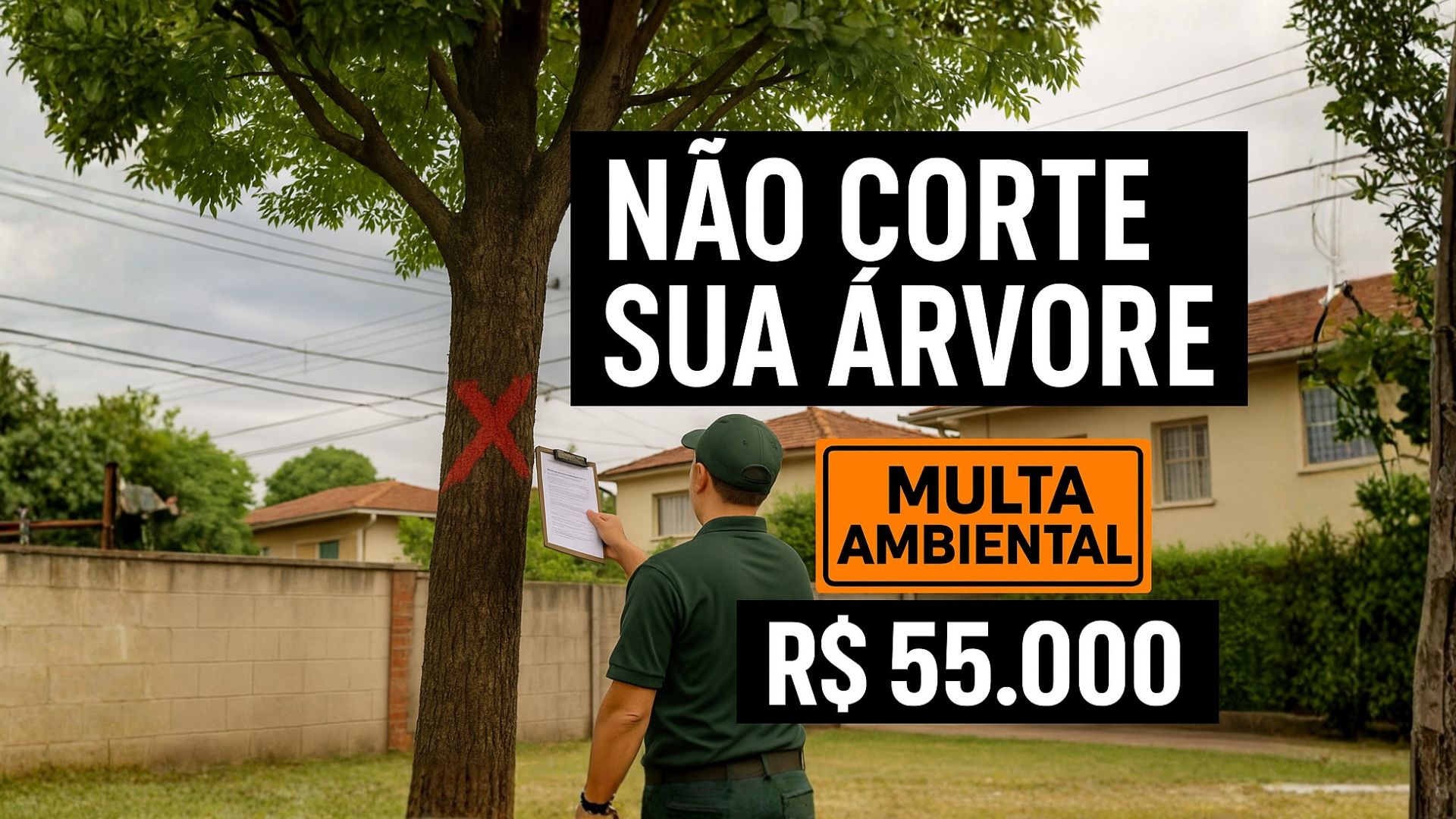


Trees in Private Areas Are Now Treated as Part of Urban Environmental Protection, with Stricter Oversight, High Fines, and New Rules Redefining the Relationship Between Residents and Vegetation Management in Their Own Yards.
Cutting down a tree in the yard without permission from the city hall is now classified as an environmental violation in various municipalities across the country.
In places like Nova Iguaçu (RJ), cutting down any species without a permit can result in fines of up to R$ 55 thousand, as well as a requirement for replanting and the possibility of criminal liability based on the Environmental Crimes Law.
Municipal Rules on Tree Pruning and Cutting
The change in attitude of municipal environmental agencies is based on local legislation and Federal Law No. 9,605/1998, which establishes penalties for those who destroy, damage, or cut vegetation without authorization from the competent authority.
-
These living root bridges and ladders are over 700 years old and help indigenous people survive in one of the rainiest regions in the world.

-
From sertanejo star to international investor: Ana Castela invests millions in a mansion in the USA, creates a themed accommodation in Orlando, and shows that the “boiadeira” also wants to grow away from the stage.

-
The 10 most stunning motorhomes in the world: a $3 million trailer with a rooftop nightclub and garage for a Ferrari, “palaces on wheels” with Italian marble, private cinema, and five-star hotel luxury for billionaires.

-
Trump wanted to spend $400 million on the White House, but the courts prohibited the million-dollar construction.


According to municipal managers and specialists consulted by city halls in educational campaigns, a more restrictive interpretation of the regulation has been adopted to protect urban greenery.
Environmental codes and land use and occupancy regulations in various cities define that tree protection applies to both public areas and private properties.
These regulations determine when pruning is considered allowed, when it constitutes drastic pruning, and under what circumstances total removal may be permitted after a technical inspection.
In many municipalities, this classification removes the owner’s unilateral decision regarding the maintenance or removal of trees on their lot, requiring prior assessment by the environmental department.
Oversight in Nova Iguaçu and Replanting Requirements
In Nova Iguaçu, the city hall has imposed a fine of up to R$ 55 thousand for those who cut down trees without authorization.
The administration also establishes the obligation for replanting saplings and monitoring the development of the species for a minimum period defined by regulation.
The Municipal Environmental Code prohibits cutting and shallow pruning without express authorization from the Municipal Secretary of Urbanism and the Environment.
In case of a violation, the responsible party may be subjected to a fine, compensatory measures, and referral of the case for analysis in accordance with federal legislation.
Fines Imposed by Other Cities: Campo Grande and Marília
In Campo Grande (MS), official communications indicate that removal or radical pruning without a license can result in fines ranging from a few hundred reais to amounts exceeding R$ 5 thousand, depending on the species and the impact of the intervention.
Marília (SP) has also updated its legislation, imposing fines of up to R$ 6 thousand for cases of improper pruning or removal without authorization.
The local regulation defines procedures for technical analysis and reinforces the need for formal projects and justifications.
Environmental Compensation After Cutting Trees
In addition to financial penalties, it is common for municipal codes to require environmental compensation after authorized or unauthorized cutting.
In Nova Iguaçu, every removal entails planting a seedling in a location determined by the environmental agency.
In other cities, replanting may be linked to construction permits.
Urban regulations establish, in some cases, a minimum number of trees proportionate to the built-up area before the issuance of a certificate of occupancy.
Situations Where Cutting is Allowed by Public Authorities
Municipal legislation provides for exceptions when there is immediate risk.
Dead trees, dry trees, those with signs of structural compromise or susceptible to falling may be removed with technical approval.
In emergency situations, agencies such as the Civil Defense may carry out the removal directly, based on safety and accident prevention protocols involving branches, trunks, or proximity to the electrical network.
Accredited Companies and Shared Responsibility
In some capitals, such as Rio de Janeiro, laws allow the hiring of private companies to carry out pruning or cutting, as long as they are accredited and authorized by the public authorities.
According to municipal regulations, both the contractor and the company can be held accountable if there is an intervention without authorization or outside the established technical parameters.
Environmental Justifications According to Public Authorities
Municipal environmental agencies assert that the increase in restrictions is related to studies indicating the contribution of urban trees to temperature reduction, rainwater absorption, pollutant reduction, and urban wildlife habitat.
Tree planting plans from different municipalities reinforce the need to preserve remaining vegetation and expand planting in densely built areas.
Court Understanding on Environmental Fines
State courts have confirmed the validity of fines imposed for irregular cutting, as long as the infraction report describes the damage, indicates the violated regulation, and provides evidence of authorship.
In some cases, amounts have been adjusted for disproportionality, but public decisions recognize the municipalities’ competence to impose sanctions resulting from the removal of protected vegetation without a license.
Changes in Urban Residents’ Behavior
With the combination of federal laws, municipal regulations, and stricter enforcement, interventions on yard trees now require formal requests for inspections and technical justifications.
For specialists consulted by municipal administrations, this movement changes the perception of urban vegetation by reinforcing that it is part of the set of environmentally protected goods.








Como estas leis que não não trás beneficios nem um para natureza porque agora antes de plantar uma simples planta nós temos que pensar duas vezes pra saber se no futuro ela vai de tar beneficios ou trazer prejuízos então o numeros de árvores nos quintais e calçadas vão só diminuindo muito melhor plantar grama que árvores
Se for árvore plantada pela prefeitura!
Agora se for plantada pelo municípie, ae n tem problema!
Engraçado, o cidadão tem que pagar multa se cortar uma arvore sem autorização ambiental, mas o Presidente corta 100 árvores para passarela, que utilização? Assim não vejo pronuncia da ambiental, como sempre só o povo, que existe regras a cumprir,muito fácil,ainda acreditam que existe democracia,kkk apenas a monarquia e **** continuam de formas diferentes,mas existentes….. realmente só hipocrisia, e só quem paga em tudo e o povo…….. palhaçada…..