





 Portuguese
  English
  Spanish
  4 min of reading
  0 comments


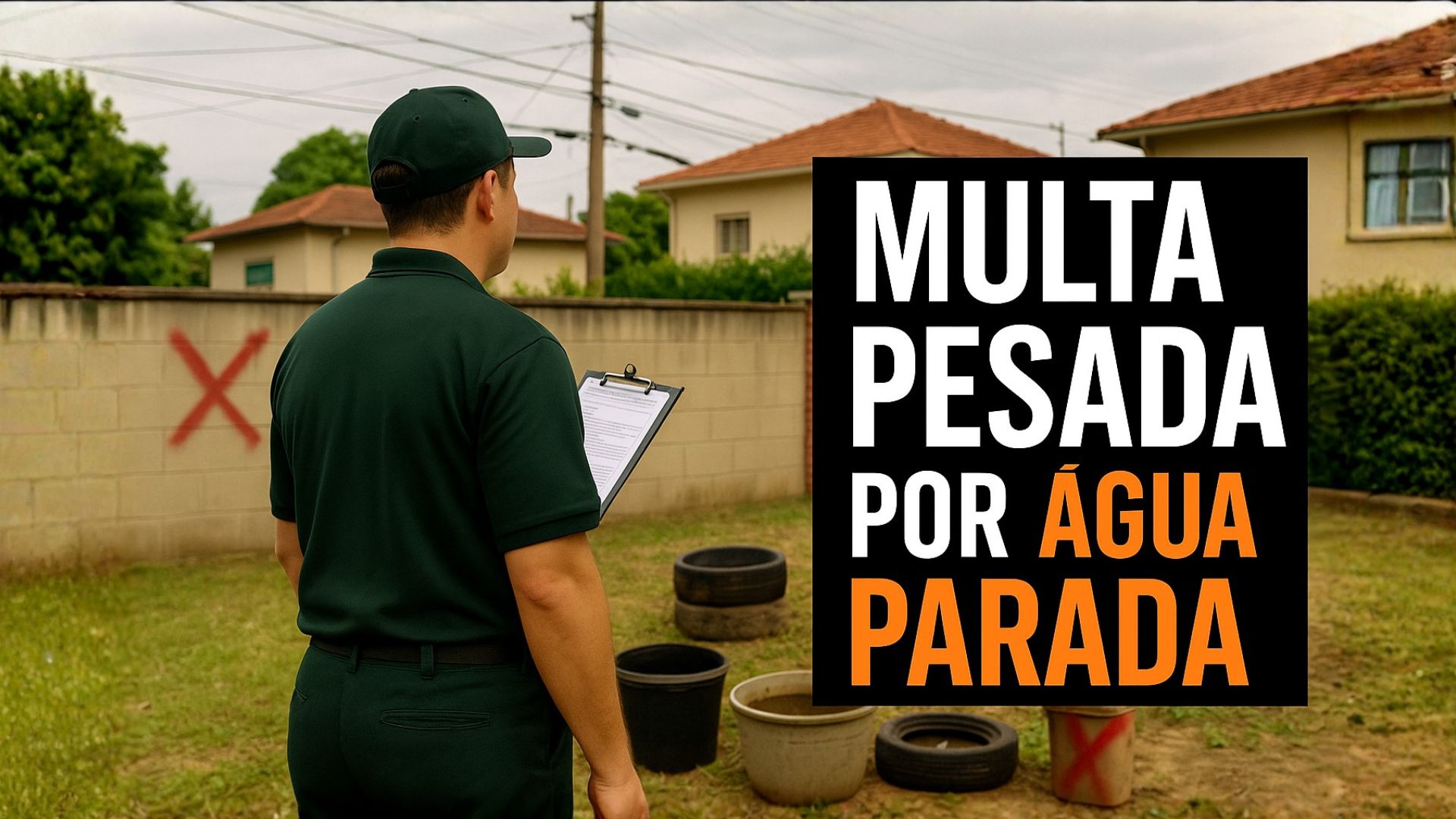
Stagnant Water in Urban Properties Now Generates High Fines and Rigorous Inspection Actions, with Forced Entry and Specific Penalties Defined by Municipal and Federal Laws.
Rigorous Inspection and High Fines
Leaving stagnant water in the backyard, on the roof, or in vacant lots has ceased to be merely a routine oversight in several Brazilian cities.
In municipalities like Mogi Guaçu, in the interior of São Paulo, property owners caught with breeding grounds for the Aedes aegypti mosquito are subject to fines that can reach R$ 7,200, along with the possibility of forced entry by public officials into closed or abandoned houses, supported by federal law.
In January 2025, the Mogi Guaçu City Hall announced tougher penalties for property owners with dengue hotspots.
-
These living root bridges and ladders are over 700 years old and help indigenous people survive in one of the rainiest regions in the world.

-
From sertanejo star to international investor: Ana Castela invests millions in a mansion in the USA, creates a themed accommodation in Orlando, and shows that the “boiadeira” also wants to grow away from the stage.

-
The 10 most stunning motorhomes in the world: a $3 million trailer with a rooftop nightclub and garage for a Ferrari, “palaces on wheels” with Italian marble, private cinema, and five-star hotel luxury for billionaires.

-
Trump wanted to spend $400 million on the White House, but the courts prohibited the million-dollar construction.


The municipal legislation, which already provided for sanctions, has established graduated fines based on the severity of the infraction, based on the Municipal Fiscal Unit (UFIM).
In cases classified as extremely serious, the amount can reach 1,500 UFIMs, which corresponds to approximately R$ 7,200, according to the municipal administration.
In February of the same year, a property of over 2,700 square meters in the city center was cleaned by the city hall itself after the owner failed to comply with a notice.
The Municipal Services Department imposed a fine of R$ 3,287.76 for the negligence that favored the proliferation of the mosquito.
Cities That Adopt Tougher Sanctions
In the capital city, the strategy combines educational actions with financial sanctions.
According to information from the Municipal Health Department, houses and establishments that have already been advised and notified to eliminate breeding grounds but maintain conditions favorable for Aedes reproduction may receive fines ranging from R$ 180 to R$ 700.
The municipality maintains a permanent campaign to encourage weekly inspections of backyards, gutters, and containers, linking the resident’s responsibility to the control of arboviruses.
In Espírito Santo, the city of Anchieta has also tightened measures against properties with dengue hotspots.
The city hall reports that the imposition of fines can range from R$ 435.24 to R$ 1,724.84, depending on the situation found and recidivism.
The local legislation also provides that health agents may enter closed or vacation homes for inspection when there is an imminent risk to public health due to the presence of the mosquito breeding grounds.
Hardline cases also appear in other regions of the country.
In Toledo, Paraná, a municipal law in effect since the mid-past decade increased the minimum fine for property owners with dengue hotspots from R$ 70 to R$ 200, with a 48-hour period for regularization after notification.
In Ribeirão Preto, in the interior of São Paulo, the city hall established fines of up to R$ 1,400 for owners of lots with tall grass and conditions favorable to Aedes amid a dengue emergency and reported cases of zika.
At the state level, Espírito Santo issued a decree providing for light, serious, and very serious sanctions, to be applied by health surveillance when there is persistence in maintaining breeding grounds for Aedes, with graduated fines according to the classification.
Legal Basis for Forced Entry into Properties
This local movement finds support in national regulations.
Law No. 13,301 of 2016 altered the legal framework for combating the mosquito by providing, among other measures, forced entry into public and private properties in situations of abandonment, absence, or refusal of access, as long as there is suspicion of Aedes aegypti breeding sites.
According to the legal text and guidelines from the Ministry of Health, forced entry must be carried out by an identified professional after attempts at prior notification on different days and times, with records of the diligences.
Experts in sanitary and constitutional law remind us that the Federal Constitution protects the inviolability of the home but allows exceptions in cases of flagrant offenses, disasters, emergency assistance, and, according to legal interpretations, for compliance with a determination from health authorities in situations of risk to public health.
Analyses published by organizations such as the Public Ministry of Paraná and by jurists specialized in health indicate that the combination of Law No. 13,301 with earlier regulations, such as Law No. 6,259/1975, supports the duty of the resident to comply with health regulations related to the control of transmissible diseases.
Direct Interventions in Closed Properties
In practice, city halls have used this set of regulations to justify more incisive measures in properties that remain closed or abandoned.
In Mogi Guaçu, the forced cleaning of the fined lot in February 2025 was presented as an example of necessary intervention given the owner’s inaction.
In Anchieta, official documents and local reports highlight that agents may enter vacation homes when there is a risk of dengue hotspots, after attempts to contact the responsible party.
In Toledo and in other cities that revised their laws, managers report that the combination of forced entry and higher fines aims to reduce the feeling of impunity concerning abandoned lots and closed properties.







-

Uma pessoa reagiu a isso.