





 Portuguese
  English
  Spanish
  4 min of reading
  23 comments


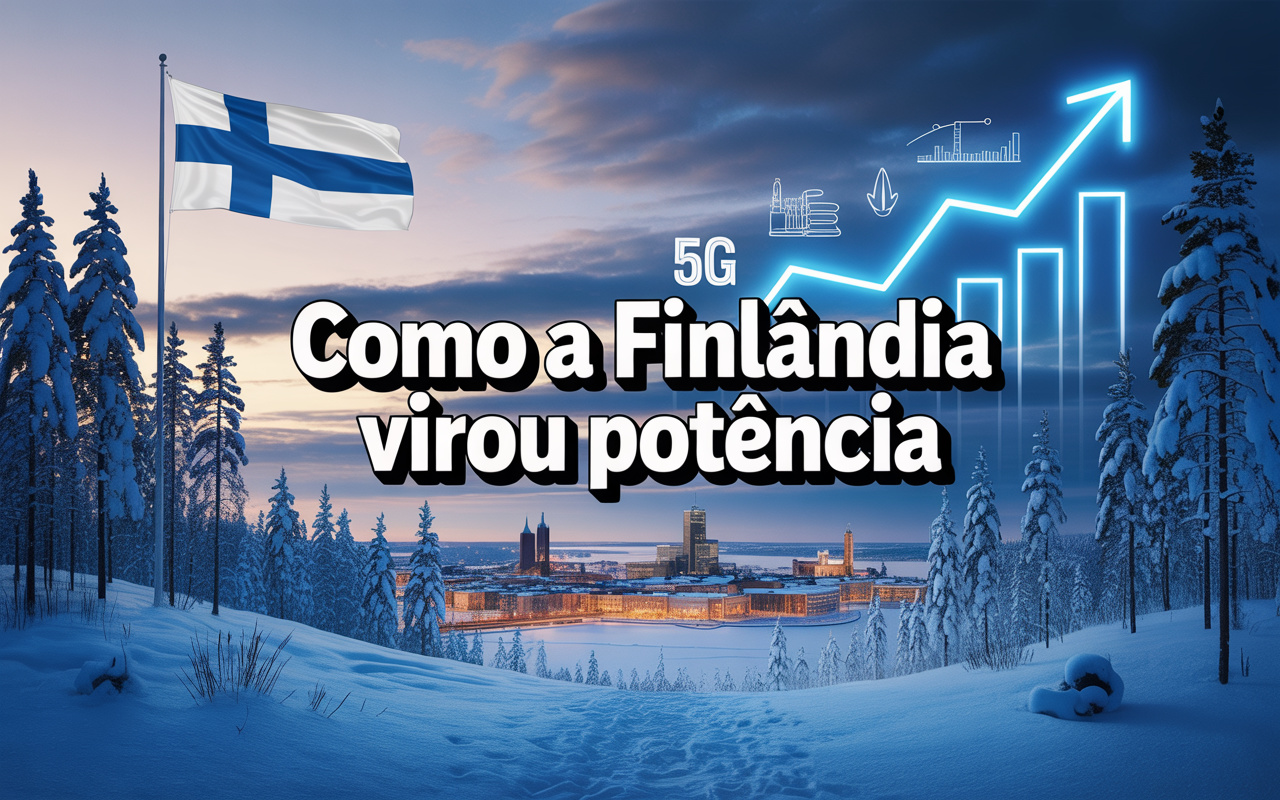


Smaller Than Minas Gerais and Marked by Wars and Hunger, Finland Reinvented Itself and Today Is One of the Richest, Most Stable and Technological Nations on the Planet.
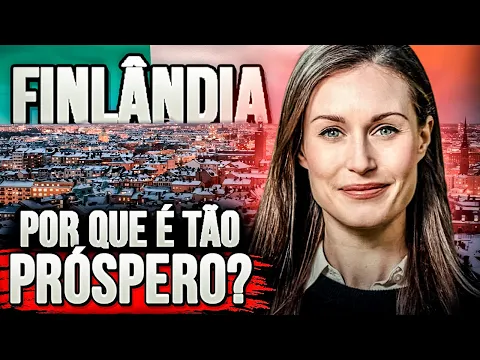
In the far north of Europe, in a territory surrounded by forests and lakes, Finland was once one of the poorest regions on the continent. During the 19th century, the country faced successive agricultural crises, temperatures below -30 °C and the worst famine in its history, which killed about 15% of the population between 1866 and 1868. Decades later, amidst World War II, the small country would again be devastated, this time by two conflicts against the Soviet Union that almost wiped it off the map. Today, the same nation, smaller than the state of Minas Gerais and with only 5.6 million inhabitants, is recognized as one of the most stable, innovative, and prosperous on the planet.
The Finnish journey is one of the most impressive stories of overcoming and strategic planning in the modern world. In just over a hundred years, the country transitioned from famine to abundance, from isolation to prominence, becoming a reference in technology, education, sustainability, and social welfare.
From Wars to National Reconstruction
Finland declared its independence in 1917, after centuries of Swedish and Russian domination. But the path to full sovereignty was bloody. Shortly after the separation, the country plunged into a civil war in 1918, followed by ongoing tensions with neighboring Soviet Union.
-
These living root bridges and ladders are over 700 years old and help indigenous people survive in one of the rainiest regions in the world.

-
From sertanejo star to international investor: Ana Castela invests millions in a mansion in the USA, creates a themed accommodation in Orlando, and shows that the “boiadeira” also wants to grow away from the stage.

-
The 10 most stunning motorhomes in the world: a $3 million trailer with a rooftop nightclub and garage for a Ferrari, “palaces on wheels” with Italian marble, private cinema, and five-star hotel luxury for billionaires.
-
Trump wanted to spend $400 million on the White House, but the courts prohibited the million-dollar construction.

Between 1939 and 1944, the Finns fought in two wars, the Winter War and the Continuation War — in which they lost about 10% of their territory, including the important region of Karelia.

Despite the losses, Finland managed to preserve its independence, something rare among the small countries that bordered the Soviet regime. But the price was high: destroyed cities, a ruined economy, and hundreds of thousands of internally displaced refugees.
After the conflict, the country adopted a pragmatic neutrality strategy. It maintained diplomatic relations with Moscow but built a solid democracy based on social cohesion and public education internally. The government prioritized investments in infrastructure, research, and technology, betting on reconstruction based on knowledge — not revenge.
The Economic and Technological Leap
Finland’s economic turning point began in the 1970s and 1980s when the country initiated an industrial modernization. In the post-war period, its economy was rural and reliant on wood, paper, and forest products. Gradually, the focus shifted to technology, engineering, and digital innovation.
Companies like Nokia, which started as a paper factory, symbolized this transition. In the 1990s, the country faced a severe recession, worsened by the dissolution of the Soviet Union — its largest trading partner.
Instead of falling back, the government responded with one of the boldest policies in Europe: increased investments in research and education even amid the crisis.
The result was the emergence of a vibrant technological ecosystem, giving rise to startups, gaming companies, environmental engineering, and clean energy. Today, Helsinki is considered one of the main innovation hubs in Europe, with particular emphasis on areas such as artificial intelligence, biotechnology, and sustainable urban design.
Solid Macroeconomics, Social Microbalance
Finland’s strength lies in its balance. In the macroeconomic scenario, the country combines a system of progressive taxes and high-quality public services, ensuring that prosperity reaches the entire population. The GDP per capita exceeds US$ 60,000, and unemployment remains around 7%, with one of the lowest inequality rates in the OECD.
On the microeconomic level, stability is reflected in daily life. Finnish cities rank among the most organized and clean in the world; public transportation is integrated and efficient; and over 80% of the population lives within 10 minutes of green spaces.
The quality of life is so high that, according to the UN World Happiness Report, Finland has held the 1st place for six consecutive years.
But the country did not get there just by being small and organized. The secret lies in the combination of efficient public governance, political transparency, and a culture of trust. Research shows that over 90% of Finns trust their institutions, something nearly unprecedented in the world.
The New Frontier: Sustainability and Green Innovation
In recent years, Finland has been positioning itself as one of the leading countries in the transition to a low-carbon economy. The government has set a goal of zeroing net CO₂ emissions by 2035, one of the most ambitious targets on the planet.
The country invests in technological solutions for heavy sectors, such as clean energy, chemical recycling, carbon capture, and forest bioeconomy. The city of Lahti, for example, was named European Green Capital in 2021 for its climate neutrality model.
Furthermore, Finland has developed pioneering technologies for sustainable batteries, wood alternatives, and deep geothermal energy, attracting international investments. Companies like Neste, a world leader in renewable fuels, show that the country not only talks about sustainability; it exports it.
Between Ice and the Future
From a territory ravaged by wars, hunger, and extreme cold, Finland has emerged as one of the most inspiring stories of the 21st century. Its example shows that prosperity does not depend on size, climate, or natural resources, but on planning, social cohesion, and long-term vision.
Today, the country that once fought merely to survive is a reference for how to live well. And perhaps that is precisely the Finnish secret: having learned, in decades of scarcity and suffering, that true development begins when a nation decides to invest in what no crisis can destroy — knowledge, trust, and the collective sense of purpose.







Educação….acima de tudo.
Nosso país, mordomias para os políticos, direitos para os que são mais, fome e miséria para o povo..
Sai ****, entram fanáticos, ganham fortunas para viver do ego na mídia…quase no fundo do poço.
Onde os políticos são honestos tuda da certo, no Brasil nunca vai dar ser, o Brasil e’ o berço dos corruptos do mundo, nunca vai melhorar para os pobres!
só de a Finlândia não ter funkeiro, políticos **** e sertanejos como musica, já é uma evolução!!!