





 Portuguese
  English
  Spanish
  4 min of reading
  0 comments


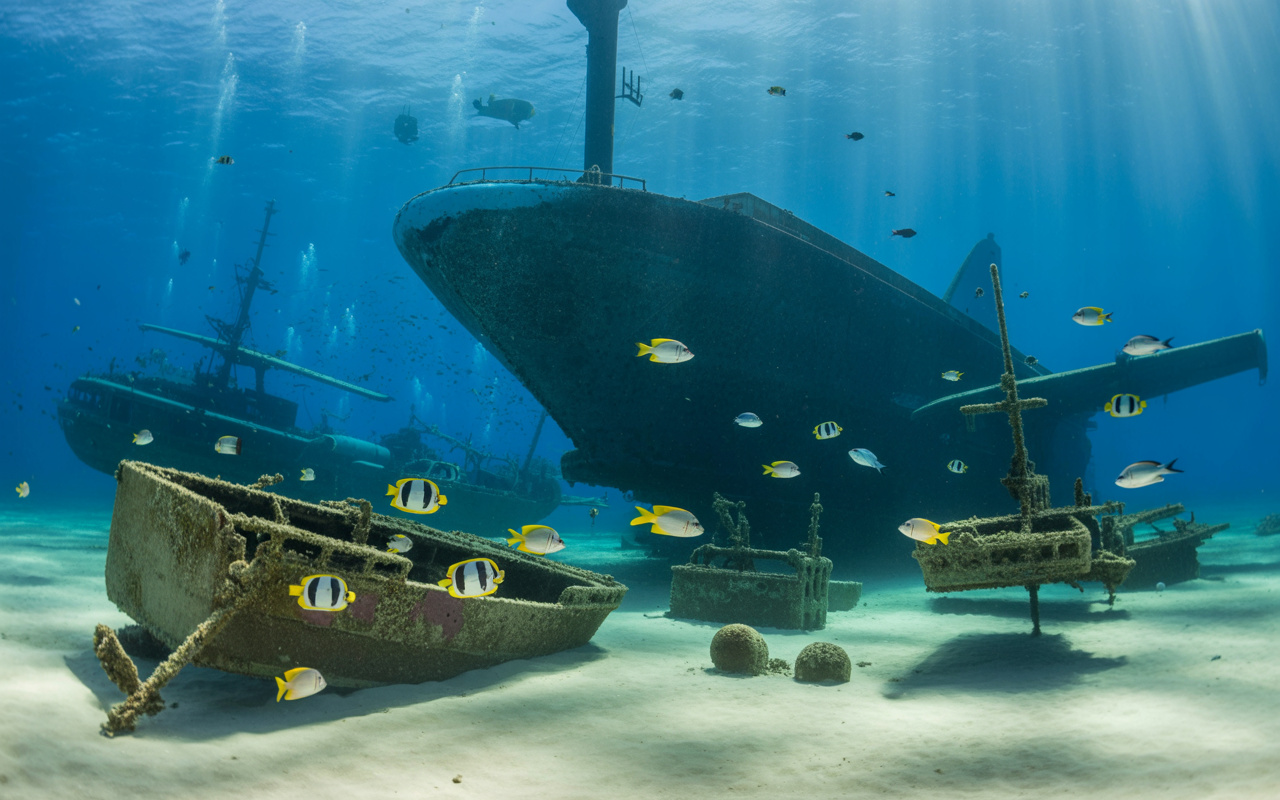
Florida Sunk More Than 4,000 Artificial Reefs With Ships and Concrete to Restore Fish, Protect Cities, and Create Invisible Marine Engineering.
According to data from the Florida Fish and Wildlife Conservation Commission (FWC), Florida’s artificial reef program began to take shape in the 1950s, when coastal communities and fishermen started submerging manufactured structures to increase marine habitat availability. What started as a scattered initiative evolved into a technical system organized and monitored by the State, with ecological metrics, georeferenced inventory, and deployment parameters.
Today, Florida officially records more than 4,000 artificial reefs installed along its coastal shelf, distributed across 34 maritime counties. This makes the state the largest laboratory for artificial marine engineering in the United States, both in density and diversity of materials used. The number is impressive not only for its scale but also for its purpose: it is applied engineering to restore ecosystems, protect cities, and strengthen coastal economies.
How to Sink an Artificial Reef: From Decommissioned Ships to Entire Airplanes
Over the past decades, according to the FWC, decommissioned warships, tugboats, airplanes, tanks, concrete pipelines, demolished piers, and complete industrial structures have been submerged. These materials undergo processes of decontamination, removal of fuels, oils, paints, and hazardous materials.
-
Home environment can influence the brain, mood, and well-being: studies indicate an increase of up to 15% in productivity, a reduction of 12% in stress with plants, and a direct impact of the circadian rhythm on the 24 hours of the day.

-
A Brazilian millionaire couple restores a farm over 150 years old in the interior of São Paulo and transforms the historic property with Portuguese tiles, antique furniture, and new spaces into a refuge that blends tradition, comfort, and sophistication.
-
Submerged city in a lake in Minas reveals intact streets, preserved vehicles, and houses after more than 60 years, impressing divers.
-
Yellowstone has started to rise again in an area of the caldera, and the movement rekindles fears surrounding the U.S. supervolcano, as scientists monitor the deformation and try to understand what is happening underground.



One of the most iconic examples was the sinking of the USS Spiegel Grove in 2002, in the Key Largo region. At over 150 meters in length and more than 6,000 tons, it became a landmark for dive tourism, but also a real-scale ecological laboratory.
There are even more symbolic cases: military airplanes have been sunk as part of dismantling and structural reuse programs. Although visually curious, they follow the same technical logic: complex three-dimensional structures with cavities and height favor marine colonization.
What Happens After Metal Touches the Ocean Floor
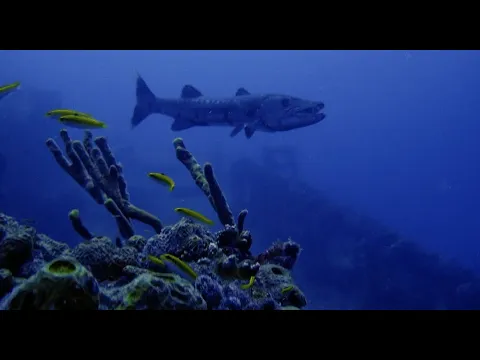
Marine engineers and biologists who monitor these programs show a pattern: submerged structures begin to be colonized by algae, sponges, and corals, which attach to hard and rough surfaces. Over time, small fish begin to frequent the area, attracting larger predators and establishing complete trophic chains.
According to surveys by the FWC and universities in Florida, species such as grouper, snapper, mackerel, barracuda, and lobster have begun to use artificial reefs as habitat. This has two implications: ecological recovery and economic strengthening, especially in regions dependent on sport fishing and diving tourism.
The process is slow and cumulative. Some structures take over 10 years to achieve significant ecological maturity, but when they reach this point, they begin to perform functions very close to those of a natural reef.
Underwater Economy: Tourism, Fishing, and Coastal Cities
This volume of submerged structures is not for decoration. It serves a concrete economic purpose. According to data from state agencies cited by local media, diving tourism associated with artificial reefs generates hundreds of millions of dollars annually in Florida, strengthening dive operators, marinas, hotels, and commerce.
Furthermore, recreational fishermen find greater availability of commercial species around these artificial reefs, which reduces pressure on natural reefs and sensitive species. Some counties report a consistent increase in recreational fishing records following the installation of artificial reefs.
This indirect economic effect reinforces the logic of the State: an artificial reef is an environmental infrastructure that generates wealth, whether through fishing, diving, or coastal protection.
Reefs That Protect Cities: Ecological Engineering Against Storms
Florida is one of the most vulnerable states in the U.S. to the impact of hurricanes, tropical storms, coastal erosion, and surges. An unprotected coast loses sand, invades properties, and increases urban costs.
Artificial structures act as rough barriers that broke wave energy, reduce water speed, and help maintain dune, beach, and mangrove systems. They do not replace hard barriers, such as seawalls, but work alongside ecology, reducing public spending on beach widening and artificial sediment replacement.
Cities like Miami and Tampa are testing combinations of artificial reefs + coastal vegetation + dune management, an approach known as nature-based coastal engineering.
Why This Became a National Policy in the U.S.
The scale of Florida is not isolated. Other states, such as Alabama, North Carolina, and Texas, also have structured programs. But no state compares to Florida in inventory, material diversity, and technical monitoring.
The reason is simple: Florida’s coast is long, vulnerable, and intensely urbanized. It combines all the factors that make an artificial reef program strategic and socially useful:
- dense cities
- coastal economy
- marine tourism
- climate risk
- pressure on ecosystems
In this context, artificial reefs cease to be a curiosity and become public infrastructure fueled by data, georeferencing, and applied science.
An Invisible Ecological Laboratory for the Future
Today, researchers treat Florida as a unique case: few places in the world have so many documented artificial reefs, with so many decades of monitoring. This allows universities to study carbon deposition, coral growth, industrial colonization, hydrodynamics, coastal regeneration, and blue economy simultaneously.
For anyone looking at Florida’s coast from an airplane, it all seems just ocean. But beneath the surface lies one of the largest ecological infrastructures ever installed by a modern State.







-

3 pessoas reagiram a isso.