





 Portuguese
  English
  Spanish
  5 min of reading
  16 comments


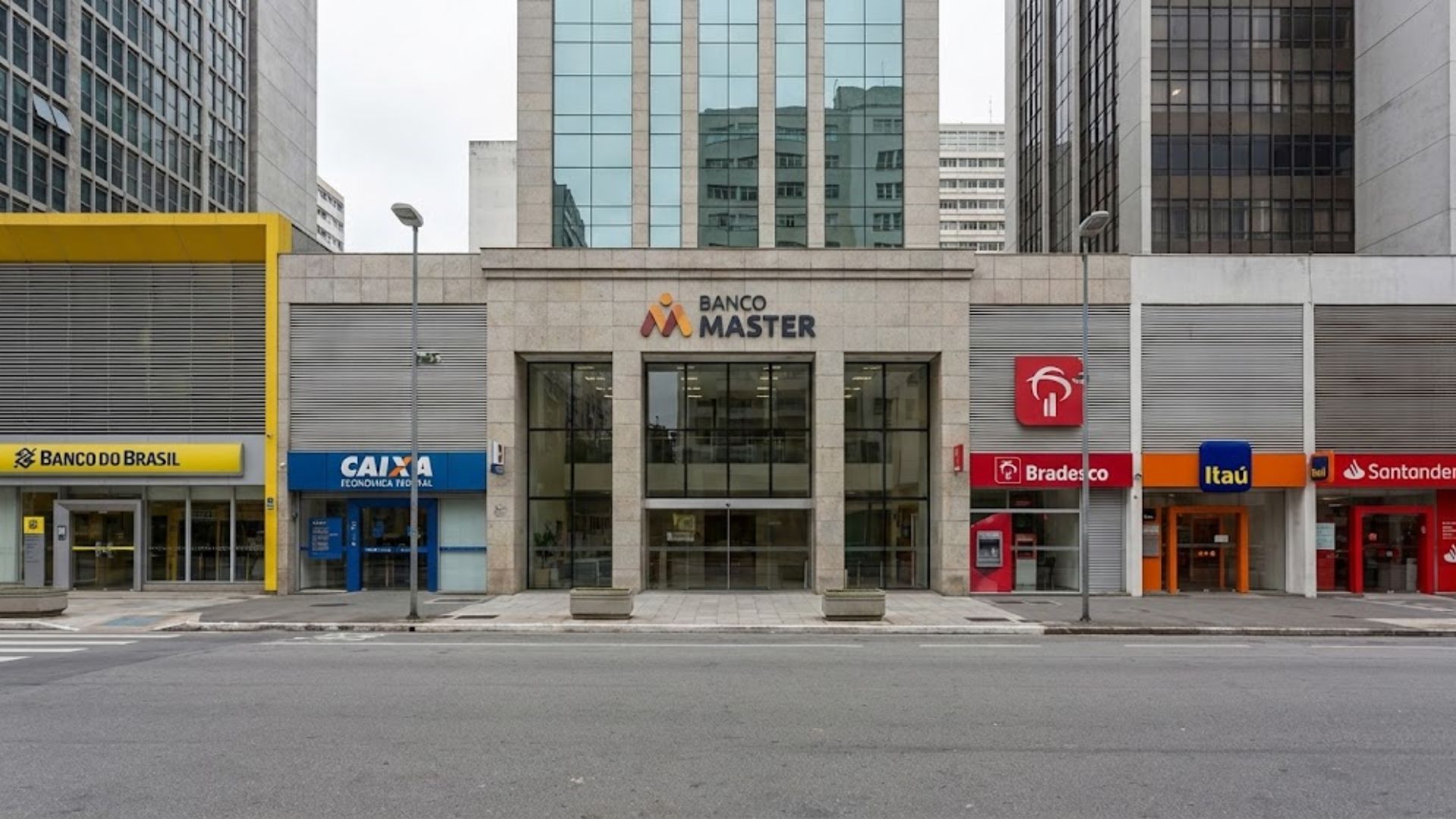


Movement That Exposed Frauds, Pressured Public Funds, and Triggered the Largest Operation of the FGC Reignites Debate About Risks and Limits of Banking Coverage in the Country.
The extrajudicial liquidation of Banco Master, decreed by the Central Bank, raised alarms among investors, public officials, and account holders across the country.
The measure was taken after investigations pointed to frauds in the issuance of credit securities and a severe liquidity crisis in the institution, which became unable to meet its obligations.
At the same time, the episode jeopardized about R$ 1.9 billion invested by state and municipal pension funds and led the Credit Guarantee Fund (FGC) to project a reimbursement operation estimated at up to R$ 41 billion, the largest in its recent history.
-
The institute that trained the greatest aerospace engineers in Brazil has just opened its first campus outside São Paulo after 75 years: ITA Ceará will have R$ 445 million, new courses in energy and systems, and classes are expected to start in 2027.

-
Luciano Hang, owner of Havan, goes to Juiz de Fora after the tragedy in February, brings R$ 1 million, hands out R$ 2,000 cards, and donates up to R$ 15,000 to victims in the region.

-
The Brazilian passport allows legal residence in dozens of countries without the need for a prior visa, and most Brazilians are unaware that they can apply for residency directly upon arriving in nations in South America, Africa, and even Europe.

-
Petrobras sends a message to Brazilian truck drivers after fuel collapse and reveals plan to have 100% domestic diesel.


Despite the significant impact, the Central Bank and the Financial Stability Committee reiterate that the episode does not represent a systemic risk to the National Financial System.
The Master conglomerate held about 0.57% of total assets and 0.55% of fundraising in the system, a proportion considered small compared to the set of financial institutions operating in the country.
Frauds and Arrest of Controller Daniel Vorcaro

Federal Police investigations describe a scheme based on the issuance and sale of fake credit securities, creation of non-existent credit portfolios, and use of these papers to artificially inflate the bank’s assets.
Estimates indicate that the frauds may exceed R$ 12 billion. At the center of the case is Daniel Vorcaro, controller of Banco Master.
He was detained by the Federal Police at Guarulhos International Airport when he was preparing to leave the country on an international flight, the day before the official announcement of the extrajudicial liquidation.
The arrest occurred simultaneously with the execution of search and seizure warrants in different states, in an offensive targeting both Master and operations involving other market agents.
At the same time, court decisions and documents sent to the Central Bank report that part of the fraudulent operations led to the sale of securities to the Bank of Brasília.
According to a federal judge’s ruling, executives from the public bank allegedly acquired credit portfolios tied to non-existent assets, which could lead to billion-dollar losses.
The court ordered the temporary suspension of the previous management and the hiring of an independent audit to investigate the facts.
Clients’ Money and FGC’s Actions
With the extrajudicial liquidation, deposits and investments eligible for the FGC guarantee are to be reimbursed according to the fund’s rules.
The standard coverage applies to products such as demand deposits, savings accounts, and CDBs issued by Master, always respecting the limit of R$ 250 thousand per CPF or CNPJ and per institution.
According to the FGC, the case involves approximately 1.6 million creditors with covered products, totaling around R$ 41 billion in eligible balances.

The fund claims to have assets exceeding R$ 100 billion, sufficient to absorb the reimbursement operation without compromising its ability to act in other episodes.
In practice, for most small investors and account holders, the risk of “losing everything” is mitigated by the FGC itself, as long as the total amount invested per CPF in Banco Master does not exceed the covered limit.
The operationalization of the payments occurs through authorized institutions, which guide clients on deadlines, channels, and necessary documents to recover the funds.
Risks for Public Funds and Unsecured Securities
The most sensitive point of the crisis lies with institutional investors who bought securities not covered by the FGC, especially long-term financial letters.
This group includes the R$ 1.9 billion invested by state and municipal pension funds.
Specific social security systems from different federative entities acquired Master securities with high profitability but without FGC protection.
Among the most exposed cases is Rioprevidência, the pension fund of the State of Rio de Janeiro, which invested about R$ 970 million in financial letters from the bank.
The autarchy confirmed the amount and stated that the payments of pensions and retirements are secured while seeking alternatives such as replacing these securities with federal precatories.
In addition to Rio de Janeiro, other states and municipalities have significant investments, leading oversight bodies and the Federal Police to open specific investigations into the offering of these products to pension systems.
One front is investigating whether the managers fully understood the risks involved and whether diversification and portfolio security rules were respected.
In this scenario, any losses may fall on the public funds themselves, rather than directly on the individual assets of the insured.
If there is a need to restore the reserves, states and municipalities may face additional pressure on their budgets, with medium- and long-term impacts on the sustainability of pension systems.


Is There A Real Risk of Another Bank Collapsing?
After the Master episode, doubts grew about the possibility of another significant institution following the same path.
So far, the Central Bank and the Financial Stability Committee claim not to see a risk of systemic crisis or domino effect on large banks.
In public documents, the Central Bank emphasizes that the liquidation of Master does not represent systemic risk due to the relatively small size of the conglomerate and the close monitoring exercised by supervision.
In the case of the Bank of Brasília, involved due to the purchase of Master portfolios and the failed attempt to acquire the private bank, the context is different.
The BRB continues to operate, under the supervision of the Central Bank and monitoring by oversight bodies.
The court ordered thorough audits and the replacement of part of the leadership, but no liquidation was decreed nor bankruptcy announced.
Experts interviewed by the press highlight that there are risks of significant losses for the BRB due to its exposure to Master, but this does not indicate a prediction of the institution’s collapse or direct threats to its account holders.
The Central Bank, by maintaining the countercyclical capital buffer after the episode, signaled that it does not perceive a need to require extra reserves from the banking system as a whole, reinforcing that the problem remains confined to specific cases.









Matéria **** de um pseudo repórter com zero de credibilidade.
Resumindo…
BRB ESTA QUEBRADO.
INCLUSIVE O MORGAN JÁ RETIROU TODOS OS PAPÉIS DE INVESTIMENTO NO BRB E DISSE CLARAMENTE:
CORRAM DO BRB
Leiam com atenção!
Disse sim, Banco de Brasília, conhecido como Banco BRB.