





 Portuguese
  English
  Spanish
 5 min of reading
  4 comments


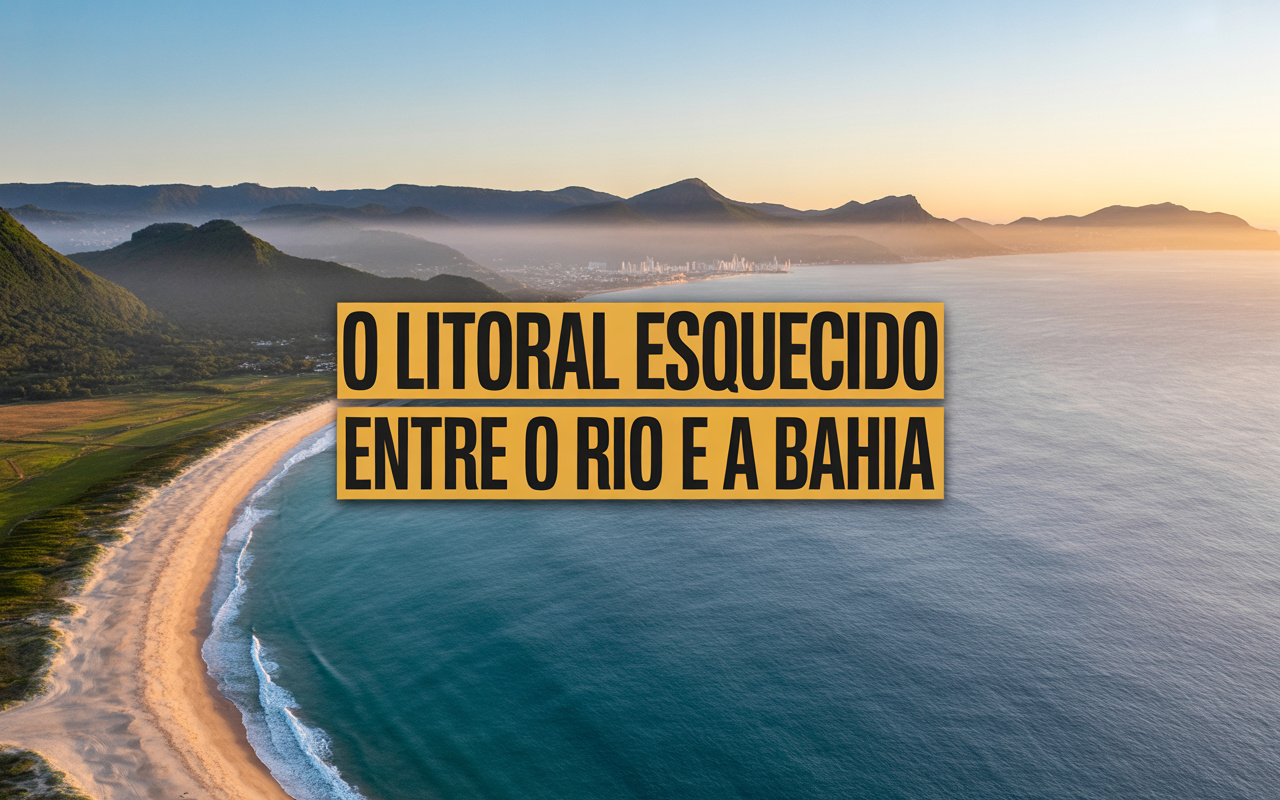


With over 400 km of coast and one of the largest ports in the country, the coast of Espírito Santo remains forgotten between Rio and Bahia, but holds unique beaches and landscapes.
Between Rio de Janeiro and Bahia, two of Brazil’s biggest tourist icons, there is a stretch of coastline that many Brazilians can’t even identify on the map. There are over 400 kilometers of shoreline, cut by mountains, cliffs, coves, and preserved islands, washed by a sea that alternates shades of green and blue. This is the coast of Espírito Santo, a state that combines rare natural beauty, economic wealth, and environmental diversity — but that, curiously, remains off the beaten path of major national tourist routes.
While Rio de Janeiro boasts international fame for its beaches and Bahia attracts crowds with its culture and cuisine, Espírito Santo seems to live in the shadow of its neighbors. And the question is inevitable: why is such a privileged coastline so seldom remembered?
A Coastline of 401 Kilometers That Blends Sea and Mountain
According to the Brazilian Institute of Geography and Statistics (IBGE), the coastline of Espírito Santo measures 401 kilometers, varying between urban beaches, coves, rocky cliffs, and barrier islands. In a single coastal trip, it is possible to go from a beach with warm, shallow waters to find, just a few kilometers away, mountains that exceed 1,000 meters in altitude, creating a visual contrast that few Brazilian states offer.
-
These living root bridges and ladders are over 700 years old and help indigenous people survive in one of the rainiest regions in the world.

-
From sertanejo star to international investor: Ana Castela invests millions in a mansion in the USA, creates a themed accommodation in Orlando, and shows that the “boiadeira” also wants to grow away from the stage.

-
The 10 most stunning motorhomes in the world: a $3 million trailer with a rooftop nightclub and garage for a Ferrari, “palaces on wheels” with Italian marble, private cinema, and five-star hotel luxury for billionaires.
-
Trump wanted to spend $400 million on the White House, but the courts prohibited the million-dollar construction.


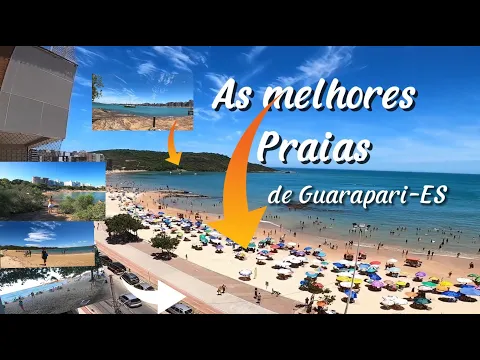

The Government of Espírito Santo, through the Department of Tourism (Setur-ES), defines the state as “a meeting of the sea with the mountains.” And this definition is not just poetic. In cities such as Guarapari, Anchieta, and Vila Velha, tourists can step off the sand and, in less than an hour, be in mountainous regions like Domingos Martins or Pedra Azul, with a European climate and colonial cuisine.
Moreover, the coastline hosts various preserved ecosystems, such as the mangroves of Vitória and Cariacica, the cliffs of Marataízes, and the dunes and barrier islands of the Itaúnas State Park in Conceição da Barra — one of the most beautiful and protected areas in Southeastern Brazil.
The Forgotten State Between Two Giants
But if Espírito Santo has so much to offer, why is it so little remembered? The answer involves a combination of historical, logistical, and market-related factors.
For decades, the state concentrated its economic development on the industrial and port sectors, leaving tourism in the background. While Rio de Janeiro consolidated its image as Brazil’s postcard and Bahia invested heavily in culture and entertainment, Espírito Santo prioritized infrastructure and exports.
The result is visible. According to data from Embratur, the state receives only 2.5% of the tourists from the Southeast, and its hotel network is still underdeveloped compared to its natural potential. “Espírito Santo is a sleeping giant of national tourism,” defines André Correia, researcher at the Espírito Santo Tourism Observatory. “It has clean beaches, good food, and warm hospitality, but it still hasn’t managed to market itself to Brazil.”
A Coast Shaped by Work and Economy
If tourism is still timid, the same cannot be said for the economic strength of the Espírito Santo coastline. The state houses one of the largest port complexes in the country, with highlights being the ports of Vitória, Tubarão, Capuaba, Praia Mole, and Barra do Riacho.
According to the National Agency of Waterway Transportation (ANTAQ), these ports handle over 100 million tons of cargo per year, mainly iron ore, cellulose, and steel products. This places Espírito Santo among the national leaders in exports — a logistical engine that drives the economy but also creates a contrast: a coastline more geared towards foreign trade than internal tourism.

On the other hand, this port-related vocation has brought infrastructure improvements and investments that are now beginning to benefit the tourism sector as well. The airport in Vitória, fully modernized in 2018, expanded air connections, and new urban revitalization projects — such as Cais das Artes and the Camburi Waterfront — aim to integrate the capital into leisure and cultural tourism.
Beaches from North to South: From Calm to Adventure
Along its 400 km, the Espírito Santo coastline offers a diversity that surprises even the most experienced visitors.
In the north of the state, the highlight is Itaúnas, in Conceição da Barra — a village surrounded by dunes, coconut trees, and traditional forró music. The dunes, reaching up to 30 meters high, shift with the wind and conceal the ruins of an ancient village buried by sand. The site has been recognized as a Natural Heritage site by UNESCO and symbolizes the harmonious coexistence between nature and popular culture.
In the center, in Vila Velha and Vitória, urban and historical tourism blends with beaches. The Convento da Penha, dating back to 1558, stands on a cliff with panoramic views of the sea, while the Ilha das Caieiras preserves fishing traditions and a cuisine based on moquecas and seafood.

Further south, Guarapari continues to be the main leisure destination in the state. Known for its monazite sands, rich in minerals with supposed therapeutic properties, the city has attracted beachgoers for over half a century. Its beaches — such as Castanheiras, Peracanga, and Meaipe — have clear waters and form coves protected by rocky cliffs.
Natural Beauties That Still Wait for Recognition
Despite so many attributes, Espírito Santo still struggles to gain the same visibility as other destinations in the Southeast. The lack of national campaigns and competition with established hubs make it difficult for the state to stand out in the collective imagination.
But this also has a positive side: the Espírito Santo coastline maintains an authentic and tranquil atmosphere, without the overcrowding of other destinations. The beaches are clean, traffic is fluid, and the cost of accommodation is more accessible. For travelers seeking nature, culture, and tranquility, the state offers a rare experience — of natural beauty still not captured by mass tourism.
According to the Department of Tourism of Espírito Santo (Setur-ES), the number of visitors grew 18% between 2021 and 2024, driven by regional publicity initiatives and the trend of nature tourism.
A Silent Giant by the Atlantic
The coastline of Espírito Santo is a Brazilian paradox: extensive, diverse, and economically vital, yet still little celebrated and underestimated. Between gigantic ports and fishing villages, the state carries a unique identity — a blend of coastal simplicity and industrial strength that makes it different from any other destination.
For many, Espírito Santo is still a passage between Rio and Bahia. But for those who allow themselves to discover it, it reveals itself as a hidden treasure of the Southeast, a place where the sea meets the mountains, tradition meets modernity, and beauty remains, silently, awaiting recognition.








Conheço o Espírito Santo, fui em 2020, é muito bonito mesmo, fiquei em Vitória, conheci Guarapari e as cidades coloniais de imigração italiana.
A questao é que a grande maioria das praias do ES q conheci , as aguas nao alternam entre o verde e azul. As aguas geralmente sao marrom, um tom barrento, que nao enche os olhos, muito ao contrário.. de qq forma viva o ES!
Não tem nada esquecido aqui!!
Temos muita visita de turistas.
Litoral abandonado.
Só salva Guarapari, pelos mineiros sem praia.