





 Portuguese
  English
  Spanish
  4 min of reading
  0 comments



The Guy Transformed Fame into a Billion-Dollar Business by Selling His Company and Digital Twin, Reinforcing the Advancement of the Creators’ Economy and AI.
In January, in Dubai, Khaby Lame, the biggest TikTok influencer by follower count, sold his company and the commercial rights to his image — including a digital twin based on artificial intelligence — for an estimated amount between US$ 900 million and US$ 975 million.
The deal was made through a stock swap, with no cash payment, thus inaugurating a new level in digital mergers and acquisitions involving content creators.
The negotiation involves Step Distinctive Limited, responsible for managing Khaby Lame’s career, and Rich Sparkle Holdings, which now takes operational control of the influencer’s business for the next three years.
-
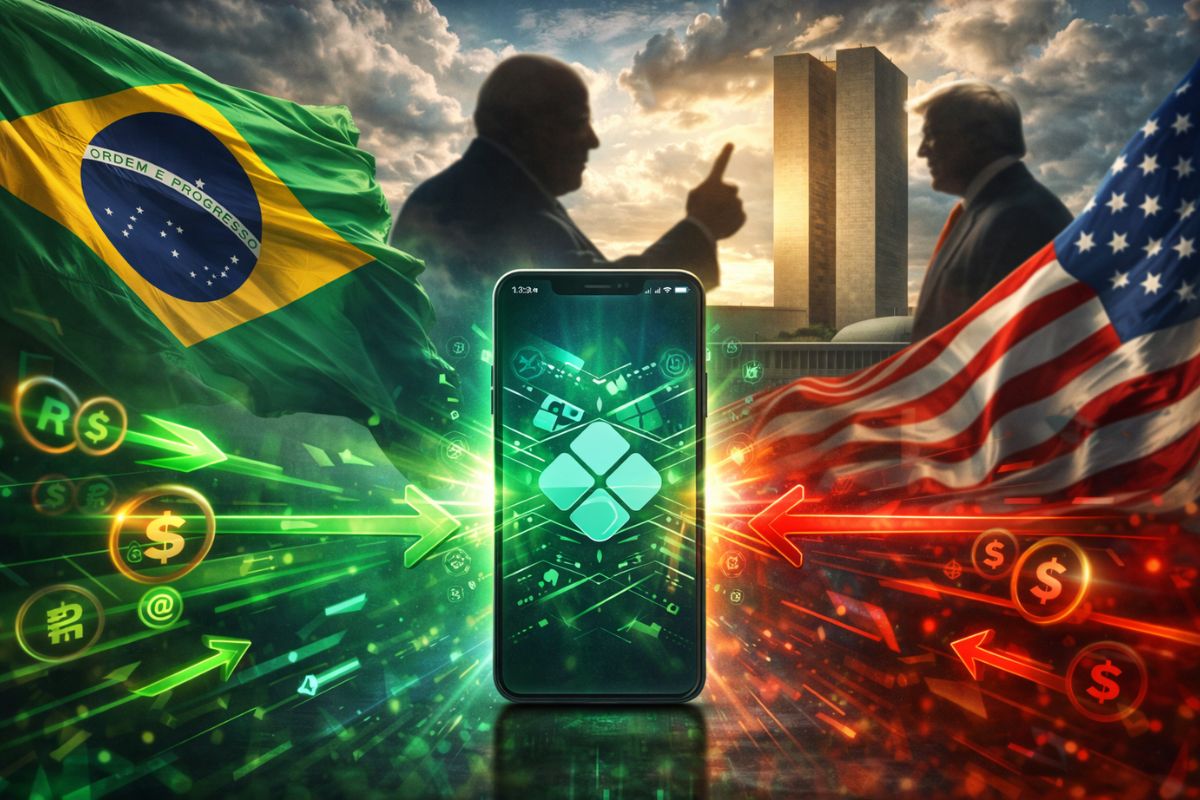
“No one will make us change the Pix,” says Lula after the US report.

-
Lula responds directly to Trump and says that Pix is from Brazil and will not change under pressure from anyone, after a report from the United States pointed out the Brazilian payment system as an American trade barrier.
-
Amazon has just announced a new fee on all deliveries, and your online purchases will become more expensive starting April 17, including for those buying from the United States here in Brazil.

-
He sold his share for R$ 4 thousand, saw the company become a giant worth R$ 19 trillion, and missed the opportunity of a lifetime.


In this context, a central question arises: to what extent can automation and corporatization preserve the authenticity that sustained the creator’s global fame?
From Layoff to Global Creator Economy
Khaby Lame’s journey has become one of the most emblematic examples of the creator economy.
In 2020, during the pandemic, he lost his job as a machine operator in a factory in Italy. With no immediate prospects, he decided to start posting short, silent videos on TikTok.
The simple format, combined with his striking facial expressions, quickly caught attention.
While many creators relied on lengthy explanations, Lame parodied excessively complex tutorials from the internet, breaking them down with obvious solutions, always finished off with a characteristic hand gesture.
Moreover, the silent style removed language barriers and, consequently, boosted his global reach.
On June 22, 2022, he surpassed Charli D’Amelio and thus became the most followed person on TikTok. From that moment, he solidified as a digital asset of international value.
What is Included in the Billion-Dollar Deal
Despite the significant amount of the deal, Khaby Lame did not own alone Step Distinctive Limited. According to Celebrity Net Worth, he owned 49% of the company.
The remaining 51% belonged to strategic partners, including Anhui Xiaoheiyang Network Technology from China, linked to the conglomerate Three Sheep.
With the sale, Step Distinctive — headquartered in Dubai — maintains responsibility for licensing, collaborations, and global sales.
At the same time, Lame remains a shareholder of Rich Sparkle Holdings, but relinquishes direct control over operational decisions.
In practice, his image is now managed as a highly structured corporate product.
Digital Twin and Artificial Intelligence at the Center of the Business
The most innovative aspect of the deal involves the transfer of rights over the digital twin of Khaby Lame.
Developed with artificial intelligence, this avatar reproduces appearance, gestures, and communication in different languages, without requiring new recordings.
In China, this model is already widely spread.
Platforms like Douyin, for example, operate with active virtual streamers 24 hours a day, which reduces operational costs by up to 80%.
This way, a single creator can operate simultaneously in various markets, expanding revenues without physical time or presence limits.
Digital Mergers and Acquisitions Accelerate in the Sector
Khaby Lame’s case, therefore, does not represent an isolated movement.
Digital mergers and acquisitions in the creative economy grew 73% in 2025, totaling 52 transactions.
Valued at over US$ 200 billion in 2024, the sector could, according to projections, exceed US$ 1 trillion before 2033.
Other examples reinforce this trend.
Beast Industries, from MrBeast, has already reached a valuation of US$ 5 billion and generated US$ 473 million in revenue in 2024.
Meanwhile, Prime, from Logan Paul, earned US$ 1.2 billion in 2023, with an estimated valuation between US$ 2 billion and US$ 3 billion.
Common to all is the same logic: transform followers into recurring consumers.
Who is the Buyer and What Are the Risks
Before the acquisition, Rich Sparkle Holdings operated in the financial printing sector and had no relevant history in social media or artificial intelligence.
Therefore, analysts question its ability to fully exploit Khaby Lame’s commercial potential.
Creators build value from authenticity and direct connection with the audience.
When large corporations take over this control, there is a risk of excessive standardization and, consequently, the loss of spontaneity — precisely the element that propelled the initial success.
A Symbol of the New Digital Economy
What began as homemade videos in March 2020 has, therefore, transformed into one of the largest transactions in the creator economy, just five years later.
Digital influence, artificial intelligence, and global capital now converge in a single deal.
Ultimately, Khaby Lame’s case symbolizes the maturity of a sector that already operates on the same scale as traditional industries.
Thus, the big unknown now is whether technology and conglomerates can preserve the creative freshness that transformed the influencer into a global phenomenon — or if the silence that consecrated him will give way to algorithms speaking in his name.










Seja o primeiro a reagir!