





 Portuguese
  English
  Spanish
  6 min of reading
  0 comments


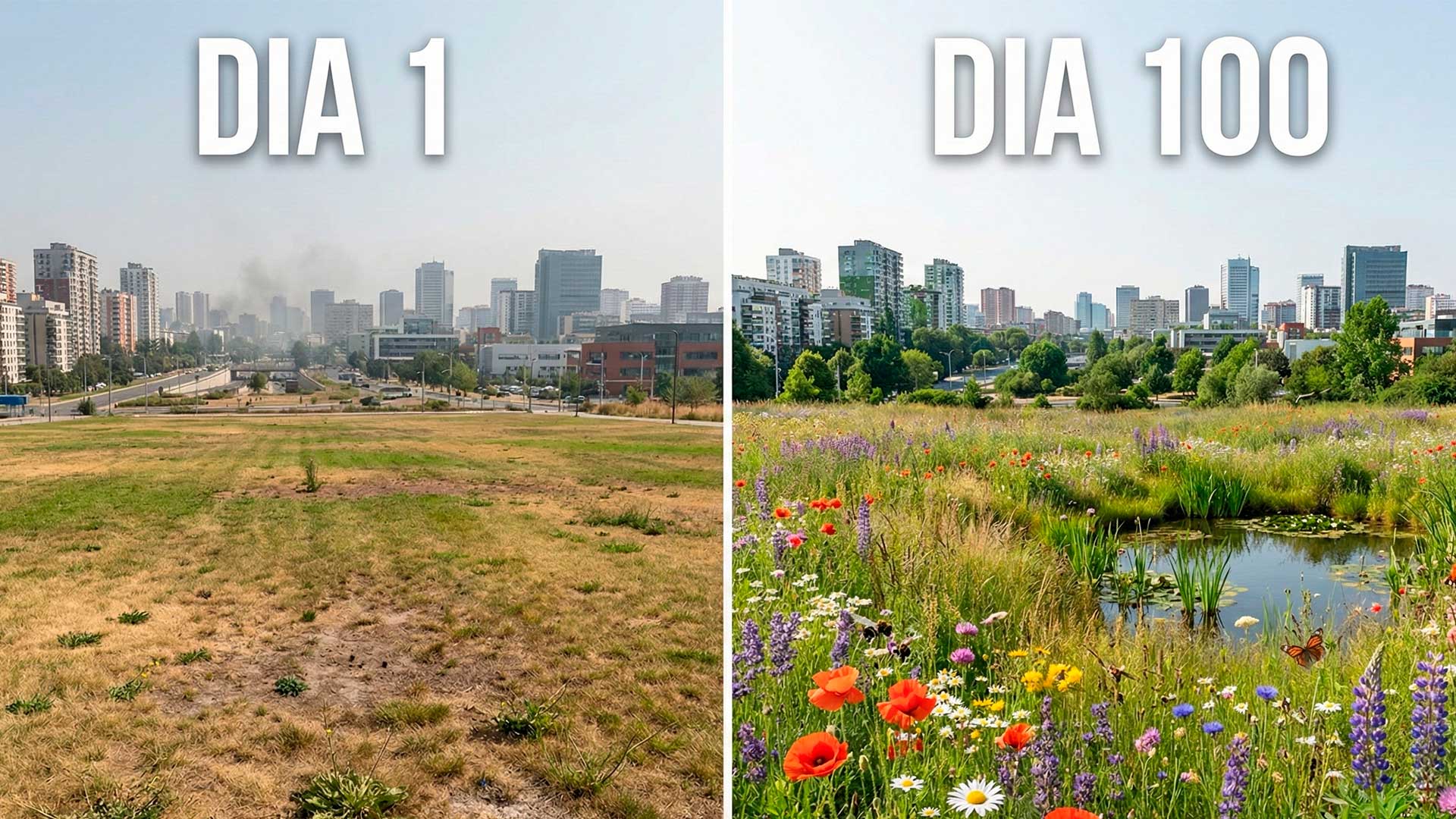
Residents and municipalities are reducing grass cutting and replacing part of the lawn with flowers and native plants to attract pollinators, save water, and increase biodiversity. The trend has gained strength with campaigns like No Mow May and practical guides for managing mini meadows and gardens for wildlife.
The idea that a low and uniform lawn is synonymous with “beautiful garden” is losing ground in several countries. Instead of the green trimmed every week, a more natural style is growing, with less frequent mowing, areas of tall grass, and strips of flowers that become food for bees, butterflies, and other insects.
This movement has a central reason, the biodiversity crisis and the lack of resources for pollinators in urban areas. Conservation organizations argue that even small spaces can function as connected “islands” of habitat, especially when there are plants that bloom and provide nectar and pollen.
The trend also intersects with rewilding, a term used for actions aimed at restoring natural processes and more resilient systems, generally with community involvement. Recent global guidelines reinforce this social component and the idea of more self-sustaining ecosystems, although “yard rewilding” is an urban version at a smaller scale.
-
A Brazilian millionaire couple restores a farm over 150 years old in the interior of São Paulo and transforms the historic property with Portuguese tiles, antique furniture, and new spaces into a refuge that blends tradition, comfort, and sophistication.
-
Submerged city in a lake in Minas reveals intact streets, preserved vehicles, and houses after more than 60 years, impressing divers.

-
Yellowstone has started to rise again in an area of the caldera, and the movement rekindles fears surrounding the U.S. supervolcano, as scientists monitor the deformation and try to understand what is happening underground.
-
Woman arrested after receiving $1.2 million due to banking error and not returning the amount.


In practice, what is happening is simple to understand, less mowing, less “green carpet,” and more plant diversity, mainly native species. And this is becoming a topic because it touches on aesthetics, neighborhood rules, and public health, in addition to bringing visible results in a few months.
Why the Perfect Lawn Has Become an Environmental Problem in Many Cities
The traditional lawn is usually composed of few species and is maintained by constant mowing, fertilization, and, in some places, intense irrigation. This reduces the chance of spontaneous flowers and diminishes the food available for pollinators, especially when urban areas are already fragmenting habitats.
For this reason, gardening and conservation entities have recommended the opposite approach, relaxing mowing and transforming parts of the lawn into areas rich in flowers. The Royal Horticultural Society in the UK describes that even a “mini meadow” can create habitat opportunities for pollinators and other insects.
This debate has also gained momentum because maintaining the lawn can be costly for the climate and the wallet in dry regions. In the United States, the EPA estimates that outdoor use accounts for about 30 percent of residential water, and that landscaping irrigation represents a significant portion of that consumption.
No Mow May and the Cultural Shift That Started in the United Kingdom and Crossed the Atlantic
One of the most well-known pushes came from No Mow May, an annual campaign by Plantlife that encourages people to put away their lawnmowers in May and let flowers grow to help nature. Plantlife itself describes the initiative as a simple gesture, with the potential to create food and shelter for insects and connect people to biodiversity.
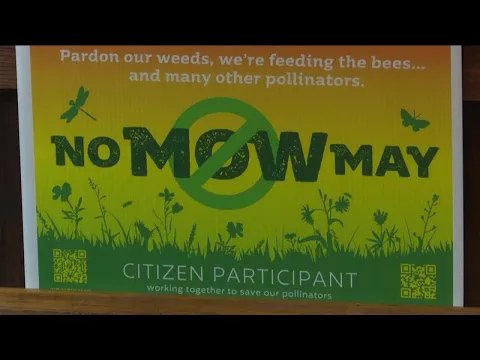

According to Gardeners’ World, No Mow May was launched by Plantlife in 2019 in the UK, in the context of a historic loss of flower-rich meadows and pressure on pollinators.
The idea spread to North America and gained local variations. The Xerces Society points out that the campaign came on strong through Appleton, Wisconsin, with coordination from networks linked to Bee City USA and community initiatives.
The popularization came along with an important discussion; mowing less helps but doesn’t solve everything. Experts have argued that the greatest impact arises when reducing lawn space becomes a permanent change, with beds and strips of native plants instead of the monochromatic “carpet.”
What Science Has Measured When the Lawn Becomes a Mini Meadow
The appeal of the topic is not just in beautiful flower photos. A study published in 2020 evaluating No Mow May found greater richness and abundance of bees in unmowed areas, particularly highlighting the size of the unmowed section and the diversity of flowers as associated factors.
This type of result feeds the narrative that gardens and backyards can function as pieces of an urban mosaic. Research has also explored how gardens can reduce “gaps” of food for pollinators at certain times of the year, reinforcing the importance of plants that bloom in succession.
At the same time, the conservation community itself warns that letting things grow without a plan can favor invasive plants in some areas. Xerces argues that stopping mowing for a month can be a first step, but the most solid strategy usually involves replacing lawns with vegetation suitable for the local ecosystem.
From Lawn to Meadow with a Beautiful Appearance and Management That Works
Gardening guides have insisted on one point that avoids frustration: a meadow is not abandonment, it is different management. The RHS describes practical paths to create meadows, such as seeding flowers, using flower turf, and converting an existing lawn, always adapting the plant mix to the soil and location.
The same RHS also emphasizes that maintenance depends on well-planned mowing and removal of material, to maintain diversity and prevent a few species from dominating the space. This logic of “mowing at the right time” is what distinguishes a mini meadow from an area that just becomes tall grass.
For those seeking a conservation-based approach, the National Wildlife Federation recommends reducing lawn space and creating beds and meadow areas with native species, reinforcing that it is possible to maintain aesthetics and organization while increasing value for wildlife.
In smaller areas, the strategy is often to start with a strip or a corner of the yard, create well-defined edges, and provide simple signage. A report from the AP showed that the trend can generate friction with neighbors and authorities, and that signs explaining the environmental purpose help reduce resistance.
And there is an inevitable topic when the grass grows, mosquitoes. Conservation and management sources recommend planning drainage and avoiding standing water, as well as prioritizing diversity and balance in the garden, since the problem is usually more related to containers and puddles than to a well-maintained mini meadow.
Water, Urban Heat, and Costs: Why Municipalities and Residents Are Reevaluating Green Spaces
Beyond biodiversity, resource economy has become a central argument. The EPA calculates that outdoor consumption accounts for about 30 percent of residential use, and that much of this can go to landscaping irrigation, a sensitive point in droughts and heat waves.
In this scenario, replacing part of the lawn with more adapted vegetation, requiring less water, is presented as a dual solution. It reduces maintenance and can improve local thermal comfort, especially when combined with more shade and less exposed soil.
Urban Rewilding and the Controversy That Divides Neighborhoods
Rewilding is often associated with larger-scale restoration projects, but recent global guidelines emphasize the importance of involving people and thinking about social benefits alongside ecological recovery. This helps explain why “ungrooming” cities has become a public debate; it touches on what each community considers acceptable as urban landscape.
The controversy appears on two fronts. On one side are the advocates of short lawns, who argue about the risk of pests, the appearance of abandonment, and conflicts with local rules, while on the other side are residents who see urban biodiversity as a priority and argue that aesthetics can be organized with edges and management.
In the middle of this, the notion is growing that the best response is not to abandon mowing, but to redesign urban green spaces to have more flowers, more natives, and more diversity throughout the year. This is the difference between a one-month fad and a real change in how cities “produce nature” in daily life.
In your neighborhood, is a trimmed lawn care or a waste of water and space for biodiversity? Tell us in the comments if you think mini meadows are a modern solution or disguised chaos, and state what rule should apply to everyone.




-

-

2 pessoas reagiram a isso.