





 Portuguese
  English
  Spanish
  5 min of reading
  1 comment


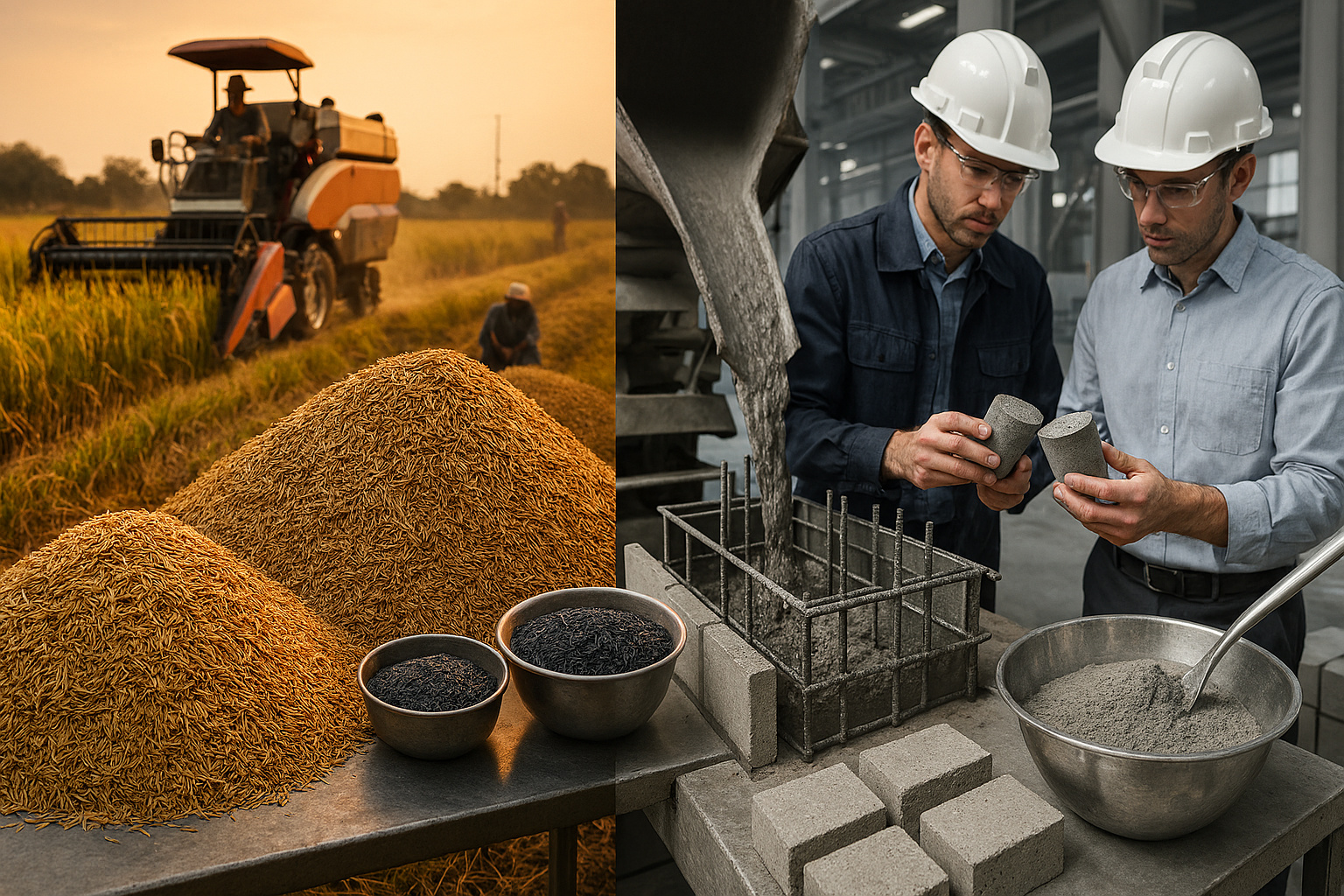


Rice Husk Ash Starts to Replace Part of Cement, Increasing Density and Durability of Concrete While Reducing Agricultural Waste.
Rice husk is an abundant byproduct in global agriculture. For every ton of processed rice, about 200 kilos become husk—a waste that is difficult to dispose of because it is not suitable for animal feed, does not decompose easily, and accumulates in large volumes near producing regions. In countries like India, Vietnam, Indonesia, and Brazil, mountains of this material grow alongside processing plants.
For decades, the industry treated this as waste, often burned outdoors. However, when rice husk is burned under controlled conditions, it produces an ash that is extremely rich in amorphous silica, a component very similar to what cement uses to gain strength. From this observation, research started in the latter half of the 20th century on the use of Rice Husk Ash (RHA) as a substitute for cement.
The idea was simple yet powerful: transform a worthless agricultural material into an engineering input capable of improving concrete performance. Today, this technique has not only evolved but is also being applied in real construction projects, especially in agricultural countries.
-
In the United States, a valley 86 meters below sea level has reached 56.7°C and remains the place with the highest air temperature ever recorded on Earth, a direct result of a terrain that traps heat between high mountains in the midst of the desert.
-
Goodbye clothes with odors from use: Samsung’s device uses high-temperature steam, eliminating up to 99.9% of bacteria, removing dust mites, and neutralizing odors directly in the wardrobe without the need for washing.

-
Embraer arrives in Mexico with 7 new E190-E2s in 2026, after 5 jets have already been delivered, while Mexicana surpasses 1 million passengers, plans a fleet of 20 aircraft, and expands strategic routes across the country.

-
China is not joking around and is secretly expanding its nuclear weapons infrastructure: a giant dome the size of 13 city blocks, 600 warheads, destroyed villages, and a modernized military network in record time in China, says CNN.


Why Rice Husk Ash Works in Concrete?
Traditional cement reacts with water and forms a gel that solidifies and binds the aggregates (stone and sand). But this reaction is not completely efficient: some of the calcium hydroxide generated remains in the concrete without structural function and even creates pathways for water and ions to enter, causing corrosion in the rebar.
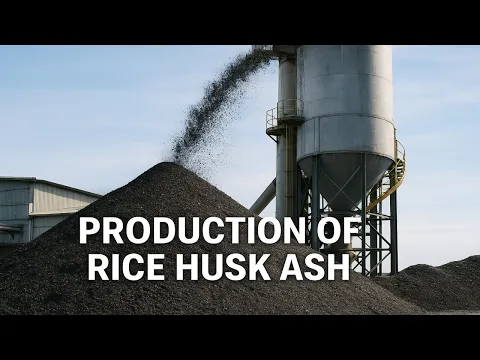

Rice husk ash, when produced correctly, acts as a pozzolan, reacting precisely with this calcium hydroxide and forming more resistant gel. The result is not only a cement savings but also a denser microstructure that is less porous and has fewer pathways for water and aggressive agents.
In Practice, This Means:
• Lower Permeability
• Higher Long-Term Compressive Strength
• Less Infiltration and Efflorescence
• Greater Durability in Humid or Saline Environments
• Reduction of Drying Cracks
Engineers report that the best benefits appear when the replacement is between 10% and 20% of cement with RHA, although studies are exploring larger numbers.
Where This Is Already Being Used and Why
Rice husk ash has gained traction primarily where two simultaneous conditions exist:
- Intensive rice production, generating cheap and available raw material
- Humid climate, which demands less porous and more infiltration-resistant concrete
Thus, the Pioneer Centers Are:
India and Southeast Asia: regions that produce rice on an industrial scale and have always dealt with humidity, salt spray, and sudden temperature variations.
Construction companies use RHA in urban pavements, precast elements, and structural blocks. Research from the Indian Institute of Technology (IIT) shows real gains in strength and cost reduction.
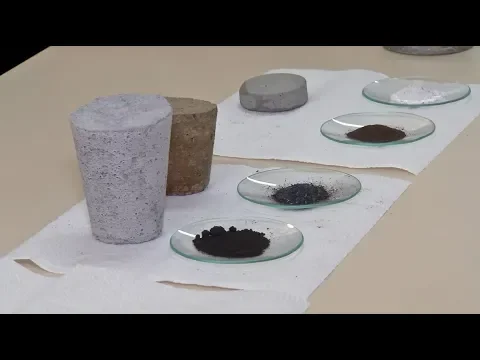
Northeast Brazil: states like Maranhão and Piauí have significant agricultural production and constructions exposed to humidity and marine environments.
Federal universities have studies showing that concrete with RHA reduces infiltration, improves performance in hot climates, and helps save cement.
The application is not restricted to large projects. In many regions, RHA is already found in mortars, sealing blocks, interlocking pavements, and precast elements. Treatment stations and coastal structures also benefit from reduced permeability.
Unexpected Advantage: Durability in Aggressive Environments
While ordinary cement struggles when exposed to saline water, sulfates, and wet and dry cycles, concrete with RHA can better withstand these environments. This happens because pozzolanic reactions create a denser matrix, making it harder for chlorides—one of the worst corrosion accelerators—to enter.
Ports, bridge piles, and buried pipes are examples of structures that must withstand decades in hostile conditions. Therefore, it is no coincidence that interest in RHA has increased precisely in coastal regions.
CO₂ Reduction Without Ideological Discourse
Here, the environmental factor is a consequence, not marketing. Portland cement is one of the materials that consume the most energy in the world, and production releases CO₂ both through burning and through the chemical decomposition of limestone.
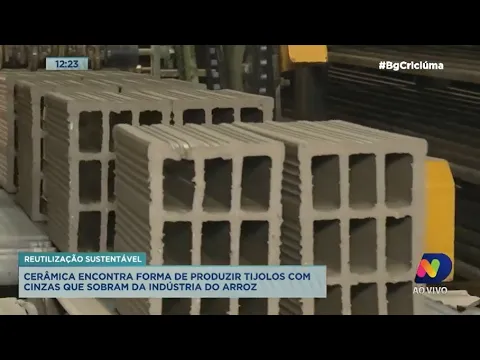
Replacing part of the cement with an agricultural waste that would be discarded reduces the carbon footprint of concrete, even if no one promotes this as an environmental banner.
For the end-user, what matters is that the project:
• Lasts longer
• Absorbs less water
• Rejects surface cracks
• And costs less in the end
And this is precisely what makes rice husk ash stand out: it is not a “green and weak” solution but a material with real technical function.
What Still Limits Large-Scale Use
The main bottleneck is not performance, but the production process. The husk needs to be burned at controlled temperatures to generate amorphous and not crystalline silica.
In uncontrolled burns, the silica turns to crystal and loses its pozzolanic capacity. This need for technical control explains why RHA advances first in regions with universities and institutions involved, before becoming an industrial standard.
A second issue is logistics: the husk needs to be transported to boilers or controlled burning units, and then the ash needs to be ground and carefully added to the mix.
This results in the technology advancing in “application islands”, usually close to rice production hubs.
From the Field to Concrete with Results
Rice husk ash does not completely replace cement, but it corrects some of its main weaknesses and also solves an agricultural disposal problem.
It is not a laboratory trend or theoretical discourse—it is a real case of convergence between agriculture and civil engineering that is becoming more common each year.
What was once a worthless byproduct is now becoming part of bridges, pavements, sidewalks, and structures exposed to moisture in places as different as Chennai, Ho Chi Minh, Kuala Lumpur, Teresina, and São Luís.
And as the price of cement fluctuates and projects are exposed to extreme climates, this type of hybrid material should gain more ground.








Em 1992/1993, como estudante de Engenharia Civil da Universidade Federal de Santa Maria ( UFSM ) no RS, participei da tese de Doutorado do Professor Geraldo Cechella Isaía, sobre o uso de casca de arroz em concretos de alto desempenho. E realmente, em determinadas proporções havia um ganho de resistência no concreto. O problema na época era conseguir escala, pois a casca tinha que ser queimada, e depois moída até virar um pó muito fino.