





 Portuguese
  English
  Spanish
  6 min of reading
  12 comments


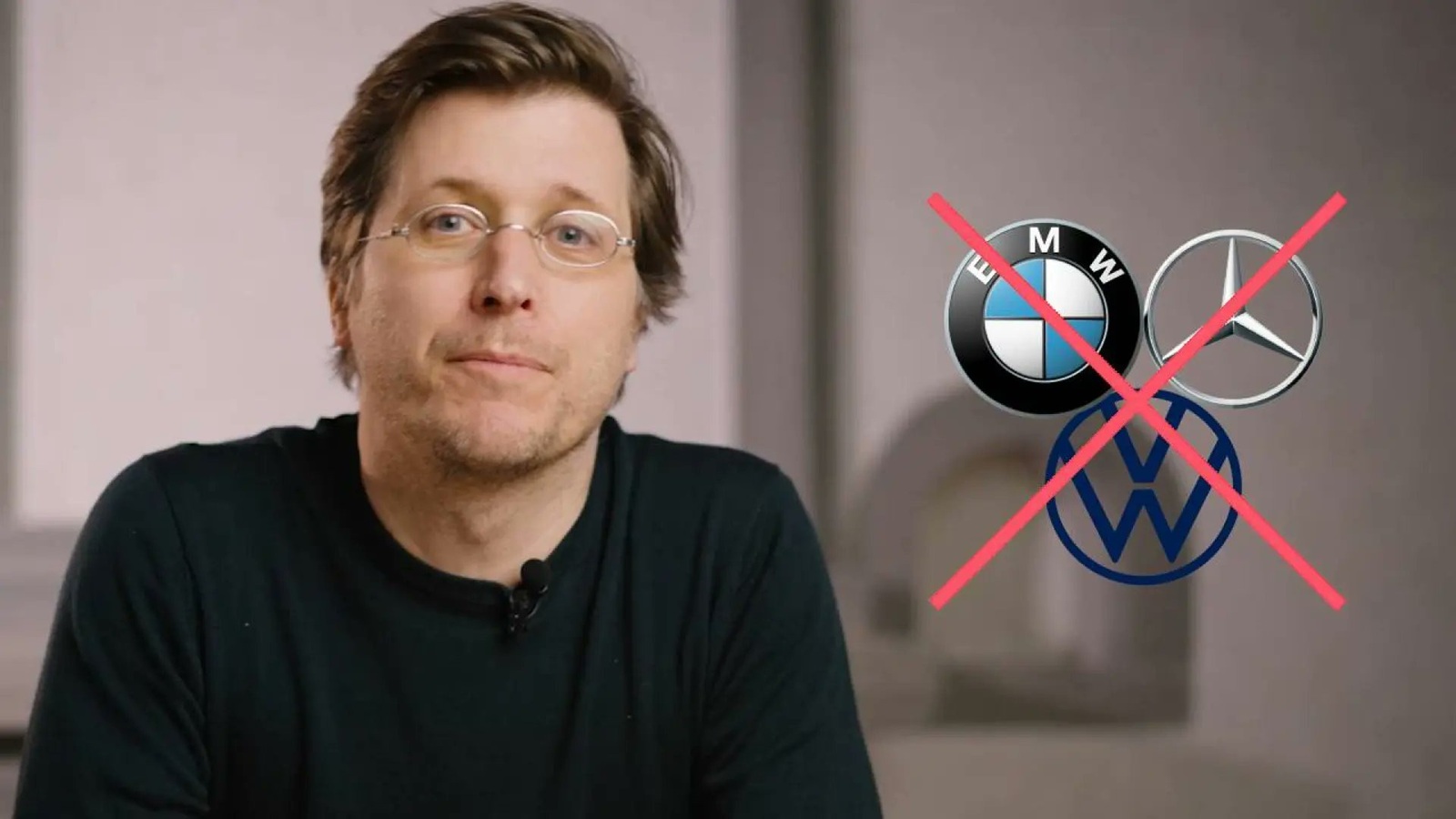


German Economist Claims BMW, Volkswagen, and Mercedes May Cease to Exist in Their Current Form, Sparking Strong Industry Reactions by Highlighting Risks in Electrification, Profits, and the Race for Autonomous Driving
The statement from one of Germany’s most influential economists has raised an alarm in the heart of the European automotive sector. According to him, the three giants BMW, Volkswagen, and Mercedes may simply cease to exist as we know them today.
This prediction comes at a time of unprecedented technological pressure, fierce global competition, and strategic challenges that put automakers in front of decisions that could define or destroy the future of each of them.
The scenario is tense. Between the electrification that demands enormous investments, the race for leadership in autonomous driving, and the weight of international tariffs, traditional brands find themselves facing a rapidly changing board.
-
The car stored for 38 years: when opening the barn door, what appears is breathtaking and looks like a scene from a movie!

-
Fiat works miracles in the Brazilian market, lowers the price of its 0 km hatch to R$ 69,990, reestablishes the model as the cheapest car in the country, and reignites the battle against Kwid and C3.
-
Chevette with cooking gas: How the gas cylinder ends up being used in cars clandestinely and why this makeshift solution can result in leaks, explosions, damaged engines, and seized vehicles.
-
Fiat launches the new 2027 Toro hybrid with 48V, 176 hp, an electric motor of 15.5 hp, a 0.85 kWh battery, up to 7% fuel savings, 8% fewer emissions, and possible exemption from IPVA.
There is a sense that, if there is no precise and swift adaptation, the German industry risks losing the prominence it has gained over decades.
The Statement That Ignited Debate in Germany

The warning came from Moritz Schularick, a widely respected German economist at universities and financial institutions.
In his words, BMW, Volkswagen, and Mercedes are facing transformations so profound that they might cease to exist in their current form.
The statement gained even more weight because it comes at a time when the sector is experiencing accelerated changes.
Electrification demands constant updates, and the development of autonomous driving has become one of the main investment focuses.
All of this happens while companies seek firmer profits, despite margins decreasing amid Chinese competition and global industrial policies.
According to Schularick, medium and long-term trends already indicate that traditional automakers will inevitably need radical changes.
The Decisive Interview and Schularick’s Predictions
The statement was made on the program Caren Miosga, aired by the public broadcaster ARD. In the interview, Schularick stated that Germany’s automotive sector will undergo a complete redesign by the end of the decade.
He went straight to the point by predicting that BMW, Volkswagen, and Mercedes likely will not exist in their current configuration. The phrase “current form” became the epicenter of the discussion, raising doubts about mergers, sales, deep restructurings, or even a loss of global relevance.
According to the economist, the current state of the industry demonstrates fragility against international competition.
In his words:
“Judging by the three major German automakers, Volkswagen, BMW, and Mercedes-Benz, I believe they probably will not exist in their current form by the end of the decade, given the current state of the German automotive industry.”
Schularick also suggested that, in the coming years, strategic investors may take over parts of the three manufacturers.
To support his hypothesis, he cited the example of Volvo, acquired by the Geely Group in 2010. The Swedish brand has since undergone profound revitalization and is now considered a reference in the premium sector.
Another point raised by the economist is the race for autonomous driving. For him, Germany risks falling behind while competing countries advance at an accelerated pace.
“It is a major concern that, in all this retrospective debate, we are forgetting what the next revolution is and thus falling behind again.”
Sector Reactions to the Statements
Schularick’s words triggered a strong reaction in different political and industrial segments. Hildegard Müller, president of the German Automobile Industry Association, classified the prediction as absurd. For her, automakers continue to be successful despite the difficulties imposed by German policy and high energy costs.
Meanwhile, Cem Özdemir from the Green Party downplayed the risk of Chinese investors taking over brands like Mercedes-Benz. He stated that he remains confident in the German automotive sector and that each economic area must do its part to ensure stability.
The reactions highlight the division among experts. While some believe automakers are secure, others see signs of vulnerability.
The Weight of Financial Challenges: The Sudden Decline of Porsche
The problems are not limited to predictions. Recent numbers show that the pressure is already causing significant damage.
One of the most emblematic cases is that of Porsche. The brand recorded a 99% drop in its operating profit in the first nine months of 2025 compared to the same period the previous year.
The decline has multiple causes:
• Falling sales in China
• High costs related to batteries
• Impact of tariffs imposed by the United States
The decline has nearly wiped out the financial performance of the manufacturer, raising an alert for the rest of the Volkswagen group and the sector as a whole.
Mercedes Faces Turbulence but Tries to React
Mercedes-Benz is also going through a delicate period. Despite the difficulties, some signs of recovery are beginning to appear thanks to the new CLA, which attracts media and consumer attention.
Still, the overall situation remains sensitive. The adaptation process to electric vehicles is slow, and global competitiveness is tightening. The competition with Chinese and American brands has put pressure on the company’s positioning, which seeks to balance investments in automation, electrification, and cost reduction.
Mass Layoffs: The Harshest Portrait of the Crisis
Schularick’s forecast did not come out of nowhere. The numbers related to layoffs show a sector in strong contraction.
According to estimates from the consulting firm EY, more than 200,000 jobs are at risk in the coming years. In the last year alone, about 51,500 positions were eliminated, representing 6.7% of the German automotive industry’s workforce.
Among the most impactful cases is that of Volkswagen AG, which announced the reduction of approximately 35,000 jobs as part of a broad restructuring program in the country.
Bosch, one of the largest automotive components manufacturers in the world, also confirmed significant cuts. In total, 13,000 positions will be eliminated. The company justified the decision by stating that it faces:
• A decline in demand for parts
• A transition to electric cars slower than expected
• An urgent need to reduce costs
The layoffs do not only affect the big brands. The entire supply chain suffers a ripple effect:
• Parts suppliers
• Logistics companies
• Transportation
• Related industrial sectors
The decline in exports, especially to China, further exacerbates the scenario. At the same time, high production costs in Germany make competition with Asian countries even tougher.
The Direct Impact on Workers and the Local Economy
In factories, the effects are immediate. Many units operate with reduced shifts. Others are being closed or adapted to lower production volumes.
Some companies have turned to:
• Voluntary layoffs
• Reduced work programs
• Internal relocation
However, these measures do not prevent the crisis from advancing. The social impact is evident. In entire regions, the automotive sector accounts for a large part of local income. When a factory reduces operations, the whole surrounding economy feels the tremor.
The Challenge for the German Government
The government faces a complex dilemma. On one side, there is a commitment to sustainability goals, which involve rapidly electrifying the fleet and reducing emissions. On the other, there is a need to preserve jobs in a sector essential to the national economy.
The green transition, therefore, has not been simple. Mass layoffs reveal that the costs of transitioning to cleaner vehicles go far beyond just swapping engines. The process requires a radical transformation of the entire industrial infrastructure, something that is happening at an uneven pace.
An Uncertain Future for the German Giants
Schularick’s prediction does not determine the future, but the unease it generates highlights the profound transformations underway.
The automotive sector in Germany is at a historic crossroads, where strategic decisions may define the survival of companies that have shaped the global image of the automobile.
Amid technological pressures, economic crisis, international disputes, and environmental demands, the landscape remains undefined.
One thing, however, is already clear: the German automotive sector will not emerge from the next decade the same as it entered.








Carros jamais faltarão no mercado em época alguma, nem que movidos à vela. Já a venda de novos modelos deve registrar queda considerável ao longo dos próximos anos. Tudo para se adequar às exigências de indicadores ambientais e comportamentais cada dia mais rigorosos. A saída inevitavelmente passa pelo investimento em transporte de massa como pela adoção de modalidades emergentes, tipo assinatura e locação temporária.
Os eletricos são micos por 2 grandes motivos: a autonomia das baterias e locais/ tempo para recarga. Isso vai levar uns 30 anos, pelo menos, para resolver.
Essa ideia de eletricos veio dos comun@s, via fars# ambiental e faz parte da estrategia para a 3ª guerra mundial.
Fars# ambiental. Kkkk, esses bolsonaristas **** não têm jeito mesmo.
Na China já é realidade 60% da frota é elétrica, não sei onde está o seu “mico elétrico”, essa sua teoria da conspiração precisa de conteúdo, ficar na versão Papagaio de Pirata repetindo o que desconhece não vai te tirar da escuridão… 👁👁👁
O futuro eh o seguinte, uma enorme stelantis com sua mesmice e os chineses