





 Portuguese
  English
  Spanish
  3 min of reading
  0 comments


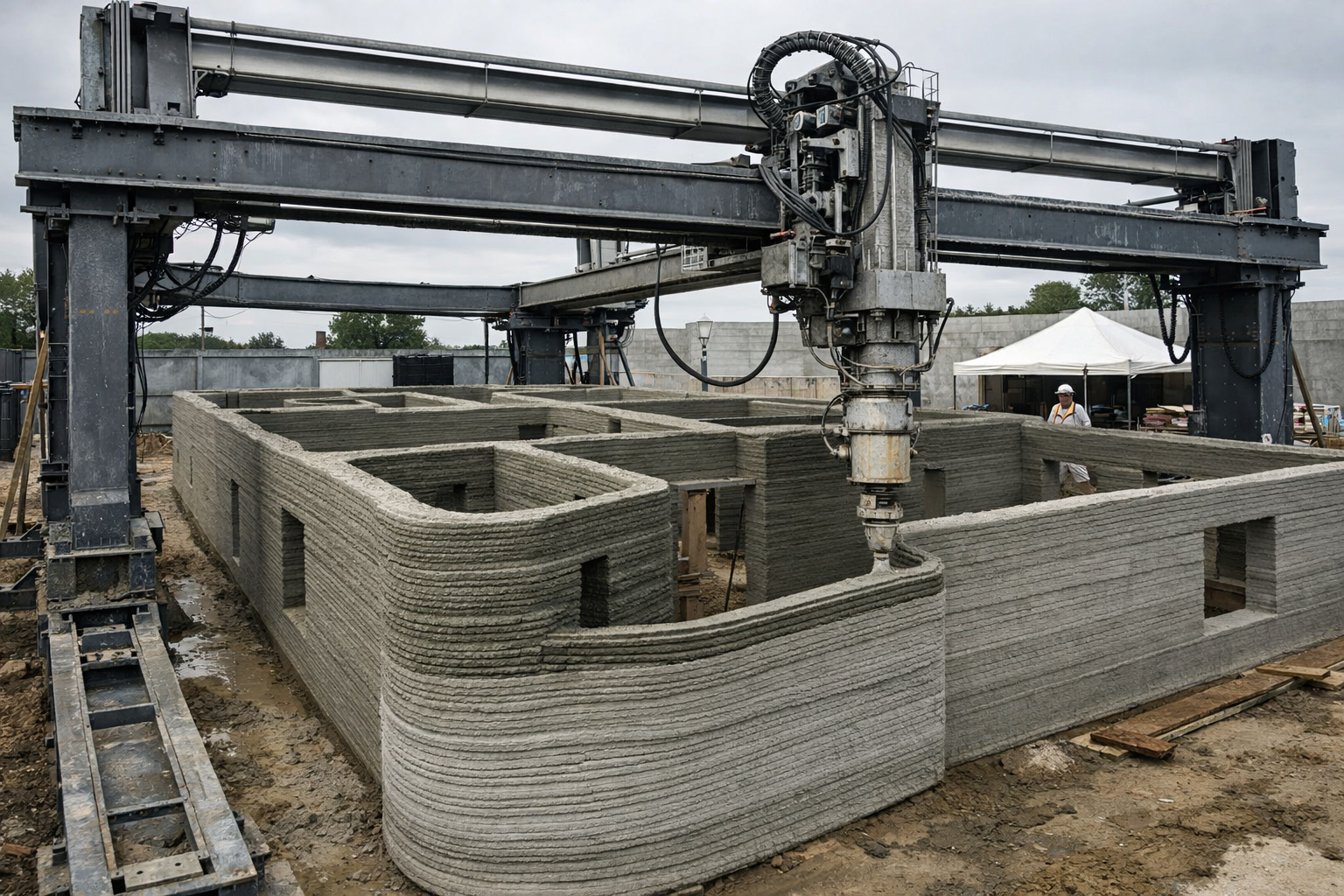
Technology Created in the United States Accelerates Housing Construction by Printing Entire Structures in Less Than a Day, Integrating Concrete, Plumbing, and Electrical Wiring
3D printing has evolved from being merely an experimental innovation to directly impacting the construction industry. In recent years, the technology has rapidly advanced and now reaches a historic milestone: the construction of complete houses in just 20 hours. This breakthrough draws attention not only for its speed but also for its potential to reduce costs, waste, and construction timelines.
The information was released by the website tonka3d, which highlighted a project developed by a professor at the University of Southern California. According to the portal, the system was created with the aim of making construction more accessible, efficient, and scalable, especially in regions facing housing deficits.
Moreover, the technology could completely transform the way governments and companies approach large-scale housing projects.
-
The lack of welders, electricians, and operators becomes a structural threat in 2025, with the construction industry and manufacturing already suffering from delays, cost pressures, and labor shortages in Brazil.

-
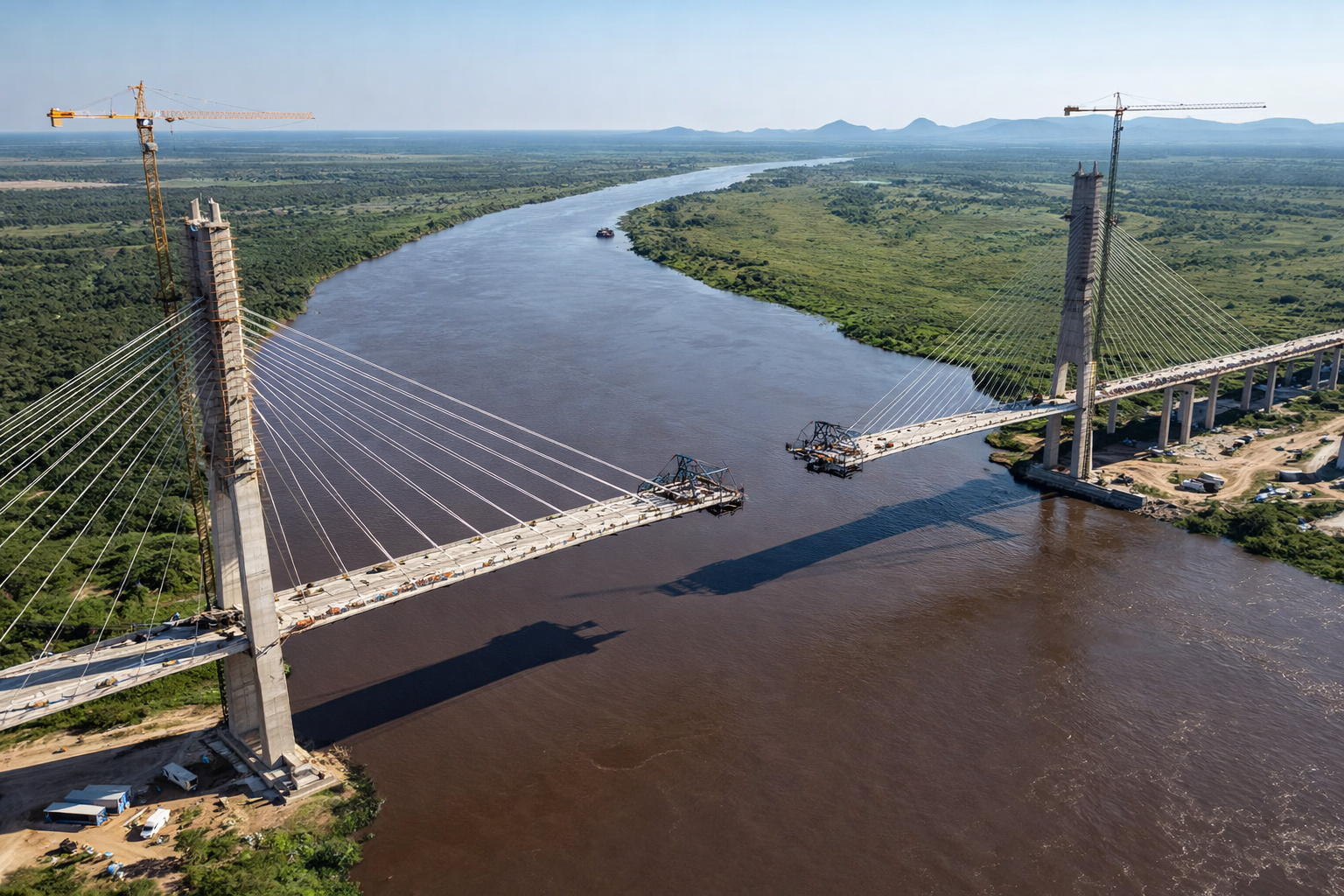
Brazil and Paraguay are just 46 meters away from a historic union on the bioceanic bridge that promises to revolutionize trade between the Atlantic and the Pacific.
-
With 55 km over the sea, a cost of US$ 20 billion, and enough steel to build 60 Eiffel Towers, China’s largest project has connected Hong Kong, Zhuhai, and Macau in a colossal bridge that defies the logic of engineering.

-
A trick with joint compound transforms a Styrofoam ceiling into a plaster-like ceiling: leveled panels, wires and mesh at the joints, sand, paint, and change the environment while spending little today.


How the Giant 3D Printer Capable of Building Houses in Less Than a Day Works

The system is called Contour Crafting and uses a large-scale 3D printer installed directly on the construction site. The machine deposits successive layers of concrete with high precision, forming the structural walls in a few hours.
During the process, the equipment also installs plumbing and electrical wiring within the structure. This way, it eliminates several traditional construction stages. Robotic arms ensure alignment, strength, and uniform finishing from the start.
At the end of the printing, the house appears practically ready. The project only requires the installation of doors and windows for the complete home to be finalized. Thus, the construction time, which would normally take months, is reduced to less than a day.
Cost Reduction, Less Waste, and Greater Efficiency in Construction
The technology also significantly reduces costs. Since the system operates in an automated way, the construction requires less labor-intensive work. Furthermore, the precise control of materials drastically decreases waste, one of the largest problems in traditional construction.
For this reason, Contour Crafting presents itself as a viable solution for low-cost housing projects. Nevertheless, the system is not limited to simple homes. Developers have adapted the technology for larger constructions and even high-end residences.
The equipment can also automatically paint walls and apply tiles with the help of robotic arms. Therefore, the technology serves both popular projects and more sophisticated developments.
The Future of 3D Printed Houses and the Global Impact of Technology
3D printing of houses is already drawing interest in various countries. Regions facing housing crises see the technology as a quick and scalable solution. In emergency situations, such as natural disasters, the system can accelerate the reconstruction of homes in record time.
However, experts warn of regulatory and standardization challenges. Nonetheless, the advancement of technology seems irreversible. The combination of automation, engineering, and sustainability points to a profound change in the sector.
In conclusion, the giant 3D printer makes it clear that the future of construction may be faster, more economical, and more technological than previously imagined.
Would you live in a house built by a 3D printer in less than a day? Why?









-

-

-

4 pessoas reagiram a isso.