





 Portuguese
  English
  Spanish
  5 min of reading
  0 comments


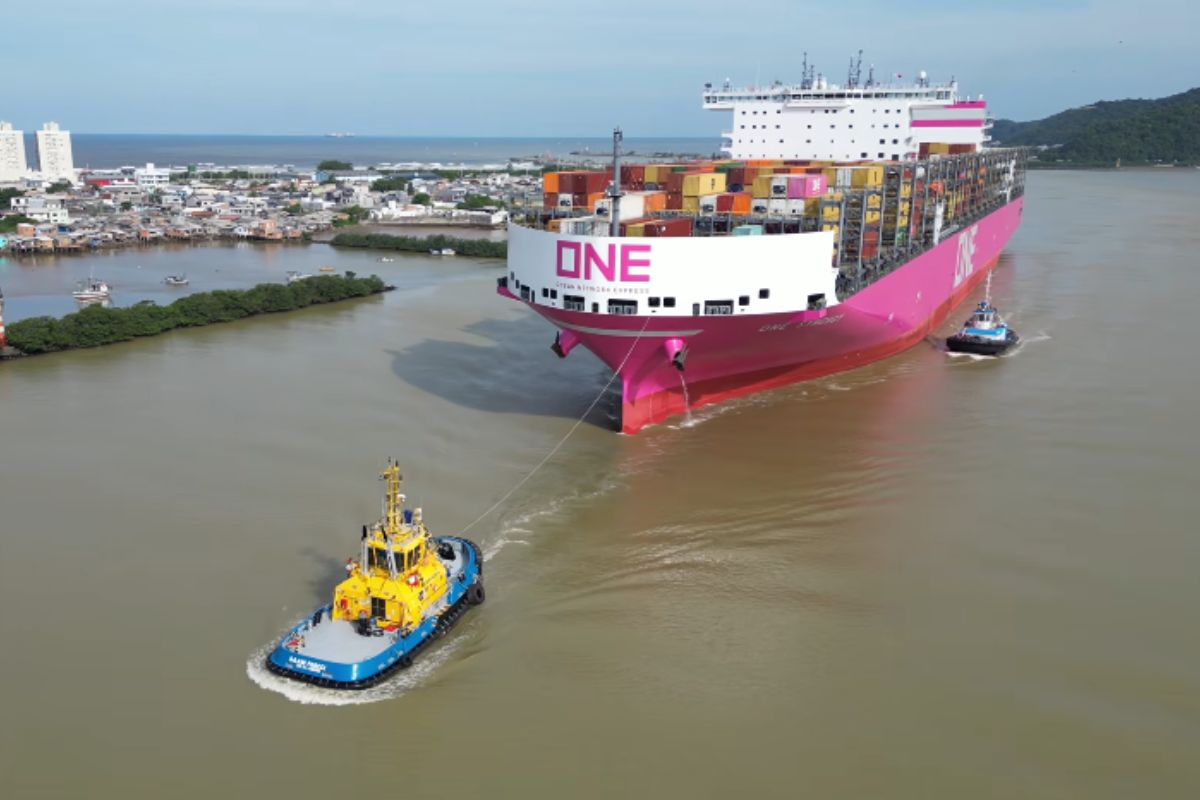
On Its First Journey to the Country, the ONE Giant Crosses the Itajai Canal, Berths at Portonave and Shows How Ocean Network Express Operates Its Most Modern Container Ship.
On its first journey to Brazil, the ONE giant crossed the access canal to Itajai and berthed at Portonave, displaying numbers that seem disproportionate to the surrounding urban landscape. With a length of 335.94 meters, a beam of 51 meters, and a capacity of around 13,700 twenty-foot containers, the container ship built in 2025 imposed itself as a true wall of steel in front of the houses and buildings along the shore.
More than just impressing with its size, the ONE giant represents a new generation of vessels focused on energy efficiency, environmental impact reduction, and increased productivity on routes between Asia and the east coast of South America. The debut of this ship in Itajai signals how far naval engineering has come and how much Brazilian ports need to keep up in terms of infrastructure, draft, and technology.
A ONE Giant Crossing the Itajai Canal
The arrival of the ONE giant was documented in detail, both with ground images and drones, showing the ship navigating the Itajai-Açu River towards Portonave.
-
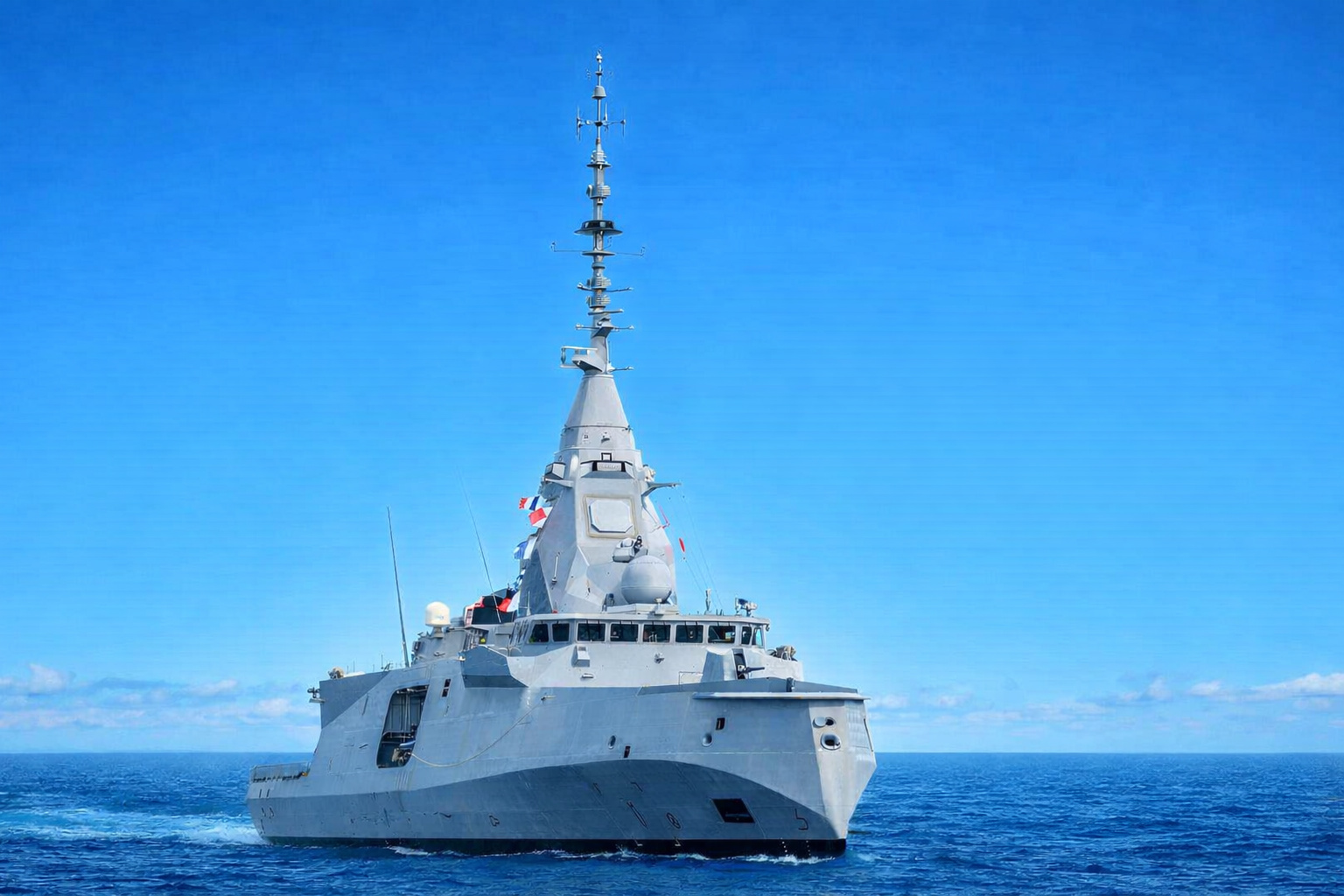
A 4,500-ton frigate with just over 100 crew members, state-of-the-art radar, and cruise missiles is being touted as the new standard of naval warfare in the 21st century.
-
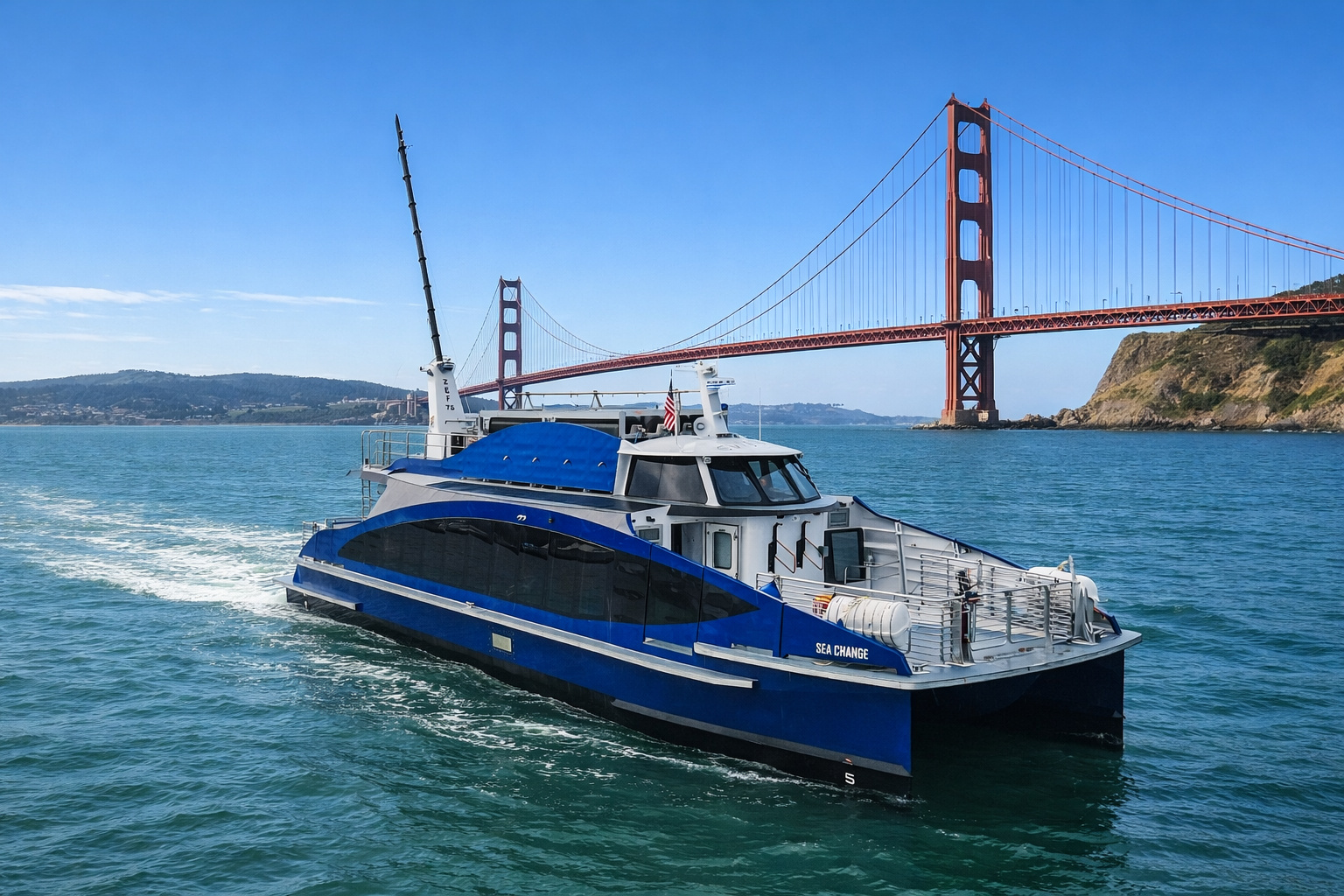
The first commercial hydrogen-powered ferry enters operation in the U.S., eliminates the use of diesel, uses fuel cells to generate clean energy on board, and transforms San Francisco Bay into a landmark of the new era of emission-free navigation.
-
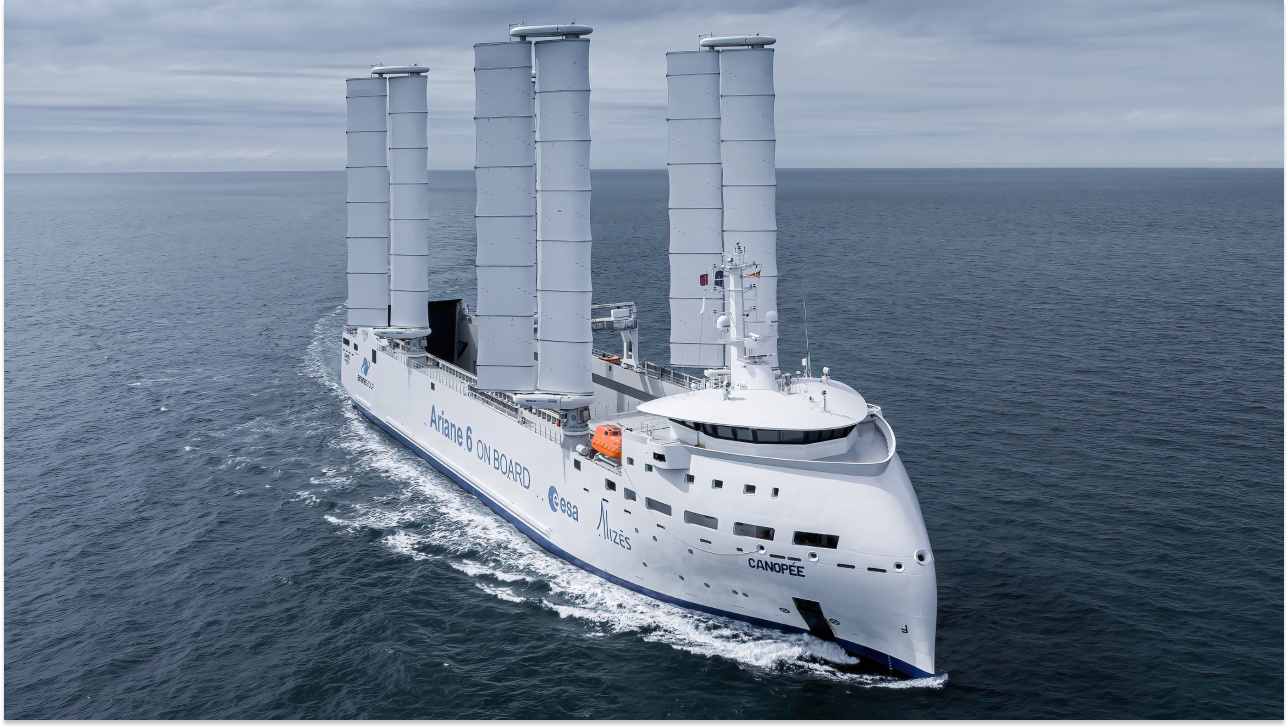
With a length of 121 meters and four rigid sails of 36 meters that automatically rotate to capture the wind, Canopée is the world’s first hybrid industrial cargo ship powered by wind, used to transport rockets and reduce fuel consumption by up to 30% on transoceanic routes.
-
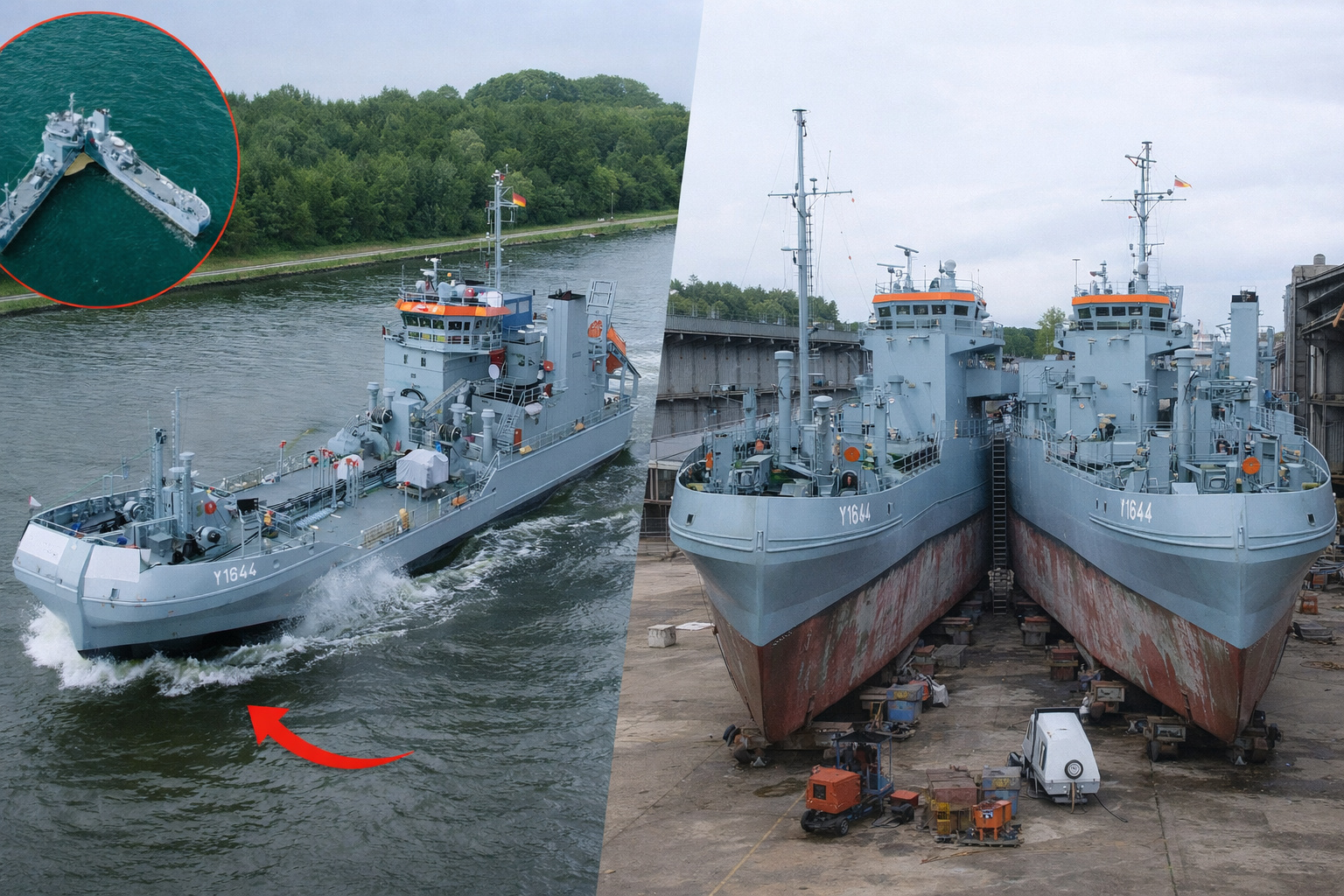
The German ship Bottsand splits its hull in two halves in the middle of the ocean to swallow spilled oil on the surface, separating the oil from the water inside a 790 cubic meter tank and then closing again. It is the only ship in the world factory-designed to split in half as part of normal operations, and the crew of six people who operate everything is civilian.

Even still distant from the camera, the ship’s flight deck seemed to “graze” the roofs of nearby houses, reinforcing the sensation of disproportion between the magenta hull and the urban landscape.
While pilots and tugboats handled the maneuver, the ship turned to starboard, following the curve of the river.
From above, the aerial images make it clear that it is a true masterpiece of naval engineering, occupying nearly the entire usable width of the canal and requiring millimetric precision in navigation.
Dimensions That Change the Port Scale
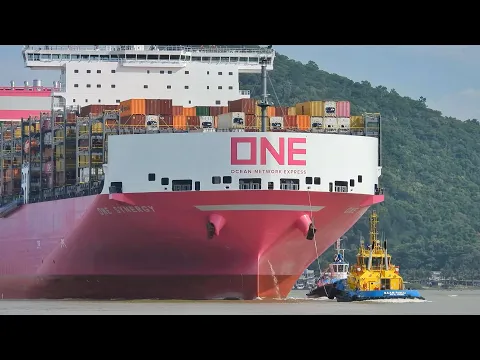

The ONE giant is 335.94 meters long, a dimension comparable to or greater than many aircraft carriers, and 51 meters wide, the maximum width of the hull.
For comparison, older cargo ships from the early days of self-propelled merchant vessels were around 60 meters long; today, just the width of this modern container ship approaches that length.
At the time of arrival at Itajai, the ship was navigating with a draft of around 11.20 meters, in a section of the canal that is approximately 14 meters deep.
This means that there was only a few meters clearance between the keel and the bottom, within the operational limits set for the maneuver.
When fully loaded, the ship’s maximum draft can reach about 16 meters, which gives an idea of the size of the “steel wall” that remains submerged during the ocean crossing.
According to the captain’s description in the video, the ship’s gross weight exceeds 160,000 tons, combining hull, equipment, fuel, and cargo. It’s as if a small city is moving on the water, compressed into a single steel hull.
Capacity of 13,700 Containers and the Asia–South America Route
Designed to carry approximately 13,700 twenty-foot containers, the ONE giant is essentially equivalent to around 13,700 loaded truck trailers.
At maximum capacity, when departing from Asian ports, the stack of containers extends almost to the superstructure, forming a floating cargo yard.
Currently, this vessel primarily operates on the route between Asia and the east coast of South America, connecting major industrial hubs in Asia to ports in the region, such as Santos and Itajai, among others.
The call at Portonave, in Navegantes, marks the first journey of the ship to Brazil, further inserting the Santa Catarina terminal into the circuit of next-generation mega container ships.
Each call of the ONE giant concentrates in a single berthing a volume of cargo that, just a few decades ago, would have required several smaller ships, multiple stops, and much longer operating times.
Main Engine, Speed, and Energy Efficiency
The ONE giant sails under the Singapore flag and is equipped with a high-efficiency main engine, capable of reaching speeds close to 22 knots, a performance considered high for a ship of its size over long distances.
The combination of a modern engine, optimized hull, and onboard systems is part of a clear trend in maritime transport: to carry more cargo per trip, with lower specific fuel consumption and lower emissions per container moved.
This is particularly relevant on long routes like Asia–South America, where each additional knot or less represents a significant difference in travel time and operating cost.
Project Prepared for Alternative Fuels
One of the most interesting points highlighted about the ONE giant is that the design already considers future adaptations for alternative fuels, aligning operational performance with the increasingly stringent environmental requirements in maritime transport.
This preparation for the use of cleaner fuels places the ship in tune with the global energy transition in the sector.
It is not just a gigantic container ship, but an example of the direction in which naval engineering is heading, combining scale, efficiency, and reduced environmental impact.
Even the shape of the bow catches attention, with a distinctive design aimed at improving hydrodynamics and reducing water resistance.
The Magenta Color, the Landscape, and the Maneuver at Portonave
Visually, the ONE giant immediately stands out due to the magenta color of the hull and superstructure, a trademark of Ocean Network Express.
Observing the skyline in the city of Navegantes, one can see that many buildings do not reach the height of the ship’s superstructure, reinforcing the sensation that it “passes over” the urban landscape.
Upon arrival at Portonave, tugboats accompanied the vessel from the stern, adjusting position and speed for berthing.
The ship did not make a complete turn; it entered already in the configuration planned to berth to starboard, simplifying the final maneuver.
Still, maneuvering a hull over 330 meters, with dozens of meters of draft and minimal lateral and vertical clearance, requires fine coordination among the pilot, captain, tugboats, and shore team.
What the Debut of This ONE Giant Represents for Brazilian Ports
The first call of the ONE giant in Itajai is not just a “show of images” for those who closely follow ships.
It is a concrete signal that the new generation of container ships is already operating regularly on the routes serving Brazil, and that terminals like Portonave need to continue investing in channel depth, dock infrastructure, powerful tugboats, and navigation support systems.
At the same time, the presence of a ship with a length of 335.94 meters, a beam of 51 meters, and a design prepared for alternative fuels shows that scale, efficiency, and sustainability are moving hand in hand in 21st-century commercial navigation.
For Brazilian foreign trade, this means the capacity to consolidate more cargo in fewer trips, with more competitive costs and more direct integration with major Asian hubs.
And you, after learning about the numbers and technology of this ONE giant, do you think that increasingly larger ships are more of an opportunity or a challenge for the ports and cities along the Brazilian coast?






-

2 pessoas reagiram a isso.