





 Portuguese
  English
  Spanish
  3 min of reading
  0 comments


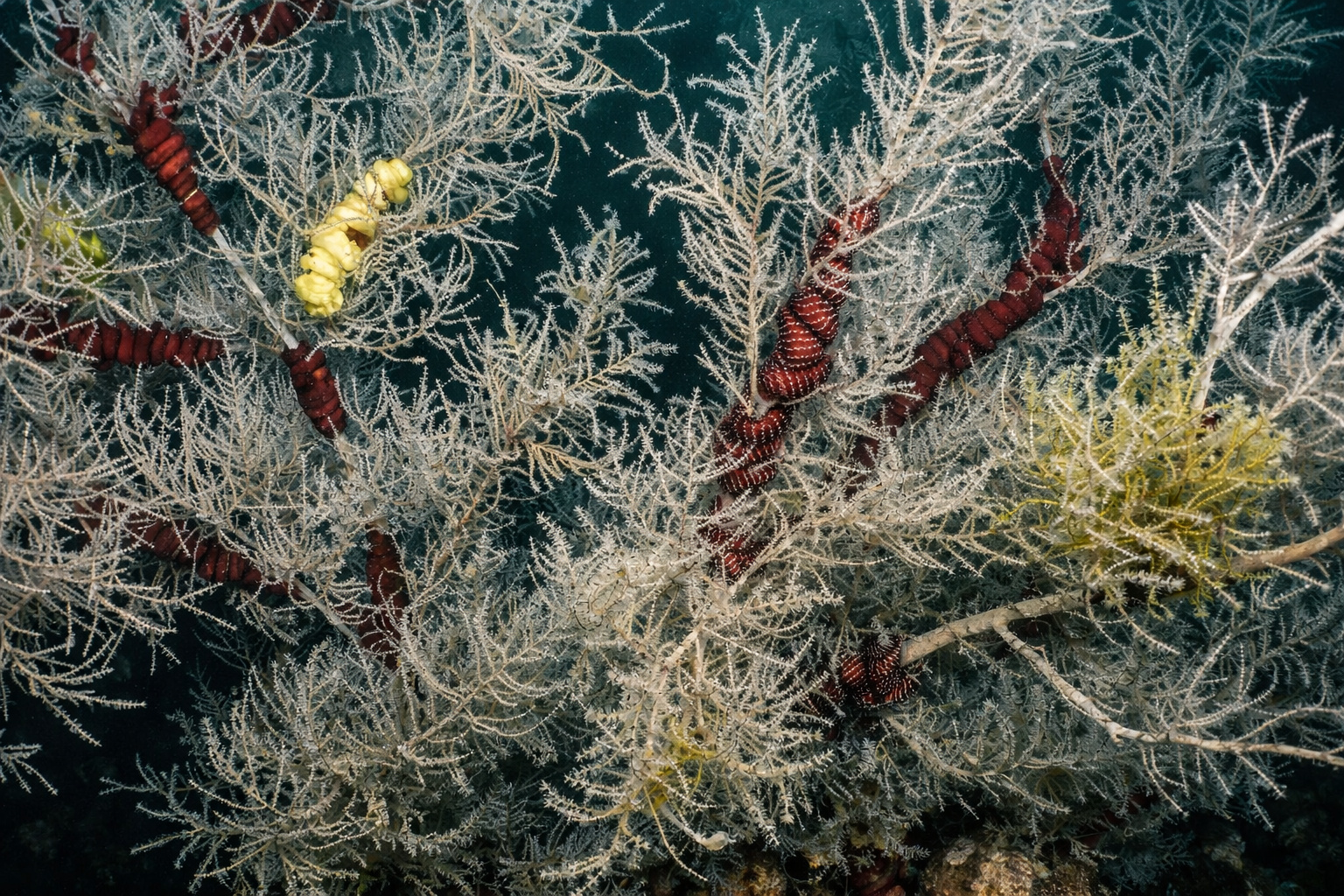
An Exceptional Black Coral Found in New Zealand Surprises Scientists and Reinforces the Importance of Conserving Ancient Marine Species
An extraordinary marine discovery has recently been recorded in the deep waters of Fiordland, New Zealand, attracting the attention of researchers and experts in oceanic biodiversity.
During a dive expedition in protected marine areas, scientists located a giant black coral approximately four meters tall and about 4.5 meters wide, dimensions that significantly exceed what is typically observed in this species.
Estimates indicate that the organism is between 300 and 400 years old, making it one of the oldest specimens ever identified in the region.
-
Won R$ 72 million in the British lottery, but lost it all for not claiming: October ticket in Bexley was forgotten, the 180-day deadline passed, and the fortune will fund local community projects in London.

-
Mixing vinegar with detergent in a blender has become the most talked-about cleaning trick on the internet because it solves a problem that everyone has in the kitchen in seconds and uses only two ingredients that you already have at home.

-
The largest fortress on the planet is located in a city with 10 km star-shaped walls, 300 hectares protected, an aqueduct with 843 arches and 7 km long, strategic forts, and a UNESCO title that intrigues specialists.

-
USS Gerald R. Ford: the floating city of $13 billion where 5,000 sailors serve 17,000 meals a day, sleep in stacked bunks, take 10-liter showers, and keep 75 fighter jets ready.


The discovery reinforces the ecological value of New Zealand’s fiords and reveals a natural heritage that has remained unknown for centuries.
Expert Highlights Unprecedented Size of Coral
Professor James Bell, from Te Herenga Waka—Victoria University of Wellington, explained that the find represents a milestone for marine biology in the region.
With 25 years of experience in oceanic studies, the researcher stated that he had never encountered a black coral with such impressive dimensions.
According to him, specimens of this species usually reach between two and three meters in height, highlighting the exceptional nature of the organism discovered in Fiordland.
Moreover, the scientist emphasized that black corals are extremely long-lived organisms and grow very slowly, a characteristic that makes ancient individuals particularly important for the ecological stability of marine populations.
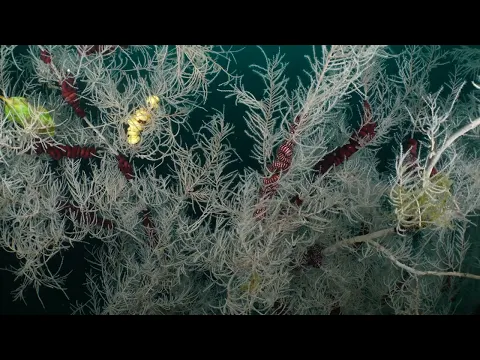

Biological Importance of Ancient Black Coral Colonies
The presence of such an ancient coral has direct implications for the survival of the species.
Black corals grow slowly over centuries, and thus, mature individuals play a crucial role in the reproduction of the species.
These organisms produce a greater amount of reproductive material and, in this way, contribute to the continuity of marine populations over time.
Consequently, the preservation of these ancient colonies becomes essential to ensure the maintenance of the oceanic ecosystems where these corals develop.
Scientific Project Seeks to Map Protected Corals in Fiordland
Given the relevance of the discovery, scientific and environmental institutions have initiated a joint conservation effort.
The work involves Te Herenga Waka—Victoria University of Wellington, the Department of Conservation of New Zealand, and Fiordland Marine Reserve.
The main goal is to map black coral colonies along the fiords, identifying the areas where these organisms are present.
This survey will guide environmental protection policies and, at the same time, contribute to the responsible management of human activities in the region.
Among these activities, navigation stands out, which can be better planned to avoid accidental damage to marine structures.
The Curious Appearance of Live Black Coral
Despite its name, black coral displays a visual characteristic that often surprises observers.
When alive, the coral appears white, even though its internal structure is dark.
This anatomical characteristic explains the naming of the species, even though its external appearance does not correspond to the popular name.
Furthermore, the organism receives rigorous legal protection in New Zealand, being safeguarded by the Wildlife Act, which prohibits any form of intentional collection or degradation.
Importance of Conserving Marine Ecosystems
The discovery reinforces the role of protected marine areas in New Zealand in preserving oceanic biodiversity.
Regions like Fiordland serve as ecological refuges that protect ancient organisms and rare species.
Additionally, the presence of a coral with centuries of existence demonstrates that the oceans still hide biological structures that are little known to science.
These discoveries expand knowledge about marine biodiversity and reinforce the need for effective conservation strategies.
How many other centenarian organisms still remain hidden in the world’s oceans, waiting to be revealed by science?





-

Uma pessoa reagiu a isso.