





 Portuguese
  English
  Spanish
  5 min of reading
  0 comments



Petrobras Reevaluates Sale of Bahia Polo Amid Falling Oil Prices, Seeking to Adjust Operations and Focus on More Profitable Assets to Face Market Volatility.
The drop in oil prices directly impacts the global economy; therefore, it influences everything from fuel costs to investments in large exploration and production projects.
In Brazil, Petrobras, one of the largest oil companies in the world, feels these fluctuations quite intensely.
Recently, the state-owned company announced that it reevaluates the possibility of selling Bahia Polo, a set of productive onshore fields, in reflection of the current low price of a barrel of oil.
-
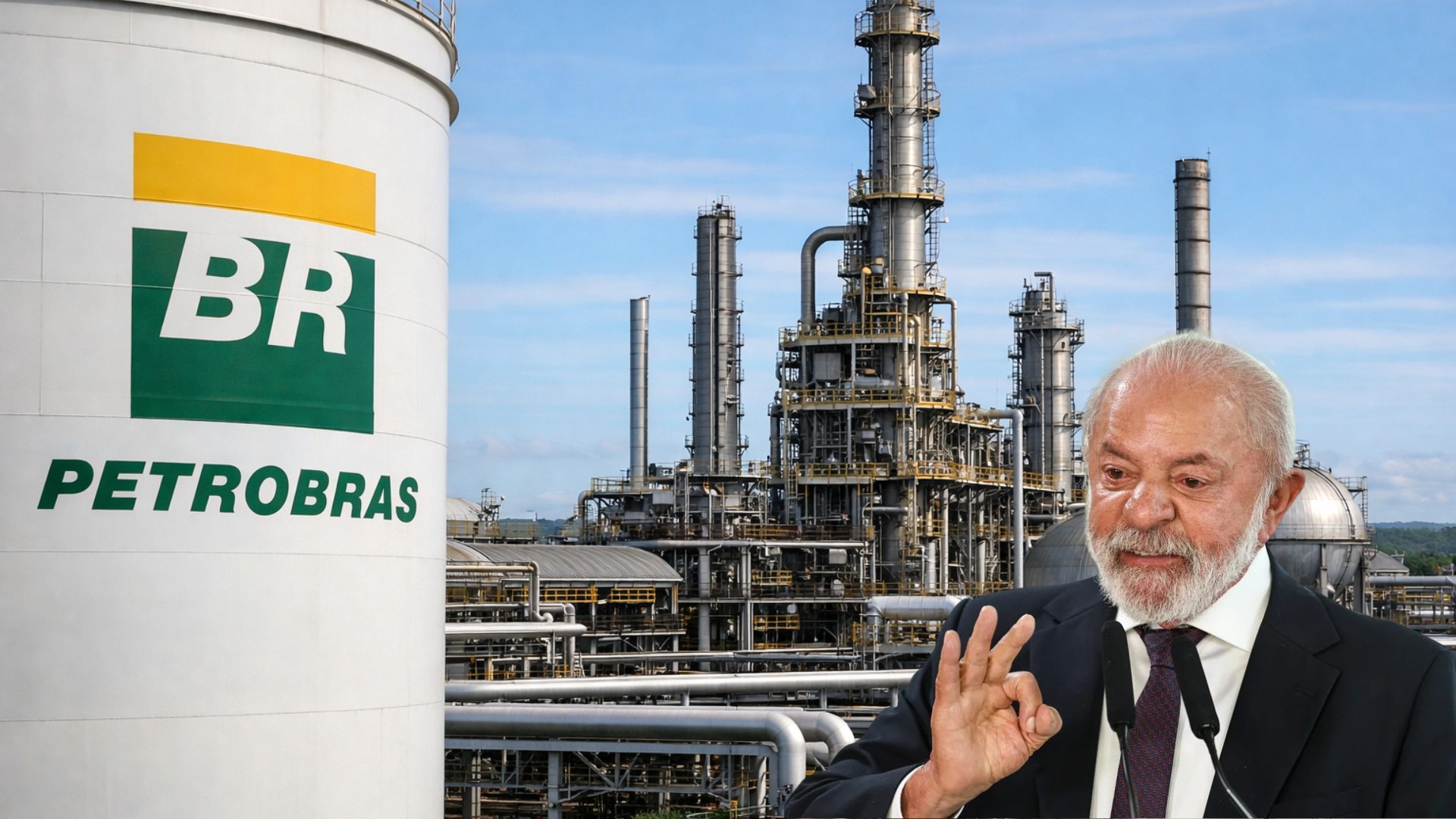
Lula reveals a masterstroke by Petrobras to undo a deal made by Bolsonaro, which involves the return of an important refinery that currently produces less than half of what was expected and makes Brazil dependent on international diesel.
-
A study confirms that the natural gas sector will reduce greenhouse gas emissions in Brazil by 0.5% and accelerate the energy transition by 2026.

-
Petrobras implements a severe adjustment and confirms a 55% increase in the price of aviation kerosene with a proposal for installment payments for the companies.

-
The rise in oil prices could ensure an extra revenue of R$ 100 billion for the Federal Government, indicates a recent economic study.


Thus, to understand the importance of this decision, one must analyze the historical context of oil, its price cycles, and the challenges Petrobras faces.
Oil continues to be one of the most valuable and strategic commodities in the global economy.
Since the early 20th century, its exploration and commercialization have shaped global geopolitics.
As a result, oil-rich countries have gained significant economic influence, while price fluctuations have directly affected people’s daily lives.
In Brazil, the discovery of oil in national territory, especially in the pre-salt layer, brought a new dimension to the local industry.
However, not all oil fields have the same extraction cost or financial return.
Moreover, it is important to highlight that oil remains an essential energy source for the global economy, despite advancements in renewable energies.
Fossil fuel continues to account for a large part of the global energy matrix, supplying sectors such as transport, industry, and electricity generation.
Consequently, oil price variations directly impact various segments, from fuel prices at gas stations to the cost of products and services.
Therefore, the financial health of companies like Petrobras depends on fluctuations in this volatile market.
Characteristics and Challenges of Bahia Polo
Bahia Polo, located in the Recôncavo region and northern Bahia, exemplifies an onshore oil field that, despite being productive, presents specific challenges.
With a daily production of around 9,000 barrels of oil, or 12,000 barrels of oil equivalent when including natural gas, Bahia Polo is a mature asset.
This means that over the years, production tends to decrease and operational costs may increase, requiring ongoing investments to maintain economic viability.
Thus, the fluctuation in oil prices directly influences the decision of Petrobras to maintain or sell this asset.
Onshore fields like Bahia Polo have characteristics different from large offshore fields, especially those in the pre-salt layer, which have higher volume and extraction costs.
Additionally, onshore operations involve logistical, environmental, and technical challenges that can escalate production costs.
For example, maintaining infrastructure, managing personnel, and environmental monitoring require ongoing efforts that impact profitability.
Therefore, during periods of high oil prices, these costs become easier to absorb, but when there is a drop in oil prices, profitability may be compromised.
In the following decade, prices experienced periods of stability and decline, especially with increasing production in the United States and other countries.
More recently, between 2010 and 2014, the price of a barrel of oil reached over US$ 100, a figure that encouraged investment in Brazilian pre-salt projects.
However, starting in 2014, the market underwent a significant reversal, with prices plummeting to less than half.
This was due to factors such as increased production in the United States, a slowdown in the Chinese economy, and changes in OPEC (Organization of the Petroleum Exporting Countries) policy.
Impacts of Falling Oil Prices on Petrobras
This drop in oil prices directly affected the strategies of major companies in the sector, including Petrobras.
With low prices, high-cost and high-risk projects become less attractive, and the need to cut costs and focus on more profitable assets takes priority.
In this scenario, Petrobras began the process to sell Bahia Polo, a decision it suspended in September 2023.
However, it is now being reevaluated due to the recent decline in barrel prices.
This change in strategy does not occur in isolation. Moreover, Petrobras faces pressures from the financial market and investors who demand greater efficiency and profitability.
Petrobras President Magda Chambriard emphasized that the price of oil directly influences the viability of onshore fields, such as Bahia Polo.
According to her, when the barrel price is around US$ 100, operating these fields makes economic sense.
However, with the price dropping to about US$ 65, the situation changes, making reevaluation necessary.
This reality shows how price fluctuations are a critical factor for the management of the company’s assets.
In addition to Bahia Polo, Petrobras has other strategic fields for the country, such as the Urucu field in the Amazon.
The company has already stated that it does not include this field in the current reevaluation, precisely because it produces high-quality oil, which holds greater market value.
Thus, this differentiation among assets shows how production composition and oil quality also influence business decisions in light of price variations.
Challenges and Changes in the Global Energy Sector
The context of the drop in oil prices is also related to global changes in the energy matrix.
The transition to renewable sources, environmental concerns, and emission reduction targets compel investors and governments to evaluate investments in fossil fuels more carefully.
Thus, this transformation represents an additional challenge for companies like Petrobras, which need to balance their traditional operations with the pursuit of innovation and sustainability.
Furthermore, technological advancements, such as the digitalization of production processes, the use of artificial intelligence, and automation, are changing the landscape of the oil industry.
These innovations can reduce costs and increase efficiency, but they also require significant investments.
Therefore, in a scenario of prolonged price decline, Petrobras needs to cautiously assess where to allocate its resources to ensure continuity and sustainable growth.
In this way, the reevaluation of the sale of Bahia Polo does not merely represent an immediate financial issue.
Rather, it is part of a larger strategy for Petrobras’s adaptation to a constantly changing market.
Hence, the state-owned company seeks to focus its efforts on assets that offer greater returns and lower risks, ensuring its competitiveness and sustainability in the long run.
It is important to highlight that Bahia Polo, despite the challenges, still maintains its relevance for the national production of oil and gas.
Its sale or maintenance involves complex decisions that consider not only the price of oil.
At the moment, but also future projections, social and economic impacts for the involved regions, and the strategic role of the asset for Petrobras.








Seja o primeiro a reagir!