





 Portuguese
  English
  Spanish
  4 min of reading
  2 comments


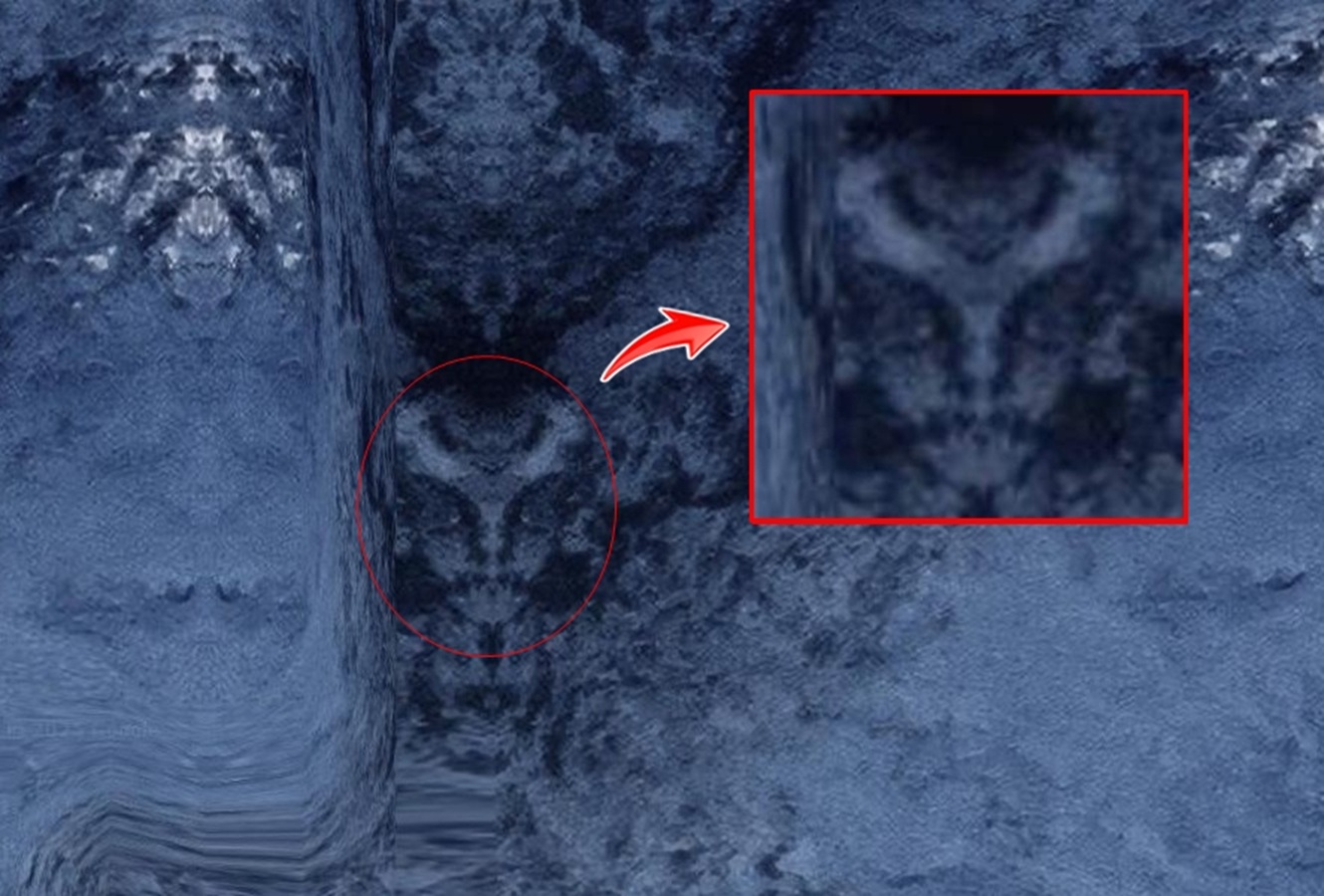


A Mysterious Face Appeared on Top of a Remote Mountain in Southern Chile, Intriguing Google Maps Users. The Discovery Reignited Theories About Extraterrestrial Life, But Experts Explain the Phenomenon Based on Human Psychology. The Debate Between Science and Imagination Is Back in the Spotlight.
Attentive users of Google Maps were surprised to notice something unusual in southern Chile.
In an isolated area, near the southern tip of the country, a mysterious face seems to appear on top of a mountain.
The image, discovered at the coordinates -55.544240031062884, -69.2657059749214, quickly spread across social media and raised all sorts of theories.
-
He started running at 66 years old, broke records at 82, and is now a subject of study for having a metabolic age comparable to that of a 20-year-old, in a case that is intriguing scientists and inspiring the world.

-
Oldest tree on the planet reappears after 130 years of searches: Wattieza, 385 million years old, was 10 meters tall and had no leaves or seeds; Gilboa fossils in New York solved the mystery in 2007.

-
A 48-square-meter house assembled in hours with 4,000 bricks made of recycled plastic that does not absorb moisture, has natural thermal insulation, and costs less than 90,000 reais in a complete kit.

-
Luciano Hang revealed that Havan’s air fleet has already accumulated more than 20,000 landings, 10,000 flight hours, and 6 million kilometers traveled, and he says that without the planes, the company would never have grown so quickly.


The find was made by Scott C Waring, a well-known UFO hunter. He posted a video on YouTube showing the image and asking: “Are these aliens?.”
According to Waring, very ancient and advanced beings may have left such marks, which would now be seen as angels, demons, or even gods.
Alien Base or Optical Illusion?
Speculation about the origin of the image did not stop there.
In the comments on the video, many supported the idea of something extraterrestrial.
One follower claimed to have found similar images in Antarctica and said he initially thought they were just digital glitches.
However, after the discovery in Chile, he began to consider that they might be ancient glyphs, similar to those in Nazca.
Despite the excitement, experts suggest a very different explanation for the phenomenon.
Pareidolia: The Brain Wants to See Faces
The most important thing to understand is that this image may simply be the result of a psychological process called pareidolia.
According to Dr. Robin Kramer from the University of Lincoln, our brains are trained to identify faces anywhere, even where there are none.
“Our facial detection system has evolved to be excellent at detecting faces,” the specialist stated.
For him, it makes more sense for the brain to make errors by seeing faces where there are none than to miss real faces.
This phenomenon helps explain why geological structures, like mountains or rocks, sometimes seem to have eyes, a nose, or a mouth.
It’s the same reason why some people claim to see religious images in toast or trees.
Evolving Advantage and Automatic Reflexes
According to Professor Kevin Brooks from Macquarie University, this ability to quickly identify faces may have been essential for human survival.
“We tend to classify anything vaguely resembling a face as a face until proven otherwise,” he explained.
For our ancestors, this increased the chances of noticing the approach of a friend — or an enemy.
In dangerous situations, it was better to err on the side of caution than take risks. Thus, this visual reflex would have been preserved throughout generations.
Believing in the Invisible Can Affect What You See
Furthermore, studies indicate that people more inclined to religious or supernatural beliefs are more likely to have this type of perception.
A study conducted in Finland in 2012 showed that those who believe in paranormal phenomena tend to see faces in random images more frequently.
Researcher Susan Wardle from the National Institute of Health emphasizes that this is generally not a sign of a neurological issue.
However, she warns that a high incidence of pareidolia may indicate a predisposition to believe in explanations without real basis.
She states: “The majority of people who see faces in things recognize that the faces are not real.”
The problem, according to the specialist, arises when someone starts interpreting these patterns as hidden messages or supernatural signs.
Recurring Phenomenon in Other Regions
The case in Chile is not unique. Over the years, Google Maps has become a true stage for curious discoveries.
From shapes resembling ships in the Sahara Desert to strange portals in Antarctica, there’s no shortage of images that spark the imagination.
One of the most famous examples of pareidolia occurred off Earth. In 1976, a NASA probe photographed a formation on Mars that looked like a face.
For years, the “Face on Mars” fueled theories of alien civilizations. However, more recent images showed that it was merely the effect of light and relief on sand dunes.
Between Fascination and Science
Therefore, the image discovered by Scott Waring should be viewed with caution. According to scientists, it is most likely that the formation is merely a natural result of geology, combined with the human tendency to see patterns where none exist.
Still, the fascination for this type of image continues. Platforms like Google Maps allow anyone to explore the world in detail, opening space for discoveries, theories, and sometimes, illusions.
What stands out in this case is how the human mind can be easily deceived by visual stimuli. And how, when faced with the unknown, we often prefer to believe in the extraordinary.
Whether out of curiosity, faith, or sheer desire to imagine something beyond reality, these discoveries continue to provoke debates and enchant internet users.
After all, who hasn’t looked at a cloud and seen a face?









As a geologist I can affirm that those patterns are not natural, but artificially made. Someone editted the satellite image as a joke, or some kind of glitch that have mirrored some natural patterns, but there is no way naturally we would see so many bilateral symmetry in an icy surface so close together. Also you can see that is a region with a lot of image deformations.
“Creo que debe estudiarse más a fondo la imagen y el contexto. (Si esta imagen no fue puesta a propósito por algún ocioso editor de Google Maps, que es otra probabilidad). Me hago estas preguntas:
¿Por qué muchas personas que hacen la búsqueda ven las mismas imágenes al describirlas? Eso, en mi opinión, podría descartar la imaginación individual.
Hay una simetría perfecta en varias de las supuestas figuras o rostros, de tal manera que es muy precisa. Al ver una nube, siempre hay alguna deformidad en uno de los lados, pero aquí hay muy buena simetría para ser simplemente sombras proyectadas.
¿Por qué las imágenes están aglomeradas en una misma zona? No es solo una; son varias juntas en un tramo de la isla. Al intentar explorar más espacios de la zona, no se aprecia ninguna otra forma.
No cuesta ni hay que esforzarse para reconocer la imagenes… o verlas de forma distinta. Son solo inquietudes. Saludos.