





 Portuguese
  English
  Spanish
  5 min of reading
  3 comments


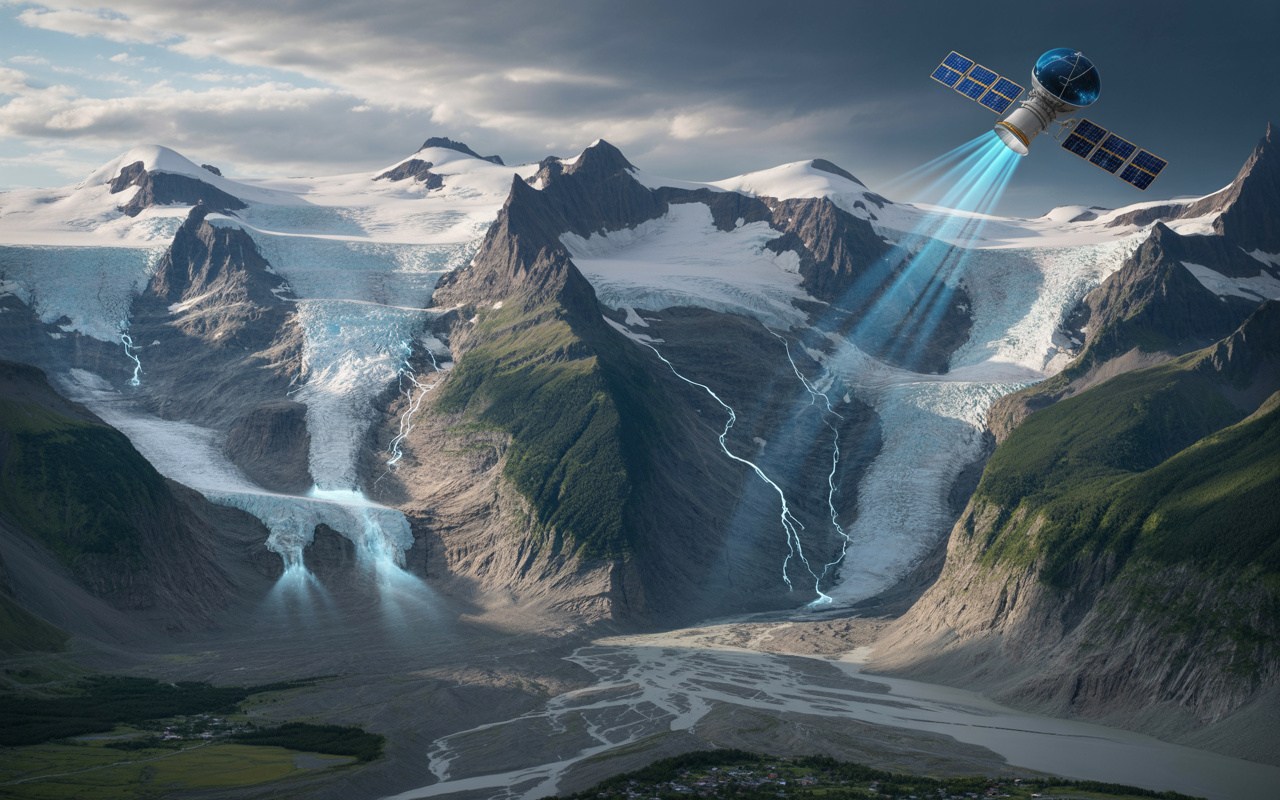


NASA Satellites Reveal That Glaciers In The Andes, Alps, Rockies, And Central Asia Are Losing Billions Of Tons Of Ice Per Year, Putting Global Freshwater At Risk.
Far beyond the dramatic images of Greenland and Antarctica, a silent yet equally alarming transformation is underway in the world’s mountain ranges. Data obtained from high-precision satellites show that mountain glaciers on nearly every continent are shrinking at a record pace, losing tens of billions of tons of ice each year. The phenomenon is no longer isolated or regional: it is a systemic change, monitored by missions such as GRACE and GRACE-FO from NASA, analyzed by the IPCC, and detailed in studies published in scientific journals such as Nature Climate Change.
What Satellites Are Showing About Global Ice Melt
Since the early 2000s, satellites capable of measuring minor variations in Earth’s gravitational field have started to “weigh” large masses of ice.
The results of these measurements are unequivocal: mountain glaciers lost more than 6 trillion tons of ice between 2000 and 2023, according to recent scientific compilations. Practically, this means an average of over 250 billion tons per year, a value that grows decade by decade.
-
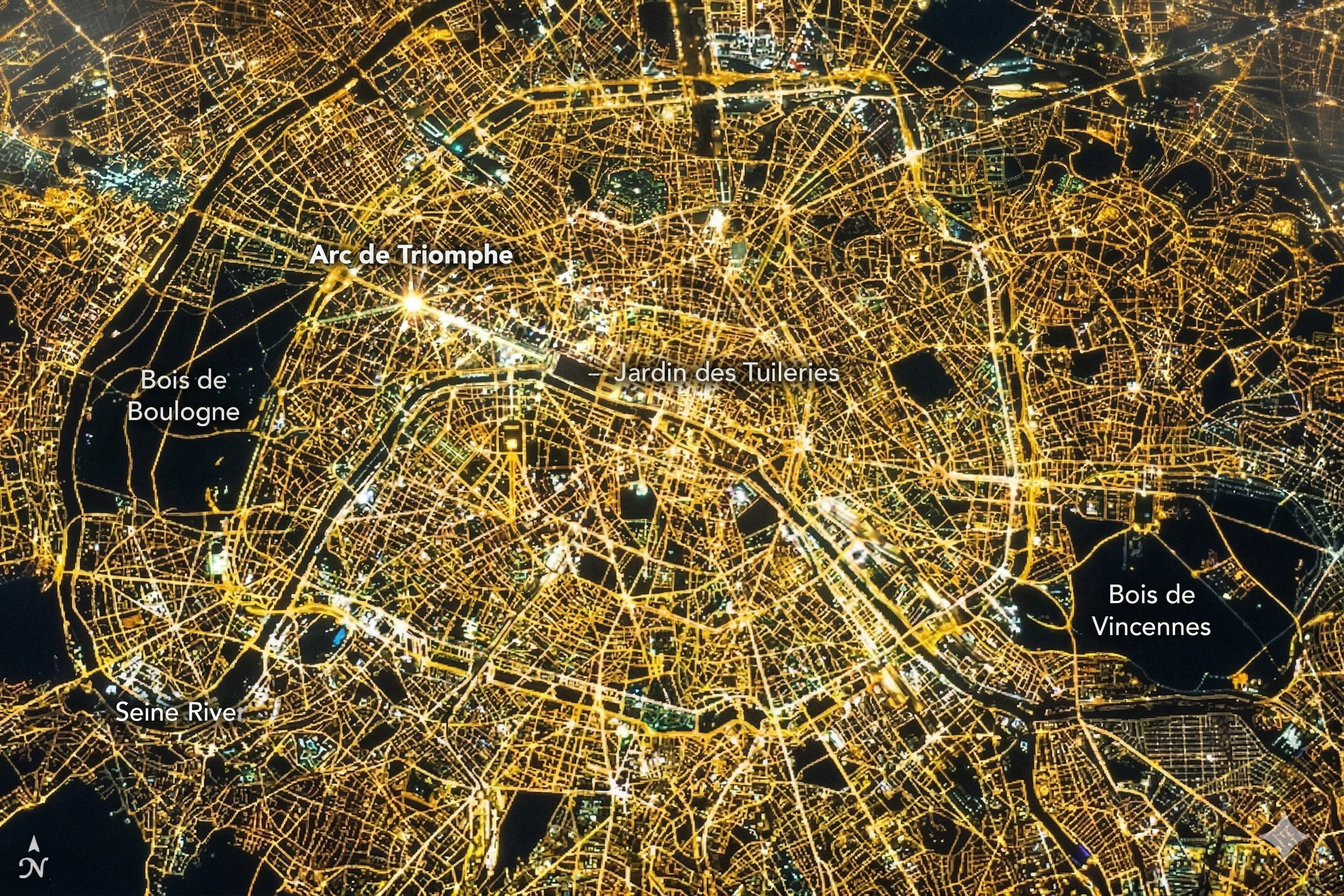
At an altitude of 400 km by astronauts from the International Space Station, Paris transforms at night into a golden mesh so precise that it reveals the outline of the Seine River, avenues, and entire neighborhoods like a luminous map drawn over the Earth.
-
iPhone 17 reaches historic low price with 256 GB, 120 Hz display, and drops to R$ 5,703 on Shopee, featuring A19 chip, dual 48 MP cameras, battery life of up to 30 hours, and advanced AI features.

-
Trip to Mars getting closer: Pulsar Fusion, from the UK, advances with plasma ignition in fusion engine and could drastically reduce space travel time, making crewed missions faster, safer, and economically viable.
-
Made with recycled plastic, a Lego-inspired brick builds a 180 m² house in 15 days, providing thermal comfort, preventing moisture, and turning waste into income, kits, and accelerated construction in the country.




Unlike polar ice caps, mountain glaciers respond more quickly to rising temperatures. They function as natural water reservoirs, releasing a steady flow during dry seasons. When this ice disappears, the impact is not only climatic but also directly human, agricultural, and economic.
Andes: The Largest Tropical Glacier System In The World In Accelerated Retreat
In South America, the Andes contain the largest mass of tropical ice on the planet. Countries like Peru, Bolivia, Ecuador, Colombia, Chile, and Argentina depend on these glaciers for urban supply, agricultural irrigation, and hydroelectric power generation.
Satellite measurements indicate that some Andean regions have already lost between 30% and 50% of their glacial area since the 1980s. In specific areas of Peru and Bolivia, smaller glaciers have simply vanished from physical records. The problem is exacerbated because, after a temporary peak in flow caused by rapid melting, the so-called “hydrological collapse” occurs, when water ceases to flow regularly.
European Alps: Historic Melt In The Heart Of The Continent
The Alps, which extend through France, Switzerland, Italy, Austria, and Germany, are experiencing one of the fastest documented episodes of retreat. Studies based on data from NASA and European meteorological services show that the Alps have lost more than 60% of their ice volume since the late 19th century, with extreme acceleration after 2000.
Recent heat waves have caused alpine glaciers to lose up to 10% of their mass in a single summer. In addition to the hydrological impact, melting increases the risk of landslides, slope collapses, and geological instability, affecting villages, roads, railways, and tourist infrastructure.
Rocky Mountains: Ice Retreating In The “Waterbox” Of North America
In the Rocky Mountains, especially in the United States and Canada, glaciers serve as regulators of the flow of essential rivers, such as the Colorado and Columbia. Satellites indicate that more than 70% of the documented glaciers in Glacier National Park, Montana, have disappeared since the early 20th century.
The impact goes beyond the landscape. Agricultural states in the western U.S. are already facing chronic water shortages, exacerbated by the loss of snow and ice that once sustained rivers during the summer. The trend indicated by IPCC models is for continuous reduction, even in moderate warming scenarios.
Central Asia And The Himalayas: The Planet’s “Third Pole” Under Pressure
The region encompassing the Himalayas, Hindu Kush, and Central Asia is often referred to as the “Third Pole”, as it contains the largest mass of ice outside polar regions. Satellites show that this area loses tens of billions of tons of ice per year, directly affecting large watersheds.
Rivers such as the Indus, Ganges, Brahmaputra, Yangtze, and Mekong depend on this ice to support systems that sustain over 1.5 billion people. Accelerated melting increases the risk of flooding in the short term and severe shortages in the medium and long term, creating an unprecedented hydrological paradox.
Why The Melting Of Mountain Glaciers Is More Dangerous Than It Seems
Unlike polar ice, which directly influences sea level, melting mountain glaciers first affect freshwater supply, agriculture, and social stability. Regions that currently experience stable river flow may face sudden breaks in agricultural production, conflicts over water, and increased climate migration.
Another critical point is that these glaciers do not regenerate on a human scale. Even if temperatures stabilize, many of them have already crossed irreversible tipping points, according to the IPCC.
What The Latest Scientific Reports Say
Consolidated reports from the IPCC, analyses from NASA, and articles published in Nature Climate Change converge on a clear diagnosis: mountain glaciers are among the most sensitive indicators of global warming. They respond quickly to temperature variations and serve as early warnings of broader changes in the climate system.
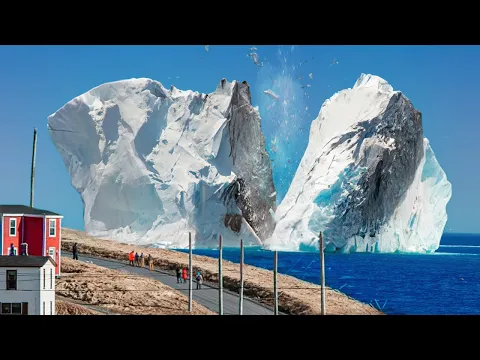
Models indicate that, without significant emission reductions, up to two-thirds of the world’s mountain glaciers could disappear by the end of the century, permanently altering the water cycle in vast inhabited regions.
A Global Alert That Goes Far Beyond Ice
What satellites reveal is not just the shrinkage of frozen landscapes but the weakening of a system that supports cities, crops, energy, and millions of lives. Greenland and Antarctica attract attention due to their size, but the melting of mountain glaciers is the factor that first impacts the daily lives of populations.
The loss of ice in the Andes, Alps, Rockies, and Central Asia shows that the climate crisis is not concentrated in remote regions, but silently advancing over the main sources of freshwater on the planet. The ice is disappearing — and with it, a fundamental part of the balance that sustained modern civilization.









Afe..morremos todos e não sabemos…
O importante é que toda estas massas de águas geladas vindas de todas as direções e de lugares longínquos ou pertinentes não peguem a muitos de surpresa e causem o imprevisto, o insustentável, desconhecidas, com muitos destroços, verdadeiros espantos mas improváveis ou com uma mínima probabilidade de atingir populações mundiais, nesta triste loteria; soberana dos azares …
A educação e a consciência, são os pilares da raça humana: qualquer atividade que possa fazer pra salvar nosso planeta, é válida para todos, independente da sua raça, cor, posição social ou religião. Vamos imaginar a Terra como uma escada, com infintos degraus: onde suas ações sejam do tamanho da sua força para escala-la.