





 Portuguese
  English
  Spanish
  2 min of reading
  0 comments


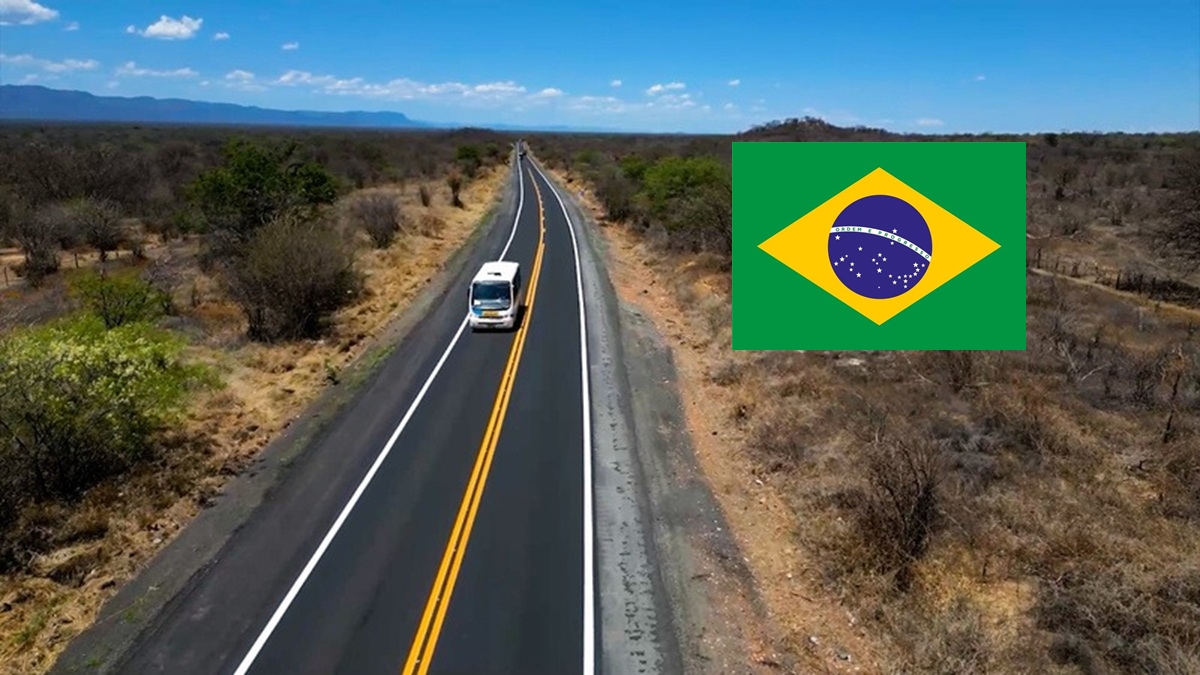
With 2,300 Kilometers, BR-242 Connects Maragogipe in Bahia to Sorriso in Mato Grosso, Passing Through Landscapes of Chapada Diamantina
BR-242, officially known as Milton Santos Highway, is one of the main transverse roads in the Brazilian federal highway system. With approximately 2,300 kilometers in length, it connects the east to the west of the country, linking the municipality of Maragogipe in Bahia to the city of Sorriso in Mato Grosso.
This federal highway crosses three states — Bahia, Tocantins, and Mato Grosso — and plays a strategic role in logistical and economic integration between the coast and the producing regions of the interior. Its starting point is near the Baía de Todos os Santos, while the final stretch reaches the Brazilian Midwest, in one of the most dynamic agriculture areas in the country.
A Road Between Natural Beauties and Agricultural Fields
Along its route, BR-242 crosses landscapes of great environmental value, such as Chapada Diamantina, an important ecotourism destination in Bahia. This feature makes the highway not only a transportation route but also a crucial path for regional tourism.
-
Friends have been building a small “town” for 30 years to grow old together, with compact houses, a common area, nature surrounding it, and a collective life project designed for friendship, coexistence, and simplicity.

-
This small town in Germany created its own currency 24 years ago, today it circulates millions per year, is accepted in over 300 stores, and the German government allowed all of this to happen under one condition.

-
Curitiba is shrinking and is expected to lose 97,000 residents by 2050, while inland cities in Paraná such as Sarandi, Araucária, and Toledo are experiencing accelerated growth that is changing the entire state’s map.

-
Tourists were poisoned on Everest in a million-dollar fraud scheme involving helicopters that diverted over $19 million and shocked international authorities.


Another highlight is its passage through the MATOPIBA region, which encompasses western Bahia and part of Tocantins. In this productive area, the road becomes essential for the transport of grains such as soybeans, corn, and cotton, reinforcing its role in the Brazilian agricultural economy.
Despite its importance, sections still lack paving or complete construction, revealing infrastructure challenges that impact transport and regional development.
The number “242” indicates its transversal character, a feature of federal highways that cross the country in an east-west direction, consolidating BR-242 as a vital link between the Atlantic coast and the productive interior of Brazil.










Seja o primeiro a reagir!