





 Portuguese
  English
  Spanish
  4 min of reading
  0 comments


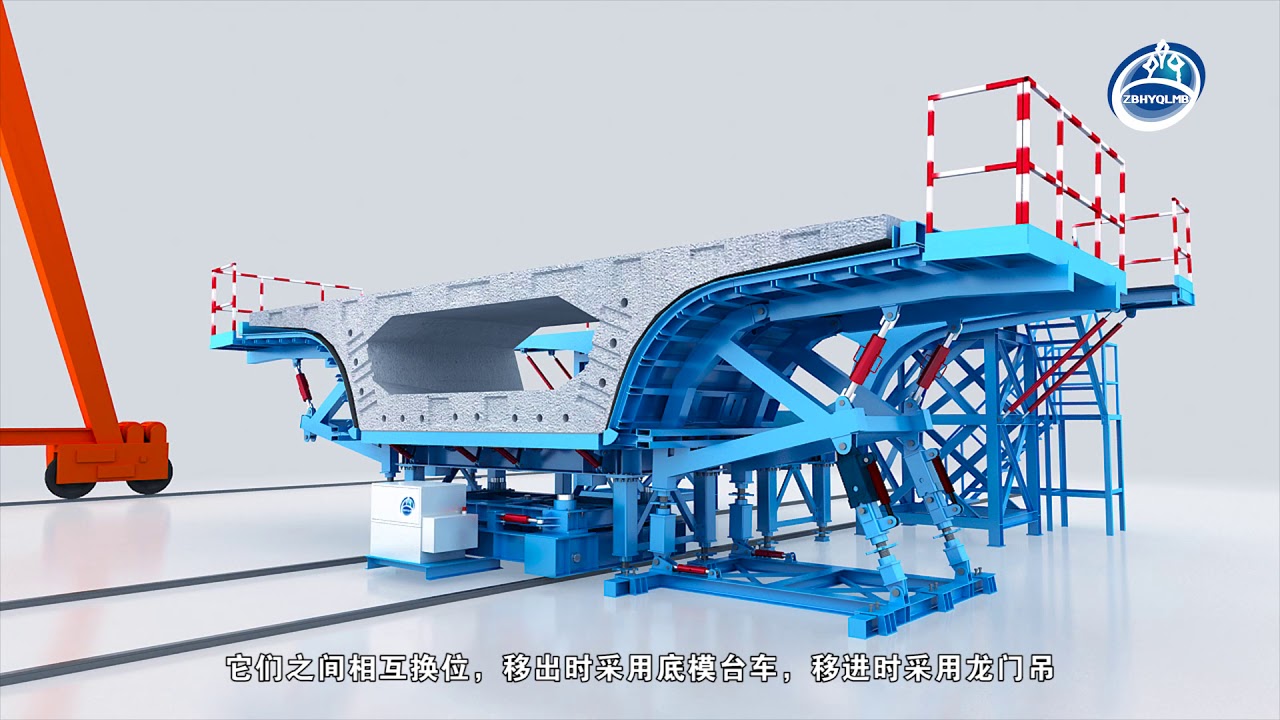
China Builds High-Speed Viaducts Using Mobile Beam Factories: 30–40 M Segments Are Produced On-Site and Assembled at an Industrial Pace Along the Railway.
Technical reports and records of the Chinese high-speed rail system show that China has solved a classic bottleneck in heavy railway construction, transporting giant beams over long distances — by changing the factory location. Instead of transporting finished pieces over congested highways, the country has started to install factory-job sites along the route, producing the beams on-site that support continuous viaducts for hundreds of kilometers. This method is now operated by large state-owned enterprises in the sector, such as China Railway Group and China Railway Construction Corporation, responsible for extensive stretches of the HSR network.
The “Factory” That Moves Along with the Railway
The heart of the system is the beam casting yard, an industrial yard temporarily set up near the line under construction. Here, repetitive molds produce prestressed concrete beams that are 30 to 40 meters long, standardized to fit into series of equally standardized pillars.
The yard concentrates reinforcement, prestressing, curing, and geometric control, functioning like an assembly line.
-
The lack of welders, electricians, and operators becomes a structural threat in 2025, with the construction industry and manufacturing already suffering from delays, cost pressures, and labor shortages in Brazil.
-
Brazil and Paraguay are just 46 meters away from a historic union on the bioceanic bridge that promises to revolutionize trade between the Atlantic and the Pacific.

-
With 55 km over the sea, a cost of US$ 20 billion, and enough steel to build 60 Eiffel Towers, China’s largest project has connected Hong Kong, Zhuhai, and Macau in a colossal bridge that defies the logic of engineering.

-
A trick with joint compound transforms a Styrofoam ceiling into a plaster-like ceiling: leveled panels, wires and mesh at the joints, sand, paint, and change the environment while spending little today.


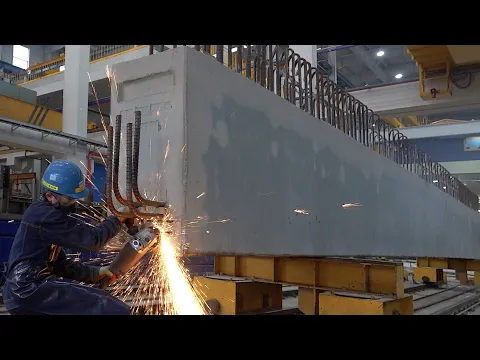

As a section of the viaduct advances, the yard is dismantled and reassembled further ahead, following the work. In practice, the factory “moves” with the railway, drastically reducing the need for heavy transport of parts that can weigh hundreds of tons.
Mass Production with Industrial Control
Each beam is born under controlled conditions: temperature, concrete curing, cable tension, and geometric tolerances are continuously monitored. This repetition eliminates common variations found in traditional job sites and allows for continuous production, with predictable cycles.
The result is a constant supply of ready-to-assemble segments, synchronized with the pace of the pillars and foundations.
Standardization also simplifies logistics: the beams leave the yard directly to their final position, in short moves made by special conveyors or internal tracks of the yard.
Accelerated Assembly with Launching Gantries
To place the beams in position, launching gantries — large machines that move from pillar to pillar, lifting each segment and positioning it with millimeter precision — come into play. The equipment advances on its own over the already assembled structure, repeating the cycle beam after beam.
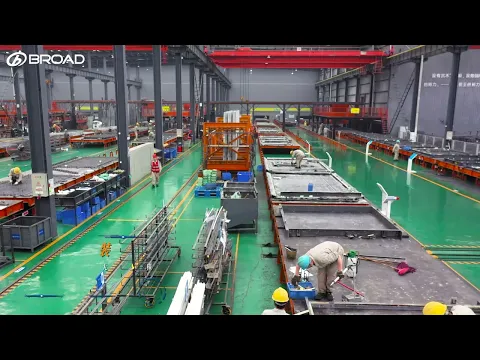
This combination — mobile factory + launching gantry — transforms the assembly of viaducts into an almost automatic process.
In long corridors, the system maintains a steady daily pace, which explains how China can erect kilometers of viaducts in time frames that seem incompatible with the size of the structures.
Elimination of Heavy Transport on Highways
One of the less visible but decisive gains is the removal of exceptional loads from roads. Instead of long convoys, escorts, and traffic restrictions, local production shortens the path between manufacturing and installation to just a few kilometers, sometimes just hundreds of meters. This reduces costs, risks, and urban conflicts, in addition to accelerating the schedule.
This method has been systematically applied on lines such as Beijing–Shanghai, Wuhan–Guangzhou, and Zhengzhou–Xi’an, where long elevated stretches required rapid and reliable repetition. In these corridors, the presence of continuous viaducts is not aesthetic: it reduces ground interference, crosses agricultural and urban areas, and maintains the precise alignment required by high-speed trains.
Why the Method Works on a Continental Scale
The key to success is the combination of scale and repetition. By standardizing spans, beams, and equipment, China has transformed a handcrafted project into mass production. Each new section benefits from the lessons learned from the previous one, and the system improves as it progresses.
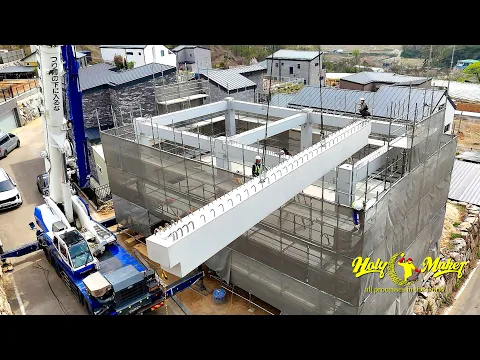
In the end, what appears to be just a viaduct is, in fact, the product of a mobile industrial ecosystem, where concrete, steel, giant machines, and logistics work in sync.
The Chinese experience shows that the secret lies not only in larger machines but in changing the logic of construction. By bringing the factory to the route instead of the other way around, the country created a method that is little known outside Asia, capable of supporting one of the largest railway programs on the planet.
It’s engineering that does not rely on improvisation but on repetition, rhythm, and scale, exactly the type of solution that allows for the construction of colossal infrastructures as if they were assembly line products.










-

-

-

-

-

6 pessoas reagiram a isso.