





 Portuguese
  English
  Spanish
  4 min of reading
  7 comments


Separator Made With Plastic Drum And PVC Pipes Can Cost About R$ 300 And Replace Commercial Models Of Up To R$ 1,800, Reducing Clogging In The Sewer Network.
In residential kitchens and rural properties, grease from washing dishes is one of the main causes of clogging in the plumbing. When oil and fatty residues go directly into the plumbing, they tend to solidify, adhering to the inner walls of the pipes.
The grease trap is the equipment responsible for preventing these residues from advancing to the main network. Ready-made commercial models can cost between R$ 800 and R$ 1,800, depending on the capacity and material. However, the operating principle of the system is simple and allows for adaptations with accessible materials.
How A Domestic Grease Separator Works
The operation is based on a basic physical principle: grease is less dense than water and therefore floats.
-
The lack of welders, electricians, and operators becomes a structural threat in 2025, with the construction industry and manufacturing already suffering from delays, cost pressures, and labor shortages in Brazil.

-
Brazil and Paraguay are just 46 meters away from a historic union on the bioceanic bridge that promises to revolutionize trade between the Atlantic and the Pacific.

-
With 55 km over the sea, a cost of US$ 20 billion, and enough steel to build 60 Eiffel Towers, China’s largest project has connected Hong Kong, Zhuhai, and Macau in a colossal bridge that defies the logic of engineering.

-
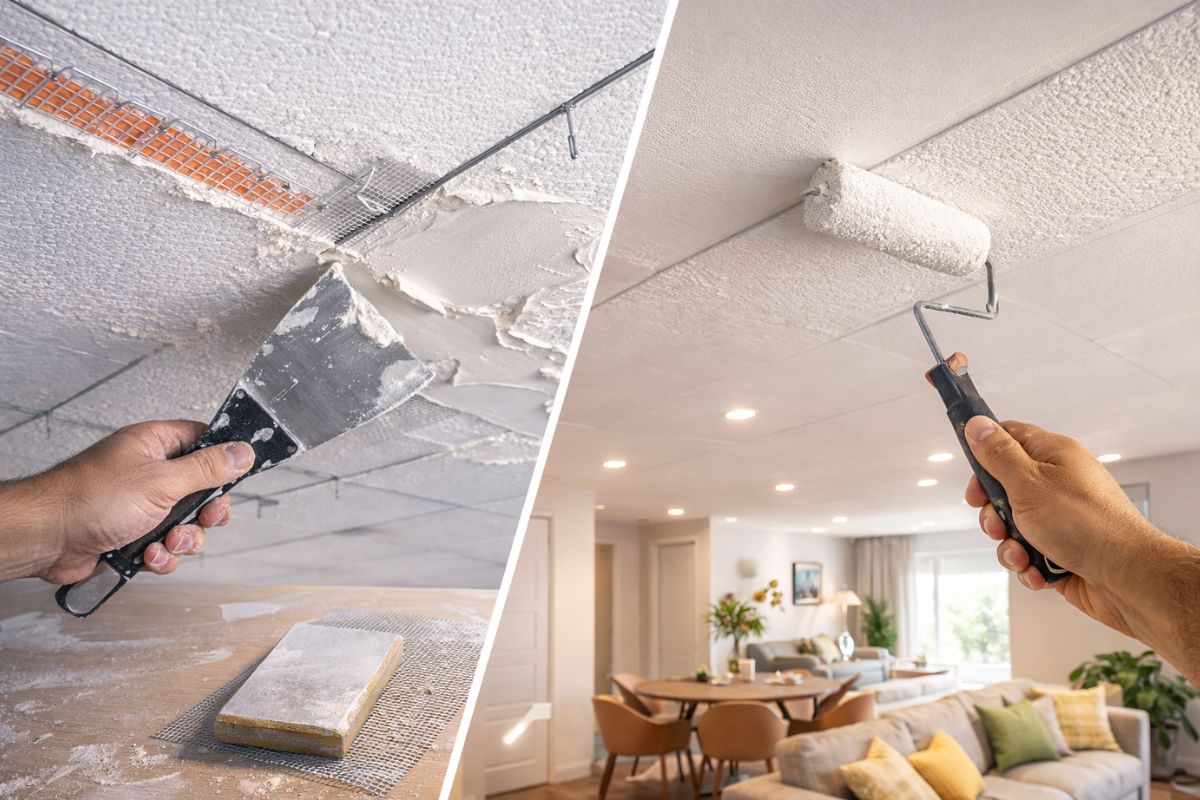
A trick with joint compound transforms a Styrofoam ceiling into a plaster-like ceiling: leveled panels, wires and mesh at the joints, sand, paint, and change the environment while spending little today.

When the sink water enters the reservoir, its speed decreases. This deceleration allows the grease to rise to the surface, while heavier particles settle at the bottom. The relatively cleaner water exits through an outlet pipe positioned below the grease layer.
The separation occurs due to density difference and does not require electricity or complex mechanisms.
Basic Structure With Plastic Drum And PVC
Simplified models use:
- Plastic Drum Of 50 To 200 Liters
- PVC Inlet Pipe
- Lower Positioned Outlet Pipe
- Sealed Inspection Cover
- PVC Connections And Elbows

The drum functions as a retention chamber. The water inlet is installed at a higher level, while the outlet is a few centimeters below the internal surface, preventing the grease layer from moving to the sewage system.
The correct positioning of the pipes ensures the efficiency of separation.
Why The System Prevents Clogging
The accumulated grease inside the trap can be removed manually at regular intervals. Without this retention phase, residues would follow into the piping, where they could solidify.
Clogs caused by grease can result in water backing up through the sink, unpleasant odors, or the need for mechanical unclogging. By intercepting the grease before it advances, the system significantly reduces the formation of blockages.
Estimated Cost Of The Simplified Model
The main costs involved are:
- Recycled Or New Plastic Drum
- PVC Pipes And Connections
- Sealants And Sealing

Depending on the region and the chosen capacity, the cost can range from R$ 300 to R$ 500 for small systems.
This cost is lower than many ready-made commercial models, especially those made of molded polyethylene or concrete.
Proper Sizing Is Essential
The efficiency depends on the volume of the reservoir in relation to the amount of water used in the kitchen. Very small reservoirs may not provide enough time for adequate separation.
The water retention time inside the trap is crucial for the grease to separate. In homes with a higher volume of use, a larger drum or a model with an internal deflection compartment may be necessary.
Periodic Maintenance Ensures Performance
The system requires periodic cleaning to remove the accumulated grease layer. If there is no maintenance:
- Usable Volume Decreases
- Grease May Exceed The Outlet Pipe Level
- The System Loses Efficiency

The cleaning frequency depends on the kitchen usage and the amount of waste generated.
Application In Sitios And Rural Areas
In properties far from the public sewage network, the separator can be integrated with:
- Septic Tank
- Biodigester
- Infiltration System
The prior retention of grease helps preserve the functioning of later treatment systems. The grease trap acts as the first barrier in the domestic treatment line.
Limitations Of The Homemade Model
Although functional, the simplified system does not replace technical standards when required by municipal legislation. Additionally:
- Must Be Installed With Adequate Sealing
- Needs To Be Accessible For Cleaning
- Does Not Completely Eliminate Heavy Solids
In urban areas with specific regulation, there may be a requirement for certified models.
Comparison With Commercial Models
Industrial or ready-made commercial models offer:
- Molded Housing
- Defined Internal Compartments
- Standardized Connections
On the other hand, the model with a plastic drum depends on the correct execution of the connections. The physical principle is the same; what changes is the finishing and standardization. The domestic grease separator made with a plastic drum and PVC pipes uses a simple physical principle to retain oils and residues before they reach the sewage system.


With reduced cost compared to commercial models, it can be a viable alternative in rural properties and residences, provided it is properly sized and maintained regularly.
By intercepting the grease at the source, the system reduces the risk of clogs and contributes to greater durability of domestic plumbing.










Achei prático mais fácil de fazer a limpeza
A ideia em si é boa mas conforme está na ilustração não funciona pq a sujeira pesada cae e volta para o encanamento não para a cx de gordura
Consegui uma solução caseira e já tem 10 anos, nunca encheu, nunca entupiu e eu nunca precisei limpar a caixa de gordura da minha casa: coloque a saída da máquina de lavar roupas na pia da cozinha.
funciona mesmo ? Normalmente instalada – máquina de lavar- longe da cozinha. Assim ter-se-ia que fazer uma conexão longa ( como vc fêz) para conectar a saída da máquina de lavar no duto de saída da cozinha. ?? E não dá nenhum extravasamento na cx de gordura?
A caixa de gordura é JUSTAMENTE PRA SER LIMPO FREQUENTEMENTE…. serve para RETER a gordura! Isso é, ao invés da gordura ir para a fossa e para ESGOTO PUBLICO (RUA)… a gordura fica num ÚNICO PONTO para ser retirado, ao invés de ENTUPIR VARIOS PONTOS DA REDE DE ESGOTO DOMÉSTICO e acabar na rua. ESSA SUGESTÃO É ERRADA, POIS REALMENTE EXTRAVAZA….
Quando existia fossa tinha que chamar limpa fossa ou fazer outra fossa, e a sujeira não ia parar no esgoto público agora vc paga esgoto e não pode ir pro esgoto, vai entender, tudo bem que tem que limpar a caixa de gordura, só que a maioria vai, não adianta que vai, mas é real a fossaera muito menos poluidora
A caixa de gordura é JUSTAMENTE PRA SER LIMPO FREQUENTEMENTE…. serve para RETER a gordura! Isso é, ao invés da gordura ir para a fossa e para ESGOTO PUBLICO (RUA)… a gordura fica num ÚNICO PONTO para ser retirado, ao invés de ENTUPIR VARIOS PONTOS DA REDE DE ESGOTO DOMÉSTICO e acabar na rua.