





 Portuguese
  English
  Spanish
  4 min of reading
  2 comments


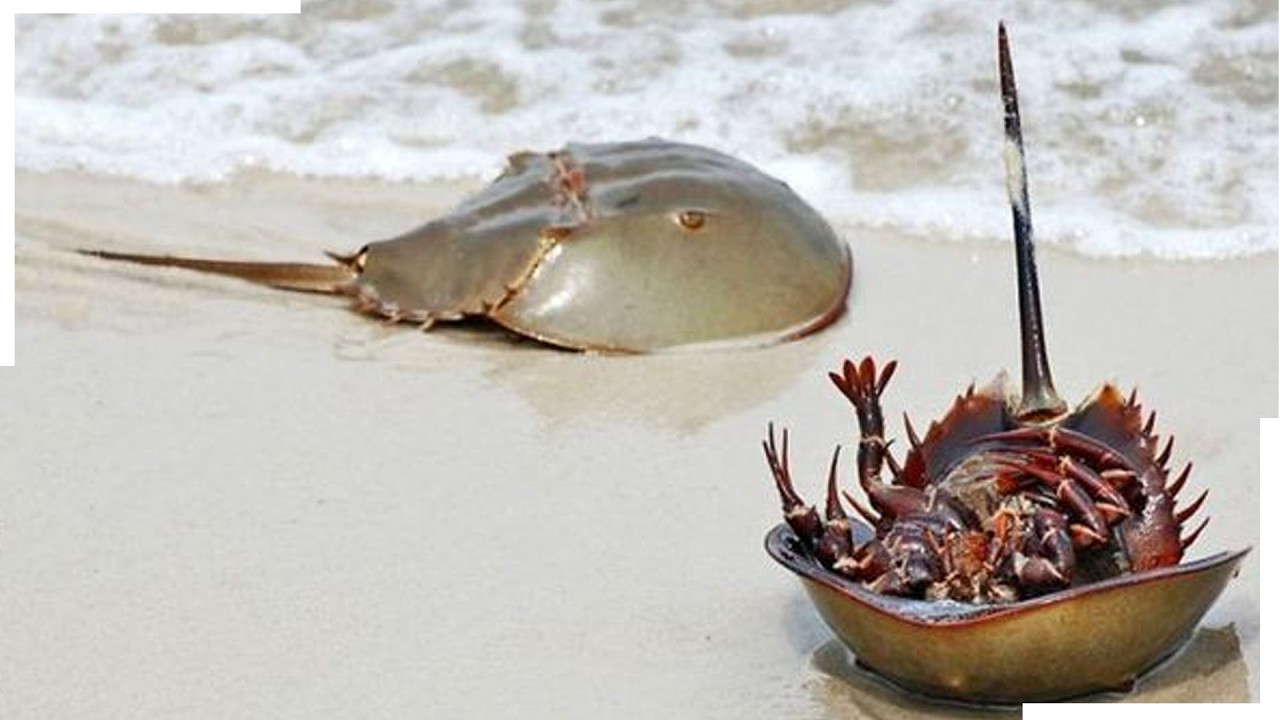


With An Estimated Origin of 450 Million Years, the Horseshoe Crab Survived Mass Extinctions, Maintains Prehistoric Anatomy, and Provides Vital Blue Blood for Modern Medicine.
When it comes to “prehistoric” animals, few live up to the term like the horseshoe crab (Limulus polyphemus). It emerged long before dinosaurs, survived all major mass extinctions on Earth, and arrived in the 21st century practically with the same basic appearance as hundreds of millions of years ago. While entire species have disappeared, this marine arthropod has remained functional, adapted, and biologically efficient in the shallow coastal environments of the North Atlantic.
Despite its name, the horseshoe crab is not a true crab. It belongs to an older group, the chelicerates, being closer to spiders and scorpions than to modern crustaceans. This ancestral lineage helps to explain why its anatomy seems straight out of a paleontology textbook.
An Anatomy That Has Endured 450 Million Years With Almost No Change
The fossil record indicates that direct ancestors of the horseshoe crab already existed in the Ordovician period, about 450 million years ago. Since then, its basic body structure has changed very little.
-
With a cost per shot close to zero, the DragonFire laser could change naval warfare in 2027 and provide British ships with nearly unlimited defense against drones.

-
A British startup creates tires that generate electricity in electric vehicles when passing over potholes, speed bumps, and cracks.

-
Scientists have created robots made with living cells that have their own nervous system, swim on their own, explore the environment, and self-organize without any genetic engineering, and now they want to do the same with human cells.

-
Students create a solar-powered ambulance that operates without a plug, without fuel, and still keeps medical equipment running in remote areas.


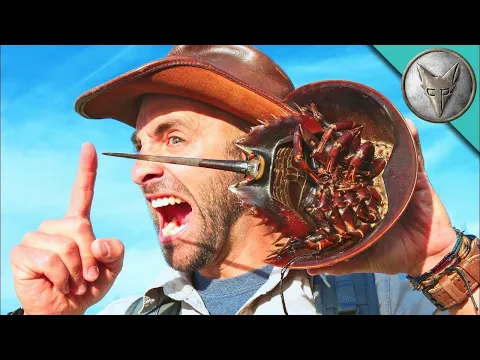
The body is divided into three main parts: the prosoma (the horseshoe-shaped “carapace”), the opisthosoma, and the telson, a long, rigid spine used for balance and defense.

This anatomical stability is not a coincidence. It indicates an extremely efficient evolutionary design. The thick exoskeleton protects against predators, while the gill-like structures allow for efficient breathing in oxygen-poor waters.
The compound and simple eyes work together to detect movement and light in murky environments, common in estuaries and shallow beaches.
From an evolutionary standpoint, the horseshoe crab represents a classic case of “morphological stasis”: when a body form works so well that natural selection does not impose significant changes over time.
The Annual Ritual That Covers Beaches With Prehistoric Eggs
One of the most impressive behaviors of the horseshoe crab takes place every year, usually in the spring and early summer. Thousands of individuals migrate in sync to sandy beaches during high tides, especially on full or new moon nights.
The females dig small nests in the sand and lay between 60,000 and 120,000 eggs throughout the breeding season. These eggs remain partially buried and become an essential food source for migratory birds, such as the red knot, which relies on this energetic abundance to complete long migratory routes.
This event transforms entire beaches into true living nurseries, directly linking an animal of Cambrian origin to modern ecological chains. Without the eggs of the horseshoe crab, entire populations of migratory birds would collapse.
Blue Blood: The Biochemical Detail That Saved Millions of Human Lives
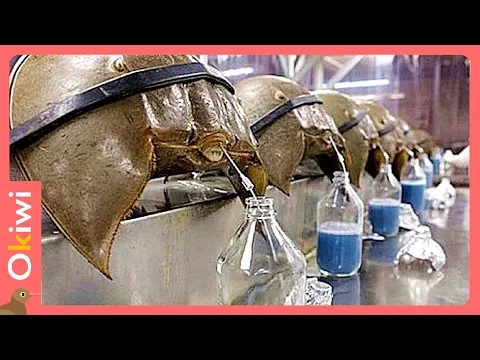
If the horseshoe crab would already be extraordinary for its evolutionary longevity, it becomes even more relevant when it enters modern laboratories. Its blood is blue—not for aesthetics, but for chemistry. Instead of iron-based hemoglobin, it uses hemocyanin, a copper-rich protein to transport oxygen.
More importantly, there is the so-called LAL (Limulus Amebocyte Lysate), a substance extracted from the animal’s blood cells. LAL reacts instantly to the presence of bacterial endotoxins, even in minimal amounts. For this reason, it has become the global standard for testing the sterility of vaccines, injectable drugs, prosthetics, and medical equipment.
Without LAL, the modern pharmaceutical industry simply would not function as it does today. It is estimated that millions of safety tests each year directly depend on this substance derived from an animal that existed even before trees emerged on Earth.
Blood Collection, Risks, and Ethical Dilemmas
The medical importance has also brought challenges. To obtain LAL, horseshoe crabs are captured, have part of their blood collected, and are then returned to the ocean. While many survive, studies indicate post-collection mortality rates ranging from 10% to 30%, along with sublethal effects such as disorientation and reduced reproductive capacity.
This impact has generated global debates about conservation and bioethics. In recent years, advances in developing synthetic alternatives to LAL, such as rFC (recombinant Factor C), have begun to reduce the direct dependence on animal blood, but the transition is still slow and uneven among countries.
A Living Fossil Under Modern Threat
Paradoxically, an animal that has survived five mass extinctions now faces risks caused by human activity in just a few decades. Coastal urbanization, pollution, overfishing, and climate change are directly affecting their breeding areas.
In some regions of the United States, populations of horseshoe crabs are already showing concerning declines. Programs for managing and protecting breeding beaches have come to be regarded not only as environmental measures but as strategic actions for public health and global biodiversity.
Why the Horseshoe Crab is More Than Just a Strange Animal
The horseshoe crab is not just a “weird creature” from the distant past. It is a living bridge between the deep history of the Earth, current ecosystems, and high-tech medicine. Few organisms manage to connect paleontology, ecology, molecular biology, and the pharmaceutical industry so directly.
As we observe a horseshoe crab slowly walking on the sand, we are seeing practically the same organism that witnessed the emergence of the first vertebrates, the conquest of dry land, and the impact of global asteroids. A living reminder that sometimes, surviving does not mean changing—it means already being perfectly adapted.
If you wish, I can continue with similar topics in the same epic pattern, focused on other real “living fossils,” with technical data and solid scientific basis.







This article was written with AI. Author copied and pasted and left some of the AI text at the bottom 😂 Copied below for reference. Also says crab-horshoe in one of the headers.. Does no one do their own work anymore?
“If you want, I can continue with similar agendas In the same epic style, focused on other real “living fossils,” with technical data and a solid scientific basis.”
She’s a lazy fraud. How many of her articles are “agendas” generated by Ai…