





 Portuguese
  English
  Spanish
  5 min of reading
  0 comments


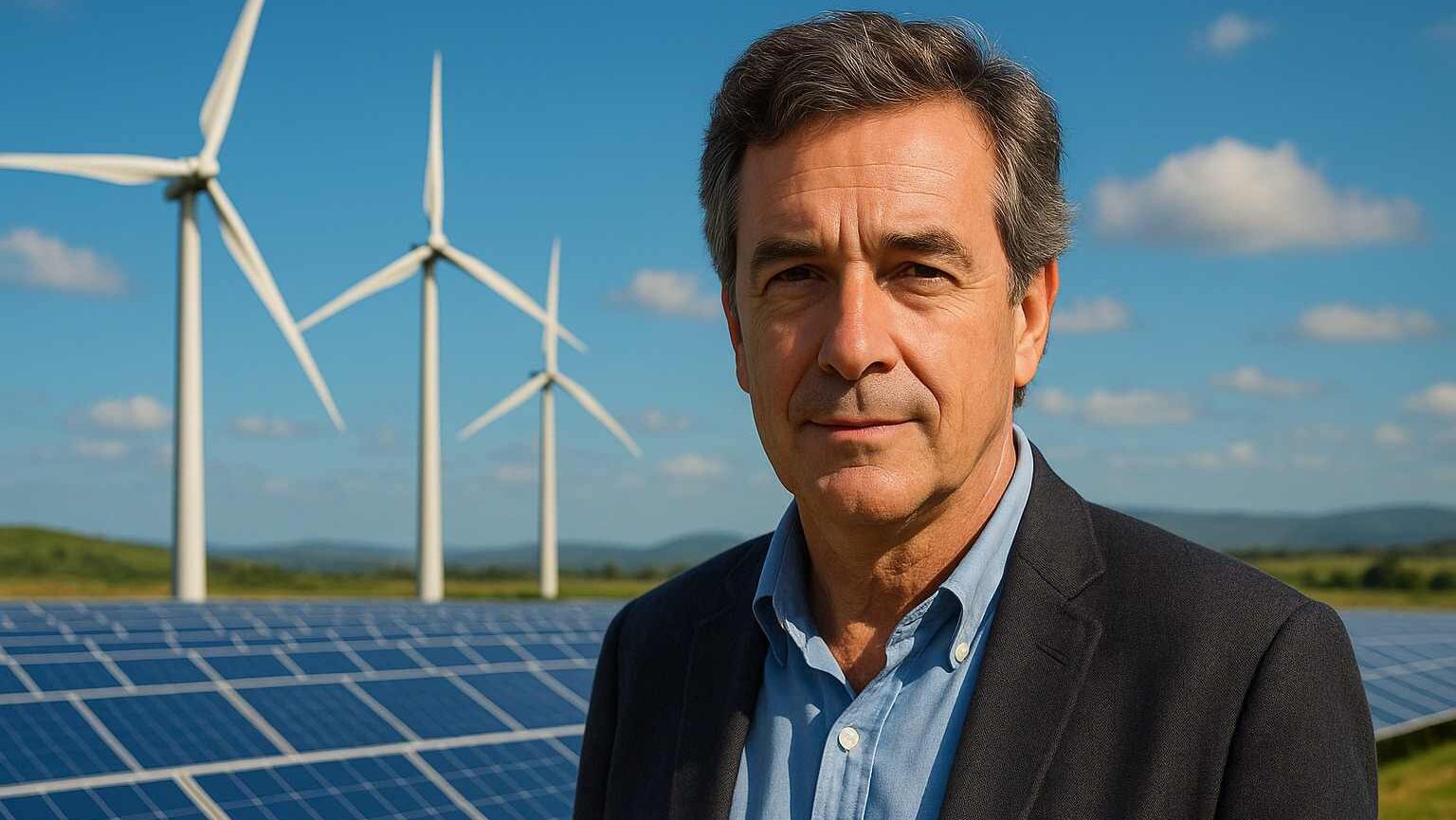
Uruguay Transformed Its Electric System By Adopting Rules That Favored Renewable Competition, Reducing Costs, Increasing Jobs, And Creating A Model That, According To Its Creator, Can Be Replicated In Other Countries
The advancement of Uruguay in the electric sector gained prominence because it changed the way the country produces and consumes energy. This change occurred rapidly and achieved results that seemed distant when the first analyses were made.
The starting point was a direct assessment of costs, vulnerability, and dependence. The country faced growing difficulties, and physicist Ramon Méndez Galain proposed a different route to address them.
The proposal was based on the idea that the energy transition should not be treated solely as a response to climate issues. For him, the topic was essentially economic.
-
With a cost per shot close to zero, the DragonFire laser could change naval warfare in 2027 and provide British ships with nearly unlimited defense against drones.

-
A British startup creates tires that generate electricity in electric vehicles when passing over potholes, speed bumps, and cracks.

-
Scientists have created robots made with living cells that have their own nervous system, swim on their own, explore the environment, and self-organize without any genetic engineering, and now they want to do the same with human cells.

-
Students create a solar-powered ambulance that operates without a plug, without fuel, and still keeps medical equipment running in remote areas.


As soon as the regulatory framework was redesigned, the results began to appear because the rules allowed renewable energies to compete with fossil fuels on equal terms. From then on, the scenario changed quickly.
The Starting Point Of A Small Country
When Méndez Galain studied the local electric system, he identified a set of problems. Demand was increasing, fossil options were almost nonexistent, and external dependence was growing. Hydropower was already reaching its limit, and the first signs of instability were appearing in the grid, affecting homes and productive sectors.
Uruguay, with 3.5 million inhabitants, had a productive structure capable of supporting deep changes, although it did not have a large industrial park.
This format opened space for a reorganization of the system because it allowed the adoption of solutions aimed at reducing costs and efficiently using available resources.
At the beginning of the 2010s, the government recognized that dependence on imported oil could not continue. It was at this moment that Méndez Galain’s proposal gained strength.
He suggested creating a system almost entirely supported by national renewable resources, but with rules that ensured competitive balance. The idea was simple and disruptive at the same time: to let renewable electricity prove its own worth within a fair regulatory environment.
Measurable Results And Direct Effects
With the restructuring completed, the numbers began to show the extent of the transformation. Uruguay began generating almost 99% of its electricity from renewable sources. Thermal power plants, which were frequently activated before, today represent between 1% and 3% of operations, functioning only when hydropower, wind turbines, and solar systems do not fully meet demand.
The composition of the matrix also became more diversified. Hydropower accounts for about 45% of generation.
Wind power can reach 35%, biomass contributes 15%, and solar is used as a strategic complement to fill fluctuations.
The economic impact was one of the main results. The total cost of electricity fell by approximately half compared to a fossil fuel-dependent system. Countries such as Honduras, the Dominican Republic, and Chile have publicly analyzed the model, seeking similar pathways.
The volume of investments increased. In five years, the country received nearly US$ 6 billion directed to the renewable energy sector. Moreover, 50,000 jobs were created, a significant number relative to the size of the population. The economy gained stability because it stopped reacting to fluctuations in the international fuel market, a crucial point for a country without fossil reserves.
The Role Of Institutions And Political Continuity
The Uruguayan transition did not occur solely because of turbines, panels, and plants. The institutional process sustained the change.
The country structured long-term capacity markets, suspended subsidies for fossil fuels, and adopted competitive auctions focused on wind and solar energy. These mechanisms reduced costs and offered predictability for investors.
The continuity of policies over five administrations was also decisive. Even with adjustments, the general direction remained stable, strengthening regulatory security.
This institutional behavior reinforced the view that the transition only becomes viable when the rules guarantee real competitive conditions. According to Méndez Galain, this is the decisive point: the technology already exists, but it depends on institutions capable of allowing it to advance.
Global Differences And The Discussion On Replicability
Some observers claim that the case of Uruguay is unique because of its size and the relationship between demand and installed capacity. Larger countries, with aging grids or intensive industrial sectors, face distinct challenges. Storage needs to be expanded, and infrastructure modernized.
Méndez Galain acknowledges these differences but states that they do not impede progress. For him, each country has specific conditions, such as wind, sun, geothermal, biomass, tides, or energy efficiency. The central point is not the absolute quantity, but the possibility of allowing these resources to compete without being affected by subsidies for fossil fuels.
The IMF estimates that these subsidies exceed US$ 1.3 trillion per year in direct form and exceed US$ 6 trillion when indirect effects are considered.
The message conveyed by the Uruguayan case generates discomfort because it shows that the transition works when it reduces costs and creates jobs, not just when it is treated as a climate requirement.
Delegations from Mexico, Chile, Colombia, the Netherlands, and South Africa studied the model, each with its own objectives and limitations. Financial institutions began to see the country as a reference to demonstrate that renewable energy is also an economically competitive option.
The Question That Remains
For Méndez Galain, the doubt has never been about the technical capacity of renewable sources. The real discussion is about the willingness of governments to change rules that historically favored fossil fuels. The answer to this question is still not defined.
The Uruguayan transformation brought environmental benefits. The reduction in emissions is evident, but there are less visible effects. Air pollution decreased in areas where thermal power plants were frequently activated.
The energy valorization of biomass reduced industrial waste, especially in the agricultural and forestry sectors. The risks associated with spills and the transportation of fuels decreased, reducing impacts that often remain outside climate reports.
The reorganization required territorial planning. The need to distribute renewable installations led to a reflection on land use, preventing concentrated impacts.
There was also an effort to ensure that expansion did not occur at the expense of biodiversity. Environmental standards were reinforced with this goal, facing challenges still present in other countries.
A Lesson Built In Practice
The Uruguayan case stands out as it shows that a rapid, inexpensive, and real transition is possible when supported by strong institutions and balanced rules.
The combination of almost 100% renewable electricity, halved costs, economic stability, and job creation made the country an example studied in various regions.
The experience did not arise from a single factor. It relied on political decisions, regulatory adjustments, correctly structured incentives, and efficient use of available resources.
From this, Uruguay built a model that, according to its creator, could work in any place where there is a willingness to change the game.








-

Uma pessoa reagiu a isso.