





 Portuguese
  English
  Spanish
  5 min of reading
  0 comments


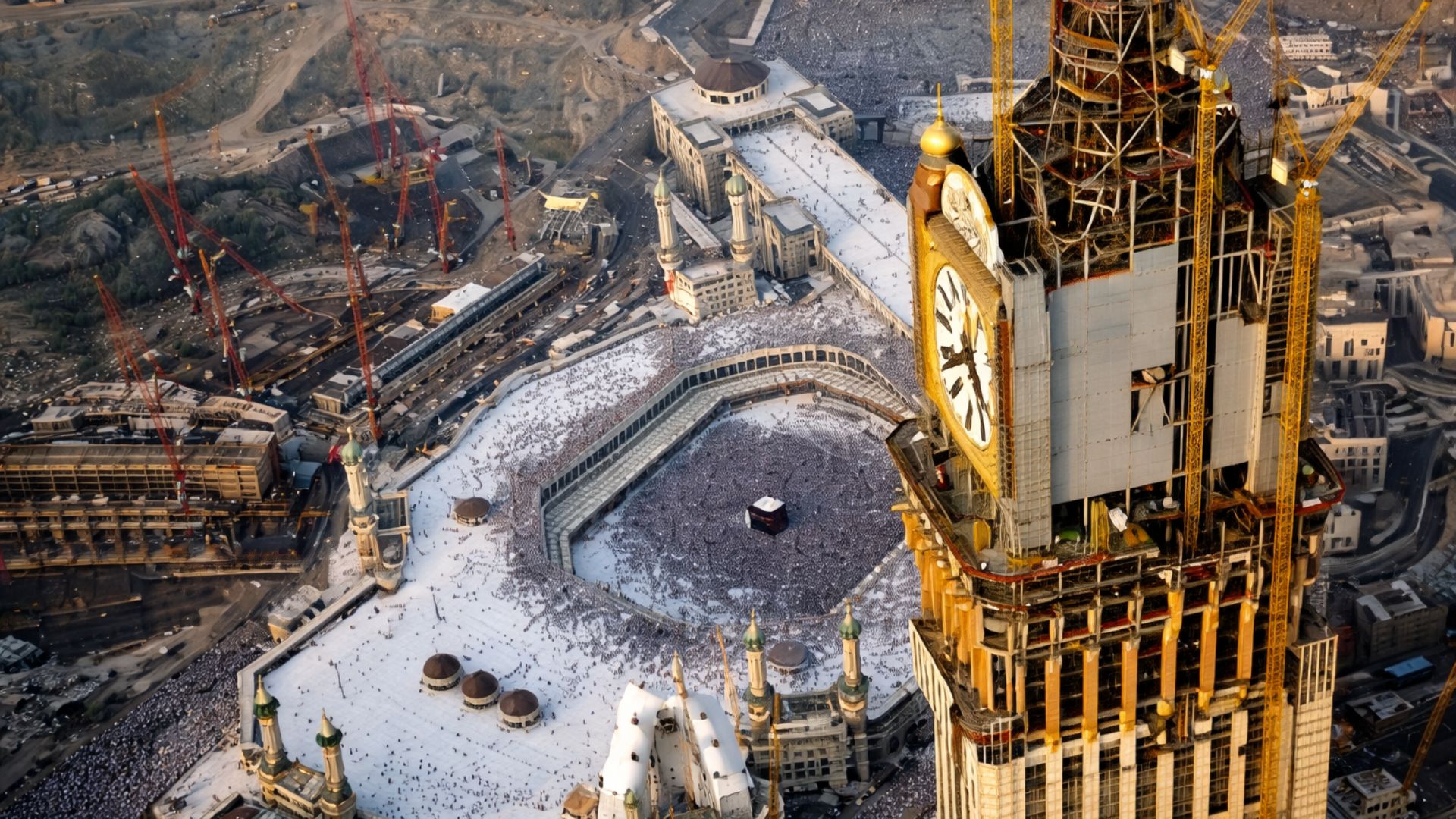
Monumental Tower Erects Extreme Engineering in One of the Most Sensitive Locations on the Planet, Uniting Advanced Structural Solutions, Ultra-Light Materials, and Precise Logistics to Function Next to the Main Sanctuary of Islam Without Disrupting the Religious Rhythm of the City.
Just a few meters from the Great Mosque of Mecca, in front of the Kaaba, Saudi Arabia has erected a building that has become a global reference for scale, technical complexity, and religious symbolism, bringing together challenges rarely faced in contemporary engineering projects.
At 601 meters tall, the Makkah Royal Clock Tower, the core of the Abraj Al Bait complex, has established itself as the tallest clock tower in the world, standing out not only for its size but for the need to coexist with one of the most sacred spaces in the Islamic world.
The building houses four giant dials, illuminated by high-intensity systems, designed to be visible from great distances and to operate continuously in extreme environmental conditions, such as intense heat, strong winds, and sharp thermal variations.
-
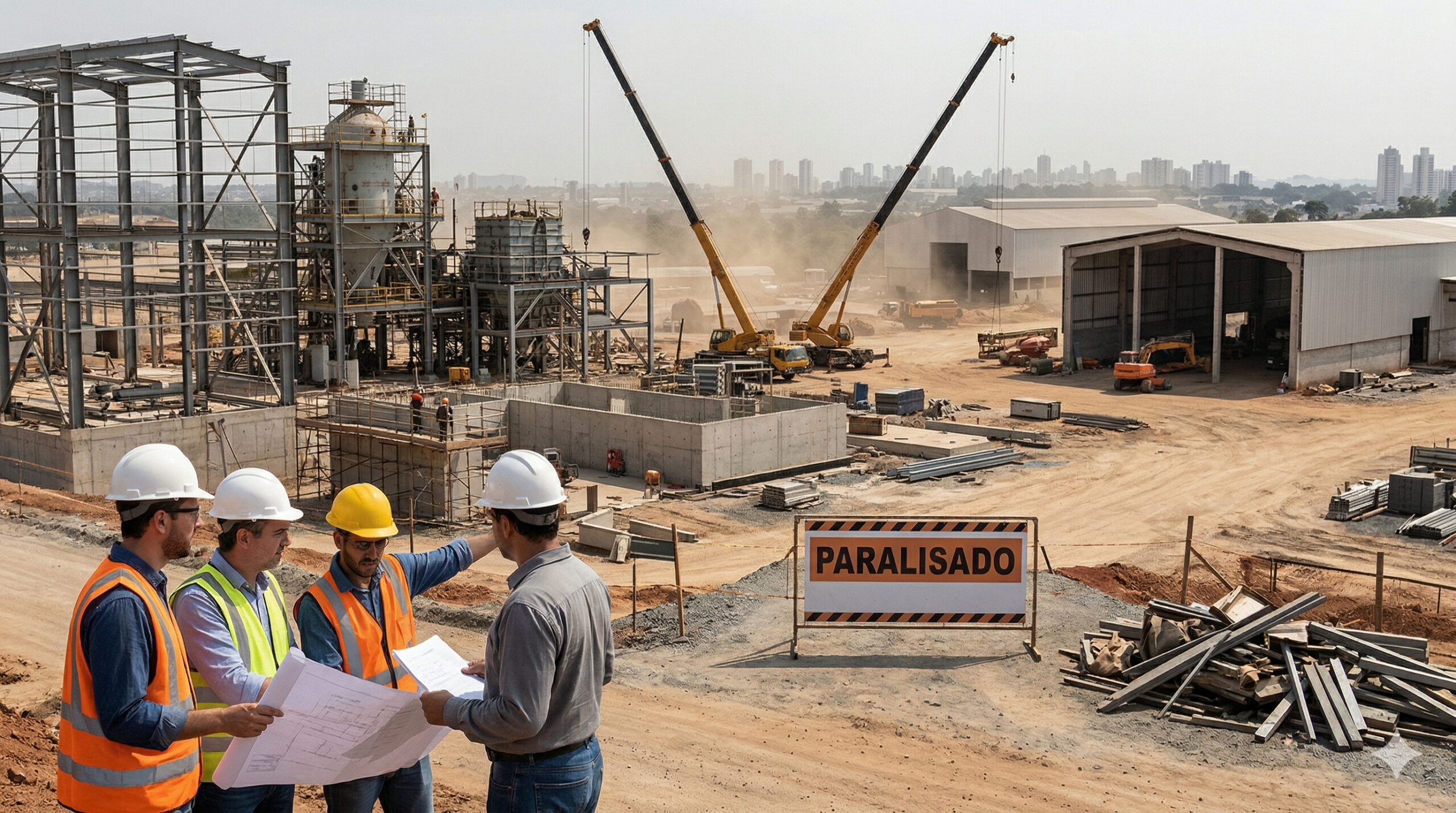
The lack of welders, electricians, and operators becomes a structural threat in 2025, with the construction industry and manufacturing already suffering from delays, cost pressures, and labor shortages in Brazil.
-
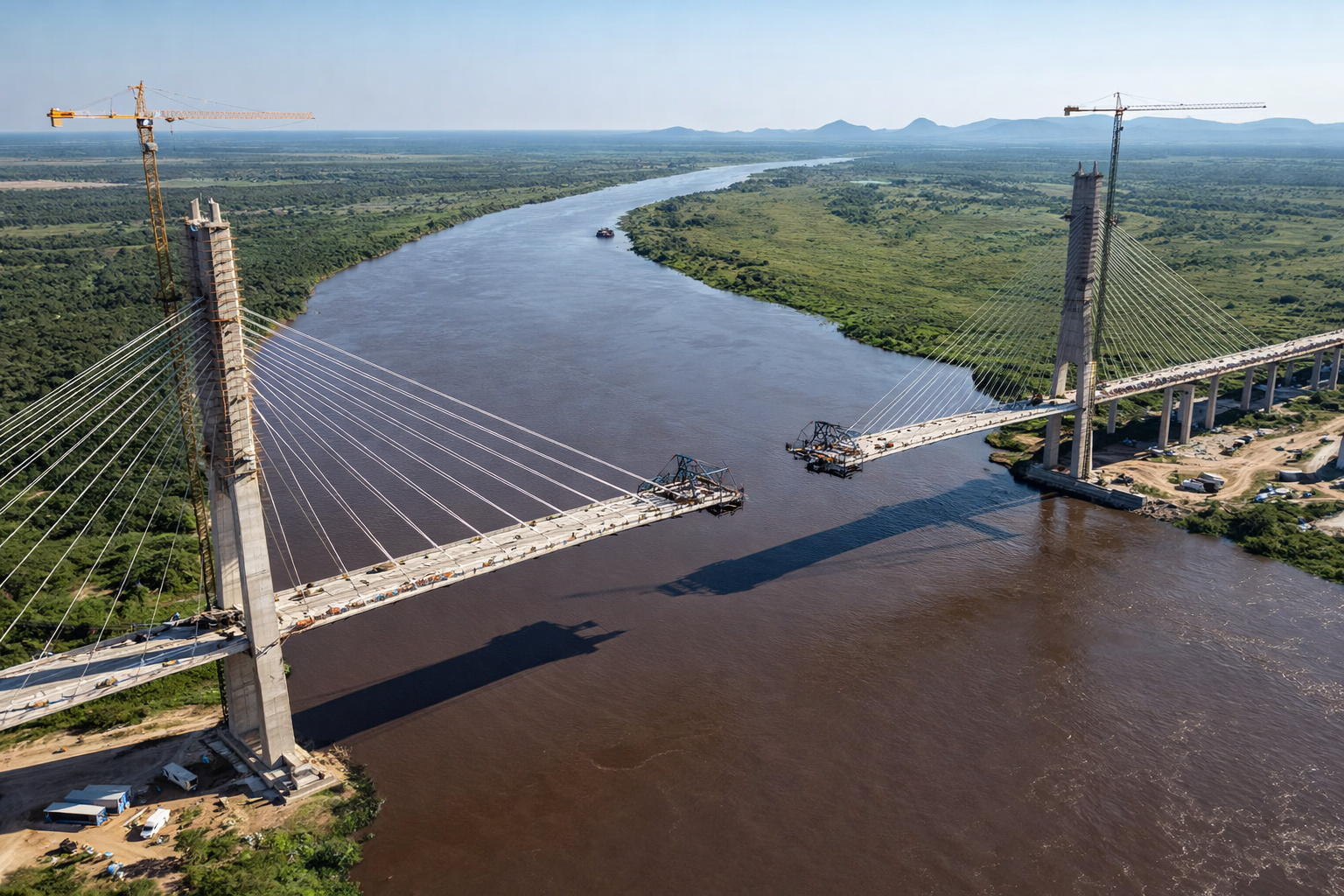
Brazil and Paraguay are just 46 meters away from a historic union on the bioceanic bridge that promises to revolutionize trade between the Atlantic and the Pacific.
-
With 55 km over the sea, a cost of US$ 20 billion, and enough steel to build 60 Eiffel Towers, China’s largest project has connected Hong Kong, Zhuhai, and Macau in a colossal bridge that defies the logic of engineering.

-
A trick with joint compound transforms a Styrofoam ceiling into a plaster-like ceiling: leveled panels, wires and mesh at the joints, sand, paint, and change the environment while spending little today.


Completed in the early last decade, the project was driven not only by architectural ambition or the pursuit of records but by the need to meet the demands of a city that operates under strong logistical and religious pressure year-round.
From the outset, the project had to adapt to access restrictions, mandatory interruptions during prayer times, and the requirement for permanent security in an area that receives millions of pilgrims during specific periods.
These factors shaped technical decisions, timelines, and construction methods, requiring engineering capable of engaging with faith, respecting millennia-old traditions, and still operating at the limits of available technology.
Mecca and the Challenge of Building on Sacred Ground

Although not an industrial hub or a global financial center, Mecca has a complex urban infrastructure designed to absorb massive flows of visitors attracted by religious rituals that have been repeated for centuries.
During the Hajj and Umrah, hotels, transportation, security, and public services enter maximum operational mode, transforming the city into an organism that must function precisely to avoid collapses.
It was in this context that the Abraj Al Bait complex was established, bringing together hospitality, service areas, and a central tower that came to dominate the urban landscape while keeping the symbolic significance of the surroundings in view.
Building so close to the most sacred site in Islam imposed an unusual level of coordination, in which each step needed to respect local norms, religious rituals, and physical limits imposed by geography and available space.
More than just raising a skyscraper, the challenge was to integrate a megainfrastructure into a city whose daily logic is not economic but spiritual and ritualistic.
A Clock That Became a Structural Challenge
The clock became the most emblematic element of the tower, shifting from being just a visual component to assuming a central role in the structural and operational challenges of the building.
Installed at great height, the four faces of the dial were exposed to intense winds, desert dust, and thermal amplitudes that required solutions beyond those used in conventional clock towers.

In these conditions, any failure would have an immediate impact, not only visually but also symbolically, since the clock serves as a temporal reference and urban landmark for the city.
Designed to operate continuously in an extreme environment, the system needed to combine mechanical reliability, structural strength, and relative ease of maintenance, even with limited access.
Each dial ranks among the largest ever built, illuminated by millions of points of light that allow for visibility from long distances, solidifying the clock as the dominant feature of the landscape.
Ultra-Light Materials to Overcome Weight
The choice of materials used in the clock attracted the attention of engineers from different countries, especially due to the need to reduce weight without compromising rigidity and operational accuracy.
In conventional projects, metal hands are common, but at monumental sizes, this solution becomes unfeasible due to the exponential increase in mass, vibration, and energy consumption.
To overcome this obstacle, the design incorporated high-performance composite structures, adopting carbon fiber as the main material for the clock’s hands.
Lighter and at the same time rigid, these components reduced system inertia, decreasing strain on the internal mechanism and ensuring precise movements even under strong winds.
There are technical references indicating hands over 20 meters long, a precedent-setting milestone in horology, helping to explain the adoption of solutions typical of aerospace engineering.
Crown, Crescent, and Engineering at the Highest Point
Above the clock, the tower ends in a composition that includes a pinnacle and a crescent, a recurring symbol in Islamic architecture, but in this case, assumed a relevant structural role.
The crescent was designed with composite materials, such as carbon fiber and fiberglass, to keep weight under control at the highest point of the structure, where any additional load becomes critical.
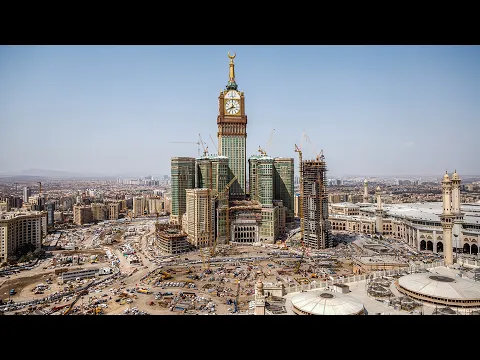

This upper region concentrates not only symbolic elements but also technical systems and internal spaces, increasing the complexity of the project and its stability requirements.
Engineering, therefore, did not end at the clock, extending to the top to accommodate function, symbol, and maintenance in an environment subject to extreme conditions.
One of the Most Expensive Projects Ever Built
The Abraj Al Bait complex appears in international surveys as one of the most expensive projects ever executed in the world, with estimates placing the total cost between 15 and 16 billion dollars.
The variation in numbers reflects different accounting methodologies, but the high value is explained by the scale of the project and the diversity of customized solutions adopted.
In addition to multiple towers and hospitality, the complex includes urban services, security systems, and a central tower that required specialized manufacturing, complex transportation, and assembly at great heights.
All this was carried out without interrupting the daily functioning of the city, which continued receiving pilgrims while the construction advanced at a controlled pace.
Even in a financial district, a project of this scale would be challenging, but what changes when engineering needs to coexist with faith, respect millennia-old rituals, and still operate at the limits of modern technology?








-

-

2 pessoas reagiram a isso.