





 Portuguese
  English
  Spanish
  7 min of reading
  55 comments


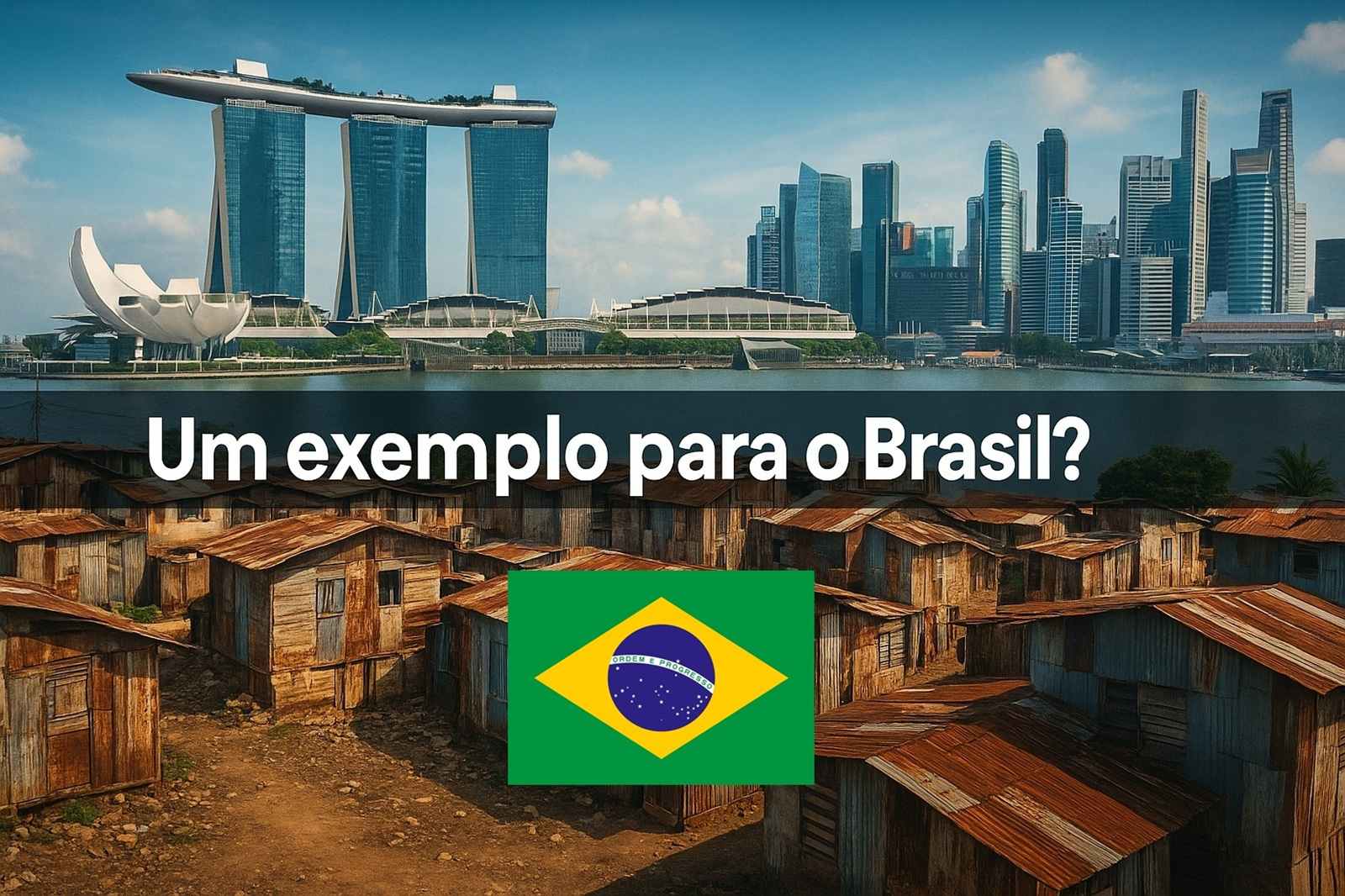


In Just Six Decades, Singapore Emerged From Poverty and Became a Global Power, With One of the Highest Per Capita GDPs in the World, Exemplary Education, and Public Policies That Enchant Economists
Today, Singapore is synonymous with prosperity, cleanliness, and innovation. Gleaming skyscrapers, immaculate streets, and a vibrant economy make this small island in Southeast Asia an example of modern development.
However, a little more than 60 years ago, the scenario was completely opposite: a poor territory, without natural resources, and immersed in social and economic challenges.
The transformation of this nation is one of the most impressive in contemporary history. Would this be the greatest example for Brazil to draw inspiration from to become a developed country?
-
These living root bridges and ladders are over 700 years old and help indigenous people survive in one of the rainiest regions in the world.

-
From sertanejo star to international investor: Ana Castela invests millions in a mansion in the USA, creates a themed accommodation in Orlando, and shows that the “boiadeira” also wants to grow away from the stage.

-
The 10 most stunning motorhomes in the world: a $3 million trailer with a rooftop nightclub and garage for a Ferrari, “palaces on wheels” with Italian marble, private cinema, and five-star hotel luxury for billionaires.

-
Trump wanted to spend $400 million on the White House, but the courts prohibited the million-dollar construction.



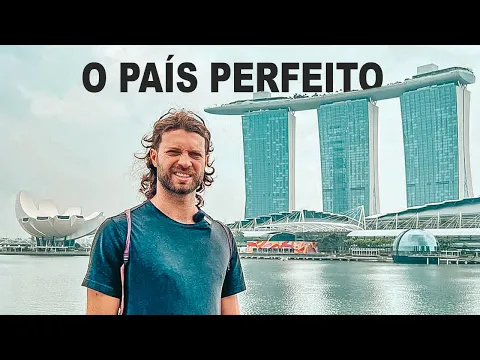
Singapore Tourism: The Wonderful Marina Bay Sands Complex.
From Impoverished Colony to Challenging Independence
In the 1960s, Singapore faced a bleak landscape. After separating from Malaysia in 1965, the country discovered it had no oil, gold, or even enough drinking water for its population.
Unemployment was high, shantytowns dominated the urban landscape, and ethnic conflicts threatened the newly acquired stability.
In this scenario, Lee Kuan Yew took office as prime minister with an audacious vision: to transform Singapore into a “First World oasis in a Third World region.”
For many, the goal seemed impossible. For Lee, it was a mission.
His government initiated a national reconstruction project based on discipline, planning, and education – the pillars that would guide the country towards prosperity.

Cleanliness as Public Policy
Lee believed that a clean and organized city would be a powerful calling card for foreign investors.
Thus, he launched massive urban cleaning and greening campaigns. The population was encouraged to take care of the streets and squares, reinforcing a sense of collective responsibility.
A remarkable episode was the ban on the sale of chewing gum. The measure came after it was found that gum stuck in public spaces harmed the city’s image.
The decision, although controversial, helped solidify Singapore as one of the cleanest and most disciplined metropolises in the world.
Education: The True Natural Resource of Singapore
Without mineral wealth, the government focused efforts on human development. Education became the top priority.
English was adopted as the business language, and the school system began to value meritocracy and excellence.
In the 1980s, “Singapore Math” emerged, an innovative teaching method focused on logical reasoning and problem-solving.
The model became a global reference and was even adopted by American schools.
Moreover, technical and scientific training received strong encouragement, preparing generations to work in high global demand areas such as technology, engineering, and biotechnology.
The result was swift: by the 1990s, Singapore already hosted multinational companies like IBM and GlaxoSmithKline, which boosted the economy and created skilled jobs.
Small Territory, Big Decisions
The diminutive size of Singapore – with just over 700 km² – was turned into an advantage. Agility in decision-making and adaptability became hallmarks of the country.
In the 1970s, the government recognized the potential of the financial sector and created a favorable business environment, with low taxes and clear regulations.
This strategy attracted international banks and investment funds, transforming Singapore into one of the largest financial centers in the world.
Today, the country manages over US$ 3 trillion in assets and holds a prominent global position.
Planning and Governance as the Foundation of Success
The government of Singapore is recognized for efficiency and long-term vision. Public policies were implemented rigorously, from population control to social housing.
Every project was planned to meet immediate and future needs.
One of the greatest examples is the housing program conducted by the Housing Development Board (HDB). In the 1960s, the population lived primarily in precarious conditions. The HDB changed this reality by building millions of modern and affordable apartments.
More than 80% of Singapore’s inhabitants today live in HDB units, which provide comfort, security, and complete infrastructure, with parks, markets, and cultural centers.
Additionally, residents can buy their apartments at subsidized prices, creating a sense of belonging and social stability.

Exemplary Water Management and Modern Infrastructure
The lack of water resources was one of the country’s biggest national challenges. To solve the problem, the government invested in desalination and water recycling technology, making the country self-sufficient.
The project not only ensured supply but also transformed Singapore into a global reference in sustainability and environmental innovation.
Public transportation is another highlight. The rail and road network is modern and efficient, quickly connecting all parts of the island.
This cutting-edge infrastructure has been essential in attracting investments and consolidating the country as a logistical and commercial hub.
Changi Airport: Symbol of Singaporean Excellence
Built in the 1970s, Changi Airport was a visionary bet by Lee Kuan Yew. Despite the country’s small size, he believed that connecting Singapore to the world would be vital. Today, the airport is considered one of the best in the world.
Strategically located, Changi is just eight hours flying time from more than half of the world’s population. More than just a transportation center, it is a tourist attraction, with indoor gardens, cinemas, swimming pools, and even slides.
Receiving over 65 million passengers a year, it is a development engine and a symbol of the country’s planning capacity.
Expanding Economy and Impressive Data
In 2024, Singapore reported an estimated nominal Gross Domestic Product (GDP) of USD 547.4 billion, according to recent data.
The per capita GDP reached about USD 90,689, according to a source that considers data from December 2024.
The economy grew 4.4% throughout 2024, with the fourth quarter showing a 5.0% expansion compared to the same period the previous year.
These numbers reflect a solid, diversified, and future-oriented economy. Among the highlights, Singapore achieved a score of 83.5 in The Heritage Foundation’s Index of Economic Freedom 2024 – placing it in 1st place worldwide in the ranking.
In the PISA 2022, Singaporean students achieved 41% performance at the highest levels in mathematics, 23% at the highest levels in reading, 24% in science, and 92% of students reached at least level 2 in mathematics.
In terms of human development, Singapore recorded a Human Development Index (HDI) of 0.946 in 2023, ranking among countries with a “Very High” level.
In the business environment, the World Bank published its “Business Ready” report in October 2024, in which Singapore leads in operational efficiency with 87.33% – indicating an extremely favorable structure for entrepreneurship.
A Safe Harbor for Investors
Political stability and transparency have made Singapore a reliable destination for international investors.
Since 1974, Temasek Holdings, a state-owned investment company, has managed over US$ 400 billion in assets.
With investments in strategic sectors such as technology, energy, and finance, Temasek has consolidated the country as a global financial power.
During international economic crises, such as in 2008, prudent government management ensured that the local economy remained resilient, reinforcing investor confidence and the country’s reputation as a safe harbor in Southeast Asia.
Innovation and Entrepreneurship as Engines of the Future
In recent decades, Singapore has heavily invested in science, technology, and innovation. Government programs offer tax incentives and support for startups.
The result is a vibrant ecosystem of entrepreneurship and research, with emerging companies in biotechnology, artificial intelligence, and clean energy.
The city also hosts technology parks and innovation centers that connect universities, government, and private companies. This synergy ensures that Singapore remains at the forefront of the digital economy and global sustainability.
The True Heritage: The People of Singapore
The country’s prosperity is the result of a collective pact between the government and citizens. Discipline, respect for the law, and national pride have shaped a culture of excellence. Instead of relying on luck, Singapore built its own path to success.
Today, the island is an example of how planning, meritocracy, and investment in people can transform even the most limited territories.
An Example for Brazil
The case of Singapore shows that a country does not need vast natural resources to achieve prosperity, but rather leadership, planning, and investment in people.
Brazil, with its immense territorial extent and mineral wealth, has far greater potential than the small Asian island but lacks focus and long-term management.
Singapore invested in quality education, meritocracy, and institutional stability.
The result was a highly qualified population and a diversified economy capable of attracting global investments.
Brazil could follow a similar path if it prioritized technical and scientific education, simplified the business environment, and fought against the bureaucracy that stifles entrepreneurs.
Moreover, the model of public housing and the rigor in urban planning in Singapore could inspire Brazilian policies aimed at dignified housing and more efficient cities.
The experience of the Asian country proves that discipline, transparency, and clear goals can transform realities.
While Singapore became synonymous with efficiency, Brazil still faces inequality, corruption, and waste.
The Singaporean example shows that it is not the size of the territory that defines success, but the ability to turn challenges into opportunities through good governance and investment in people.







Fui diagnosticada com doença de Parkinson há quatro anos. Por mais de dois anos, dependi da levodopa e de vários outros medicamentos, mas, infelizmente, os sintomas continuaram piorando. Os tremores se tornaram mais perceptíveis e meu equilíbrio e mobilidade começaram a declinar rapidamente. No ano passado, por desespero e esperança, decidi experimentar um programa de tratamento à base de ervas da NaturePath Herbal Clinic.
Sinceramente, eu estava cética no início, mas, poucos meses após o início do tratamento, comecei a notar mudanças reais. Meus movimentos ficaram mais suaves, os tremores diminuíram e me senti mais firme ao caminhar. Incrivelmente, também recuperei grande parte da minha energia e confiança. Tem sido uma experiência transformadora. Me sinto mais eu mesma novamente, melhor do que me sentia há anos. Se você ou um ente querido está lutando contra a doença de Parkinson, recomendo muito que você considere a abordagem natural deles. Você pode visitar o site deles em www. naturepathherbalclinic .com.
Esqueceram de dizer q tudo começou com a MORTE DE CORRUPTOS o que falta no brasil onde eles são elogiados e vivem muito bem…
E muito simples aonde o governante pensa no povo oferecendo boa educação segurança e saúde qualquer país que adotar esse tipo de postura só vai crescer diferente do nosso aonde somos escravo do governo onde tudo é caro pagamos o maior exposto do mundo e não temos direito a nada e todo nosso dinheiro fica na mão do governo e seus aliados dessa forma o nosso país que tem tudo pra ser o país mais rico do mundo com os governantes que temos cada vez só vai ficar mas difícil mas eu acredito que um dia vai chegar uma turma que vai pensar no povo e fazer esse país virar uma das maiores potência mundial e não o que acontece hoje que só faz seu povo de escravos.