





 Portuguese
  English
  Spanish
  4 min of reading
  0 comments


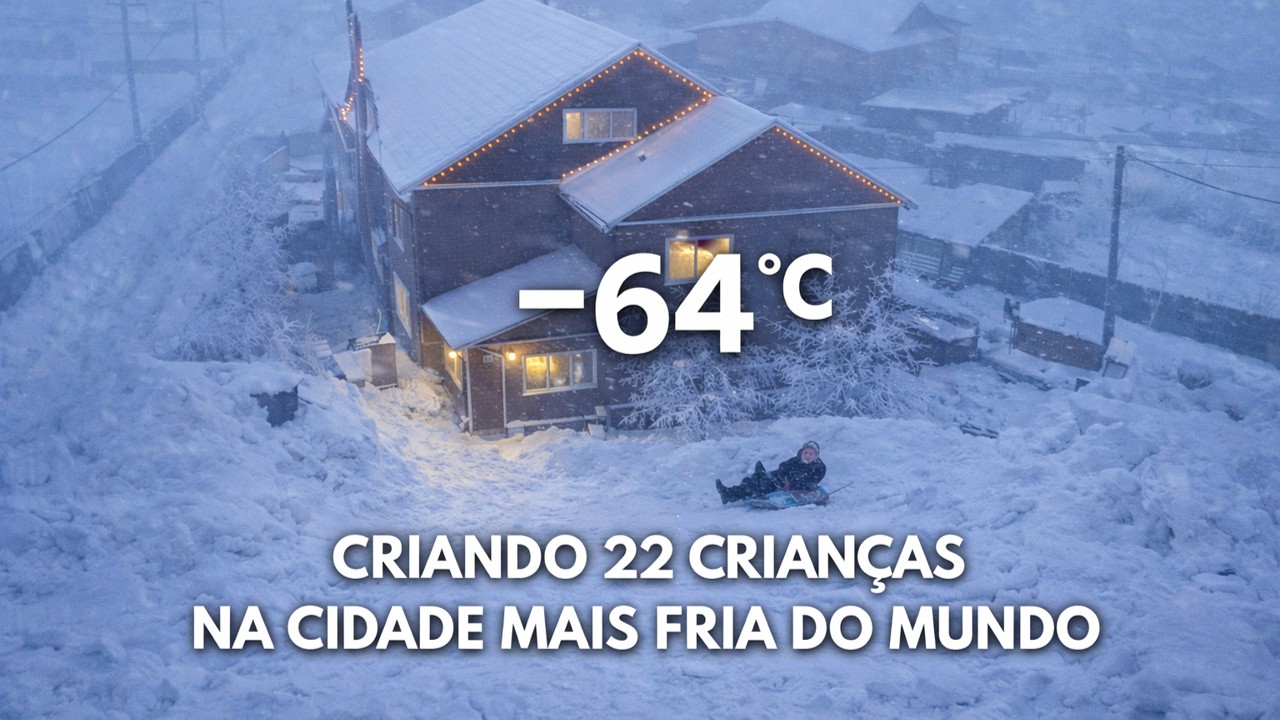
Raising Children Is Already a Challenge Anywhere on the Planet. Now Imagine Doing It in One of the Most Extreme Environments on Earth, Where Leaving Home Can Mean a Real Risk to Life. In the Remote Region of Yakutia, in the Heart of Siberia, a Family Decided to Call This Hostile Scenario Home — Even When the Thermometers Plummet to an Impressive −64 °C in Winter.
Alexander Pavlov begins the day before dawn. His first mission is not to make coffee, but to go out and fetch ice — the only way to ensure enough drinking water for his family. In the suburbs of Yakutia, many homes lack access to central water supply. Therefore, large reserve containers are part of the domestic routine.
Raising children in these conditions would already be difficult. But Alexander and his wife, Oxana, are raising 22 children, 18 of whom are adopted. The family spans entire generations: the oldest child is 37 years old, while the youngest is still a baby.
When Schools Close, But Life Goes On
That morning, the thermometers were reading about −48 °C — something considered “normal” in Yakutia. At temperatures below −45 °C, primary schools suspend classes. However, daycares continue operating until −55 °C, which forces some children to leave home even in extreme cold.
-
He started running at 66 years old, broke records at 82, and is now a subject of study for having a metabolic age comparable to that of a 20-year-old, in a case that is intriguing scientists and inspiring the world.

-
Oldest tree on the planet reappears after 130 years of searches: Wattieza, 385 million years old, was 10 meters tall and had no leaves or seeds; Gilboa fossils in New York solved the mystery in 2007.

-
A 48-square-meter house assembled in hours with 4,000 bricks made of recycled plastic that does not absorb moisture, has natural thermal insulation, and costs less than 90,000 reais in a complete kit.

-
Luciano Hang revealed that Havan’s air fleet has already accumulated more than 20,000 landings, 10,000 flight hours, and 6 million kilometers traveled, and he says that without the planes, the company would never have grown so quickly.


While Oxana wakes the children and organizes the routine, Alexander checks the heating system in the house. Two boilers keep the approximately 350 m² residence heated to about 25 °C. Even in the intense cold outside, heating costs hover around $200 per month — a price considered reasonable for the region.

Routine, Discipline, and Cooperation: The Key to Surviving
Managing schedules, meals, and responsibilities for a family this size requires discipline. Breakfast is prepared in stages, as the house has only one kitchen, and the space cannot accommodate everyone at the same time. First, the youngest eat, followed by the older ones.
The decision to open their home to so many children came from Oxana. A trained teacher, she has always had a strong connection to childcare and the desire to offer love, safety, and stability. With the growth of the family, Alexander quit his job as an engineer to devote himself entirely to the children.
The couple receives government support to cover food and clothing, but most of the daily work depends on cooperation among everyone.

Going to School at −48 °C Is Not an Exception
Even in the extreme cold, educational life does not stop. Children and young people head to schools, universities, and daily activities. In Yakutia, dressing appropriately is not an option — it’s a matter of survival. Thermal pants, special jackets, and boots designed for extreme temperatures are part of the daily uniform.
The Pavlov family chose to live just a few minutes’ walk from the school and daycare, reducing exposure time to the cold. Older siblings always accompany the younger ones, ensuring no one stays outside for too long.
For university students, transportation is done by red-painted buses — not for aesthetics, but for safety. The color is more visible amid the dense fog and white landscape, making it easier to spot even from a distance.
Playing, Exercising, and Keeping the Body Active
When not at school, children play outdoors whenever possible: snow slides, ice skating, and skiing are part of local childhood. When the cold becomes unbearable, activities move indoors.
Alexander takes physical health seriously. He built a covered gym where the children practice sports and exercises regularly. Some of the older ones participate in sports competitions, such as athletics and boxing.

Food Adapted to Extreme Cold
Cooking outdoors in negative temperatures is part of the routine. Alexander prepares barbecues on a special stove, even when the thermometer reads below −40 °C. According to him, meat acquires a unique flavor when cooked in the cold air.
Indoors, Oxana and the older daughters prepare warm and nutritious meals. Fish, fried pies, meats, and rice dominate the menu. Fresh vegetables and fruits are rare and expensive in the region, due to severe growing conditions. Therefore, frozen fruits are widely consumed and stored for long periods.
The daily soup is a local tradition — not only to nourish but to warm the body and soul during harsh winters.
Human Warmth in the Coldest Place on Earth
When night falls and temperatures drop even further, the Pavlov family gathers inside the house. Protected from the extreme cold, they find in daily companionship what Yakutia does not offer: warmth.
In the heart of the coldest city on the planet, this family proves that, even where winter can kill in minutes, resilience, organization, and affection are capable of sustaining life.









-

-

-

5 pessoas reagiram a isso.