





 Portuguese
  English
  Spanish
  5 min of reading
  0 comments


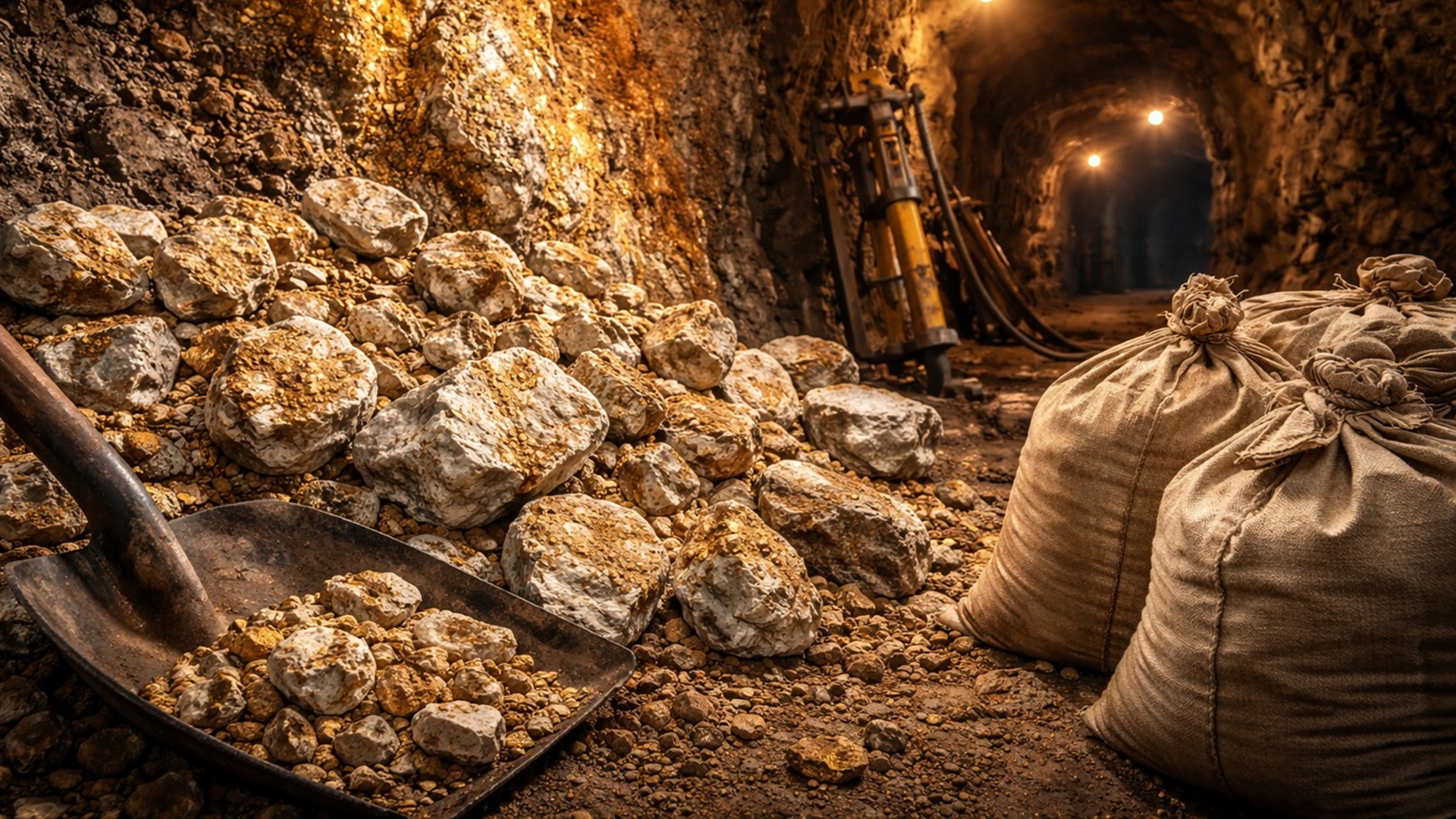
The Experience Documents a Complete 12-Hour Shift in a Gold Mine Over 125 Years Old Still in Commercial Operation, Detailing Drilling Stages, Use of Explosives, Manual Removal of Ore, Risks Involved, Extracted Volume, and the Actual Economic Value Obtained at the End of the Underground Work
Inside an active gold mine over 125 years old, the Ghost Town Living channel follows a 12-hour journey of underground work that includes drilling, blasting, manual ore removal, and waste rock separation, revealing how much gold can still be extracted in a single shift using traditional methods in the 21st century.
A Historic Mine Still in Operation
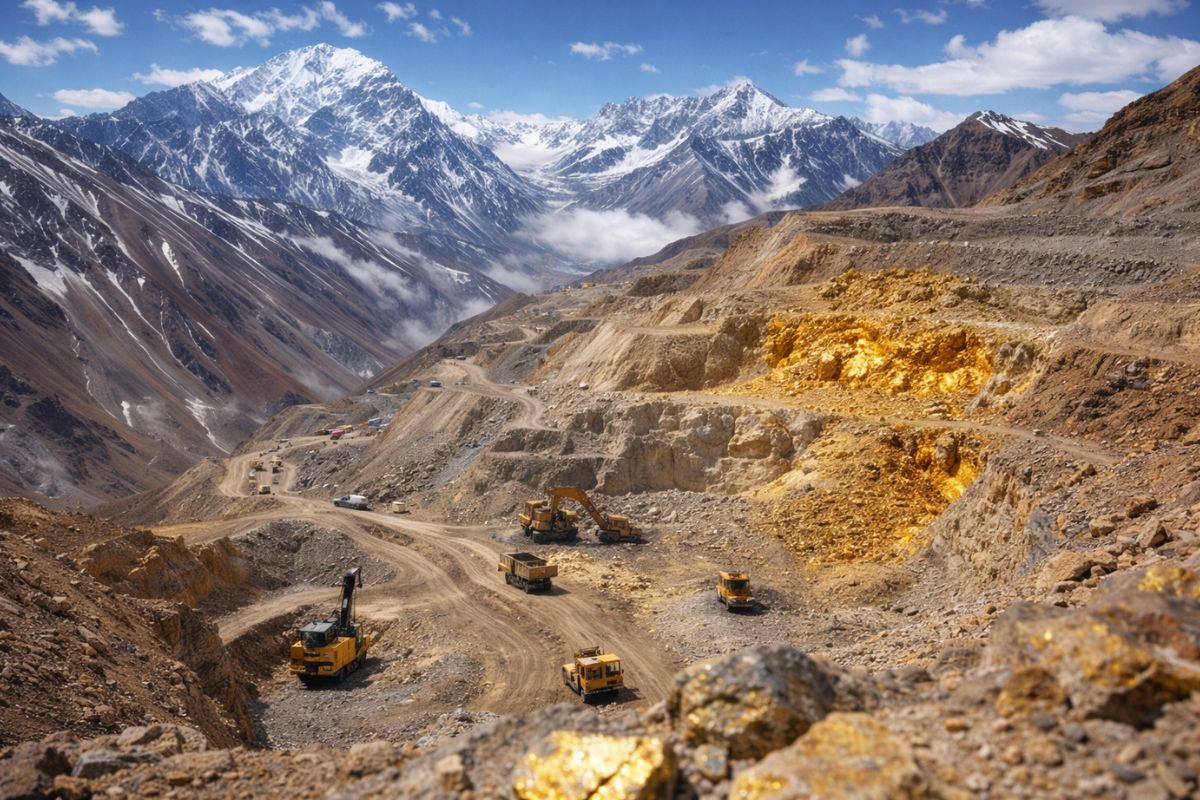
The episode follows the creator of the Ghost Town Living channel inside a gold mine opened in the late 19th century, located in a mountainous region near the Canada border, at over 1,300 meters altitude.
Despite its age, the site is not a museum or tourist attraction: it is an active commercial mine, accessible only for about two months a year due to extreme snow accumulation.
-
He started running at 66 years old, broke records at 82, and is now a subject of study for having a metabolic age comparable to that of a 20-year-old, in a case that is intriguing scientists and inspiring the world.

-
Oldest tree on the planet reappears after 130 years of searches: Wattieza, 385 million years old, was 10 meters tall and had no leaves or seeds; Gilboa fossils in New York solved the mystery in 2007.

-
A 48-square-meter house assembled in hours with 4,000 bricks made of recycled plastic that does not absorb moisture, has natural thermal insulation, and costs less than 90,000 reais in a complete kit.

-
Luciano Hang revealed that Havan’s air fleet has already accumulated more than 20,000 landings, 10,000 flight hours, and 6 million kilometers traveled, and he says that without the planes, the company would never have grown so quickly.


Since its opening, the mine has produced over 30,000 ounces of gold. Considering current values, this represents hundreds of millions of dollars in metal extracted over more than a century.
Today, the operation is conducted by Mount Baker Mining, which has been recovering old tunnels and resuming productive fronts abandoned for decades.
Certification and Modern Rules for an Ancient Job
Before entering the underground, the video shows a fundamental contrast between past and present: even with years of experience exploring abandoned mines, the presenter needed to obtain official certification as an underground miner.
The process included MSHA training, the regulatory body for mining safety in the United States, conducted in a conference room outside the mine environment.
The certification addresses ventilation, evacuation, rock stability, use of explosives, and equipment operation.
The episode emphasizes that, despite the method being old, modern mining requires strict legal compliance, with no exceptions for informal experience.
Drilling with 20th Century Technology
The underground work begins with drilling the gold vein using a “jack leg,” a pneumatic drill created in the early 20th century and still widely used.
Weighing about 120 kilograms, the equipment operates with compressed air and water, automatically pushing the bit against the rock while spraying dust to reduce respiratory risks.
The quartz vein being explored concentrates gold in a narrow band of approximately 60 to 90 centimeters along the upper wall of the tunnel, known as the hanging wall. According to the operators, the average ore grade in this zone ranges from 0.75 to 1 ounce of gold per ton, considered high by current standards.
Sixteen holes were drilled in about two hours, following a repetitive pattern along the vein, preparing the ground for the most critical stage of the journey.
Explosives and Micrometric Calculation
With the holes completed, the use of ANFO explosives comes into play, a mixture of ammonium nitrate and fuel oil. Each hole receives a detonator with a programmed delay in milliseconds, as well as a booster to ensure proper detonation of the material.
The goal is to fragment the gold vein without excessively compromising the stability of the tunnel. However, the episode shows that even well-calculated plans can fail.
The detonation was more powerful than expected, launching rock blocks dozens of meters and mixing rich ore with waste material.
This outcome turned the rest of the shift into a containment and cleanup operation, increasing risks and requiring heightened attention to avoid accidents with metallic debris and unstable rocks.
Mucking: The Heaviest Work
After ventilating the tunnel, mucking begins, a stage where fragmented ore is manually removed. Unlike modern mines that use diesel loaders, the entire process here is done by human strength.
The workers visually separate mineralized quartz from worthless rock, filling bags of approximately 11 kilograms each.
The physical effort is intense, repetitive, and continuous, reflecting common practices at the beginning of the last century.
The video emphasizes that in this type of mining, productivity is directly linked to physical endurance and experience in recognizing high-grade ore among the rubble.
Visible Gold in the Rock
During the cleanup, the camera captures one of the most symbolic moments of underground mining: visible gold embedded in quartz.
Small metallic filaments appear along the vein, confirming the quality of the worked area.
The episode also explains the geological origin of these formations, associated with ancient magmatic activity. Fluids rich in silica and precious metals migrated through fractures in the rock, crystallizing into veins that are now being explored.
This context connects science, history, and manual labor in the same physical space.
The Result of 12 Hours
At the end of the shift, the balance is concrete. 176 bags of ore were filled, totaling about 2.25 tons. With an estimated grade of approximately one ounce of gold per ton, the daily yield was around two ounces.
With gold priced at about US$ 3,400 per ounce at the time of filming, the gross value extracted during the shift exceeds US$ 6,800. The video makes it clear that this number does not represent net profit, as it does not take into account operational costs, logistics, equipment, and licensing.
A Bridge Between Past and Present
More than the numbers, the episode serves as a rare portrait of traditional mining still in operation.
The method employed is much more similar to that used 125 years ago than to today’s highly automated operations.
In the end, the presenter reflects on the extreme physical effort, constant risks, and discipline required of miners in the past.
The journey documented by Ghost Town Living transforms historical statistics into a sensory experience, offering the audience a direct understanding of the work that shaped cities, economies, and borders.
This article was crafted based on the video published by the Ghost Town Living channel on YouTube, which documents a complete work journey in a historic commercial gold mine operated by Mount Baker Mining, including drilling, blasting, ore removal, and shift results.








-

2 pessoas reagiram a isso.