





 Portuguese
  English
  Spanish
  7 min of reading
  0 comments


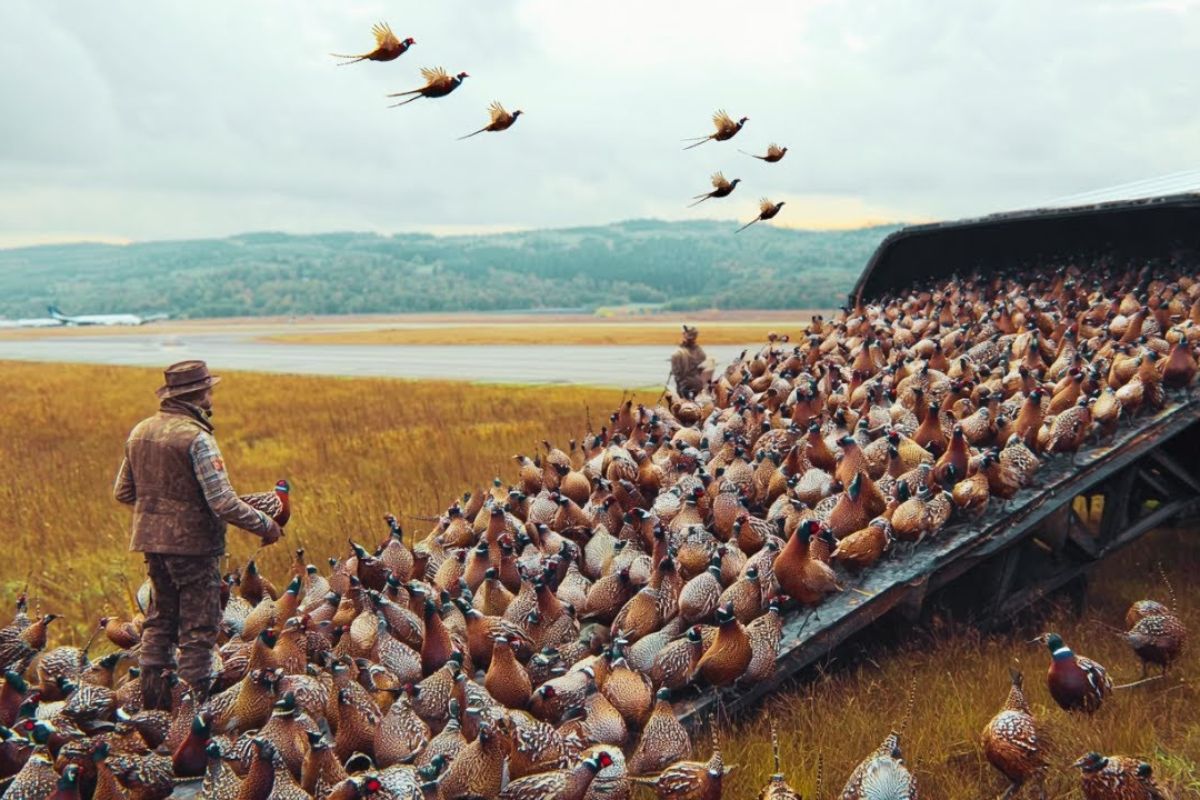
The Pheasant Hunt Has Crossed Centuries and Continents, Transforming an Asian Bird into a Status Symbol, Rural Economic Engine, and Focus of One of the Most Intense Ethical Debates in the Modern World.
The pheasant hunt was born in the wild landscapes of Asia, crossed oceans as a symbol of prestige, and today drives a billion-dollar industry in countries like the United Kingdom and the United States, while also fueling a fierce dispute between tradition, economy, and animal welfare.
The pheasant hunt was once a simple act of survival and has come to represent luxury, rural tourism, jobs, and cultural identity. But behind the barrels of shotguns and the bucolic scenery lies a troubling question: what is the ethical and environmental cost of raising millions of birds just to be killed for sport?
A Battle Scene Worth Millions
At first glance, the pheasant hunt can be mistaken for a battlefield. Dogs try to advance, hunters position themselves, the vegetation vibrates, and a quick flap of wings breaks the silence with a shot. In just a few seconds, what was merely expectation becomes the exact moment when a bird falls from the sky to feed an ancient and highly profitable tradition.
-
The eggshell that almost everyone throws away is made up of about 95% calcium carbonate and can help enrich the soil when crushed, slowly releasing nutrients and being reused in home gardens and vegetable patches.

-
This farm in the United States does not use sunlight, does not use soil, and produces 500 times more food per square meter than traditional agriculture: the secret lies in 42,000 LEDs, hydroponics, and a system that recycles even the heat from the lamps.

-
The water that almost everyone throws away after cooking potatoes carries nutrients released during the preparation and can be reused to help in the development of plants when used correctly at the base of gardens and pots, at no additional cost and without changing the routine.

-
The sea water temperature rose from 28 to 34 degrees in Santa Catarina and killed up to 90% of the oysters: producers who planted over 1 million seeds lost practically everything and say that if it happens again, production is doomed to end.


This same scene repeats itself every year on rural properties in the United Kingdom and the United States. Around it, an economic chain is organized, involving specialized farms, inns, restaurants, ammunition shops, hunting guides, and rural workers who directly depend on this activity.
From Asian Wild Bird to Status Symbol

Long before it became a luxury item, the pheasant lived freely in the forests and fields of countries like China, Mongolia, Vietnam, and India. There, these birds walked among tall grasses, took flight at the slightest sign of threat, and were hunted for the quality of their meat, considered tasty and special.
Over time, human fascination went beyond food. In China, the pheasant appeared in arts and legends as a symbol of good luck. In other Asian countries, it gained prominence both on the table and as game for rudimentary hunting sports, still far from the organized industry that would exist centuries later.
United Kingdom: The Pheasant Hunt as a Gear of the Countryside
The turning point occurred when European sailors and traders began bringing live pheasants from Asia to Europe.
Between the 18th and 19th centuries, these animals were released onto British and French rural properties, initially as exotic curiosities and quickly as targets for sport hunting by aristocrats.
In the United Kingdom, the pheasant hunt has become so ingrained in rural culture that it is now part of the calendar for small towns.
As autumn approaches, entire villages shift their pace to welcome guests, organize hunting trips, and release millions of birds specially raised to feed the season.
It is estimated that about 35 million pheasants are released every year in British fields. This movement injects large sums of money into the countryside, keeps rural properties active, and sustains a service chain that relies on hunting, hospitality, and gastronomy connected to this tradition.
United States: Family Tradition and Local Economy

On the other side of the Atlantic, Europe exported more than birds. It exported a model. The pheasant hunt arrived in North America and found an ideal habitat in the fields and agricultural areas of the Midwest. States like South Dakota, Nebraska, and Kansas became synonymous with this practice.
In the United States, the image is less aristocratic and more communal. Every autumn, over 100,000 hunters participate in the season in some states, generating hundreds of millions of dollars for small towns that rely on visitor traffic.
It is not just an economic activity: for many families, pheasant hunting is also a bonding ritual passed down from generation to generation.
Behind the Luxury: Industrial-Scale Pheasant Farms
To sustain this demand, the pheasant hunt has ceased to rely solely on wild populations. The pheasant has become an agricultural product, raised in millions of units on specialized farms that combine technology, sophisticated management, and simulation of wildlife.
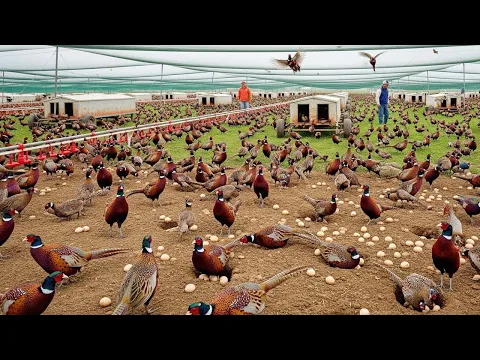
The journey begins with the females, which start laying eggs at about seven months old. Unlike industrial chickens, pheasants are seasonal producers and lay fewer eggs, which increases the value of each unit.
Employees carefully collect the eggs daily, separating broken or deformed ones and storing the healthy ones in cool environments until incubation.
Unlike chicken eggs, pheasant eggs are not washed to preserve a natural layer that protects against bacteria.
Then, they go to controlled incubators, where temperature and humidity are monitored for about 23 to 25 days. Even so, hatching rates are lower than those of chickens, around 65% to 75%.
When the chicks hatch, they go to the brooding phase, the most delicate period of raising. Any error in temperature, ventilation, or hygiene can decimate dozens of birds in a single night. Therefore, facilities are kept warm, clean, well-ventilated, and stocked with high-protein feed and fresh water.
At around 8 to 10 weeks, the young pheasants are transferred to large outdoor pens surrounded by high nets. In these areas, which can span dozens or hundreds of hectares, the birds live in semi-wild conditions, learning to cope with rain, sun, and wind, developing short flight capabilities, and moving in flocks as they would in nature.
To reduce stress and aggressiveness, some farms use small temporary devices attached to the beaks to lessen the impulse to peck at other individuals. Feeding and watering points are scattered across the grounds, and many producers utilize automatic feeders and vaccination programs to mitigate diseases.
When they reach maturity, pheasants are strong, alert, and visually striking, with long tails and colorful plumage. At this stage, captures begin with nets and mobile fences, followed by transportation in ventilated boxes to private hunting reserves or licensed areas.
In the United Kingdom, tens of millions of birds go through this cycle from egg to hunting field every year, in a process as choreographed as it is controversial.
On the Table: Pheasant as a Symbol of Tradition and Exclusivity
The fascination with pheasants does not end when the shot is fired. It continues at the table. The meat is darker and leaner than chicken and has an intense flavor, historically making it a centerpiece at banquets of European aristocrats.
Classics include whole roasted pheasant, slowly cooked in red wine, or turned into fine pâtés. Nowadays, high-end restaurants and five-star hotels in the United Kingdom and the United States offer pheasant as a luxurious alternative to more common poultry. Even the eggs, small and with bluish or brown shells, are sold as premium products. For many consumers, tasting a dish of pheasant is as much about status and tradition as it is about gastronomy.
The Arguments of Those Who Support Pheasant Hunting
Those involved in the pheasant hunt see the activity as a key component of the rural economy and conservation. The central argument is that the breeding and hunting chain provides thousands of jobs and prevents the abandonment of properties and forests that could be converted into more environmentally aggressive activities.
Reservoir owners argue that investments in managing woods and fields for pheasants also benefit other species, creating an indirect preservation effect.
For this group, pheasant hunting is not exploitation, but a way to finance conservation and keep a rural way of life alive.
In regions like South Dakota, for example, just one pheasant hunting season can generate nearly 300 million dollars in the local economy, including accommodation, food, equipment, and services. For small towns, this income can represent the difference between stagnation and growth.
The Criticism: Ethics, Animal Welfare, and Environmental Impact

On the opposite side of the debate, animal rights activists and part of the scientific community view the pheasant hunt as an ethical model that is hard to defend.
The main accusation is direct: raising tens of millions of birds just to release them and kill them for fun would be turning living beings into disposable targets.
Many point out that these animals spend a significant portion of their lives in controlled environments, without experiencing a fully natural existence, only to be killed as soon as they are released into the fields.
Animal defenders compare this practice to the absurdity of raising millions of puppies just to release them and hunt them for sport.
Environmentalists also draw attention to the ecological risks of introducing and releasing large numbers of a non-native species into various habitats.
Pheasants compete for food with local wildlife, can spread diseases, and even threaten smaller species. British researchers warn that releasing millions of birds every year could profoundly alter the balance of forests and fields.
Between Tradition and the Future: What Lies Ahead
Despite the controversies, the story is not entirely negative. In some areas, ecological restoration projects are beginning to use pheasants not as game but as allies in recovering areas degraded by intensive agriculture.
Their foraging habits help to turn the soil, disperse seeds, and control insects, giving these birds a new role in certain contexts.
Genetic studies also reveal that there are over 50 species of pheasants in Asia, adapted to environments ranging from the icy peaks of the Himalayas to the tropical forests of Vietnam.
Some are protected as national treasures, like the green pheasant in Japan, while others, like the Reeves’ pheasant in China, already rely on breeding programs to prevent extinction.
Like humans, pheasants traveled with migrations, trade routes, and colonization projects, carrying different meanings in each place: food, status, affective memory, symbol of wealth, or target of protests.
Few species represent the clash between tradition, money, and new ethical sensitivities as well as the pheasant hunt does.
And what do you think? Is the pheasant hunt a tradition that deserves to be preserved with stricter rules or a luxury that needs to be rethought from scratch?








Seja o primeiro a reagir!