





 Portuguese
  English
  Spanish
  4 min of reading
  0 comments


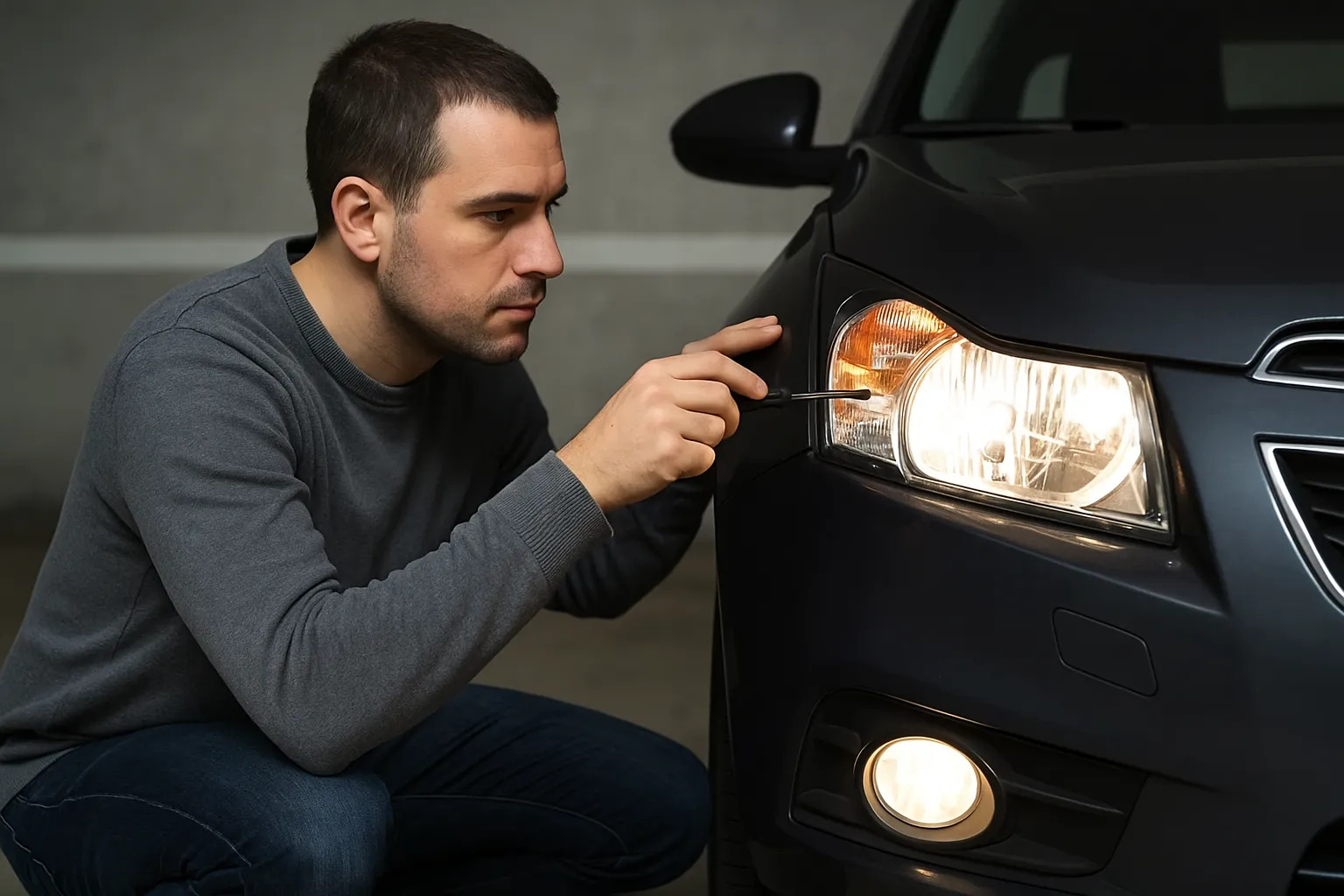
Few people notice, but driving at night is one of the biggest tests of attention and safety on the road. The headlights, which may seem like just a detail, can make the difference between a smooth trip and an unexpected scare. When they are poorly adjusted, they not only reduce your visibility but can also blind other drivers. Therefore, learning how to adjust the headlights is an essential concern for any driver who values safety and responsibility.
Adjusting Headlights Is Essential to See and Be Seen
The basic function of headlights goes far beyond illuminating the path. They help you see potholes, curves, and pedestrians, but they also serve to ensure that other drivers notice your presence. When the alignment is incorrect, part of this function is lost: low beams leave the road dark; high beams blind oncoming traffic. Adjusting the headlights is, therefore, a simple way to prevent accidents and avoid fines.
When to Know It’s Time to Adjust the Headlights
One of the most common signs that your headlights need adjustment is when you notice that the illumination does not cover the minimum distance ahead of the car. It’s also common for other drivers to complain by flashing their headlights, signaling that you are obstructing their visibility. Additionally, after changing bulbs, minor collisions, or even when the car drives a lot on bumpy roads, the adjustment tends to misalign.
-
The Toyota Hilux is R$ 75.5 thousand cheaper and bets on the 2.8 turbodiesel engine with up to 204 hp and 50.9 kgfm to catch up with the VW Saveiro, which leads with 4,472 sales.
-
The new Renault Koleos has a screen exclusively for the passenger that is invisible to the driver, heated rear seats, and 29 assistance systems, but its Chinese competitors cost R$ 40,000 less and deliver more power.
-
The car stored for 38 years: when opening the barn door, what appears is breathtaking and looks like a scene from a movie!

-
Fiat works miracles in the Brazilian market, lowers the price of its 0 km hatch to R$ 69,990, reestablishes the model as the cheapest car in the country, and reignites the battle against Kwid and C3.

Simple Tools to Make Adjustments at Home
Contrary to what many think, adjusting the headlights does not require expensive equipment. At home, you can use just a flat wall, adhesive tape, and a measuring tape. Ideally, park the car about 5 meters from the wall, turn on the low beams, and observe where the beam of light projects. With the tape, you mark the height of the center of the headlights and check if the beam is horizontally aligned and slightly angled downward. This detail prevents the light from shining directly into the eyes of oncoming drivers.
How to Use the Adjustment Screws Correctly
Most cars have specific screws to adjust the height and lateral tilt of the headlights. They are located near the headlight and can be accessed with a screwdriver or a hex key. One screw controls vertical movement, adjusting whether the beam of light is too high or low; the other regulates the lateral direction, preventing the focus from shifting to the left or right. Subtle movements already make a difference, so it’s important to turn gently and test the result on the wall before finalizing.
The Role of Weight in the Trunk and Suspension
Many people forget that the weight of the car affects the height of the headlights. If you often travel with a full trunk, the headlights may point upwards due to the rear sagging. For this reason, some vehicles come with internal electric adjustment, allowing quick headlight adjustments according to the load. If your car doesn’t have this feature, the ideal is to adjust the headlights in a situation close to actual use, with the car loaded, to ensure that the beam illuminates correctly.
Difference Between Low, High, and Fog Lights
Understanding the function of each type of lighting helps use the system correctly. Low beams are the primary choice for nighttime use in urban areas and busy roads, as they illuminate efficiently without hindering other drivers. High beams are meant for completely dark locations without oncoming traffic, such as rural roads. Fog lights are specifically for adverse weather conditions, such as heavy rain and fog, being positioned closer to the ground to cut through fog. Adjusting the headlights also means knowing when each should be used.
The Importance of Periodic Maintenance
It doesn’t help to adjust the headlights once and forget about it. Over time, wear and tear on the suspension, vibrations, and even bulb changes can misalign the system. In addition, foggy or yellowed lenses reduce the efficiency of the lighting, even if the adjustment is correct. A good practice is to check the headlights every six months, especially before long trips. In specialized workshops, there are tools that make precise adjustments, ensuring the correct angle of the light.
Fines and Risks of Driving with Misaligned Headlights
According to the Brazilian Traffic Code, driving with misaligned headlights can result in fines and points on your license, in addition to putting your life and others at risk. Especially at night, on two-way highways, overly high beams can temporarily blind oncoming drivers, increasing the risk of head-on collisions. This is a situation that can be avoided with just a few minutes of attention.
Extra Tips to Improve Nighttime Visibility
In addition to adjustment, there are other precautions that can make your nighttime driving safer. Keeping the windshield clean inside and out prevents unwanted reflections. Correctly adjusting the height of the seat also helps improve visibility of the light beam. Choosing high-quality bulbs, within the manufacturer’s specifications, ensures greater range without compromising the electrical system. Avoid makeshift solutions with irregular or higher wattage bulbs than recommended, as they are not only illegal but can cause overheating.
A Simple Action That Saves Lives
Many drivers neglect their headlights, treating them as mere details. However, proper adjustment can make the difference between seeing a pedestrian in time or having an accident. It is a simple, low-cost measure that shows care not only for the car but for everyone who shares the road. Those who learn to adjust their headlights develop a more attentive eye for the small details that create truly safe driving.









-

2 pessoas reagiram a isso.