





 Portuguese
  English
  Spanish
  4 min of reading
  0 comments


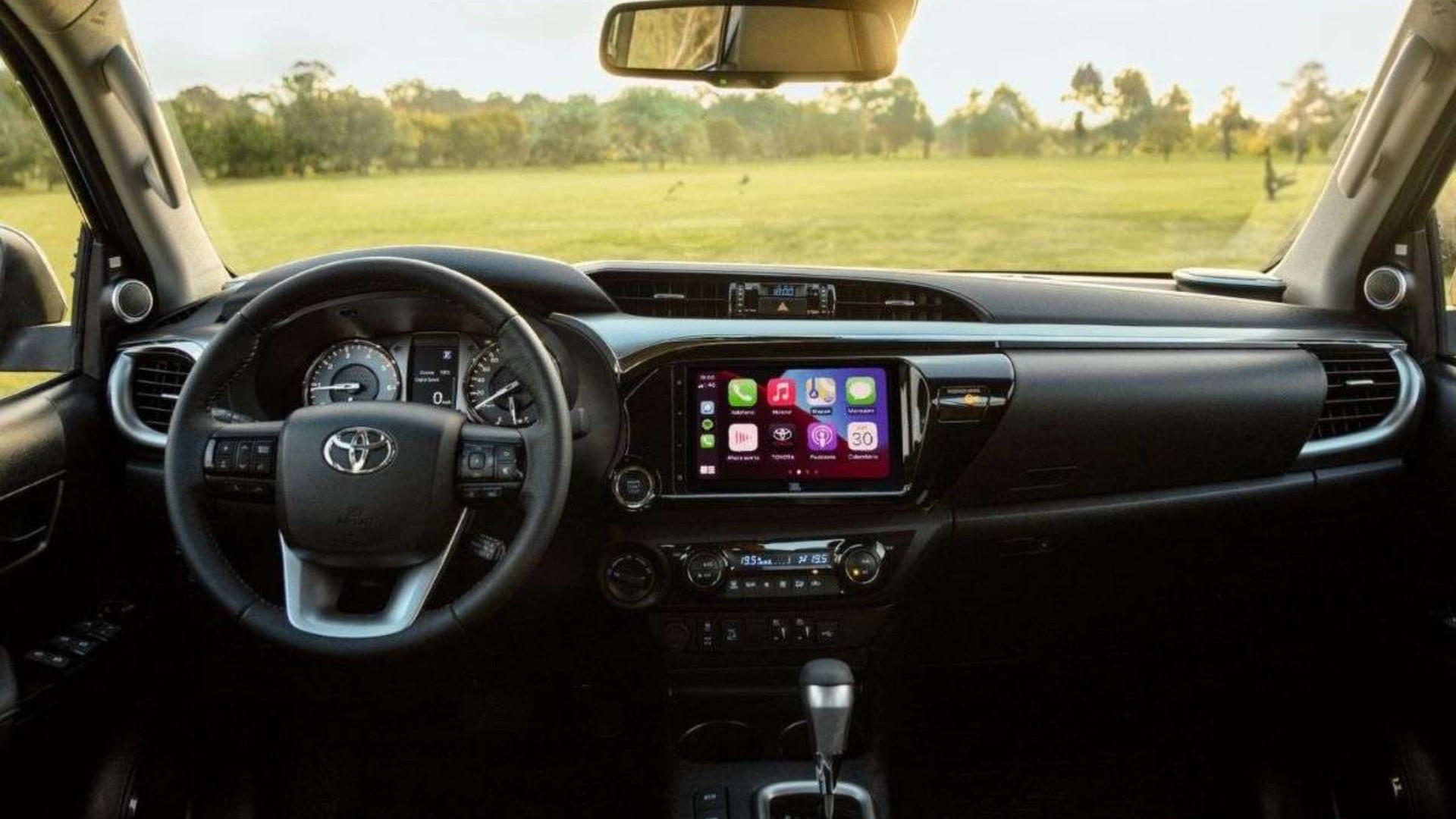
Wider price range repositions the 2026 Hilux double cabin and expands the reach of the pickup in a heated light commercial market, with versions focused on both work and private use, without changing the model’s identity.
Toyota has started to work on the 2026 Hilux double cabin with a wider price range in Brazil, opening R$ 75.5 thousand between the STD Power Pack MT version, priced at R$ 282,390, and the SRX Plus AT, announced at R$ 357,890.
This change reinforces the strategy of catering to distinct profiles within the same line, from those prioritizing professional use to those seeking more comfort and equipment.
2.8 turbodiesel engine and Toyota’s strategy for the 2026 Hilux
At the center of this movement is the already known mechanical set of the pickup.
-
New CNH rule allows the use of a private car in the exam, but insurers raise an alert about coverage in case of an accident

-
Chevrolet Tornado Van 2026 emerges as a compact van cheaper than many popular cars in Brazil, with a 1.5 engine, 6-speed manual transmission, 650 kg load capacity, 3.3 m³ of usable space, and fuel consumption of up to 18.1 km/l for about R$ 87,000 in tax-free conversion; an urban utility vehicle that Brazilians don’t have, but Mexico does.

-
Forget the basic popular car: used sedans like Passat CC, Kia Cerato, Nissan Altima, Mitsubishi Lancer, and Volvo S60 show that it’s still possible to buy more performance, comfort, and technology for less than many new compacts.

-
Used Honda Civic: 3 versions of the Japanese sedan with naturally aspirated engines of up to 155 hp, fuel consumption of up to 13.8 km/l, robust automatic transmission, and a reputation for reliable mechanics still dominate the used car market in Brazil.



The Hilux double cabin continues with a 2.8 turbodiesel engine, power of 204 hp and torque of up to 50.9 kgfm in the automatic versions, while Toyota highlights the proposal of robustness, connectivity, and safety as pillars of the 2026 model.
In practice, the internal price difference reorganizes the range without altering the historical positioning of the Hilux among medium pickups.
The entry-level version lowers the barrier for those seeking 4×4 traction and manual transmission in a configuration more focused on work, while the higher options concentrate convenience items, more refined finishes, and features that bring the pickup closer to a mixed use, between urban routine and road.

Hilux and Saveiro in the light commercial ranking
This repositioning gains relevance when the line is observed alongside recent market numbers.
In the partial of March 2026 up to the 28th, the VW Saveiro appeared with 4,472 registrations among light commercials, a growth of 74% compared to the indicated survey, while the Toyota Hilux totaled 3,440 units and a rise of 14.5% in the same cut.
Reading these data requires context. Saveiro and Hilux operate in different market segments, with proposals, sizes, and prices quite distant, but they enter the same picture when the cut considers the overall ranking of light commercials.
Therefore, the proximity between the volumes draws attention less for a direct product competition and more for the commercial reach that each model can achieve within its niche.
Price difference expands the reach of the pickup

Still, Toyota’s movement helps to expand the operational radius of the Hilux.
With an entry-level version below R$ 300 thousand and a more equipped top configuration, the brand now offers clearer steps within its own line, which can facilitate both the entry of professional buyers and the retention of customers who were already considering more complete versions.
In addition to the price, the manufacturer maintains the image of the Hilux with arguments for its permanence in the Brazilian market.
On the official website, Toyota states that the pickup has led the medium pickup segment in the country since 2016, while also reinforcing benefits such as a 9-inch multimedia system in all double cabin versions, the Toyota Safety Sense safety package in part of the range, and the warranty extension known as Toyota 10.
Versions of the Hilux double cabin serve distinct audiences
The SRX Plus configuration, which represents the top of the mentioned line, adds more appealing items for private use, such as ventilated front seats and more sophisticated finishing.
On the other hand, the STD Power Pack MT preserves the functional focus, which explains why the price difference is not just numerical, but also reflects the separation between a Hilux aimed at heavy work and another designed for those who demand more comfort in their daily lives.

The most important data, therefore, is not just the price distance between the two ends of the range, but the commercial effect of this opening.
Instead of changing the product name or launching a sub-brand, Toyota expands the Hilux’s range within its own showcase, preserving the strength of a consolidated model and offering a clearer ladder of versions, something decisive in a market that remains sensitive to price but still values robustness, resale, and tradition.
Medium pickup market remains attentive to repositioning
This scenario also helps explain why the Hilux remains relevant even in the face of rivals with distinct proposals.
The Saveiro remains strong in the light commercial segment shown in the March partial, but the Hilux maintains a significant presence at a much higher price level and in a historically more expensive category.
With the opening of R$ 75.5 thousand within the double cabin line, Toyota is precisely trying to increase this capillarity without altering the product that already occupies a central position among the medium pickups sold in the country.







Be the first to react!