





 Portuguese
  English
  Spanish
  4 min of reading
  0 comments


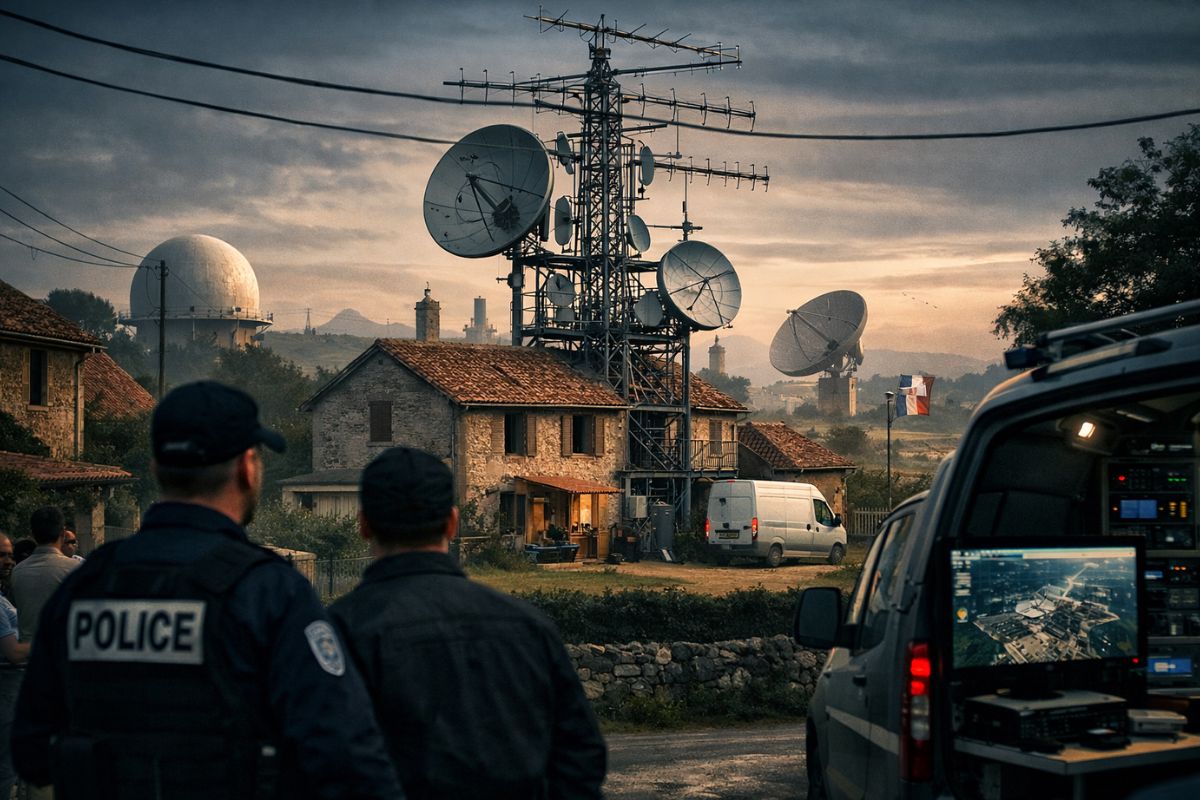
In Camblanes-et-Meynac, in the Gironde Region, Residents’ Reports of an Unusual Satellite Dish Installed by Chinese in a Rented Property Coincided with Connection Failures, Leading DGSI to Act and Opening an Investigation into Possible Data Transmission via Satellites and Strategic Communications Outside France in a Sensitive Military Area.
The Chinese detained in southwestern France came under scrutiny after a signal that, to the residents, did not seem normal: a large satellite dish installed in an Airbnb rented house, in a quiet commune in Gironde. Almost simultaneously, internet failures began to be reported in the neighborhood, increasing pressure for a response from authorities.
Following these reports, the General Directorate for Internal Security (DGSI) conducted the operation that resulted in the arrest of two Chinese citizens, aged 27 and 29, and the opening of an inquiry with criminal implications. The case moved from a local level to a national dimension as it involved an area considered strategic for defense, aerospace, and sensitive communications.
What Caught Attention in Camblanes-et-Meynac
In places with predictable routines, visible technical changes often catch attention quickly. This was the case when neighbors noticed the installation of the satellite dish structure at the temporary residence. The strangeness did not come from a single factor, but from the combination of unusual equipment, territorial context, and reported connection instability by the residents.
-
With a cost per shot close to zero, the DragonFire laser could change naval warfare in 2027 and provide British ships with nearly unlimited defense against drones.

-
A British startup creates tires that generate electricity in electric vehicles when passing over potholes, speed bumps, and cracks.

-
Scientists have created robots made with living cells that have their own nervous system, swim on their own, explore the environment, and self-organize without any genetic engineering, and now they want to do the same with human cells.

-
Students create a solar-powered ambulance that operates without a plug, without fuel, and still keeps medical equipment running in remote areas.


This set of clues was enough to trigger the institutional security circuit. From there, the incident ceased to be merely a neighborhood suspicion and began to be treated as a possible intelligence risk. The address, being in an area with strategic assets, raised the level of concern from the first reports.
How the Operation Advanced and Who Was Targeted
According to French authorities, the action led to the detention of two Chinese individuals and the confiscation of computers and electronic equipment connected to satellite communication systems. The Paris prosecutor’s office began to handle the case within the criminal framework that deals with potential information transmission to a foreign power.
In addition to the two detained, two other Chinese origin men residing in France were indicted for logistical support. This detail broadens the scope of the investigation, as it suggests a support structure within French territory and not merely a one-time action by visitors in a short-term rental.
The prosecutor also reported that the two suspects arrested had recently entered the country on work visas, presenting themselves as engineers from a company specializing in wireless communications. This element helps explain why the investigation is examining method, declared professional coverage, and the connection between technical profiles and the equipment found.
What Investigators Say Was the Objective
The investigative line indicated by the prosecutor points to an attempt to capture satellite communication data, including information associated with the Starlink network, as well as signals linked to entities considered strategic. Among these targets would be military installations and sensitive structures of national interest in France.
According to what has been disclosed, the hypothesis is the retransmission of this information to China. This is still a case in the investigative and prosecutorial phase, but the legal framing already indicates seriousness: “delivery of information to a foreign power likely to harm fundamental interests of France,” a crime with a sentence that can reach 15 years in prison.
Why the Case Gained Political and Security Weight
Not every suspicion of espionage receives the same public attention. In this episode, three layers overlap: strategic location, possible capture of high-value signals, and the presence of infrastructure installed in a temporary residential environment. This combination shifts the case from the realm of common policing to the domain of national security.
The institutional effect also weighs in: when an investigation involves satellite communications and military assets, the impact transcends direct involvement and reaches debates on rental oversight, technological monitoring, and civil vulnerabilities in sensitive areas.
The boundary between urban routine and strategic interest becomes narrower when a residential alley turns into a suspicious collection point.
The Gironde case illustrates how a resident’s alert can trigger a high-complexity investigation when there are technical indicators in a strategic area.
At the center of the investigation are four Chinese, satellite equipment, suspicion of data retransmission, and a legal framing that, if confirmed in court, could lead to severe penalties.
In your view, in regions with military and aerospace infrastructure, what signals should require an immediate response from authorities without turning suspicion into premature condemnation? And where would you place the balance between national security, privacy, and presumption of innocence?








-

-

-

-

-

10 pessoas reagiram a isso.