





 Portuguese
  English
  Spanish
  5 min of reading
  0 comments


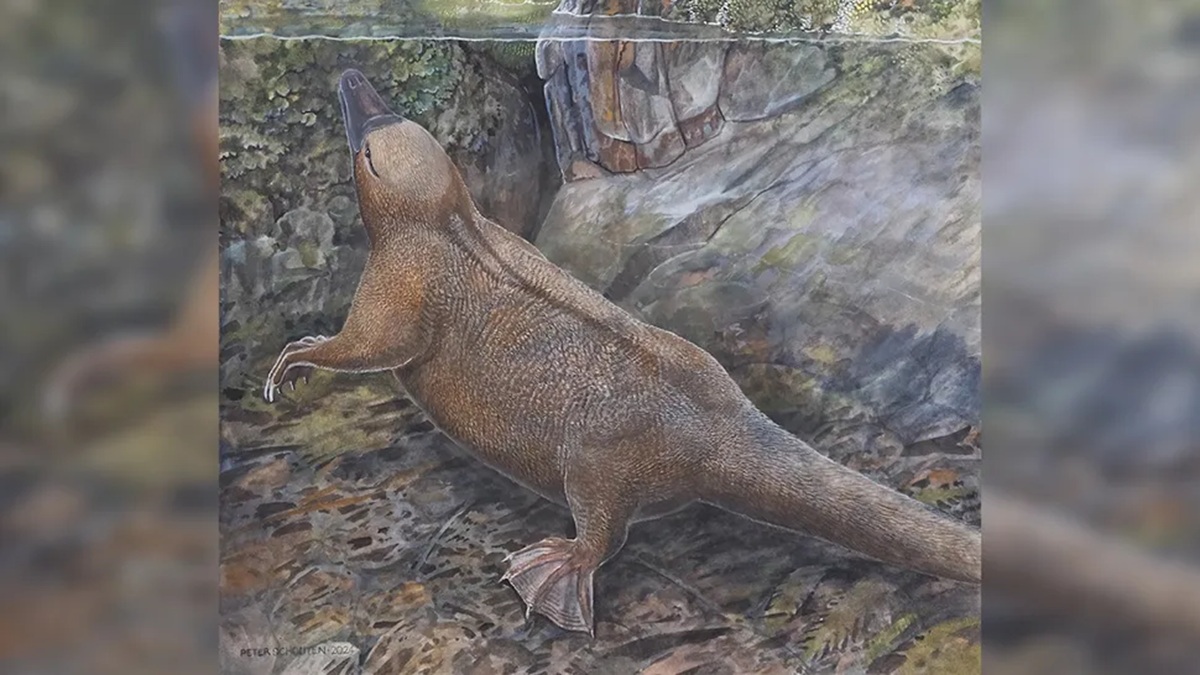
The Reanalysis of a Fossil Humerus from 108 Million Years Ago, Examined by Micro-CT, Indicates That Modern Echidnas Descend from a Semi-Aquatic Ancestor, Reversing the Common Evolutionary Trajectory Among Mammals and Altering Established Hypotheses About the Origin of Monotremes
A study published on April 28 details that echidnas, egg-laying mammals of the family Tachyglossidae, likely evolved from a semi-aquatic ancestor 108 million years ago, based on the microstructural analysis of a fossil bone indicating adaptation to aquatic life, in contrast to previous hypotheses.
Review of Hypotheses About the Origin of Echidnas
Researchers identified a rare evolutionary event by reassessing the history of echidnas, egg-laying mammals covered in spines found in Australia and New Guinea.
The new study indicates that these terrestrial animals descend from a semi-aquatic ancestor, contradicting established scientific assumptions.
-
With a cost per shot close to zero, the DragonFire laser could change naval warfare in 2027 and provide British ships with nearly unlimited defense against drones.

-
A British startup creates tires that generate electricity in electric vehicles when passing over potholes, speed bumps, and cracks.

-
Scientists have created robots made with living cells that have their own nervous system, swim on their own, explore the environment, and self-organize without any genetic engineering, and now they want to do the same with human cells.

-
Students create a solar-powered ambulance that operates without a plug, without fuel, and still keeps medical equipment running in remote areas.

Echidnas belong to the family Tachyglossidae and comprise four living species. Three of them are restricted to New Guinea, while the fourth occurs both in that territory and widely in Australia. All share unusual characteristics among mammals, such as egg-laying.
Until now, the dominant hypothesis held that echidnas and platypuses, their semi-aquatic relatives, evolved from a terrestrial ancestor that began exploring aquatic environments. Both belong to the group of monotremes, the only living egg-laying mammals.
The Fossil of Kryoryctes cadburyi and the Context of the Cretaceous
To clarify the evolution of echidnas, the team led by Sue Hand from the University of New South Wales reexamined a humerus of Kryoryctes cadburyi, an extinct monotreme that lived 108 million years ago.
The fossil was found in the southern part of present-day Victoria, Australia, at a site known as Dinosaur Cove, and is the only monotreme limb bone from that period identified. The species may have been an ancestor or close relative of modern echidnas and platypuses.
Previous analyses, conducted in the early 2000s, indicated superficial similarity between the humerus and bones of current echidnas. Nevertheless, the debate persisted over whether K. cadburyi was strictly terrestrial or had aquatic habits.
Tomographies Reveal Unexpected Internal Microstructure
The team used micro-focus computed tomography, known as micro-CT, to examine the internal microstructure of the bone. According to Hand, the internal analysis can reveal direct clues about the animal’s lifestyle, going beyond external appearance.
Modern platypuses have very thick bone walls, while echidnas have relatively thin walls. The initial expectation was to identify intermediate features or characteristics closer to echidnas, given the fossil’s external similarity.
The result surprised the researchers. Despite having a surface similar to that of an echidna, the ancient humerus exhibited thick bone walls and a reduced medullary cavity, more compatible with the structure observed in modern platypuses.
Indications of Semi-Aquatic Life and Adaptation for Diving
According to the researchers, denser bones function as ballast, facilitating diving and staying submerged under water. This characteristic suggests that K. cadburyi was a semi-aquatic digging animal, adapted to both aquatic and terrestrial environments.
From this evidence, the team concluded that the family of monotremes would have originally been semi-aquatic. Over time, the ancestors of echidnas likely migrated permanently to land, accompanied by progressively lighter bones.
These structural changes reflect the adaptation to a new lifestyle, with less dependence on water. The study was published in the journal PNAS and details this process as an unusual evolutionary event among mammals.
Scarcity of Fossils Limits the Chronology of the Transition
Despite the evidence, researchers emphasize that it is not possible to accurately determine when the complete transition of echidnas to terrestrial life occurred. The limitation arises from the scarcity of well-preserved fossils of ancestors of these animals.
The majority of extinct monotremes are known only from teeth and jaws. The humerus of K. cadburyi remains the only limb bone of this group dated to the Cretaceous period, which restricts more detailed inferences.
This fossil gap makes it difficult to establish a continuous timeline of monotreme evolution, but the new finding provides an important reference point for understanding this rare evolutionary transition.
Comparison with Other Aquatic and Semi-Aquatic Mammals
Cases of mammals that evolved from land to water are well documented in the fossil record. Whales, dolphins, seals, and beavers are examples of lineages that adopted fully or partially aquatic lifestyles.
The reverse path, however, is considered virtually unprecedented. According to Hand, the more aquatic a mammal becomes, the more difficult it is for it to return completely to the terrestrial environment, making the case of echidnas particularly unusual.
Semi-aquatic mammals that live in burrows, such as modern platypuses, would be the most likely candidates for a transition between environments, as they possess functional adaptations for both land and water, according to the researchers.
Additional Anatomical Evidence of Aquatic Past
Other indications support the hypothesis of an aquatic past for echidnas. During development, their snouts have receptors capable of detecting small electrical currents, typically associated with locating prey in aquatic environments.
Platypuses have even more of these receptors, suggesting a functional continuity between the two lineages. Additionally, the hind legs of echidnas point backward, just like those of platypuses, which use them as a rudder while swimming.
These anatomical features, combined with the new bony evidence, contribute to a more cohesive picture of the evolution of monotremes, despite the limitations imposed by the incomplete fossil record.
External Evaluation Reinforces Interpretation of the Study
For Tim Flannery, a paleontologist at the Australian Museum in Sydney who did not participate in the research, the data strengthen the evolutionary link between echidnas and platypus-like ancestors.
According to Flannery, fossils resembling platypuses date back around 100 million years, while the oldest echidna fossils are less than 2 million years old. This temporal discrepancy supports the hypothesis of an aquatic origin.
He stated that the study represents another element in the body of evidence pointing to platypus-like ancestors, describing the work as a relevant advancement in this evolutionary puzzle, despite some residual uncertainty and a slight chronological mismatch.







-

-

-

-

-

-

41 pessoas reagiram a isso.