





 Portuguese
  English
  Spanish
 4 min of reading
  0 comments


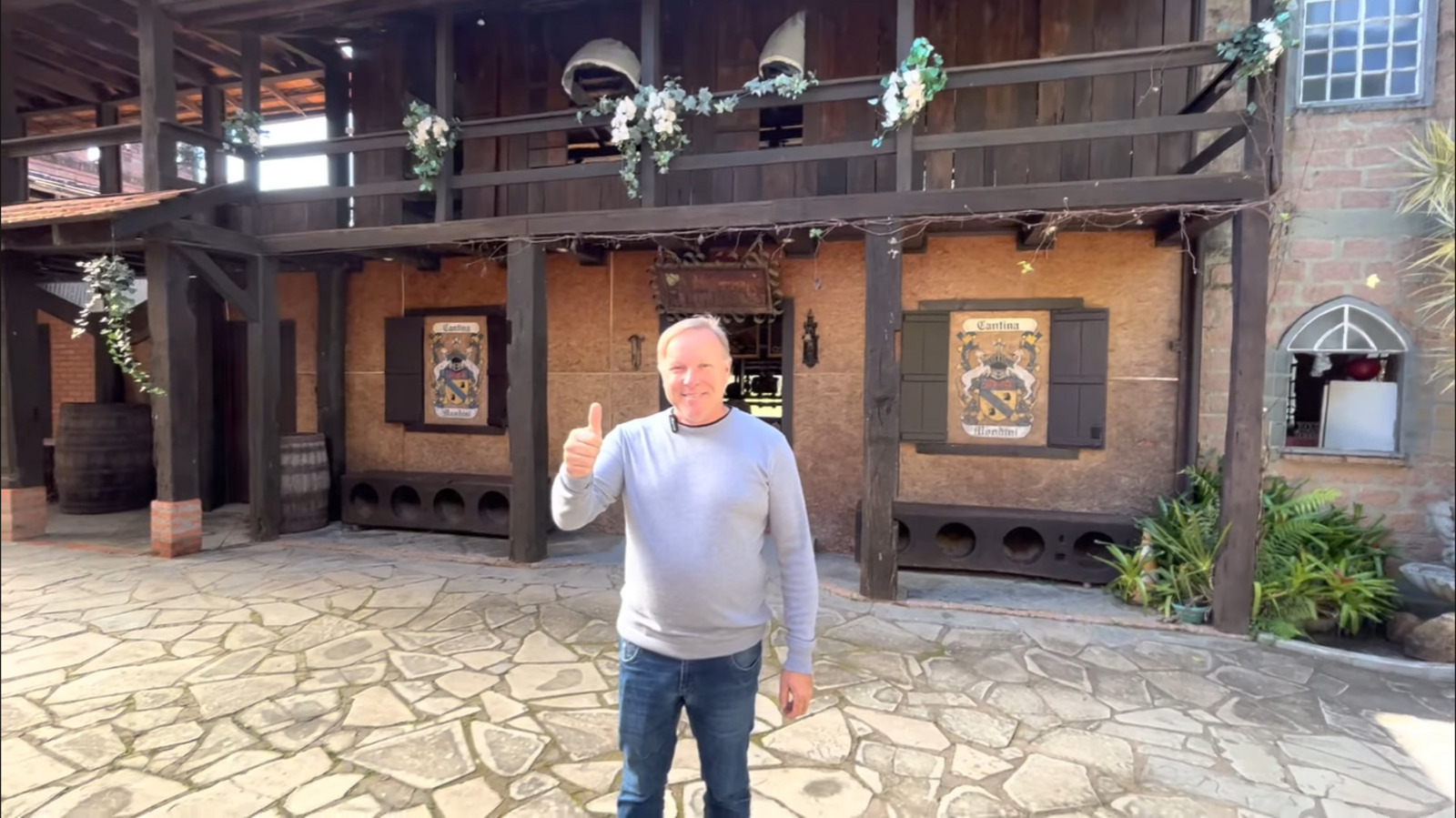
Inspired by Italian Immigration, Clésio Mondini Manually Built a Castle in His Backyard in Ascurra, Santa Catarina, Transforming Genealogical Research, Material Reuse, and Family Memory into Space in the Vale do Itajaí
Clésio Mondini, 59, envisioned, designed, and helped build with his own hands a castle in his backyard in Santa Catarina, inspired by Italy, transforming family memory into a symbolic heritage that today attracts visitors and events in the Vale do Itajaí.
Italian Roots as the Starting Point of the Project
Descendant of immigrants from the Verona region, Clésio has always maintained a strong connection with his family history, which led him to research old documents.
The investigation allowed him to reconstruct the Mondini family tree, with records dating back to 1750, connecting generations and territories.
-
A Brazilian millionaire couple restores a farm over 150 years old in the interior of São Paulo and transforms the historic property with Portuguese tiles, antique furniture, and new spaces into a refuge that blends tradition, comfort, and sophistication.
-
Submerged city in a lake in Minas reveals intact streets, preserved vehicles, and houses after more than 60 years, impressing divers.
-
Yellowstone has started to rise again in an area of the caldera, and the movement rekindles fears surrounding the U.S. supervolcano, as scientists monitor the deformation and try to understand what is happening underground.
-
Woman arrested after receiving $1.2 million due to banking error and not returning the amount.


This historical rescue served as the conceptual basis for the project, uniting memory, cultural identity, and manual labor in a personal initiative.
The family settled in Ascurra, in the Médio Vale do Itajaí, on a street called Via Vêneto, a direct reference to their Italian origin.
It was in this context that Clésio began to think of a construction that would materialize the journey of his ancestors in Brazil.
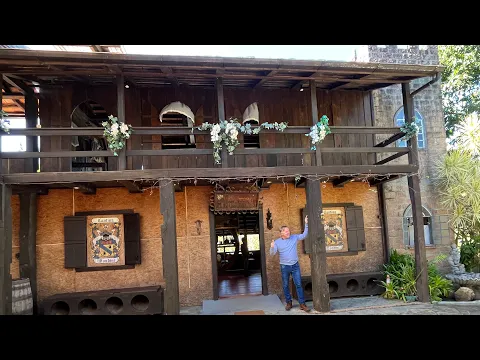

A Castle Inspired by Verona, Even Without Knowing Italy
When he started the work, Clésio had never visited Italy, but he looked for references in movies, books, and images of medieval castles.
The main focus was the architecture of the Verona region, a setting associated with the story of Romeo and Juliet, present in several details.
According to Clésio, the placement of the windows was inspired by Juliet’s famous balcony, adapted to the space available on the lot.
Every element was designed to evoke the medieval style, respecting proportions and shapes observed in the studied references.
This conceptual stage guided the entire construction, even without a formal technical project.
Work Started in 2006 in His Own Backyard
The castle began to take shape in April 2006, in the Guaricanas neighborhood, on a lot of over 5 hectares.
The area was occupied by about 10,000 grapevines, in addition to the family house and other structures.
In the same space lived the nona, as grandmothers are called in Italian, alongside an altar and a pond.
Clésio drew everything by hand, overseeing each stage alongside a mason and close family members.
He reports that he would draw on paper and relay the instructions directly for execution on site.
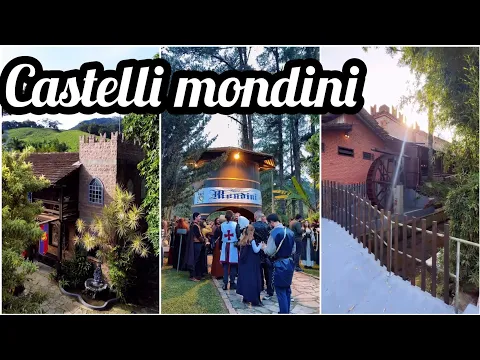
Reused Materials Reinforce Medieval Authenticity
To ensure aesthetic fidelity, the work primarily used reused materials from old constructions in the region.
About 50,000 reclaimed bricks, over 100 years old, were used in the first phase of the castle.
Doors from a deactivated hotel, wood from wine barrels, and metal rings from barrels are part of the structure.
The iron pieces were handcrafted, reinforcing the manual and historical character of the building.
Each incorporated material carries a specific origin, contributing to the narrative built in the space.
Italian Castle: From Personal Project to Event Venue in the Vale do Itajaí
Over time, the castle ceased to be just a family project and began to attract the curiosity of visitors.
Initially, part of the space was used for activities related to the family vineyard, without a broad commercial focus.
From 2007 onward, the location began to host weddings, events, photo shoots, and themed celebrations.
The unique visual transformed the castle into one of the most curious settings in the Vale do Itajaí.
Nonetheless, Clésio asserts that the project was never conceived solely as a business, but as an expression of history.
A Legacy in Constant Transformation
More than 18 years after the beginning of the work, the castle continues in permanent transformation and planned expansion.
The new stages respect the medieval style and maintain the use of reused materials as a central principle.
For Clésio Mondini, the construction represents a way to eternalize the family’s journey in Brazil.
The space preserves ties with Italian immigration and reinforces the identity built over generations.
In his backyard, he created a personal legacy that connects the past, memory, and cultural belonging.
With information from ND Mais.



-

-

-

-

-

18 pessoas reagiram a isso.