





 Portuguese
  English
  Spanish
  5 min of reading
  5 comments


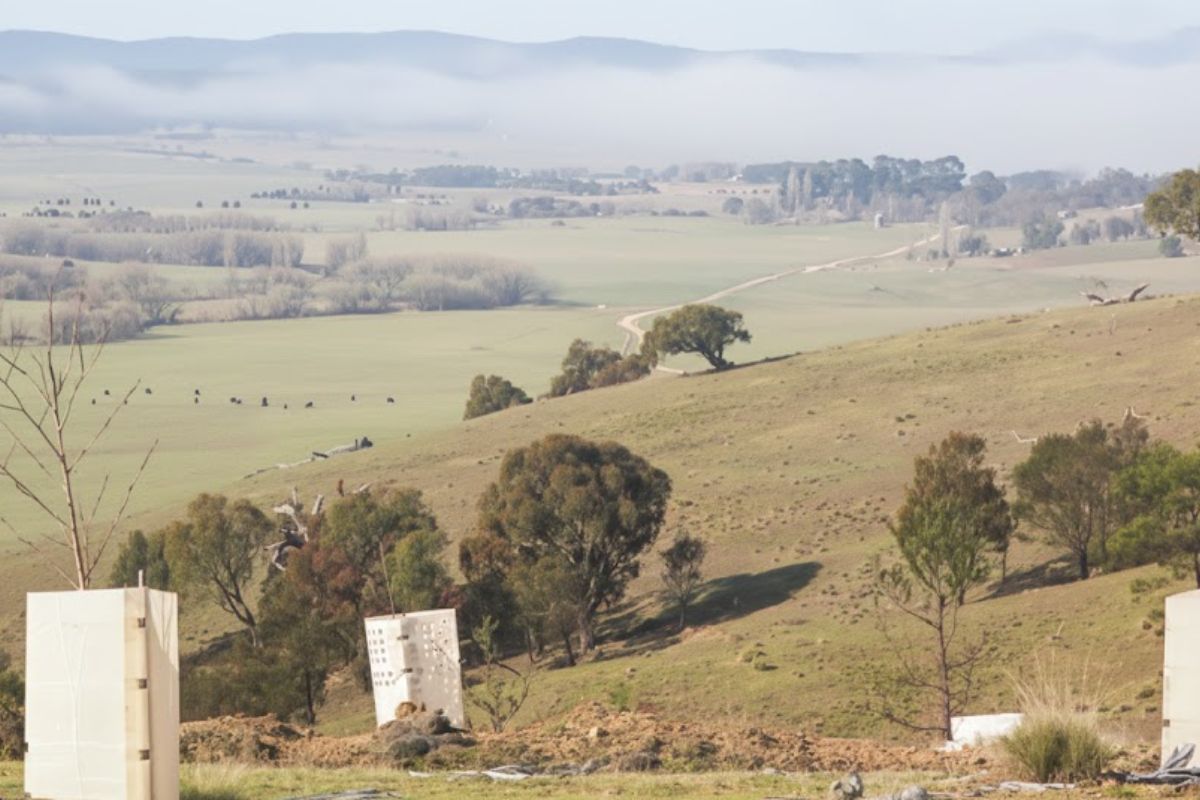


In The Heart Of Australia, Malloon Creek Natural Farms Shows That Rehydrating The Landscape Can Keep Water Flowing Even At The Peak Of Drought And Exposes How Traditional Agricultural Policies Hinder Recovery.
The Australia has experienced one of the driest periods on record, with six months described as the driest in history, and many properties were visibly affected. However, less than an hour from Canberra, a farm called Malloon Creek seemed to defy logic: outside, the paddocks were brown, but underneath, the soil remained alive.
The most shocking point is what appears in the watercourse. There is no water entering from the top of the valley, but there is still water flowing out below, as if the system had created internal reserves. The promise behind this is straightforward: rehydrate the land to survive the drought without relying solely on rain.
The “Miracle” Of Malloon Creek: Water Flowing Without Water Coming In
At Malloon, the central argument is that the farm replicated a natural process of Australia’s landscapes: bringing water to the floodplains and keeping the environment hydrated in advance, before the drought worsens.
-
While the world looks at oil, the war with Iran is already disrupting helium supply from Qatar, affecting car and iPhone chips, threatening AI expansion, and putting pressure on aluminum packaging at the highest value in four years.

-
Global warming will expose a treasure hidden under the ice of Antarctica and may spark an international dispute over gold and valuable minerals.

-
A street vendor from Praia Grande built a robot made of scrap from scooters and washing machines that pulls his popcorn cart on the beach, emits sounds, and interacts with customers, becoming an attraction on the coast of São Paulo.

-
The specifications of the Xiaomi 18 Pro Max have been leaked, and the highlight is a dual 200 MP camera with a new 22-nanometer technology that promises to consume less energy and capture details in shadows and bright areas using LOFIC HDR.


The thesis is that when the soil functions as a sponge, water stops “leaving quickly” and begins to infiltrate, be stored, and nourish the system during dry periods. The goal is not to block the water, but to slow it down.
Who Is Peter Andrews And What Is Natural Sequence Farming?
The turnaround of the project is attributed to Peter Andrews’ method, known as Natural Sequence Farming. The idea is to “get the hydrology right” first, because without hydration, no conventional management can hold off degradation for long.
The approach starts with reading the landscape as a system, observing where water flows, where it erodes, where it should spread, and how to reinfiltrate into the land. The proposal is to rehydrate what colonization and traditional management have drained to the sea.
The Work On The Creek: Reduce Erosion, Take Down Banks And Rebuild The Living Edge
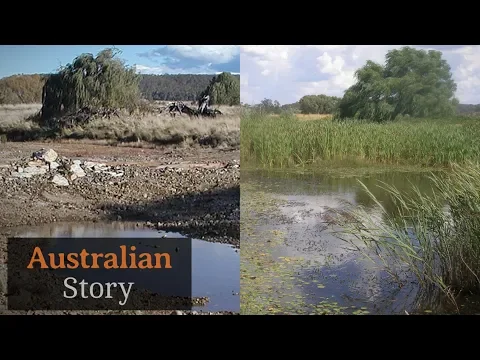
The starting point was to face a deeply eroded creek, described as a steep channel, with banks reaching about 10 meters in some sections.
Instead of accepting the “drain” as fate, the project took down banks, created structures in the watercourse, and planted species to stabilize the banks.
This generated conflict. Some neighbors thought it was “water theft,” public agencies called, there were discussions and suspicion because the work went against what many were advised to do, even involving plants that some public authorities recommend removing. The recovery began under suspicion.
Reported Results: Soil Returning To Form And Production Increasing

The report states that when hydrology improves, the grass withstands months and soil begins to form again. The team describes a layer of about 5 centimeters of soil formation observed in the process, something rare in many agricultural areas, where more degradation than construction is seen.
In the rehydrated area, there is also a reported 63% increase in production and clear signs of “drought proofing,” with water in the valley even when water does not come in from above. The message is that drought does not have to mean inevitable collapse.
Fish Returning And Biodiversity Reappearing
One of the strongest signs mentioned is the return of fish to the watercourse, with reports of species that were previously only seen in upper sections of national parks and were considered extinct in the region.
Additionally, the base text describes the return of birds and a more vibrant environment, as if the creek was starting to function as an ecological corridor. When the water returns, life follows suit.
The Shock With Traditional Agricultural Policies
The criticism is harsh: the farm says that policies and regulations are outdated and can make this type of repair technically “illegal” or unviable in practice.
There are complaints that bureaucracy takes so long that when the authorization comes out, the window for execution has already passed.
There is also a political point: authorities visit, praise, but the system does not create a coherent and replicable national response.
The project’s argument is that this does not only work on one type of terrain, and that institutional resistance hinders progress. The failure is not of technique, but of model and rule.
The Attempt To Scale: From Pilot To Whole Catchment

After testing in a section of the creek, the plan was to expand to the catchment, involving work over dozens of kilometers of watercourse and participation from multiple owners.
The vision behind this is collaborative: if the neighbor below does not participate, the system does not close.
The ambition is to turn the experience of one farm into a reference for Australia, with data collection, fauna surveys, soil structure monitoring, precisely to win the argument that “without evidence, the government does not change.”
What This Story Says About Drought And The Future Of Australia
Malloon Creek advocates a simple and uncomfortable idea: landscapes have been destroyed by human decision and, therefore, can be recovered by human decision.
It is not a promise of rain. It is a promise of retention, infiltration, and soil functioning as a reserve.
In the end, the farm becomes a mirror for Australia: either the country continues to treat water as something that needs to “leave quickly” from the land, or learns to hold what falls, slowly, to get through the months when nothing falls.
Do you believe that this model of rehydrating the landscape should become public policy in Australia, or do you think it’s risky to interfere with rivers and floodplains outside the traditional standard?








Marvellous work regenerating the land by the owners. Think of the production – should be enough to have all farmers doing it. Think of the soil as a natural reservoir- the life of the water within the land extended , drought proofing to an extent. Think of nature – insects, microbats, fish & birds to balance out the problem pest insects, greater pollination & trees to bind the soil & provide healthy habitat. It is a win win situation. Thank you for your effort.
Wonderful news
I believe this is a way forward in Australian ecology. It has shown positive results, so I can not see any reason why it should not be implemented throughout Australia as our climate becomes drier and more unpredictable.