





 Portuguese
  English
  Spanish
  9 min of reading
  0 comments


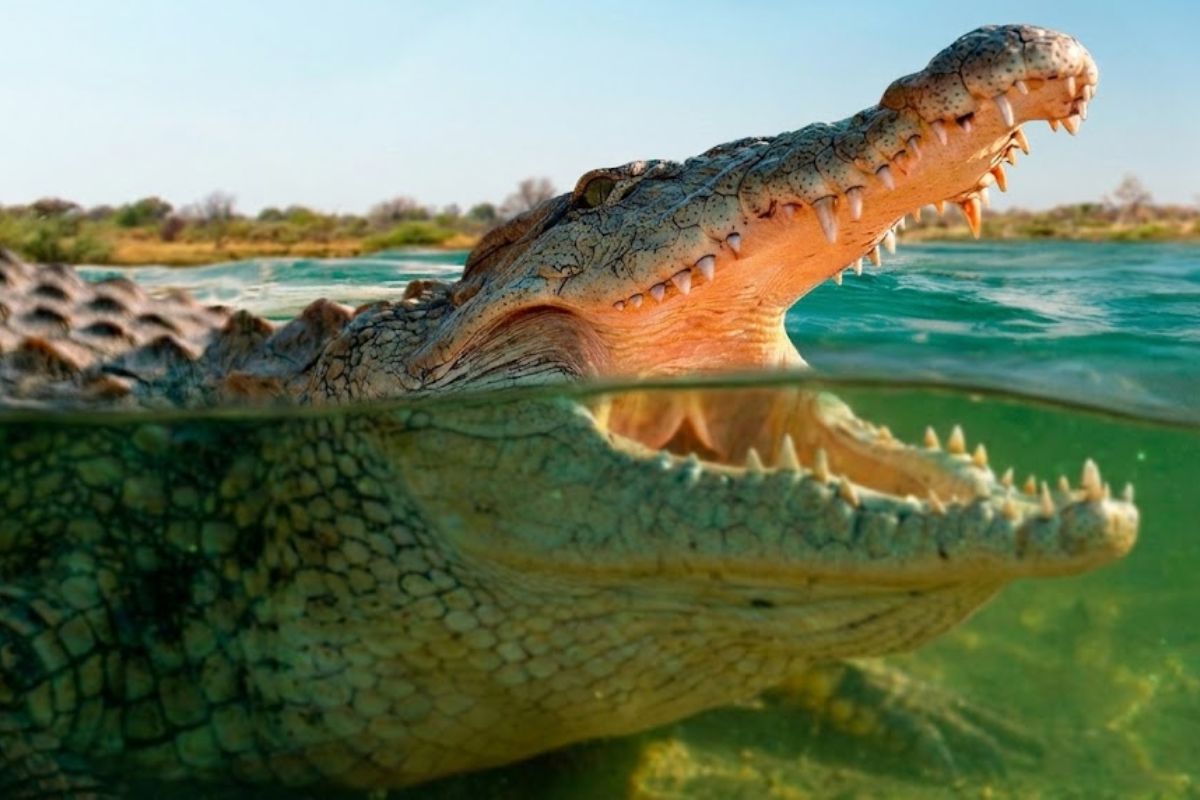
In The Most Dangerous River On The Planet, The Water That Sustains Crops And Cities Also Carries Shocks Of Up To 350 Volts, Constriction Of Pythons Over 6 Meters, Jaws Of One-Ton Crocodiles, And Diseases Transmitted By Mosquitoes And Snails In A Network That Spans From Lake Victoria To The Mediterranean.
In the most dangerous river on the planet, danger does not have a single face or a single size. It can appear as a six-meter predator standing on the bank, as an invisible shock coming from the depths, as a fever that starts days after a bath, or as a parasite that penetrates the skin unnoticed by the victim.
Even so, millions of people continue to live around the Nile because almost everything in the fertile corridor of the river depends on this water: cultivation, transportation, energy, fishing, supply, and routine. The same system that allows life in a green strip surrounded by desert also creates an environment where any carelessness comes at a high cost.
The Nile As A Corridor Of Life And Risk From Lake Victoria To Egypt

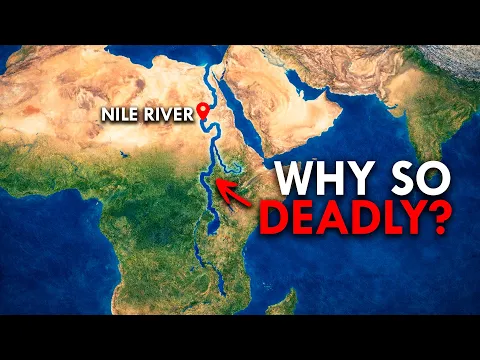
The Nile flows into the Mediterranean Sea in Egypt, but its story is larger than a single country. The water flows north, connecting a network of continuously changing ecosystems, including wetlands, rainforests, savannas, and deserts. The route links Lake Victoria and the Highlands of Ethiopia to the Egyptian delta, a distance comparable to that between New York and Moscow.
-
With a cost per shot close to zero, the DragonFire laser could change naval warfare in 2027 and provide British ships with nearly unlimited defense against drones.

-
A British startup creates tires that generate electricity in electric vehicles when passing over potholes, speed bumps, and cracks.

-
Scientists have created robots made with living cells that have their own nervous system, swim on their own, explore the environment, and self-organize without any genetic engineering, and now they want to do the same with human cells.

-
Students create a solar-powered ambulance that operates without a plug, without fuel, and still keeps medical equipment running in remote areas.


This geography explains why the Nile does not function as a simple “blue line” on the map. It is a natural infrastructure of survival, with slow stretches, swamps, channels, shallow banks, and floodplains. Where there is reliable water for hundreds of kilometers, competition intensifies: hunting, territorial defense, foraging, reproduction, and disputes for access points along the bank happen constantly.
African Rock Python: The Hunter That Kills With Precision And Force

In The Most Dangerous River On The Planet, The Threat May Come From An Animal That Does Not Rely On Venom. The African Rock Python Is A Typical Ambush Predator Of Shallow Waters And Swampy Areas, Capable Of Exceeding 6 Meters In Length. The Nile Provides The Ideal Scenario: Frequent Wild Encounters On The Bank And A Wide Landscape Where Remaining Motionless For Long Periods Becomes An Advantage.
The attack is swift when the prey gets close. The python wraps its muscular body around the victim, squeezing with each breath and cutting off blood flow to the brain, leading to a death associated with cardiac arrest, not slow crushing. Antelopes, goats, wild boar, hyenas, and even the Nile crocodile can become part of the menu. There are records of pythons swallowing whole crocodiles, typically juveniles, yet still a sign of how risky the environment is: in the Nile, even predators can become prey.
After a large meal, a python can go months without eating, which reinforces the logic of ambush. For those living along the banks, the problem is unpredictability: the snake may be where the water invites approach, precisely at the most frequently used human access points.
Nile Crocodile: Armor, Ambush, And Annual Deaths Along The Bank

The most emblematic animal of the Nile is the Nile crocodile, a predator that turns the bank into a zero-error zone. The largest cited record for the species reaches over 6 meters and over 1,000 kg, a mass comparable to that of a small vehicle. In the most dangerous river on the planet, size matters: the larger the animal, the shorter the time between attack and outcome.
The numbers associated with the risk are direct: about 200 people die each year in attacks attributed to the Nile crocodile. The method combines patience and opportunity. The crocodile can float almost invisibly, with eyes and nostrils exposed. Nictitating membranes, the third transparent eyelids, help maintain functional vision. In murky waters, camouflage improves. When it attacks, the bite is described as powerful enough to crush bones, and the frequent strategy is to drag the prey underwater.
Since the crocodile does not chew, it swallows whole when possible or tears apart using gravity, leverage, and the death roll. It is opportunistic: it eats insects, fish, carrion, and large mammals that approach to drink. In territorial disputes, food scarcity, or convenience, crocodiles can cannibalize smaller individuals, including relatives.
Even as a top predator, the Nile crocodile has come close to regional collapse. In the 1950s, the hunt for skins pushed populations to the brink of extinction in parts of its range. With protective measures, there was recovery, but the species remains absent in areas cited as the Mediterranean coast and much of the Nile Delta. The risk remains concentrated where there is contact with the bank, fishing, crossing, and bathing.
Hippos And Elephants: Giants That Kill Without “Hunting” Humans

In The Most Dangerous River On The Planet, Threat Does Not Depend On Serrated Teeth. Hippos Carry A Reputation For Aggressiveness And Unpredictability And Are Associated With About 500 Deaths Per Year. The Risk Often Appears In Situations Of Territorial Defense, Space Disputes, And Sudden Reactions At Water Points, Especially When There Are Young Or Groups Cramped In Narrow Banks.
The Nile Basin Also Houses African Elephants, Often Seen As “Gentle,” But Equally Associated With About 500 Deaths Per Year. In Alluvial Plains And Savannas, Especially During The Dry Season, Elephants And Crocodiles May Share Access Areas, With Indirect Conflict: There Are Documented Cases Of Elephants Stampeding Crocodiles, Turning Them Over And Crushing Them Against The Riverbed. The Central Point Is The Safety Rule: Size Determines Space, And Those Who Underestimate Lose.
Elephants Are Also Described As “Ecosystem Engineers” Because They Trample Vegetation, Spread Seeds, And Dig Wells Used By Other Animals And By People During Droughts. This Creates A Continuous Paradox: The Animal That Supports Ecological Processes May Be The Same One That Kills In Miscalculated Encounters.
Fish That Electrocute And Freshwater Predators With Blade-Like Teeth
The Nile Does Not Hide Danger Only At The Surface. The Electric Catfish Functions As A Walking Shock: It Can Generate Up To 350 Volts, Enough To Stun Prey And Ward Off Predators. For Humans, The Shock Is Described As Generally Non-Fatal, But The Real Risk Lies In The Setting: Slippery Banks, Currents, Craft Fishing, And Movement In Shallow Water. A Shock At The Wrong Moment Can Cause Falls, Panic, And Drowning, Especially In Places With No Quick Rescue.
Another Mentioned Predator Is The African Tigerfish, From The Genus Hydrocynus, With Sharp Teeth And Aggressive Behavior. It Replaces Teeth As A Group, Always Maintaining A Functional Bite. In Fast, Well-Oxygenated Waters, It Uses The Current To Its Advantage, Reinforcing That In The Most Dangerous River On The Planet, The River’s Flow Is Not Constant, And The Predator Adapts To The Rhythm.
This Dynamic Appears In The Difference Between Blue Nile And White Nile. The Blue Nile Is Associated With The Mountains Of The Ethiopian Highlands, Fed By Monsoon Rains, Narrowing And Accelerating In Rocky Channels And Waterfalls. It Joins The Slower White Nile In Sudan, Forming The Main Course. Practically, This Creates Mosaics Of Speed And Depth, Altering Where Each Species Hunts, Reproduces, And Avoids Contact.
Nile Monitor: The “Between Worlds” Predator That Hunts In Water And On Land
The Nile Monitor, A Large Lizard, Enters The Risk Inventory As A Generalist And Mobile Predator. It Can Run Up To 30 Km/h, Climb Trees, And Hold Its Breath For About 15 Minutes Underwater. The Tail Functions As A Rudder And As A Weapon. Size Also Matters: Individuals Can Exceed 1.8 Meters In Length.
The Strategy Includes Extreme Opportunism, With A Behavior That Directly Pressures Another Human Risk Of The Most Dangerous River On The Planet: The Presence Of Crocodiles Near Repeatedly Used Areas. Monitors Invade Crocodile Nests And May Act In Pairs, With One Individual Distracting While The Other Steals Eggs. This Does Not Make The Lizard “More Dangerous” Than A Crocodile But Reinforces The Pattern Of The Nile: Predators Compete With Predators, And The Riverbank Becomes A Constant Stage For Ambushes.
The Microscopic Danger: Mosquitoes, Malaria, And A Global Count That Exceeds Claws And Jaws
The Phrase “It’s Not Just Crocodiles” Gains Weight When The Threat Is Small, Persistent, And Statistically Dominant. In The Most Dangerous River On The Planet, The Animal That Kills The Most People Does Not Need Teeth: Mosquitoes. The Logic Is Epidemiological: Anopheles Mosquitoes Transmit Malaria, And The Impact Is Described As Resulting In Hundreds Of Thousands Of Deaths, Surpassing Any Other Animal. It Is Also Indicated That About 95% Of Malaria Cases Occur In Africa, With Many Areas Shaped By Rivers And Wetlands.
The Cycle Of The Nile Favors This Vector. Shallow Puddles And Slow Water Left By Flooding Or Recession Become Perfect Breeding Grounds. The Operational Detail That Matters For Those Living There Is Daily Life: Just Repeating Predictable Margin Routines, Without Protection, Raises Exposure. The Female Is The One That Bites, As She Needs Blood Protein To Produce Eggs, Creating A Continuous Pressure On Riparian Communities.
Invisible Parasites And Snails: When The River Enters The Body Unnoticed
Another Threat That Is Difficult To Perceive Is Schistosomiasis, Associated With Parasite Worms Whose Cycle Involves Freshwater Snails. In Calm Sections Of The River, Puddles, Channels, And Floodplain Banks, The Parasites Detach From The Snail And Can Penetrate Human Skin Without A Bite Or Sting. Weeks Later, The Adult Worms Begin To Affect Internal Organs, With Risks Of Kidney Problems, Liver Damage, Learning Difficulties, And Even Bladder Cancer.
The Scale Data Cited Is Broad: More Than 200 Million People Worldwide May Be Infected. Historical Presence Is Mentioned, With Detection In Mummies And Recognition Of Symptoms In Ancient Egypt, Reinforcing That In The Most Dangerous River On The Planet, Some Enemies Have Tracked The Nile For Much Longer Than Any Modern Infrastructure.
Floods, Agriculture, And The Price Of Survival In The Fertile Strip
The Nile Is Described As “Source Of Life And River Of Death” Because It Sustains A Fertile Strip In One Of The Driest Deserts. Historically, The Annual Flood Cycle Carried Rich Nutrient Soil And Left Moist Mud, Allowing Agriculture In The Desert And Sustaining Ancient Civilizations. This Same Mechanism Displaced Animals, Trapped Prey In Pools, And Created Unexpected Encounters Between People And Predators.
In Modern Egypt, The Dependence Continues, With A Central Fact: About 95% Of The Egyptian Population Lives A Few Kilometers From The Banks Of The Nile. The River Supplies Agriculture, Drinking Water, And Electricity, Highlighting The Aswan High Dam, Which Regulates Floods And Controls The Flow. However, Control Does Not Mean Absence Of Risk: Management Reduces Some Extremes While Amplifying Others, Such As Human Concentration Along The Bank, Intensified Use, And Repeated Routines, Just The Fuel For Accidents And Exposure.
One River, Many Dangers, The Same Pattern: Routine, Bank, And Minimal Error
In The Most Dangerous River On The Planet, The Repeated Pattern Is Always The Same: Danger Appears Where Human Routine Meets Access To Water. The Threat Can Be An Ambush Predator That Waits For Hours, A Shock That Happens Silently, A Disease That Arrives Days Later, Or A Parasite That Penetrates The Skin. The Nile Is A Living System That Connects Deserts And Wetlands, Predators And Prey, Agriculture And Health Risks, History And Daily Survival.
For Those Living In The Nile Corridor, The Logic Is Not To Conquer The River, But To Reduce Exposure And Avoid Predictability: Carefully Choose Access Points, Respect The Behavior Of Large Animals, Understand That Stagnant Water And Shallow Banks May Concentrate Biological Risks, And Treat The Nile As What It Is: An Ecosystem That Does Not Forgive Distraction.
If You Live Near Rivers, Ponds, Or Flooded Areas, It Is Worth Turning This Learning Into Practice: Observe Usage Patterns Along The Bank, Prioritize Mosquito Protection And Avoid Repeated Routines At Isolated Water Points.
In Your Opinion, What Scares You The Most In The Most Dangerous River On The Planet: The Swift Attack Of Crocodiles, The Invisible Threat Of Parasites, Or The Silent Scale Of Diseases Transmitted By Mosquitoes?







-

-

2 pessoas reagiram a isso.