





 Portuguese
  English
  Spanish
  4 min of reading
  4 comments


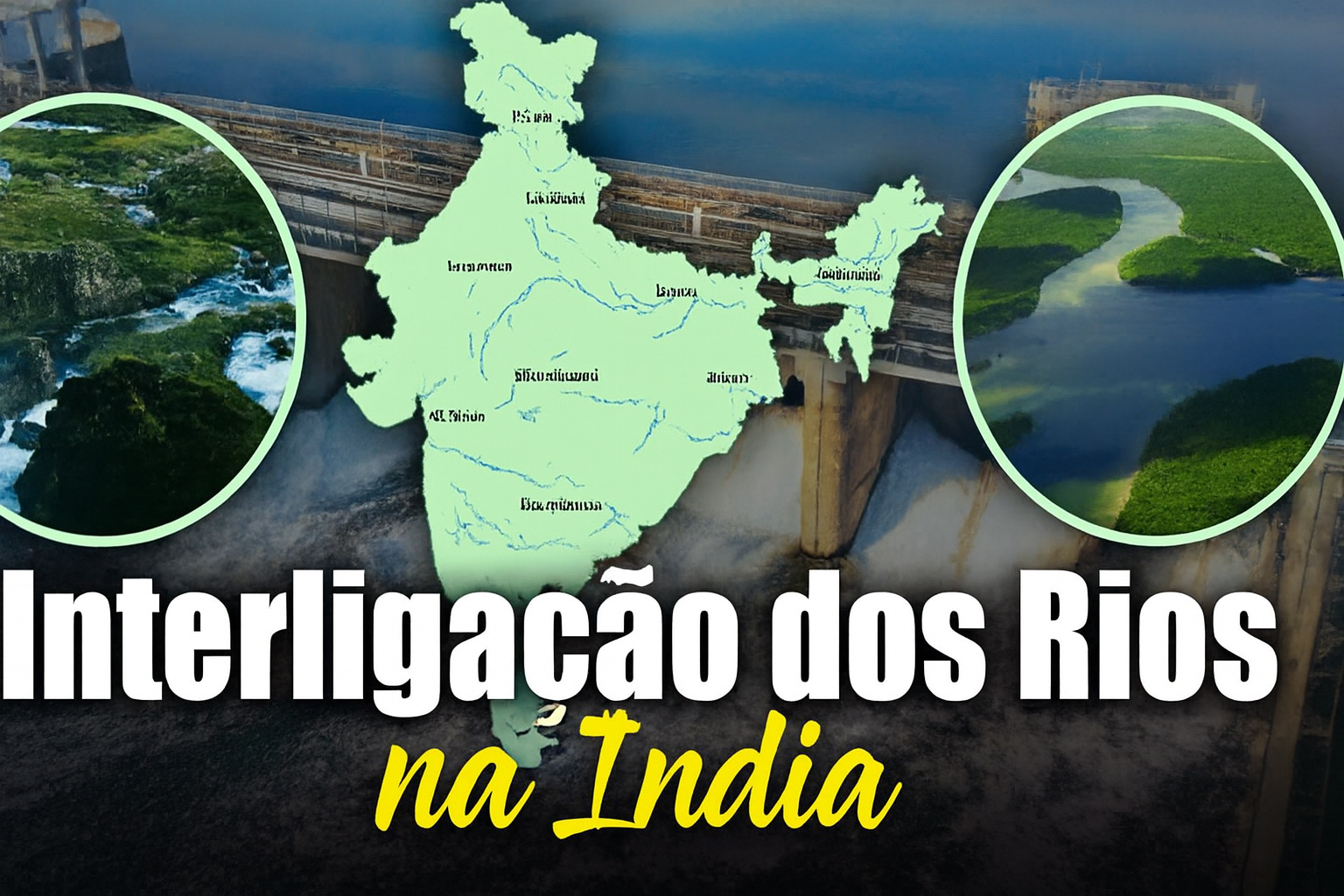


India Bets on the World’s Largest Water Project to Link Rivers, Combat Droughts and Floods, and Ensure Water for Agriculture and Cities.
National River Linking Project (NRLP): India is home to nearly one-fifth of the world’s population, but it has one of the most uneven distributions of water on the planet. While northern regions face recurring floods during the monsoon, vast areas in the central and southern parts deal with severe droughts, lost crops, and empty reservoirs. It was in the face of this historical imbalance that the country decided to invest in one of the most ambitious engineering projects ever conceived: linking its major rivers on a continental scale.
Known as the National River Linking Project (NRLP), the plan calls for the construction of dozens of dams, thousands of kilometers of canals, tunnels, pumping stations, and reservoirs, requiring the movement of billion cubic meters of earth to completely redesign the country’s water geography.
A Project Thought Out Over a Century Ago and Revived in the 21st Century
The idea of linking rivers in India is not new. It emerged during the colonial period in the early 20th century but remained shelved for decades due to technical complexity, costs, and social implications.
-
The section of Serra da Rocinha on BR-285 is now open in Timbé do Sul: 50 m tensioned curtains and top-down technique stabilize the slope, with a stairway duct controlling the water.
-
Scientists use sawdust mixed with clay to create a lighter brick, promising efficient thermal insulation and impressing by transforming waste into a solution for construction.

-
With a DNA shape, this bridge in Singapore draws attention in modern architecture and surprises tourists by transforming a simple crossing into an unforgettable visual experience in the urban heart.
-
Giant underwater pipeline begins to take shape with a R$ 134.7 million project at the Port of Santos: the 1.7 km structure uses 12-meter and 700 mm pipes to supply water to 450,000 people in Guarujá.

It was only in the 2000s that the project gained real political momentum, becoming a matter of national water security strategy.


Since then, the plan has been updated and fragmented into phases, focusing on connecting water surplus basins to chronically dry regions.
The Scale Impresses: Thousands of Kilometers of Canals and Dozens of Rivers Connected
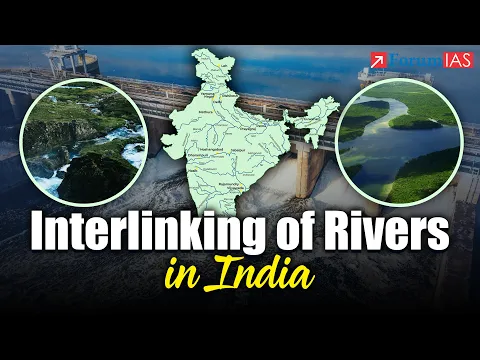
The NRLP plans to interlink more than 30 major rivers, including systems such as the Ganges, Brahmaputra, Godavari, Krishna, Mahanadi, and Cauvery.
To achieve this, the country plans to construct about 14,000 kilometers of canals, as well as extensive tunnels dug in mountainous and forested areas.
These canals are not simple ditches. Many have widths comparable to artificial rivers, capable of transporting colossal volumes of water over long distances, overcoming natural gradients with the aid of dams and pumping systems.
Billions of Cubic Meters of Earth and Rock Displaced
To open canals, build dams, and create reservoirs, the project involves massive-scale excavations, with the removal of billion cubic meters of soil and rock. In some regions, entire mountains must be cut to allow the passage of water.
The engineering required is similar to that used in megaprojects such as interoceanic canals and large dams, but multiplied by dozens of simultaneous construction fronts across the country.
Agriculture at the Center of the Strategy
More than 50% of the Indian population depends directly or indirectly on agriculture, and a significant portion of agricultural areas suffers from irregular rainfall. The government estimates that linking the rivers could irrigate millions of additional hectares, reducing exclusive reliance on the monsoons.
The promise is to transform regions currently vulnerable to drought into permanent productive areas, stabilizing food production and reducing economic losses caused by extreme weather events.
Flood Control and Management of Climate Extremes
Another central objective of the NRLP is to reduce the impacts of flooding in the north and east of the country. By redirecting part of the excess water from monsoons to deficient basins, the system would function as a water balance valve, decreasing flooding in densely populated areas.
In the context of climate change, the project is seen as an adaptation attempt on a national scale, though its outcomes remain a subject of debate.
Billion-Dollar Costs and Political Challenges
The total cost of the project is estimated at hundreds of billions of dollars, considering all the phases planned over decades. In addition to the financial challenge, there are political obstacles, as many rivers cross state and international borders, requiring complex agreements between local governments and neighboring countries.
Water disputes are already common in India, and the NRLP could either alleviate or intensify tensions, depending on its implementation.
Environmental Impacts and Controversies
Environmentalists warn that linking rivers could alter ecosystems, affect aquatic fauna, displace riverside communities, and flood forests. Large reservoirs imply mass population displacement, something common in Indian water projects.
Therefore, the NRLP is considered one of the most controversial projects in the world: for some, an inevitable solution; for others, an unprecedented environmental risk.
Regardless of the criticisms, the fact is that India is attempting something quite rare: redesigning its territory using water engineering. Few countries have dared to alter the natural flow of so many rivers in a single integrated strategy.
If completed as planned, the NRLP will not only be an infrastructure project but a permanent geographical transformation, capable of influencing agriculture, cities, economy, and politics for generations.
A Bet That Could Redefine India’s Water Future
Just as Mexico bets on rails and ports to challenge the Panama Canal, India bets on canals, dams, and artificial rivers to tackle an even more basic problem: water.
At stake is not just logistics or trade but the economic and social survival of more than a billion people.
The success or failure of this project could become one of the most decisive chapters in the engineering history of the 21st century.








Great and pioneering project with long term benefits !
No Brasil os desequilíbrios climáticos estão provocando grandes prejuízos mas com bueiros as estradas do interior se tornam mais resilientes e os pontilhões de madeira podem ser substituídos por pontes de ferro montaveis e o que não falta são empresas mineradoras de ferro e siderúrgicas mas sim programa de resiliência climática que no final todos saiam lucrando ao longo do tempo e nada de imediatismos sem fundamentos e futuros nestes tempos catastróficos…
Eleger prioridades, reduzir custos, garantir produtividades, democratizar a água para um número maior de habitantes, controlando enchentes e secas devastadoras, com utilização de energias renováveis, tudo para melhor e a vida vai evoluindo progressivamente, uma epopeia … … …