





 Portuguese
  English
  Spanish
  7 min of reading
  0 comments



At The Heart Of Urban Collection, The Garbage Truck Uses A Heavy Hydraulic System To Hold Acid Leachate, Face Lithium Batteries, And Still Prevent The City From Collapsing Every Day.
When you hear the noise of the compactor early in the morning or get stuck behind a collector in traffic, it’s easy to only think about the inconvenience. But behind that dirty body lies a heavy engineering machine that literally keeps the city from collapsing, moving tons of waste before they accumulate on the sidewalks, in the drains, and in hospitals.
What looks like just a noisy truck is, in practice, a compaction factory on wheels, capable of swallowing thousands of bags, holding liters of acid leachate without leaking, dealing with the risk of fires caused by crushed lithium batteries, and still running hours a day in a stop-and-go cycle. Without this system working silently, garbage would take over the streets in a few days, and the sanitary chaos would quickly show why this truck prevents the city from collapsing.
How The Truck Turns Loose Garbage Into Compact Blocks

At the rear is the main stage of the action. The most common system in Brazil is the rear-loading system, designed to handle loose bags, narrow streets, and cars parked everywhere. The process has two main movements, which many operators call “chew” and “swallow.”
-
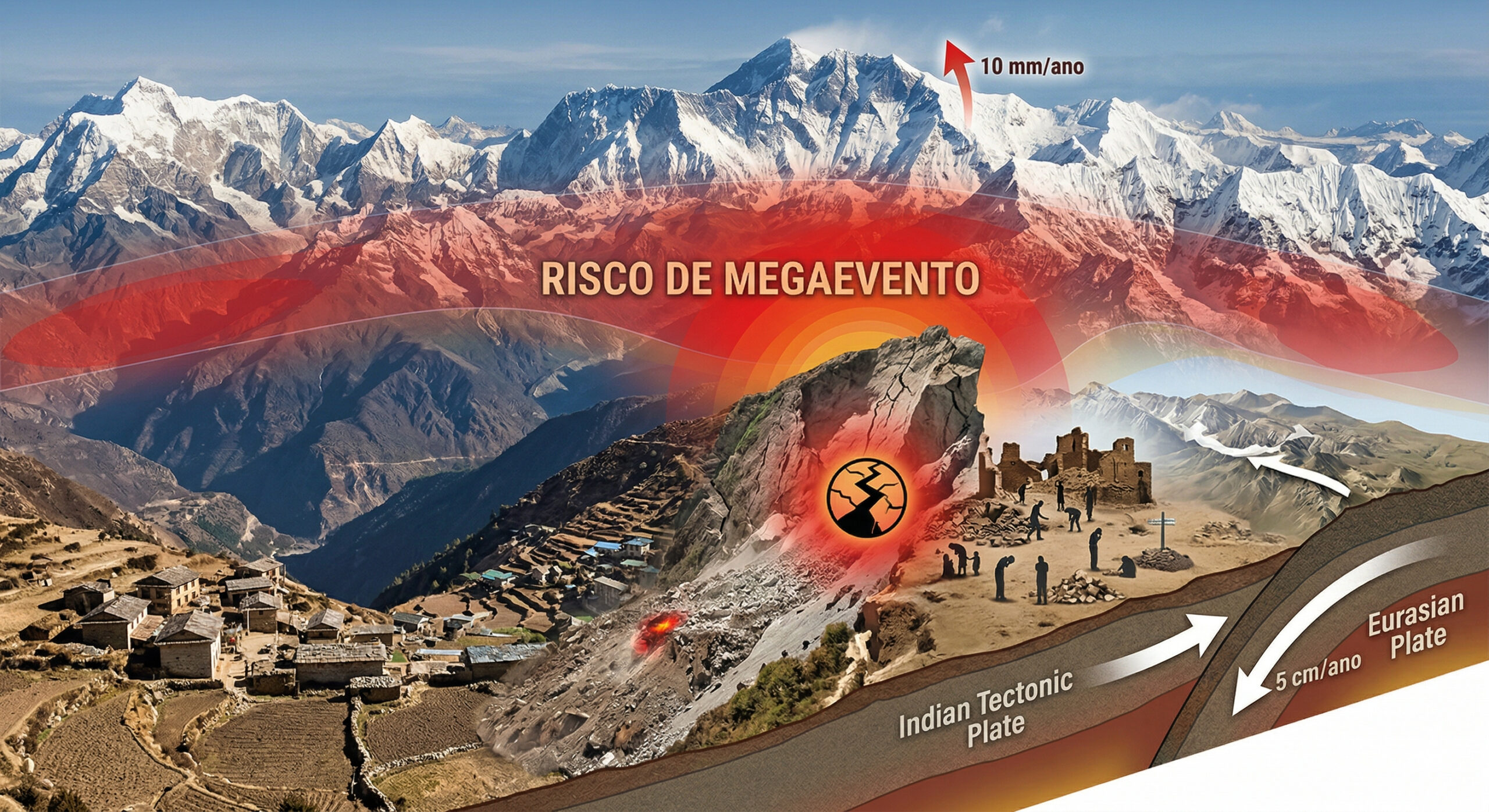
The Himalayas continue to grow to this day, with tectonic plates advancing 5 cm per year, mountains rising up to 10 mm annually, and the 2015 earthquake that killed 9,000 people may have increased the risk of an even larger seismic mega-event.
-
At an altitude of 400 km by astronauts from the International Space Station, Paris transforms at night into a golden mesh so precise that it reveals the outline of the Seine River, avenues, and entire neighborhoods like a luminous map drawn over the Earth.

-
iPhone 17 reaches historic low price with 256 GB, 120 Hz display, and drops to R$ 5,703 on Shopee, featuring A19 chip, dual 48 MP cameras, battery life of up to 30 hours, and advanced AI features.

-
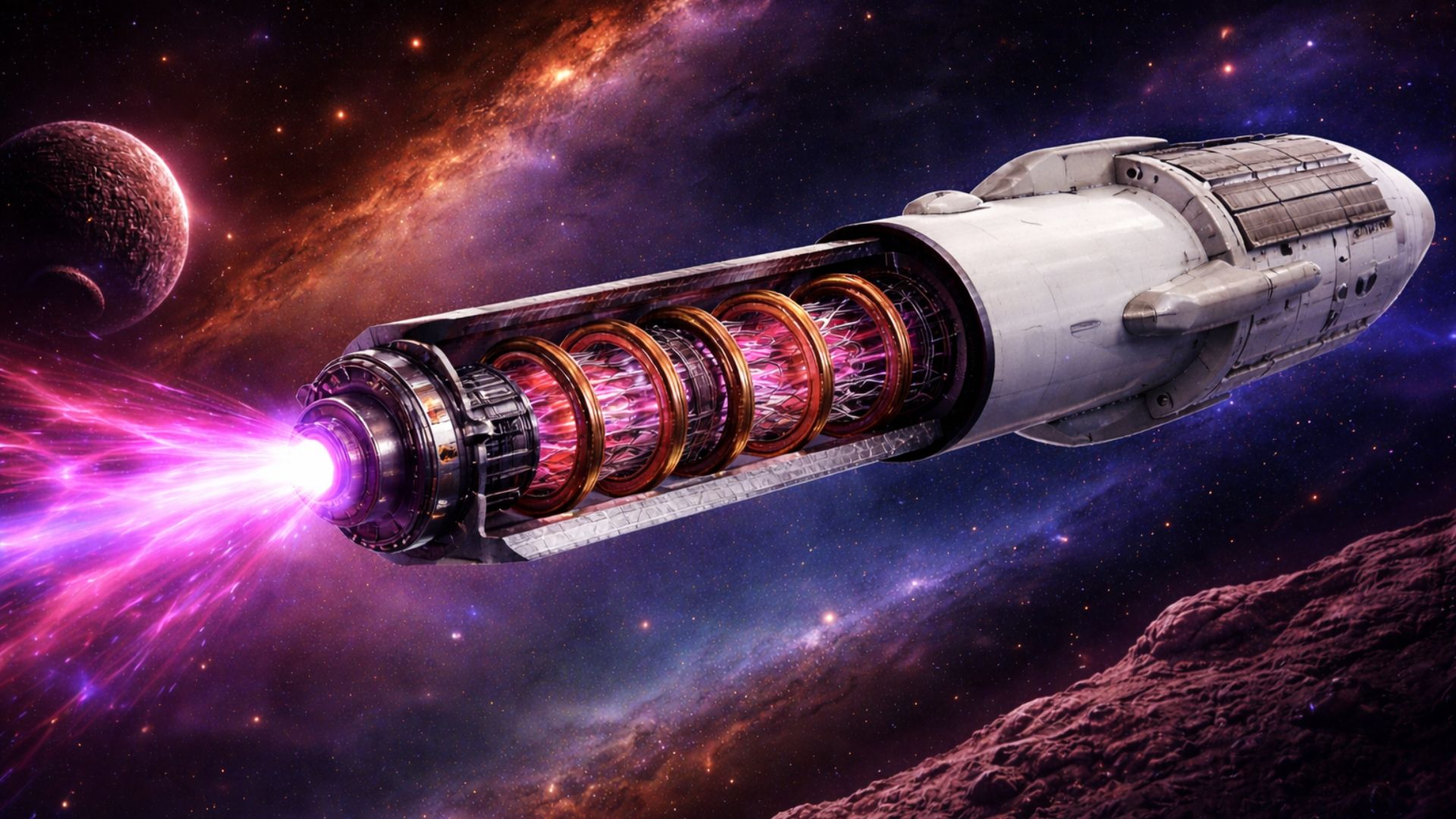
Trip to Mars getting closer: Pulsar Fusion, from the UK, advances with plasma ignition in fusion engine and could drastically reduce space travel time, making crewed missions faster, safer, and economically viable.

First, the sweeping blade extends outward, descends like a cupped hand, and pulls the garbage into the mouth of the chamber. Then, the compaction blade descends and crushes the material against the retention wall, reducing the volume at an average rate of four to one.
What previously filled four trucks turns into a compact block that fits in one, and it is this efficiency that helps prevent the city from collapsing under mountains of garbage bags.
These blades are not made of ordinary steel. Since the constant friction with glass, metal, and abrasive remnants would destroy carbon steel in a few weeks, manufacturers use specific wear-resistant steels for this type of impact. Each cycle of the press is a test of resistance for the metal, for the welds, and for the pins that hold everything together.
The Hydraulic Heart That Makes The Machine Swallow Tons

Unlike a regular cargo truck, here the engine does not just serve to turn the wheels. It also needs to power the entire hydraulic system that moves blades, locks, and lids. The secret lies in a piece called the power take-off, which diverts part of the main engine or transmission rotation to spin a high-flow hydraulic pump.
When the truck stops to collect, you hear the engine accelerate on its own. This is not a mistake or waste: the electronic system increases the RPM to ensure enough pressure in the pump, sending a brutal flow of oil through solenoid valves that control each movement at the rear.
Without this hydraulic heart pulsating all the time, the truck stops swallowing bags, and soon also stops preventing the city from collapsing.
Inside, hoses, valve blocks, and cylinders operate under high pressure, in a hostile environment of vibration, dirt, impact, and chemical attacks from the waste itself. Any oil leak or valve failure can stop the operation for a whole day.
Acid Leachate: The Battle Against The Most Hated Liquid Of Collection
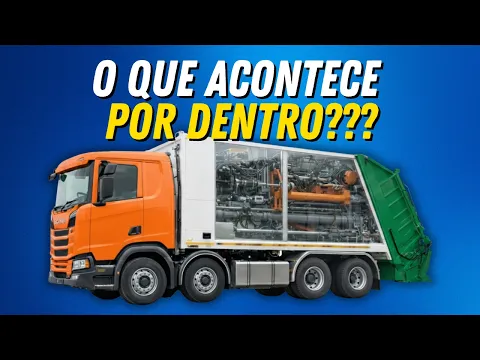

When the press crushes organic waste, a sort of “garbage juice” forms. Liters of leachate flow out instantly, an acidic, foul-smelling, and highly corrosive liquid.
The challenge is enormous: the rear cover needs to open to dump the garbage at the landfill but must remain absolutely sealed while the truck is in motion.
To achieve this, the rear is equipped with a high-density rubber profile and hydraulic locks, known as tension jacks, that pull the lid against the body of the hopper with tons of force.
All the leachate is channeled by gravity to a reservoir located beneath the chassis, usually with a capacity ranging from 200 to 400 liters, receiving chemical attacks nearly 24 hours a day.
Ordinary steel in this tank would turn into a sieve in a few months, so many manufacturers resort to special steels or epoxy coatings. Without this sealing and properly functioning tank, the truck becomes an environmental weapon instead of a tool that prevents the city from collapsing due to contamination and foul odors on the streets.
At the end of the shift, the operator opens a large-diameter ball valve and drains the leachate directly into the appropriate treatment system. Simple in appearance, this step is vital to ensure that the operation does not turn into an environmental crime.
Rear, Side, or Front: Three Engineerings For Different Realities

Not every garbage truck operates the same way. Engineering changes according to geography and labor costs. In countries like the United States and Australia, the king is the automated side-loading model.
In it, the driver controls from inside the cabin a robotic arm that picks up standardized bins, raises them, and dumps the contents into the side of the hopper.
This system is safer and faster in planned neighborhoods with wide sidewalks and little improvisation, but maintenance is complex. Sensors fail, the arm may get stuck, and if a car is parked in front of the bin, the truck simply cannot operate.
For businesses and industries, front-loading is common, with two giant forks at the front that lift metal bins over the cabin.
The main concern here is the center of gravity: lifting tons above the driver’s height requires a reinforced chassis and careful calculations to avoid tipping.
In Brazil, a large part of Europe and Asia remains loyal to rear-loading. It is rougher for collectors, who need to go up and down all the time, but it is the only system that handles loose bags, narrow streets, irregularly parked cars, and makeshift sidewalks.
It is precisely this versatility of the rear truck that, in practice, prevents the city from collapsing amid the daily urban chaos.
When Garbage Becomes A Bomb: Lithium Batteries And Fires In The Hopper

If in the past the big fear was hot barbecue ashes, today the number one enemy of the operator is the improperly discarded lithium battery.
When the hydraulic press crushes one of these batteries, thermal runaway can occur, a chemical reaction that spikes temperature and generates instant fire amidst tons of paper, plastic, and organic matter.
The result is a true mobile oven. That’s why many modern trucks use automatic fire suppression systems.
Thermal sensors monitor the temperature of the hopper, and if they detect a sudden increase, they deploy chemical foam or pressurized powder directly at the fire’s focus, often before the driver sees smoke in the mirrors.
In addition to fire fighting, there is the protection of the collectors. Emergency stop buttons remain accessible, and in newer models, electronic light curtains monitor the area of the press. If an arm or hand crosses the danger line while the blade descends, the hydraulic system immediately locks.
This combination of active and passive safety is what transforms a potentially lethal piece of equipment into a machine that prevents the city from collapsing without turning collectors into daily victims of the operation.
Ejector, Cost, And Wear Of A Monster That Works Nonstop
When the truck is full, it’s no use trying to unload by raising the hopper like a conventional tipper. The load is so compact, heavy, and unstable that the risk of tipping would be enormous.
The solution is an ejector panel, a false wall just behind the cabin, connected to a telescopic hydraulic cylinder with multiple stages.
As the truck collects, the garbage is pushed forward and compacted against this wall. At the landfill, the rear lid opens hydraulically, and the cylinder pushes the wall from beginning to end of the body, throwing the block of garbage out like the plunger of a giant syringe, keeping all four wheels firmly on the ground the whole time.
All of this comes at a price. You don’t buy a garbage truck ready-made at the dealership. First, comes the chassis, like a Volkswagen or Mercedes cab or truck prepared for heavy service, which costs hundreds of thousands of reais.
Then comes the compactor box, which adds several hundred thousand more. In practice, a brand-new set ready for work costs around R$ 600,000 to R$ 800,000, a high investment that only pays off because the truck prevents the city from collapsing every day by keeping the garbage in motion.
And the costs don’t stop at the purchase. Fuel consumption is high since the engine needs to run and operate the hydraulic system constantly. Brakes and transmission suffer from the constant stop-and-go cycle.
The chemical environment attacks hoses, electrical connections, and even the chassis, requiring protection of the electrical parts and special seals on hydraulic pistons to prevent dirt and leachate from entering the system.
The Invisible Machine That Keeps Civilization On Track
In the end, the garbage truck is a curious synthesis of physics, chemistry, hydraulics, metallurgy, and operational safety, running in one of the worst possible environments.
It is the one that, day after day, keeps the city from collapsing under its own garbage, even though most people see it merely as a noisy inconvenience on the street.
Next time you find yourself stuck behind a collection truck, you’ll look differently at this machine that holds acid leachate, faces the risk of explosions from lithium batteries, and still needs to run hours a day to handle your city’s volume. And you, have you ever stopped to think that this truck literally prevents the city from collapsing, or did you still think it was just another obstacle in traffic?







-

-

-

-

7 pessoas reagiram a isso.