





 Portuguese
  English
  Spanish
  3 min of reading
  57 comments


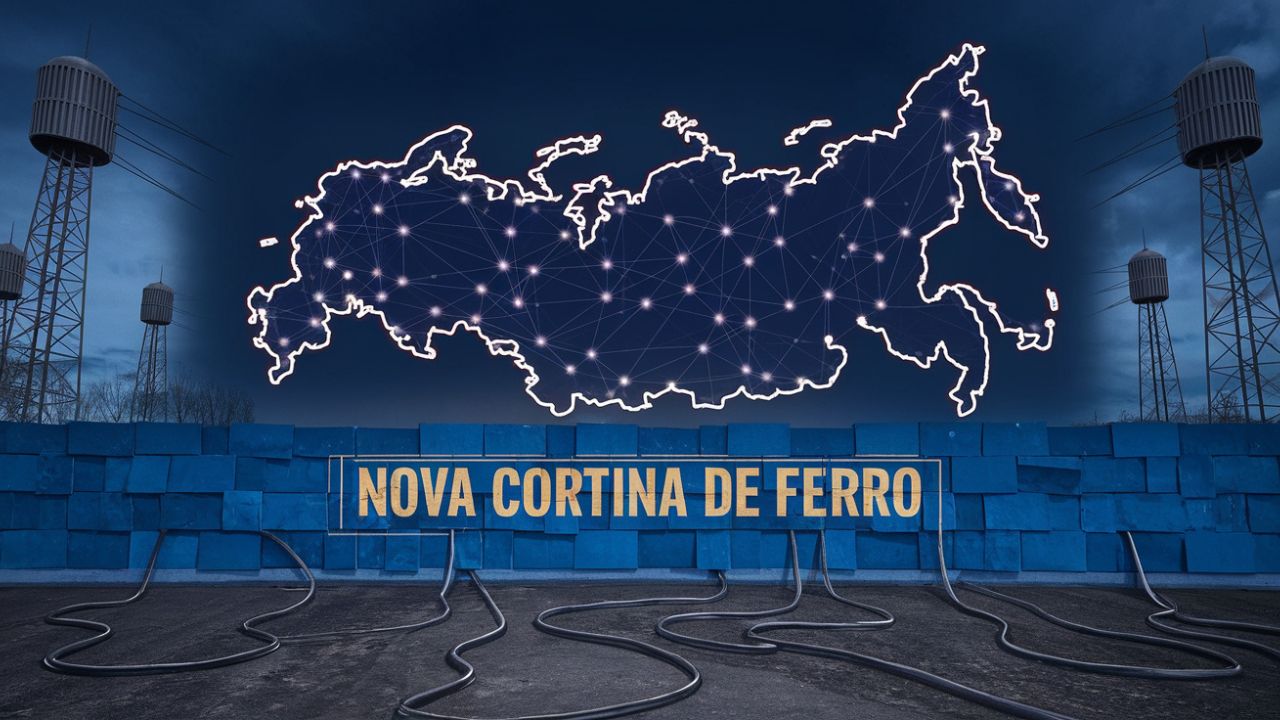


In Recent Tests, Millions of Russians Faced Connectivity Disruptions as the Country Assesses the Functionality of Runet, Its Sovereign Internet System Designed to Operate Without Relying on the Global Network.
The disconnection from the Internet in Russia is no longer just a plan on paper; it is a testing reality. Recently, the country conducted a series of exercises to assess the capacity of its “sovereign Internet” system, called Runet, to operate independently from the global network. This initiative raises important questions: is the world heading towards a new digital fragmentation? And what does this mean for freedom on the web?
Since 2019, Russia has been paving the way to create a closed digital environment. The approval of the “sovereign Internet” law was a milestone in this direction. Under the pretext of protecting the country from potential foreign blockades, the government has developed an ambitious and controversial plan. Let’s understand how this works and what is at stake.
What Is Runet and How Does It Work?
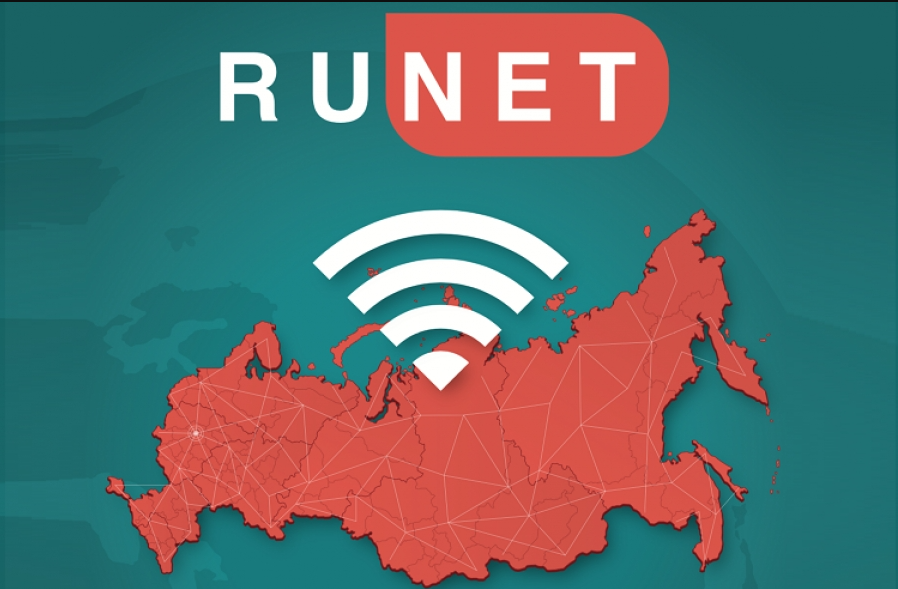
Runet is Russia’s attempt to create an isolated version of the Internet, allowing the country to operate independently in the event of a global disconnection. This includes the creation of its own Domain Name System (DNS), capable of sustaining internal traffic without relying on foreign servers.
-
China alone accounts for 70% of trade within the BRICS, while Brazil establishes itself as an essential supplier of food and minerals: understand how the group, which already represents nearly 40% of the world’s GDP, is changing the game.
-
Starting in May, those who do not have registered biometrics will not be able to apply for Bolsa Família, sickness benefits, or unemployment insurance: understand the new rule that changes access to benefits for millions of Brazilians.
-
Goodbye pet hair on clothes: a washer with an internal filter promises to remove up to 5 times more hair than regular machines and uses an XL trap dryer system to capture what remains.

-
The most overlooked waste in the electricity bill doesn’t come from the refrigerator or the air conditioner; it escapes through almost invisible cracks in doors and windows, operating all day long and can steal up to 20% of the energy used for climate control, while a low-cost seal takes just a few hours to eliminate this loss.


The 2019 law was the first concrete step in this process. It required telecommunications providers to install equipment that allows the government to control and filter data traffic. With this, the state can not only block content but also redirect traffic to alternative systems.
How Does Internet Disconnection Work in Practice?
The tests conducted in December showed the direct impact of this strategy. Regions such as Dagestan, Chechnya, and Ingushetia faced temporary blockages on popular services like WhatsApp, YouTube, and even Yandex, the “Russian Google”.
During these exercises, Russia assessed its ability to replace foreign infrastructures. The results? Despite some failures, connectivity was restored in a few hours, showing that Runet is already more than just an idea – it is a network in operation.
Technical and Social Implications
But how to create a fully independent system? That’s the challenge. The Internet is a global network with infrastructure spread across several countries. Replicating this locally requires enormous financial and technological resources.
For Russian citizens, the impact would be even greater. Disconnection would mean losing access to global services like Google and VPNs, as well as increasing governmental control over available information.
The New Era of Digital Censorship
Roskomnadzor, the regulatory body for the Internet in Russia, plays a central role in this plan. With the installation of equipment at data exchange points, the government can filter content deemed “forbidden” and block international services in a matter of minutes.
This turns disconnection from the Internet into a powerful tool of censorship. For many experts, Runet is not just a security measure but also a mechanism to silence dissenting voices.
Russia is leading a movement that could change the future of the Internet as we know it. If other countries follow this path, the global network could transform into a mosaic of isolated systems, each controlled by its government.






Isso não tem nada a ver com esquerda e direita, só soberania nacional
São coisas do final dos tempos que tem de acontecer. Como Deus irá provar que o sistema de governo humano é incapaz de gerir os humanos e a terra se os próprios humanos não sentirem na pele?
Que lixo esse Putin. Ele e um lixo.