





 Portuguese
  English
  Spanish
  4 min of reading
  0 comments


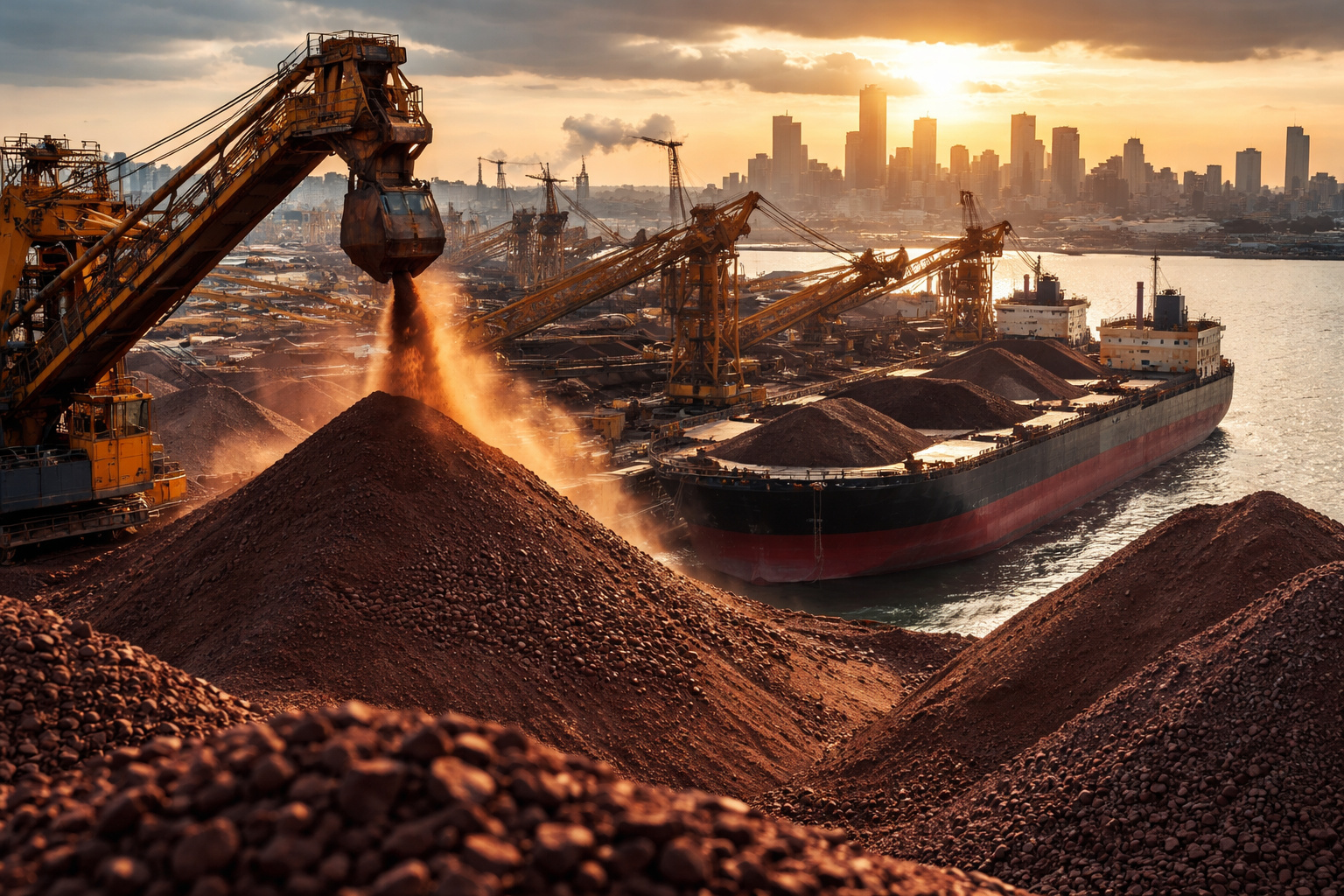
New Economic Measures Announced by China Boost Iron Ore Futures Contracts and Reinforce Expectations of Increased Global Demand for Steel
Iron ore prices rose this Thursday after the Chinese government announced a series of economic measures to stimulate the economy.
Thus, the market reacted quickly, especially given the expectation of increased consumption of steel and industrial raw materials.
This movement occurred during the annual meeting of the Chinese Parliament in 2026, when economic officials presented guidelines to strengthen the country’s growth.
-
USA and China compete for Brazil over resources that could be worth trillions — rare earths put the country at the center of a global dispute

-
After China, it’s now the turn of the USA to ‘secure’ a share of Brazil’s natural resources: the country buys critical rare earths for R$ 3 billion and enters the center of the global technology dispute.
-
Rare earths are in everything, from cell phones to bullet trains, and what almost no one realizes is why they have become the target of such a delicate global war.

-
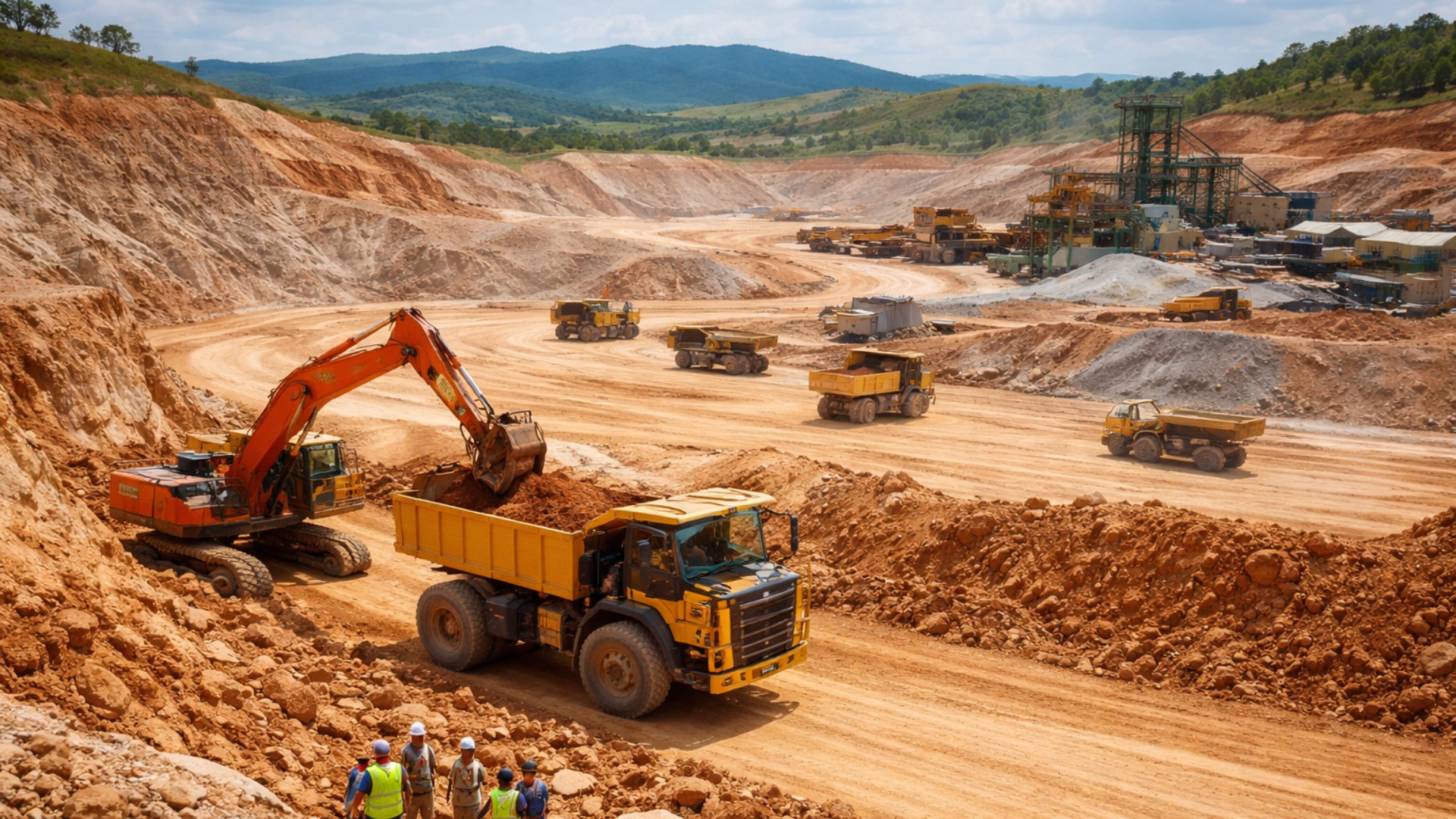
Brazil extracts 26.3 million tons of ore from what was previously treated as waste, transforming residues into wealth, producing over 3 million tons of sand, and demonstrating how national mining is relearning to generate value.


In addition, the government indicated it intends to stabilize the real estate market, a sector that historically influences the demand for steel.
Therefore, investors began to closely monitor actions directed at the real estate sector.
This is because the performance of this segment usually directly influences steel consumption in the Chinese economy.

Rise in Iron Ore Futures Contracts
Shortly after the announcement of the economic measures, iron ore futures contracts rose on major international exchanges.
According to data from the Dalian Commodity Exchange in China, the most traded contract for May rose by 1.27%.
Thus, iron ore started to be traded at 759 yuan per ton, equivalent to approximately US$ 110.09.
At the same time, the benchmark contract for April on the Singapore Exchange also recorded an increase.
In this case, the price rose by 1.03%, reaching US$ 99.8 per ton.
As a result, analysts interpreted the movement as a direct market reaction to the new economic policies announced by Beijing.
Economic Plan Sets Growth Targets for 2026
During the annual political meeting, Chinese officials presented the economic guidelines that will guide the country in the coming years.
In this context, the government set a growth target of 4.5% to 5% for 2026.
The target is part of the national economic planning disclosed during the meeting.
Although the percentage is slightly lower than the 5% growth recorded the previous year, experts consider the number in line with market expectations.
Moreover, analysts assess that the target remains within global economic projections.
Thus, the planning also allows the country to face internal challenges such as weaker domestic consumption and excess industrial capacity.
Reduction of Overproduction and Emission Control
At the same time, the Chinese government announced measures to reduce production capacity in some industrial commodities sectors.
This initiative aims to curb overproduction of steel, which has been pressuring prices in the international market.
Thus, authorities intend to reduce distortions caused by excess supply.
In addition, the government confirmed it will create a carbon emission control mechanism for the industry.
Consequently, the country will also expand the coverage of the national carbon emissions trading market between 2026 and 2030.
According to the planning presented in the Chinese Parliament, this expansion is part of the country’s environmental and industrial strategy.
Simultaneously, the government stated that it would accelerate the phasing out of production capacity deemed obsolete.
At the same time, authorities also intend to strengthen industrial planning.
Among the planned actions is the strengthening of strategic reserves of natural resources used by the industry.
Measures to Stabilize the Real Estate Market
Another key point of the economic package involves the attempt to stabilize the Chinese real estate market.
This sector was one of the largest consumers of steel in the country’s economy.
For this reason, markets are closely monitoring any policies aimed at this segment.
According to the plan presented in 2026, the government intends to improve the supply of housing.
Additionally, authorities seek to utilize the existing housing stock more efficiently.
Among the strategies discussed is the purchase of unsold properties by the government, which could be transformed into subsidized housing.
Historically, the real estate sector led steel consumption in the Chinese economy.
However, in recent years, the manufacturing industry has taken on this dominant position.
Even so, analysts note that stimuli to the real estate market tend to increase optimism regarding the demand for steel and iron ore.
In light of this scenario, the economic measures announced by China reinforce expectations of recovery in global demand for iron ore.
Thus, investors are closely monitoring the next steps of Chinese economic policies.
In light of this, a central question arises for the market: Will these measures be able to sustain a new phase of growth in global demand for steel and iron ore in the coming years?







Seja o primeiro a reagir!