





 Portuguese
  English
  Spanish
  3 min of reading
  3 comments


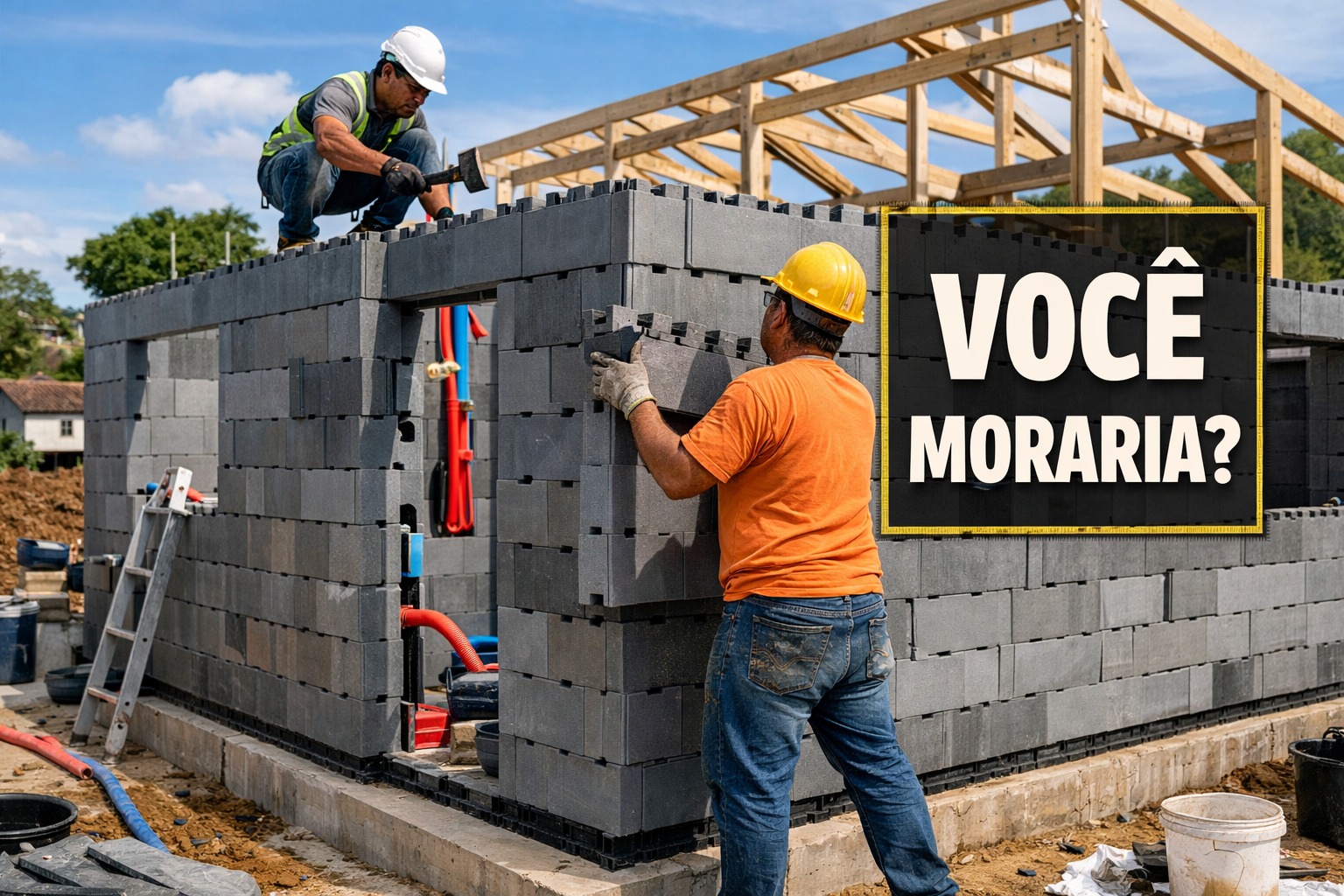


Recycled Polymer-Based Construction Technology Allows Houses to Be Built in Few Days, with Clean Assembly, Lower Water Use, Structural Accuracy, and Environmental Benefits That Transform Waste into Durable Housing
The pressure for affordable housing and the search for more responsible practices have been accelerating changes in the construction sector. In this scenario, plastic houses built in few days with recycled blocks are gaining ground as an alternative that combines speed, rationalization, and lower waste generation.
The modular system proposal is straightforward: to transform waste into habitable structures, reducing traditionally lengthy construction stages.
Simplified Assembly and Structural Performance
In practice, the method relies on pieces produced from recycled polymers, molded to fit precisely.
-
Embrapa’s discovery reveals an unexpected advancement by allowing the production of seedlings from the caatinga using brackish water, opening a new frontier for farmers to face drought more efficiently.

-
6 sources of free fertilizer that you are throwing away every day and can transform your garden without spending anything.
-
With a water crisis on the radar, Sabesp invests in reclaimed water for data centers and transforms sewage treatment into a solution that saves millions of liters and protects public supply.

-
Foresea achieves 100% offshore waste reuse in 2025, eliminates landfill disposal, and consolidates sustainable strategy with 1,500 tons recycled.

According to a study from the University of São Paulo (USP), this type of component exhibits structural resistance comparable to conventional techniques.
This data helps dispel initial skepticism and reinforces the technical viability of the solution.
The operation resembles a real-scale building block game. The blocks are stacked manually and locked by intelligent geometry, eliminating the need for mortar and drastically reducing water use.
By eliminating phases such as concrete curing and drying of external walls, the schedule shortens significantly.
Teams can complete the basic structure of a small residence in a surprising time frame, altering the site dynamics and reducing unforeseen issues.
The process typically follows three main fronts. The ground preparation involves executing a simple, level base, usually a slab.
Next comes the modular fitting, with the stacking of recycled blocks. Finally, finishing and roofing—where plumbing and electrical systems are installed through the pieces’ openings before the final covering.
Why the Construction Time of Plastic Houses Is So Low
The lightness of the blocks is one of the decisive factors. Few workers can handle the material without heavy machinery or complex cranes.
Moreover, the design of the pieces already accommodates internal channels for electrical installations, avoiding wall breaks and rework. The result is a cleaner, more organized, and predictable work environment.
Another key point is the millimeter precision of the fittings. By reducing human error margins, common delays in traditional constructions are minimized.
The predictability of delivery becomes more accurate, benefiting both builders and future occupants. In summary, engineering applied to recycled plastic optimizes every stage and every minute.
Environmental Benefits and Comfort
The positive environmental impact is often cited as one of the greatest attractions. The production of the blocks converts plastic waste into durable construction elements, removing significant volumes of trash from oceans and landfills.
There are also indirect gains: the dense plastic contributes to thermal and acoustic insulation, helping to reduce energy consumption for climate control.
This set of advantages suggests a virtuous cycle, where productive efficiency and waste reduction go hand in hand.
The construction generates less debris, requires less water, and can achieve comfort performance compatible with current urban standards.
Plastic Houses: Durability and Reduced Maintenance
Although there is still some skepticism, plastic intended for construction undergoes specific processing.
Additives incorporated into the material limit degradation from ultraviolet rays and enhance fire resistance.
Additionally, it has immunity to termites and moisture, factors that reduce chronic problems like leaks.
In practice, maintenance tends to be lower compared to wooden or drywall houses. The stability against intense climate variations reinforces the long-term character of the solution.
As a complementary detail, experts highlight that the advancement of these modular homes also drives new debates on smart urbanism and material reuse, expanding space for sustainable technologies in popular housing.
With information from Olhar Digital.








Mais detalhes sobre a fabricação dos tijolos de plástico
Por um lado tem vantagens, mas o isolamento acústico, e como seria colocado armários?
🤔
Busco informações sobre como adquirir esse material, ou máquinas para produção.