





 Portuguese
  English
  Spanish
  3 min of reading
  0 comments


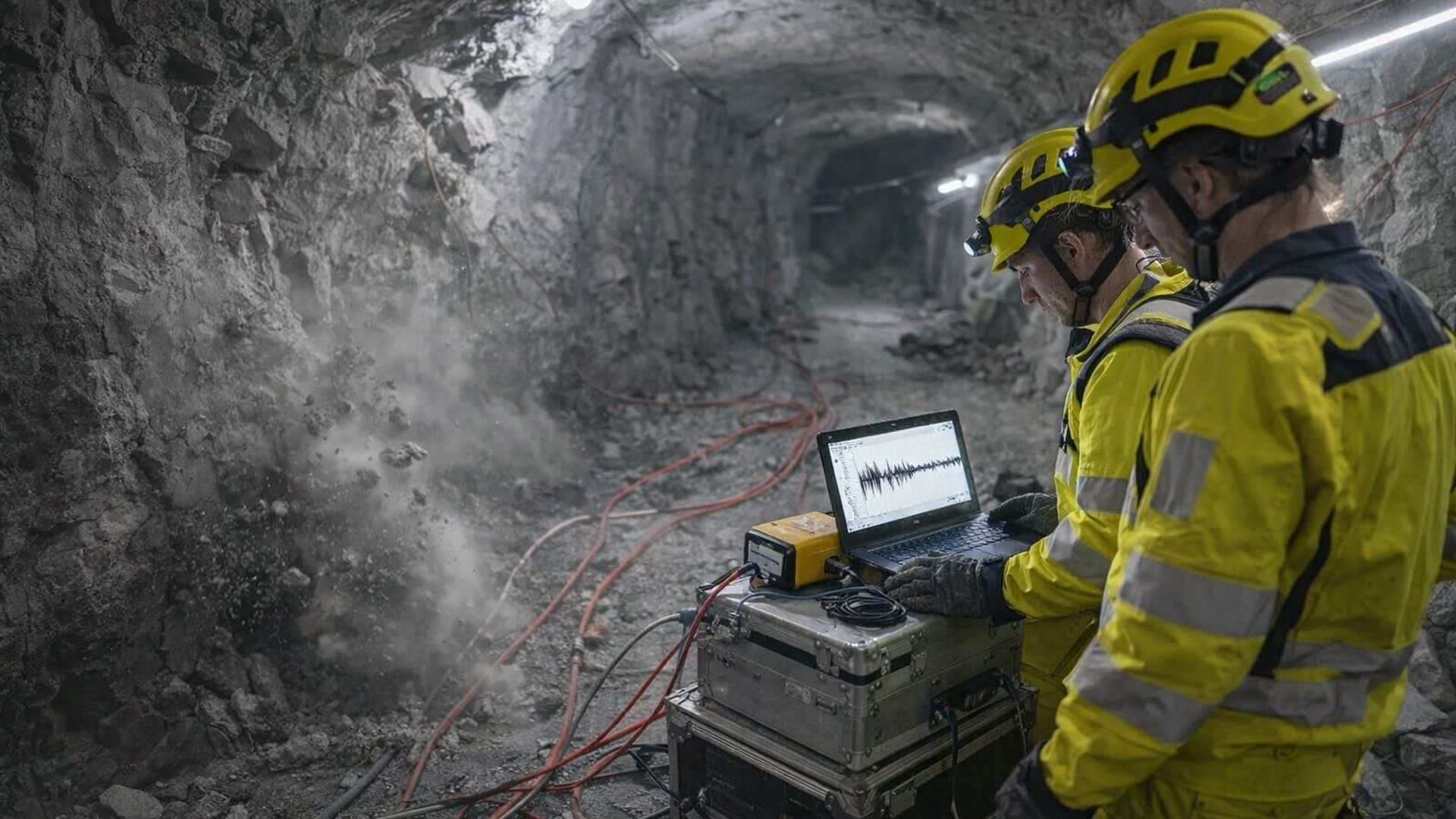
Researchers from the FEAR Project Conduct Unprecedented Experiments in a Deep Tunnel Beneath the Alps, Injecting Water and Monitoring Geological Faults with Thousands of Sensors to Induce Controlled Earthquakes, Measure Physical Parameters, and Attempt to Identify Signals That Precede Natural Shakes of Different Magnitudes
Scientists from the FEAR Project induce controlled earthquakes from a deep tunnel beneath the Alps, on the border between Switzerland and Italy, to identify precursory signals, measure physical parameters, and estimate magnitudes before natural ruptures occur.
Research Seeks Signals Before an Earthquake Occurs
Researchers still do not understand the immediate triggers of earthquakes or why some ruptures remain small while others extend for kilometers. Today, events are analyzed after they occur. According to Domenico Giardini, this limitation hinders the identification of clear signals before the tremors.
The central question guides the work: what signals does nature send before an earthquake? These signals often become evident only after the event.
-
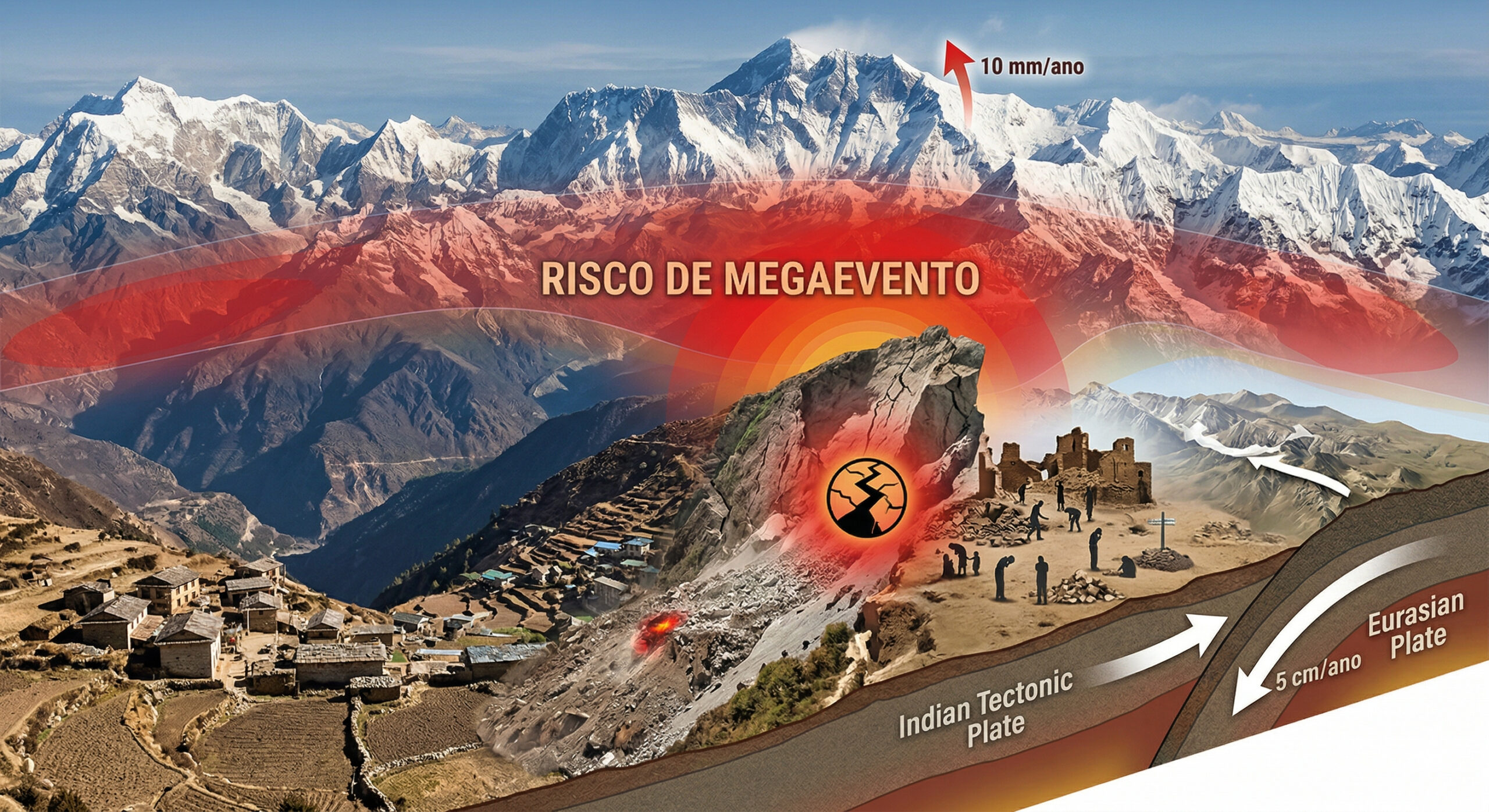
The Himalayas continue to grow to this day, with tectonic plates advancing 5 cm per year, mountains rising up to 10 mm annually, and the 2015 earthquake that killed 9,000 people may have increased the risk of an even larger seismic mega-event.
-
At an altitude of 400 km by astronauts from the International Space Station, Paris transforms at night into a golden mesh so precise that it reveals the outline of the Seine River, avenues, and entire neighborhoods like a luminous map drawn over the Earth.

-
iPhone 17 reaches historic low price with 256 GB, 120 Hz display, and drops to R$ 5,703 on Shopee, featuring A19 chip, dual 48 MP cameras, battery life of up to 30 hours, and advanced AI features.

-
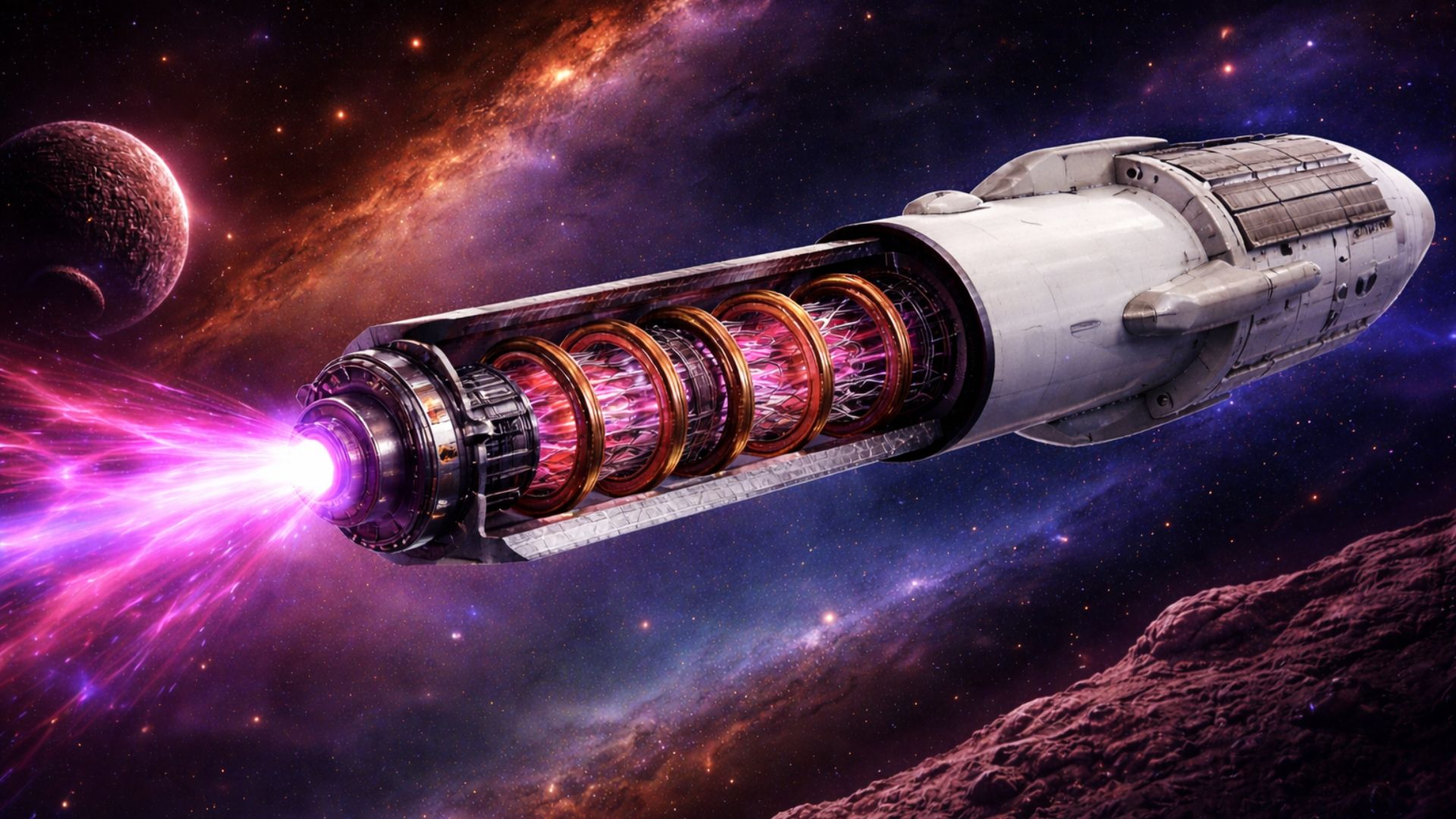
Trip to Mars getting closer: Pulsar Fusion, from the UK, advances with plasma ignition in fusion engine and could drastically reduce space travel time, making crewed missions faster, safer, and economically viable.

To move forward, the team decided to reproduce real ruptures under controlled conditions, with instruments positioned directly over a geological fault.
Alps Provide Natural Conditions for Controlled Testing
The Alps, on the border between Switzerland and Italy, are home to deep networks of faults formed over millions of years of tectonics.
The compressive force of the mountains is sufficient to fracture rocks between 1 and 2 kilometers below the surface, creating a conducive environment for small landslides.
These landslides generate tremors that are usually small.
By utilizing a pre-existing tunnel previously used in a railway project, the FEAR Project approached one of these faults to conduct direct experiments underground.
Water Injection Induces Tremors on a Set Schedule
The team pumps water into the fault to reduce friction and induce earthquakes at planned times.
According to Giardini, these events would occur naturally sooner or later in the history of the Alps, but this method ensures they happen on specific dates.
The process is similar to wastewater injection associated with oil and gas activities in regions with geological faults, such as Oklahoma and Texas. The water lubricates the fault and facilitates rupture.
Dense Instrumentation Measures Fault Responses
The key difference in the experiment is the instrumentation.
The project installed a dense network of seismographs and accelerometers directly on the fault, allowing for accurate measurements of how it responds to reduced friction and how the rupture propagates.
So far, the team has induced hundreds of thousands of earthquakes of up to zero magnitude. Since the scale is logarithmic and nonlinear, very small events can occur, including negative magnitudes, without causing damage.
Next Phases Include Hot Water and Higher Magnitudes
Next week, researchers will begin injecting hot water to observe how temperature affects the evolution of an earthquake. In March, the team plans to induce tremors of up to magnitude 1, expanding the observed range.
The goal is to identify which parameters trigger earthquakes of different magnitudes. If it is possible to induce tremors of specific magnitudes, the team hopes to measure hazardous faults in the real world and calculate the stress needed for future ruptures.
Applications for Active Faults in the Real World
Giardini cites a strong earthquake that occurred in February 2023 on the border between Turkey and Syria. The fault will continue to shift south and north, raising questions about the magnitude of the next event.
According to the researcher, parameters such as the amount of stress on the rocks outside the fault are already proving to be important.
The team is also beginning to better understand how earthquakes propagate from one fault to another nearby, observing patterns in the subsurface that are similar to real nature, even when some events occur at a minimal scale.






-

-

2 pessoas reagiram a isso.