





 Portuguese
  English
  Spanish
  5 min of reading
  5 comments


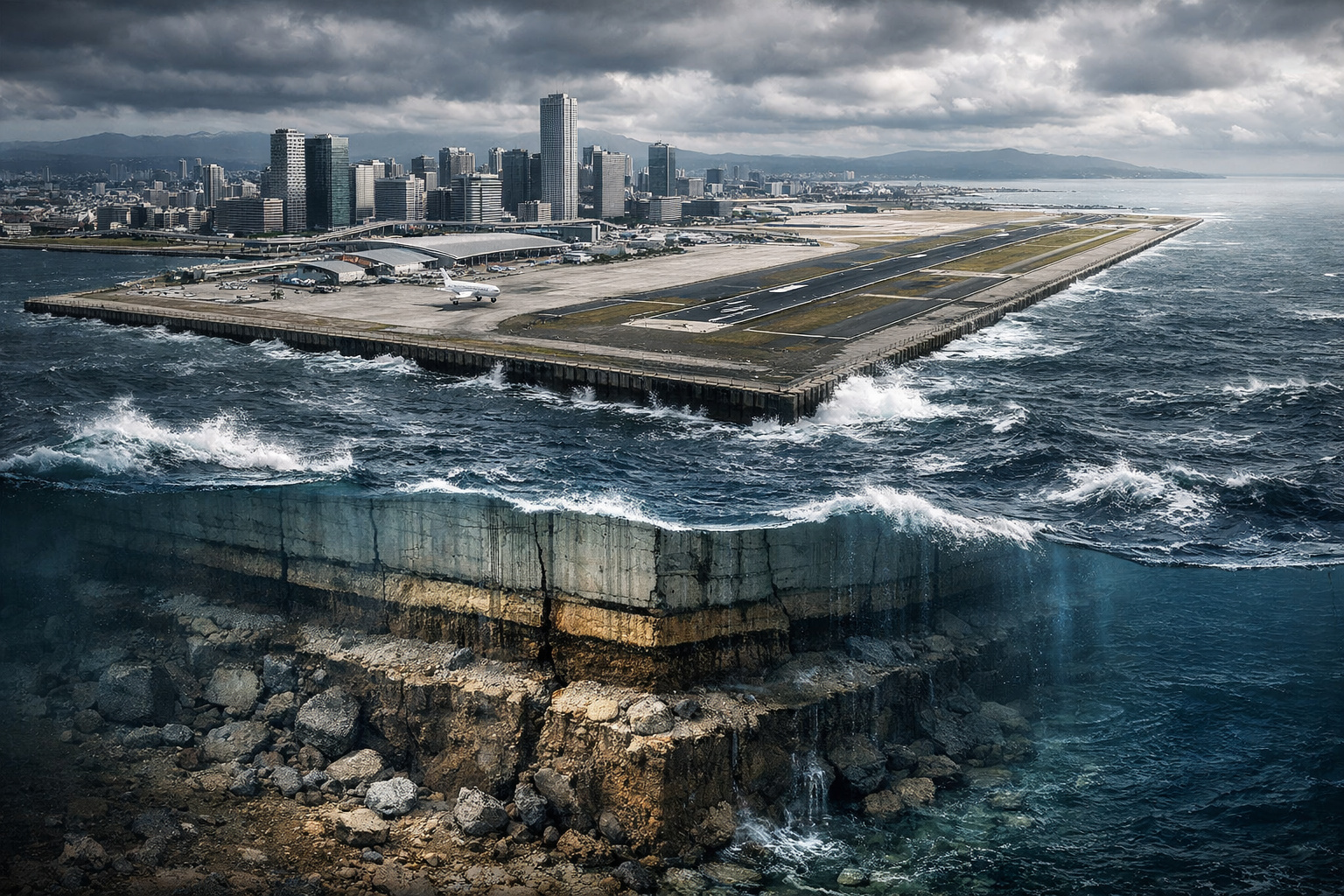


Japan Created Cities and Airports Over the Sea with Colossal Land Reclamation, but Today It Faces Subsidence, Earthquakes, and Extreme Costs to Maintain Areas Below Sea Level.
In Japan, specifically in the Tokyo Bay and Osaka Bay, urbanization projects over the sea have been executed throughout the 20th century and the beginning of the 21st century, with direct support from the Ministry of Land, Infrastructure, Transport and Tourism of Japan (MLIT), JICA (Japan International Cooperation Agency), and metropolitan authorities. Among the most emblematic cases are the artificial island of Odaiba, initiated in the 1990s, and the Kansai International Airport, inaugurated in 1994 on a completely man-made island in the sea.
These works, documented by official Japanese agencies, reports from MLIT, studies from the National Research Institute for Earth Science and Disaster Resilience (NIED), and research by the state-owned company Deltares in cooperation with Japanese universities, have turned Japan into a global reference in coastal engineering. At the same time, they created a growing problem: the continuous subsidence of artificial soil, combined with earthquakes, rising sea levels, and ongoing maintenance costs.
How Japan “Created Land” Where There Once Was Ocean
The scarcity of flat areas has always been one of the greatest obstacles to Japanese development. About 70% of the country’s territory is mountainous, concentrating population, industry, and infrastructure in narrow coastal plains. The solution adopted after the war was straightforward: to advance over the sea.
-
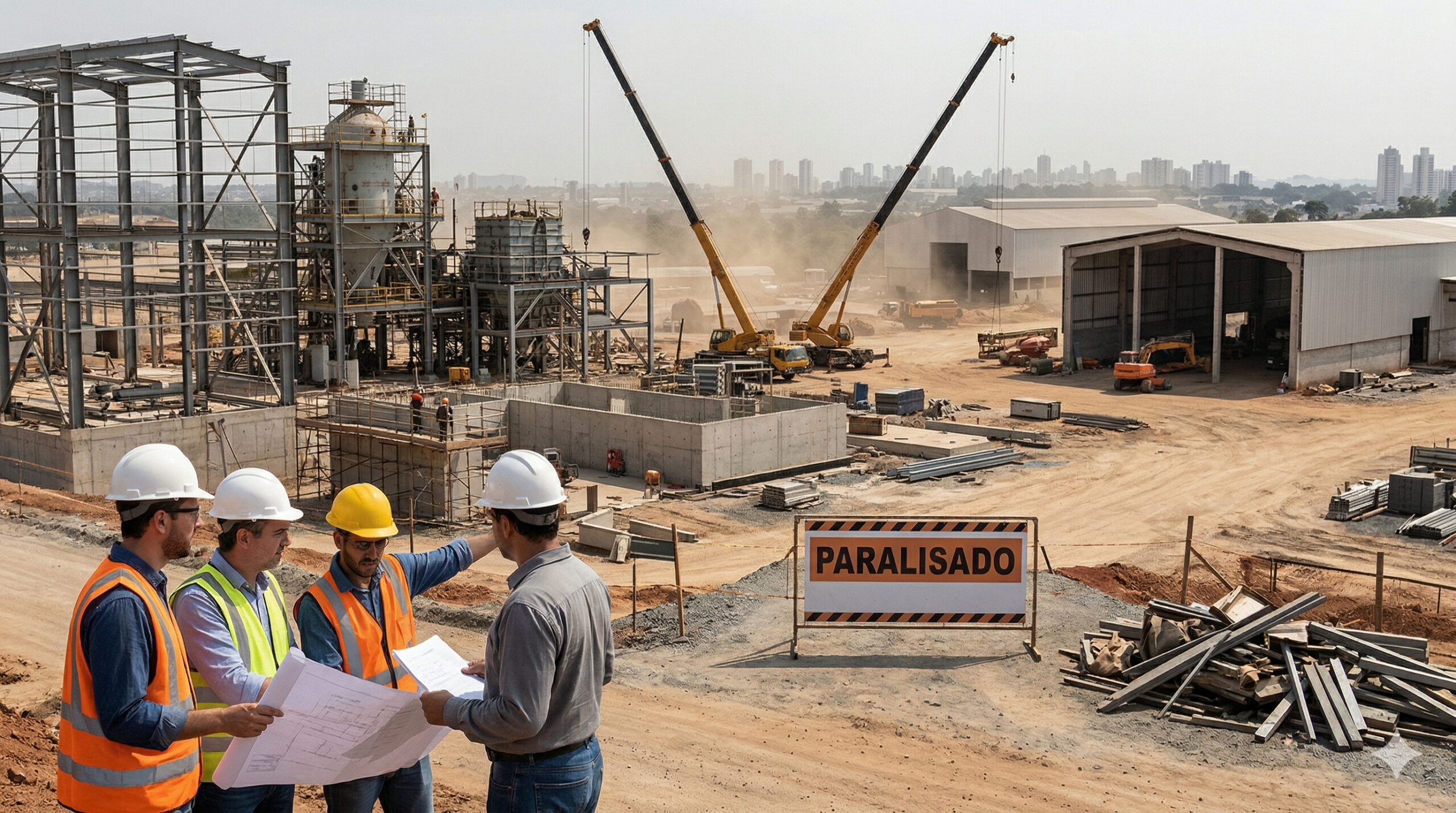
The lack of welders, electricians, and operators becomes a structural threat in 2025, with the construction industry and manufacturing already suffering from delays, cost pressures, and labor shortages in Brazil.
-
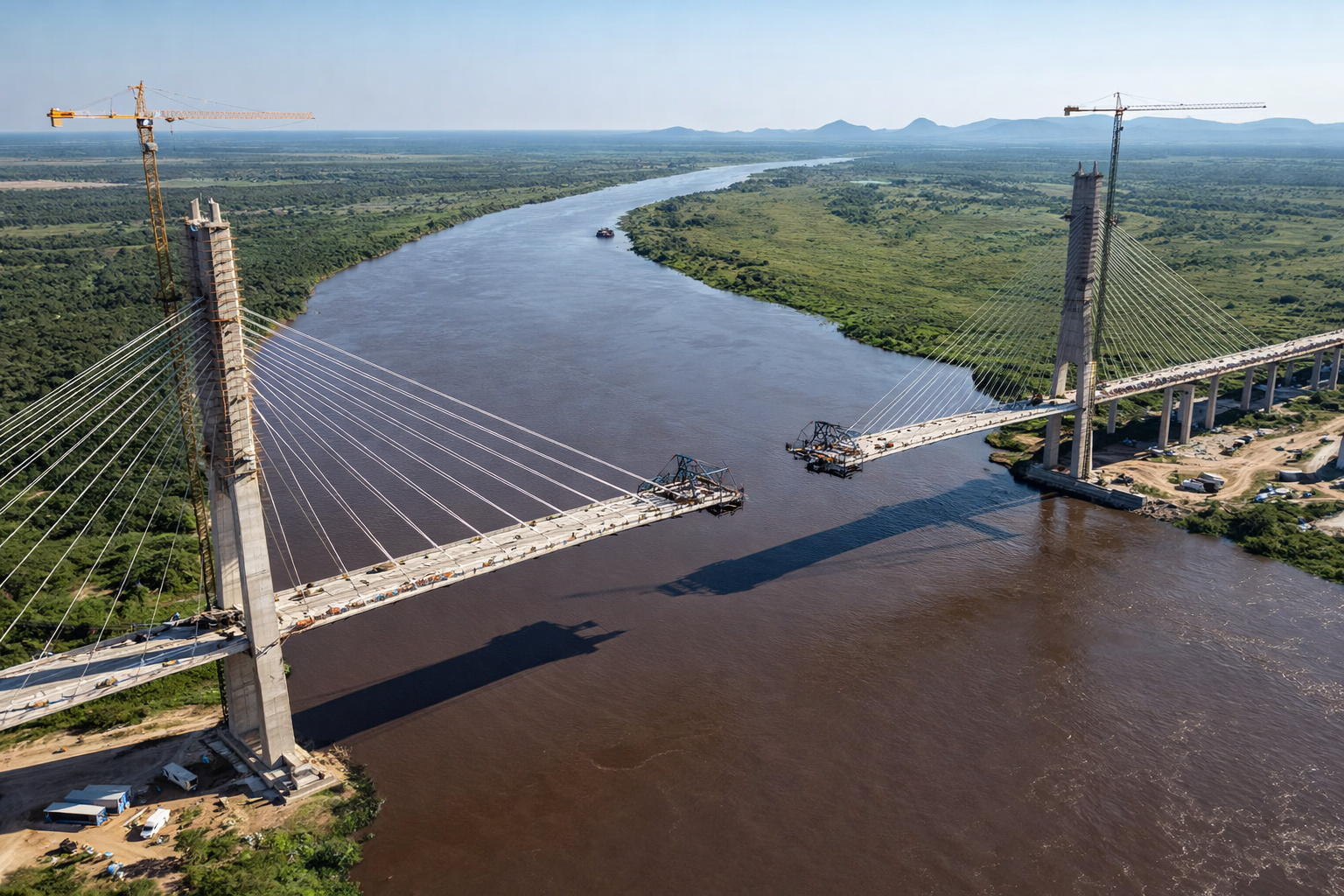
Brazil and Paraguay are just 46 meters away from a historic union on the bioceanic bridge that promises to revolutionize trade between the Atlantic and the Pacific.
-
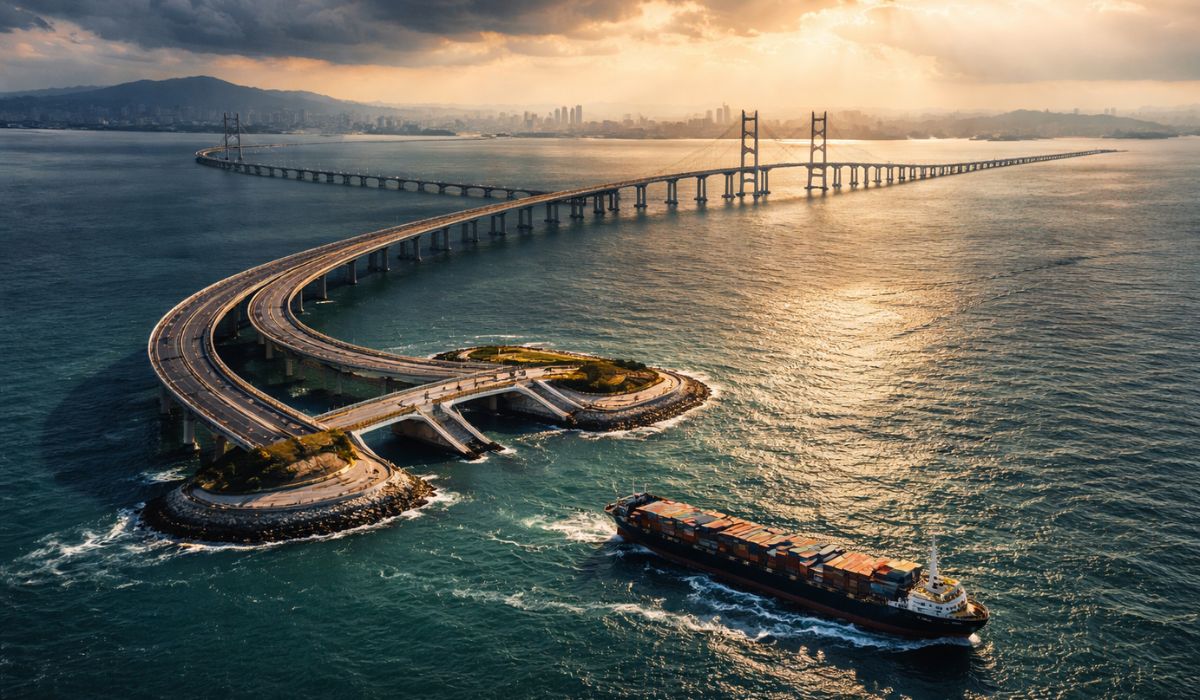
With 55 km over the sea, a cost of US$ 20 billion, and enough steel to build 60 Eiffel Towers, China’s largest project has connected Hong Kong, Zhuhai, and Macau in a colossal bridge that defies the logic of engineering.
-
A trick with joint compound transforms a Styrofoam ceiling into a plaster-like ceiling: leveled panels, wires and mesh at the joints, sand, paint, and change the environment while spending little today.

The predominant method involved:
– Construction of peripheral dikes of steel and concrete
– Dredging sediments from the seabed
– Transporting millions of cubic meters of sand, rock, and soil
– Gradual compaction of the fill over the years
In the case of Odaiba, the process began with defensive functions as early as the Edo period but gained modern scale between 1985 and 1996, when the area was converted into an urban, commercial, and tourist district of Tokyo.
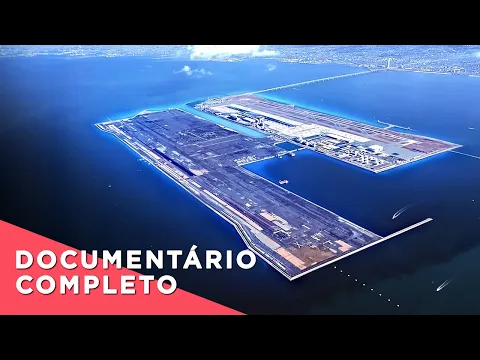
Kansai Airport is the most extreme example: an artificial island of approximately 4 km in length, built in deep waters, with tens of millions of cubic meters of fill, designed to accommodate international aviation runways far from Osaka’s urban area.
The Hidden Cost of Engineering: Continuous Subsidence of the Soil
The greatest challenge of these areas did not arise at the time of construction, but years later. The artificial soil, even compacted, continues to settle slowly, a process known as subsidence.

At Kansai Airport, official measurements from the Japanese government indicated that:
– The island has sunk more than 11 meters since operations began
– In just the first years, the annual subsidence rate exceeded 50 cm per year
– Today, even after stabilizations, the sinking continues at a slower pace
To keep the airport operational, Japan has needed to invest billions of additional dollars in:

– Elevation of runways and terminals
– Reinforcement of support pillars
– Continuous pumping systems against marine infiltration
In Odaiba and other areas of Tokyo Bay, the problem is similar, although on a smaller scale: entire neighborhoods remain below the average sea level, relying on dikes, sluices, and pumping stations 24 hours a day.
Seismic Risk: Building Over the Sea in a Country of Earthquakes
In addition to subsidence, Japan faces a unique aggravating factor: constant seismic activity. The country is located on the convergence of four tectonic plates, making earthquakes and tsunamis recurring events. Building cities over reclaimed land involves dealing with phenomena such as:
– Soil liquefaction during earthquakes
– Temporary loss of load-bearing capacity of the ground
– Severe damage to foundations and underground networks
During the 2011 earthquake, which struck northeastern Japan, landfill areas in several cities suffered visible deformations, cracks, and localized subsidence, even far from the epicenter. Subsequent studies by NIED confirmed that artificial soils are significantly more vulnerable to liquefaction than consolidated natural soils.
Maintaining Cities Below Sea Level Has Become a Permanent Operation
Unlike conventional construction, areas reclaimed from the sea in Japan are never “finished”. They require constant maintenance, functioning as living systems of engineering. Among the permanent structures are:
– Coastal dikes stretching for tens of kilometers
– Automated maritime gates
– High-capacity pumping stations
– Continuous monitoring of soil settlement
In Tokyo, metropolitan authorities acknowledge that, without active pumping, entire parts of the city would flood within a few hours during high tides combined with heavy rains.
Climate Change and Rising Sea Levels Increase the Risk
Recent reports from the Intergovernmental Panel on Climate Change (IPCC) have added a new pressure factor on these areas: the gradual rise in sea levels.
Even seemingly small increases of 30 to 50 centimeters drastically amplify the risk for regions already operating below sea level. For Japan, this means:
– The need to raise existing dikes
– Reinforcing old foundations
– Redesigning coastal evacuation plans
The Ministry of Land of Japan has already officially recognized that the cost of protecting reclaimed areas will accelerate in the coming decades.
The Japanese Paradox: Technical Success and Structural Vulnerability
From an engineering perspective, Japan has proven capable of executing some of the largest land reclamation projects on the planet, integrating urban planning, transportation, and industry in previously submerged areas.
At the same time, these projects have created a permanent dependence on technology, energy, and maintenance. It is not just about modern cities over the sea, but about infrastructures that can never be abandoned, under the risk of rapid collapse.
Today, Japanese universities, MLIT, JICA, and research centers like Deltares Japan are evaluating new models of coastal occupation, more cautious, that consider long-term geological and climatic limits. What the Japanese case teaches the rest of the world
As countries discuss coastal urban expansion, artificial ports, and constructed islands, Japan has become a real, documented, and unavoidable case study.
The lesson is clear: building over the sea is possible, but the real cost only appears decades later. And, unlike buildings or roads, the ocean never forgets where it was before.









Que desafio em Valdemar ? Revisa o texto e o ritulo
Burrice. Quem é que não sabia q era arriscado por causa de terremotos! A ganância emburrece!
Essa tecnologias e feitos mostrados neste video deveria ser visto e exemplo para o Benjamin Netanyahu ao invés de expandir o território de Israel com o massacre do povo Palestino e guerras pelo mesmo interesse contra países vizinhos, como fizeram no antigo testamento e fazem hoje